


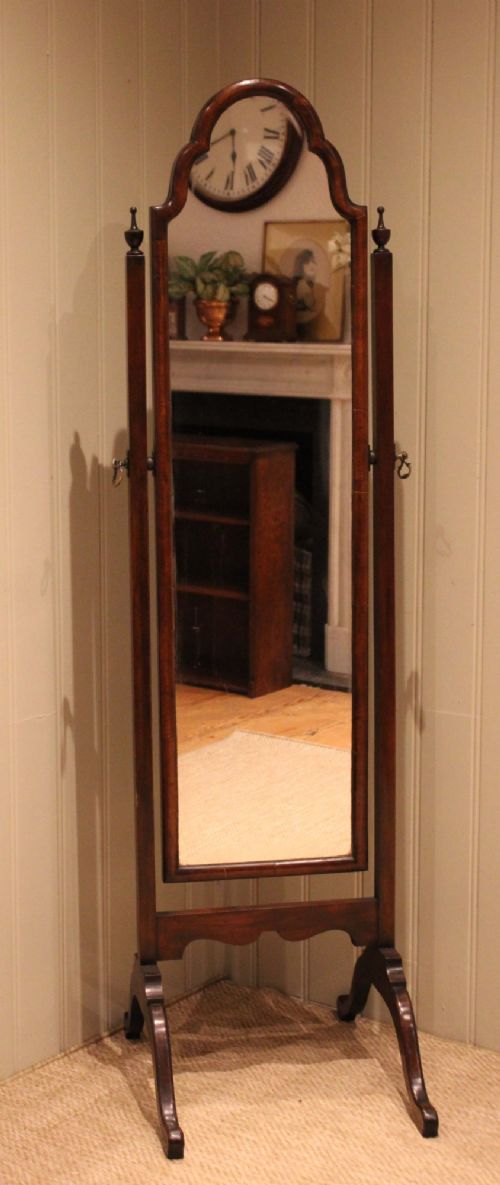
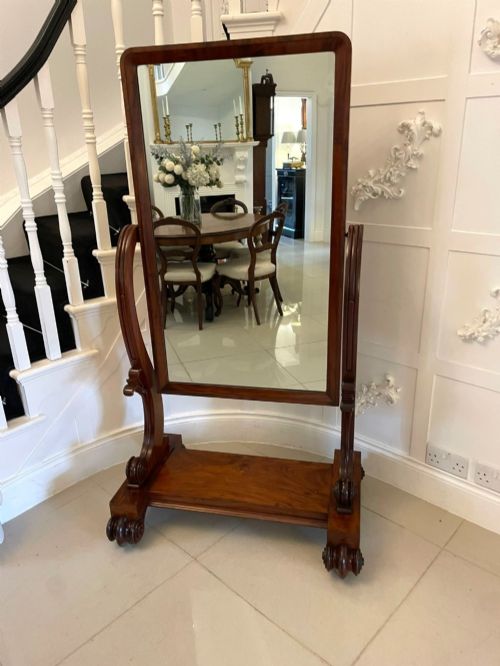
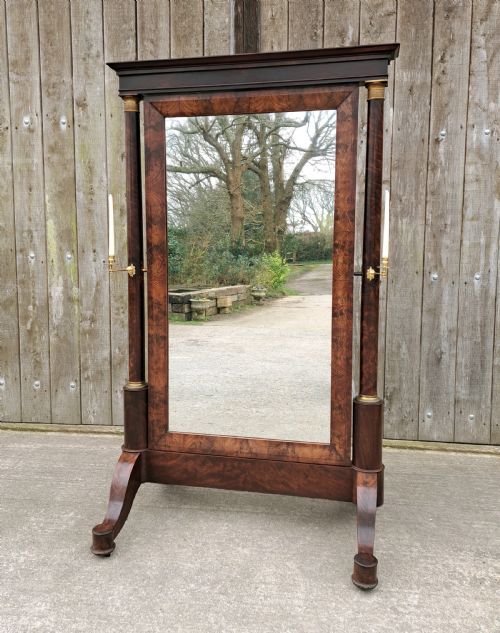
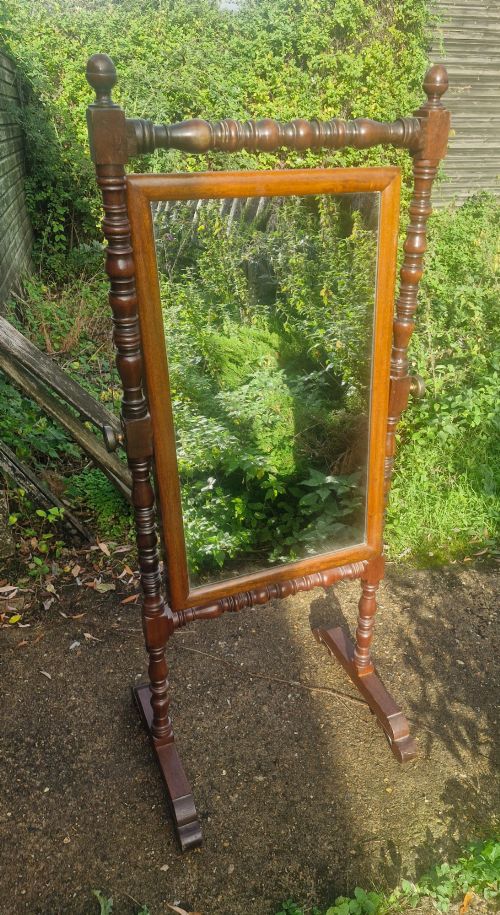

Tilt Mirror on Stand
A tilt mirror on stand offers a full or partial reflection on a pivoting frame, bringing adjustable light and proportion to a room.
Tilt Mirror on Stand
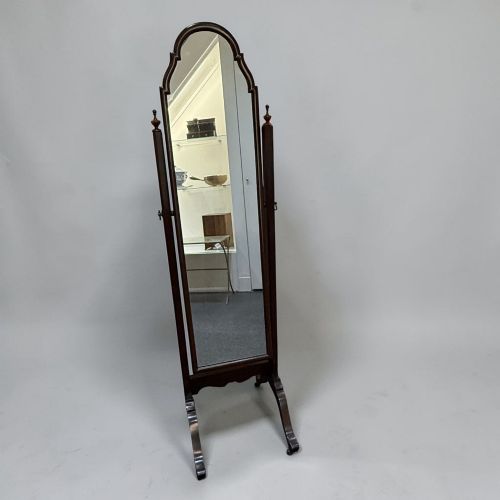
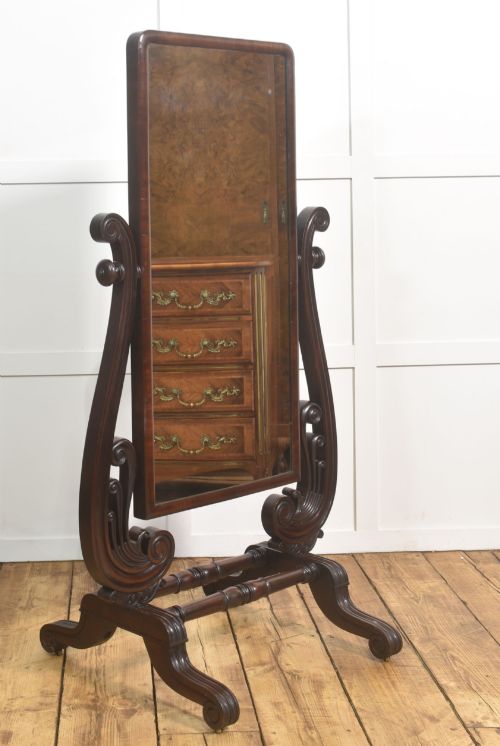
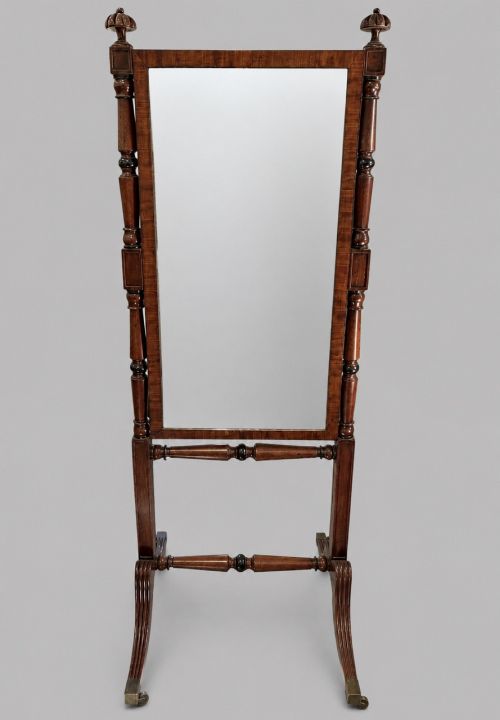
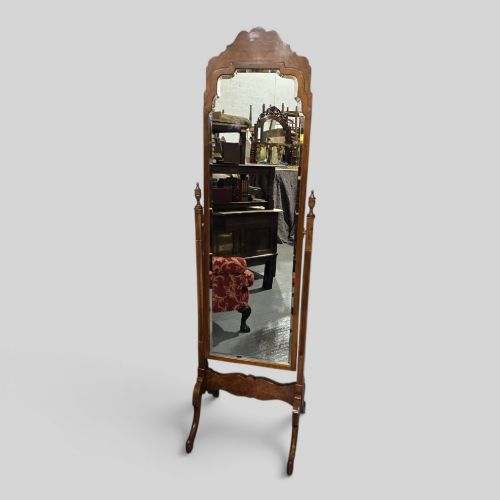
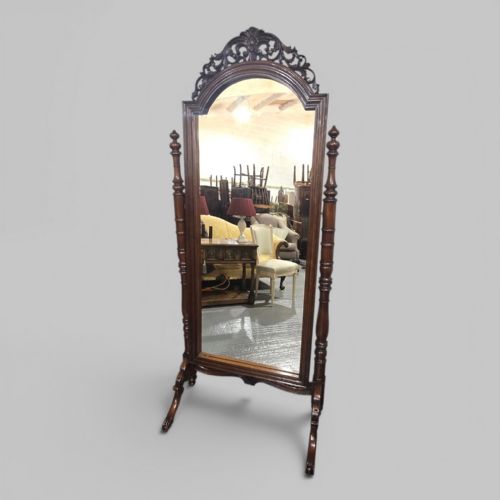
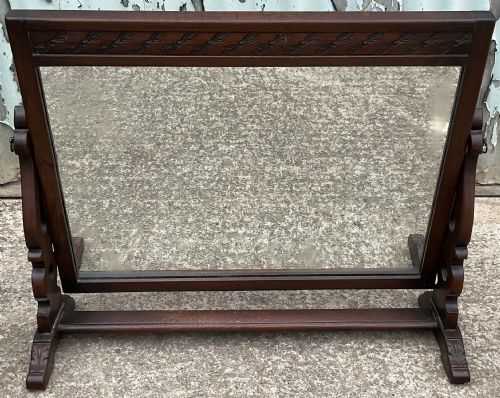
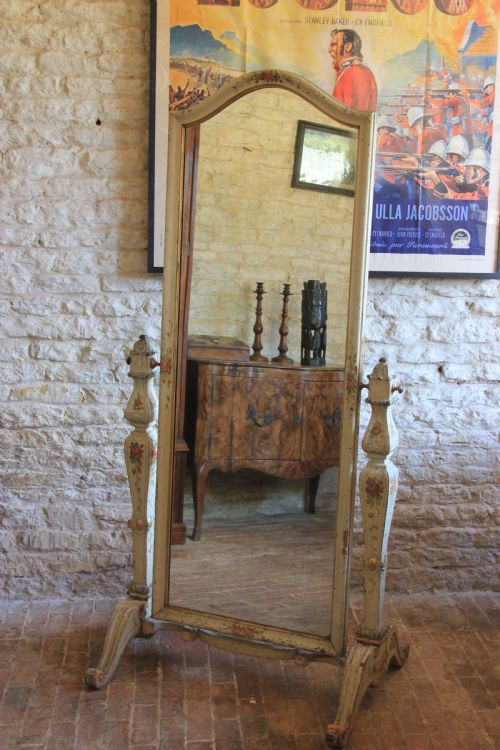
When you search for a tilt mirror on stand, you are looking at floor-standing cheval mirrors, dressing table mirrors, and vanity glasses that pivot on vertical supports.
The versions you are most likely to meet on this page hail from the Victorian, Edwardian, and Regency periods, alongside Georgian and later 1920s and 1930s examples.
These pieces serve as functional dressing items that also alter the light and perceived depth of a bedroom or dressing room.
How they were made
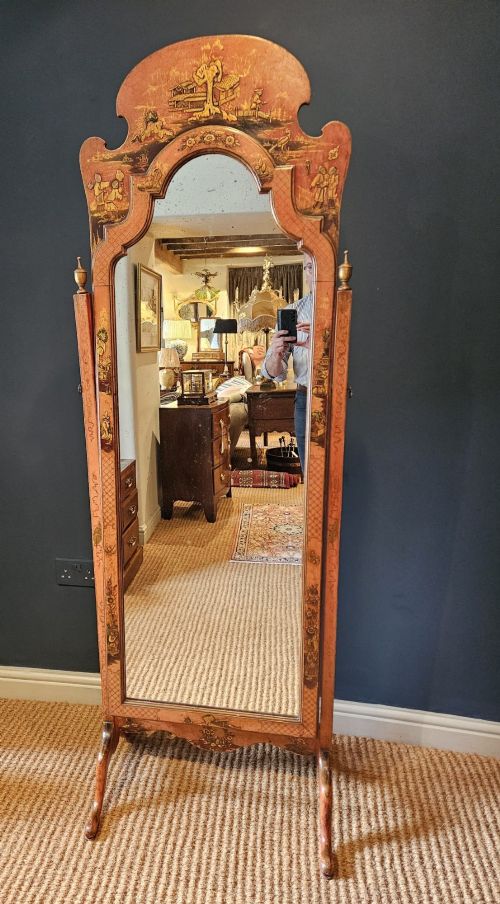
Frames and stands are constructed predominantly from timbers such as mahogany, walnut, burr walnut, pitch pine, and oak, occasionally finished with lacquered wood or Chinoiserie decoration.
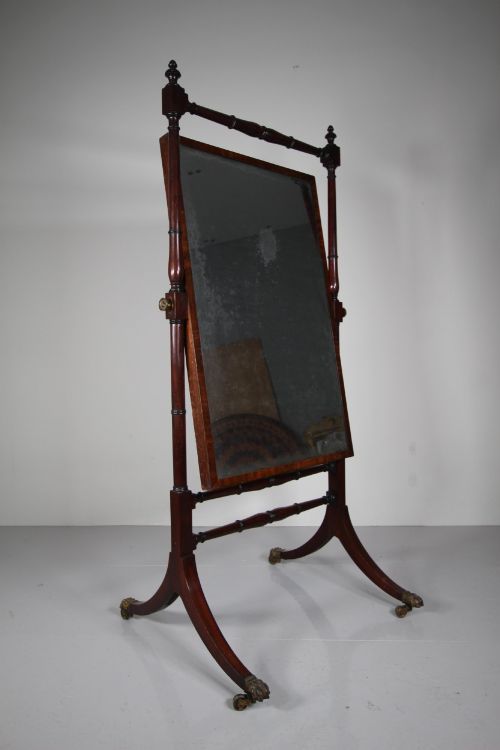
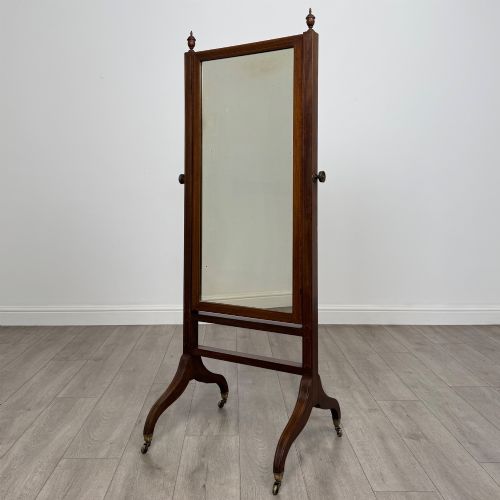
Pivoting mechanisms often incorporate brass fittings, such as castors, sabots, and adjustable side screws that hold the glass at the chosen angle.
Mirrored glass is set within swing frames, supported either by upright pillars on sturdy platform bases or by sabre legs.
Tilt Mirror on Stand Retail Price Guide 2026
Typical asking prices for tilt mirror on stand among the pieces listed under this phrase on Sellingantiques today, from the lower quarter to the upper quarter. They describe what is for sale here now, not the wider market.
One recorded piece once belonged to a General Meigs, adding a specific military provenance to the history of these pivoting glasses.
What varies in quality
The refinement of the timber selection sets pieces apart, moving from straightforward utility pine and oak to highly figured flame mahogany and burr walnut.
Quality shows in the weight and finishing of the brass castors, sabots, and pivoting brackets, which determine how smoothly the frame tilts and holds its position.
The architectural grace of the stand, whether executed in a Regency, French Empire, or Queen Anne style, dictates the visual authority of the piece.
The Tilt Mirror on Stand Glossary
- Cheval mirror
- A freestanding full-length mirror designed to swing within an upright frame. It takes its name from the French word for horse, referencing the four-legged support trestles.
- Tilt mirror
- A glass mounted on pivots that allows the user to adjust the angle of reflection. This mechanism is common on both large floor-standing mirrors and smaller dressing table versions.
- Sabot
- A metal sleeve fitted to the foot of a furniture leg for protection and decoration. Brass sabots frequently appear on Regency and William IV standards.
- Chinoiserie
- European interpretation of Chinese and East Asian artistic traditions, expressed through lacquered surfaces and painted motifs. This decorative style appears on select 1920s frames.
Tilt Mirror on Stand: Frequently Asked Questions
Where should I place a tilt mirror on stand?
These mirrors suit bedrooms and dressing rooms where adjustable height and angle assist with dressing. Positioning them near a window helps bounce natural light deeper into the space.
Floor-standing cheval versions require enough clearance around the base to allow the frame to swing fully without striking nearby furniture.
How do I adjust the tilt mechanism?
Most frames use side pivot screws or threaded brass knobs set into the upright supports. Tightening or loosening these fixtures controls the tension that holds the glass in place.
Care should be taken to support the weight of the glass with one hand while adjusting the fittings on either side.
What is the difference between a cheval mirror and a dressing table mirror?
A cheval mirror stands tall enough on the floor to reflect the entire figure of the viewer. They rest upon substantial legs or platform bases.
Dressing table or vanity mirrors are smaller scaled pieces designed to sit upon top of a surface rather than directly on the floor.
How do I identify a Regency period stand?
Regency examples often feature saber legs, brass paw castors, and clean architectural lines influenced by classical antiquity. The timbers are typically rich dark mahogany with minimal ornamentation.
Proportions tend to be neat and upright, emphasising structural geometry over heavy carving.