



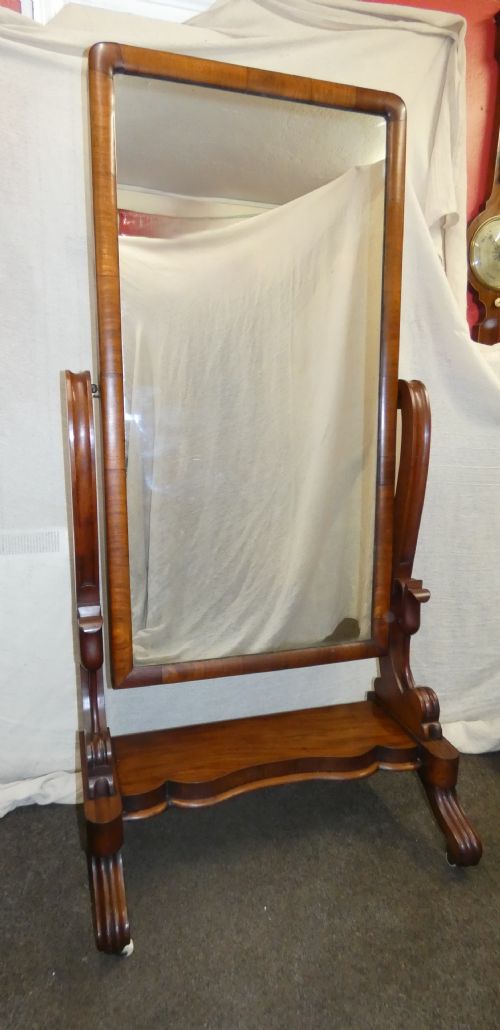

Tilt Mirror Floor
A tilt mirror floor brings practical length and light to a room, pivoting in a heavy frame to suit every angle.
Tilt Mirror Floor
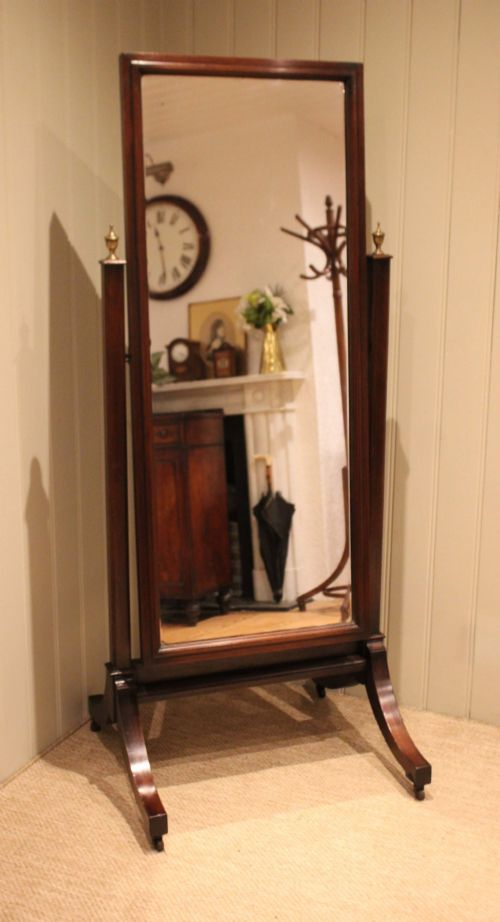
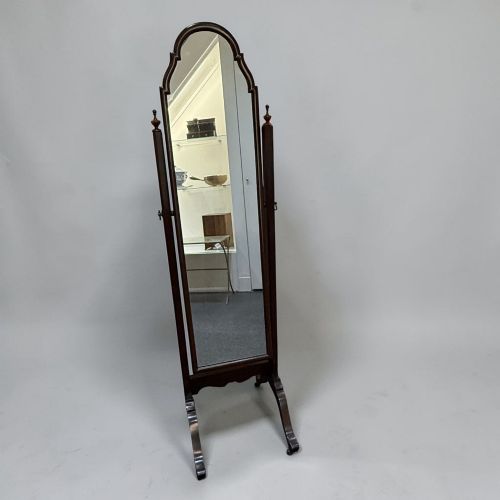
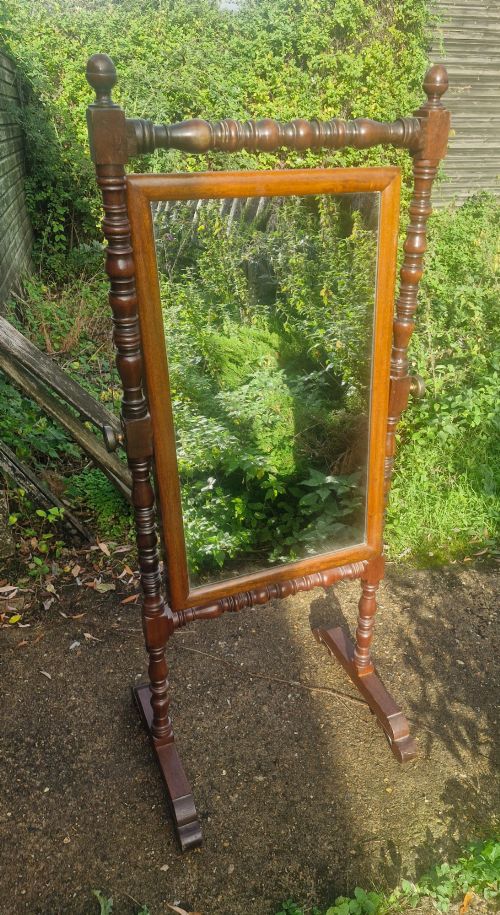
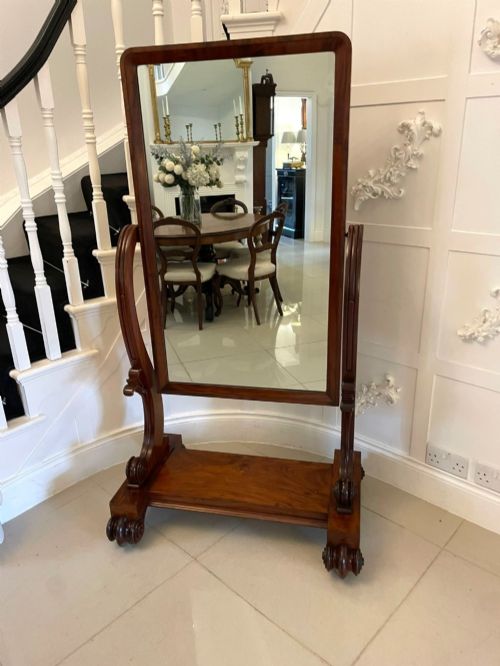
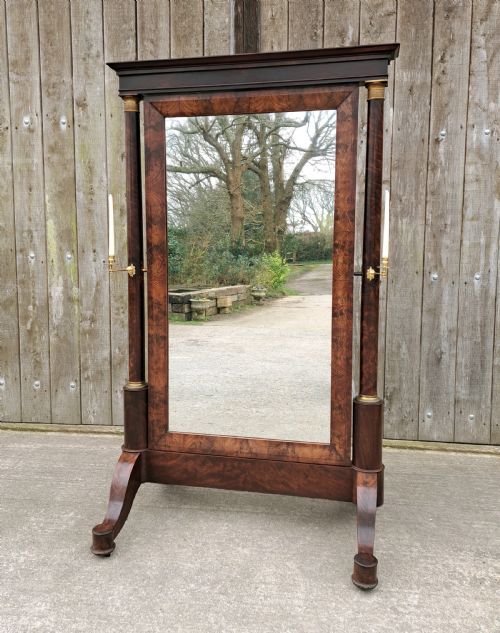
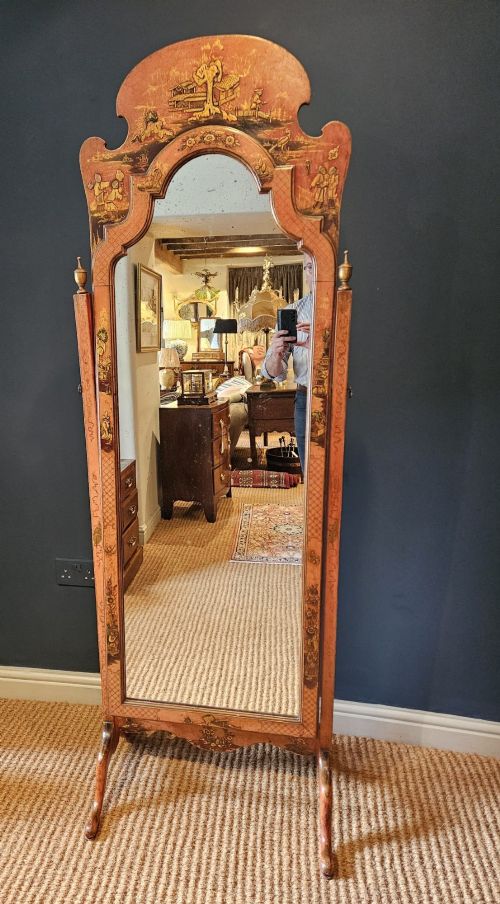
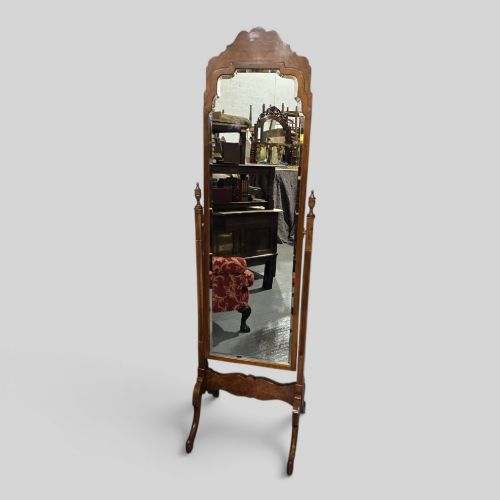
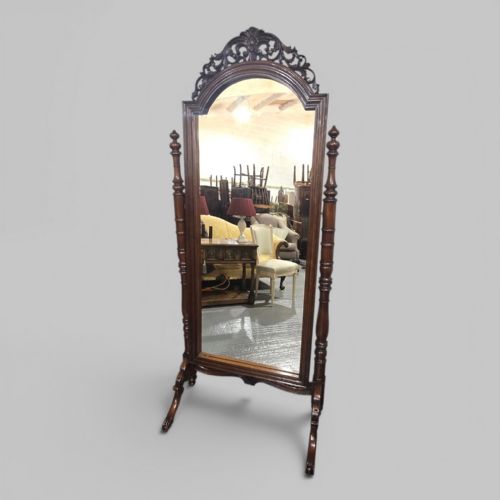
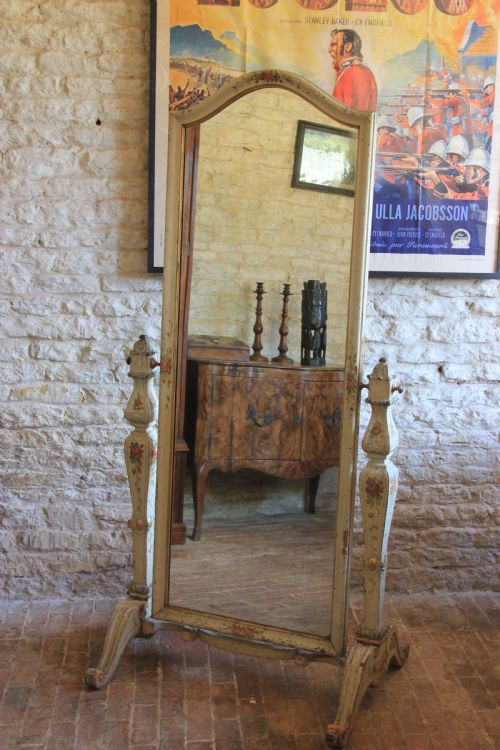
A tilt mirror floor, known in the trade as a cheval mirror, is a tall, free-standing glass held within an upright frame that pivots on vertical pins or pivots. Buyers seeking a tilt mirror floor encounter examples stretching from the Georgian era through the Victorian period and into the Edwardian years.
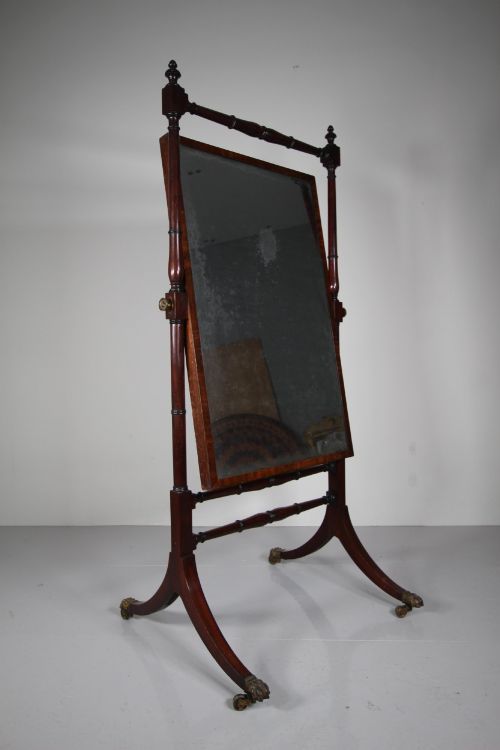
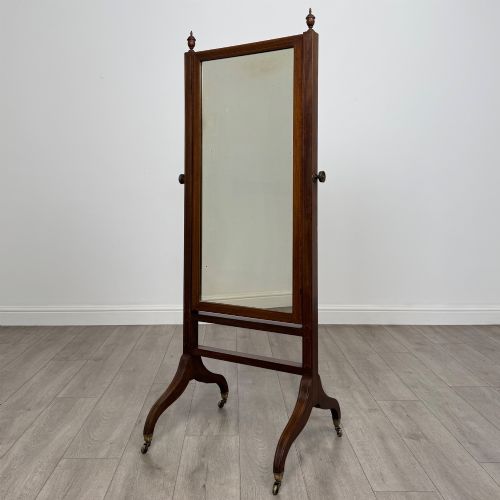
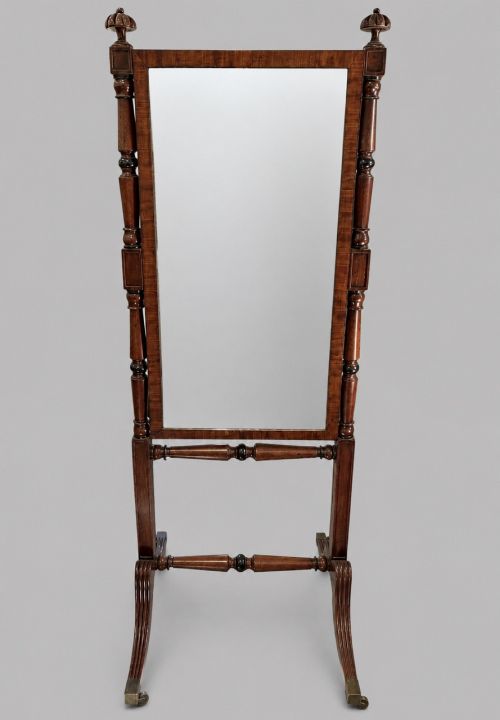
The most common version met on this page is the mahogany cheval mirror standing on sabre legs or brass castors, with origins spanning the nineteenth century. These pieces range from restrained Regency designs to more elaborate French Empire and Chinoiserie interpretations.
Makers utilised various secondary woods alongside mahogany, including walnut, burr walnut, and pitch pine. Certain items incorporate lacquered wood, gilt highlights, and intricate inlay work within the upright frames.
Distinctions in quality
The division between standard workshop production and superior output rests in the choice of timber and the execution of the frame mechanics. Fine pieces display rich mahogany or burr walnut grains coupled with substantial brass castors and robust pivot hardware that holds the glass steady at any chosen angle.
Proportion and stability dictate the standing of a piece, where heavier frames require well-balanced sabre legs or stable floor supports to prevent tipping when the glass tilts.
Tilt Mirror Floor Retail Price Guide 2026
Typical asking prices for tilt mirror floor among the pieces listed under this phrase on Sellingantiques today, from the lower quarter to the upper quarter. They describe what is for sale here now, not the wider market.
Current listings feature tilt mirror floor examples from the Georgian, Victorian, and Edwardian periods, constructed primarily in mahogany, walnut, and pitch pine.
The Tilt Mirror Floor Glossary
- Cheval mirror
- A large, free-standing floor mirror that swings within an upright frame. The term derives from the French word for horse, referencing the four-legged support trestles of early designs.
- Sabots
- Metal protective caps fitted to the feet of furniture legs, commonly rendered in brass on Regency and William IV pieces.
- Sabre legs
- Outward-curving furniture legs that taper toward the foot, frequently seen on Regency and late Georgian frames.
- Tilt dressing glass
- A pivoting mirror designed for adjusting the angle of reflection, often mounted on a floor stand for full-length viewing.
Tilt Mirror Floor: Frequently Asked Questions
Where should a tilt mirror floor be placed?
Position the piece against a sturdy wall or perpendicular to a window to maximise natural light reflection across the room. Ensure adequate clearance around the base so the frame can pivot freely without striking surrounding furniture.
Because these mirrors are heavy and free-standing, place them on level flooring to maintain balance and prevent strain on the side pivot pins.
How do I adjust the tilt mechanism?
Most frames utilise threaded pivot screws or pins set into the upright pillars that connect to the sides of the mirror frame. Tightening or loosening these fixings controls the tension required to keep the glass at your preferred angle.
Check that the supporting frame remains stable on its castors before making adjustments to avoid tilting the entire structure off balance.
How do I identify the period of a mirror?
Examine the timber selection, leg style, and construction details such as the presence of sabre legs or French Empire motifs. Georgian and Regency pieces tend to feature cleaner mahogany lines, while Edwardian and later Victorian variants introduce inlaid patterns or pitch pine.
Hardware like brass sabots and castors also offers clues to the manufacturing decade, aligning with the prevailing stylistic shifts of the nineteenth and early twentieth centuries.