


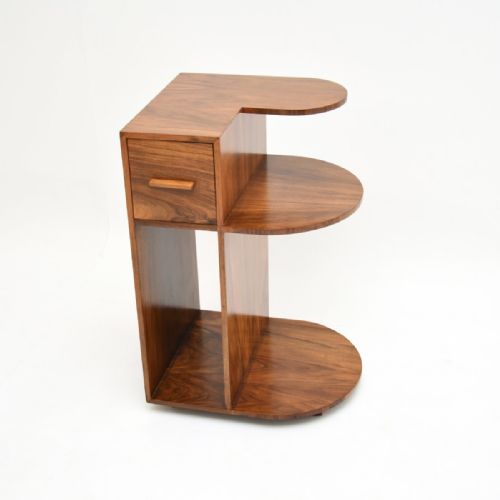

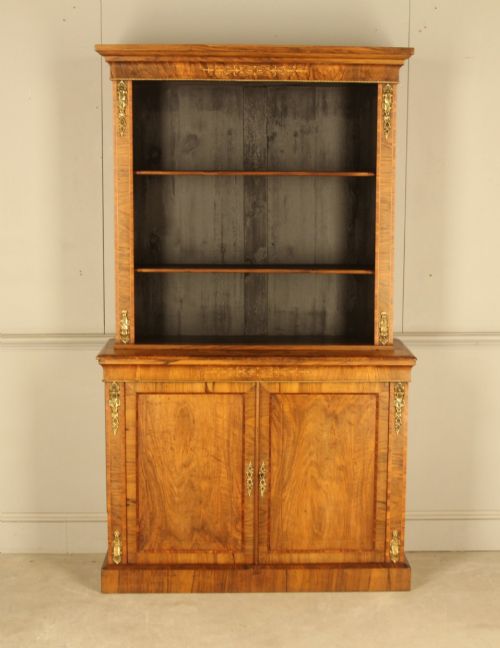
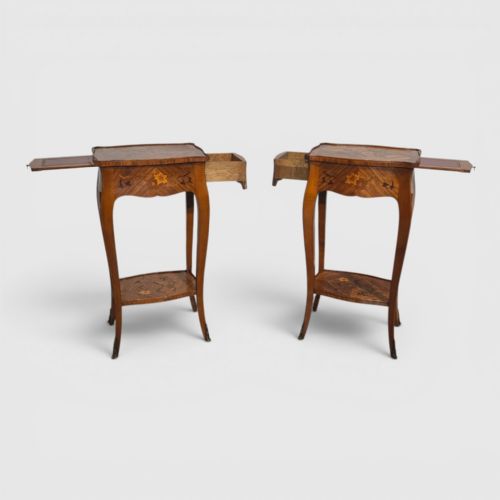


Tiered Walnut Side Cabinet
These tiered walnut side cabinet pieces combine practical surface space with rich timber grain, offering a focal point for any traditional or modernist interior.
Tiered Walnut Side Cabinet
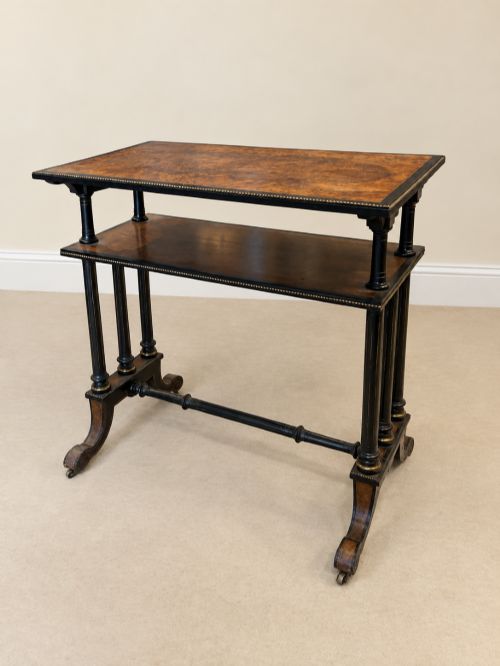
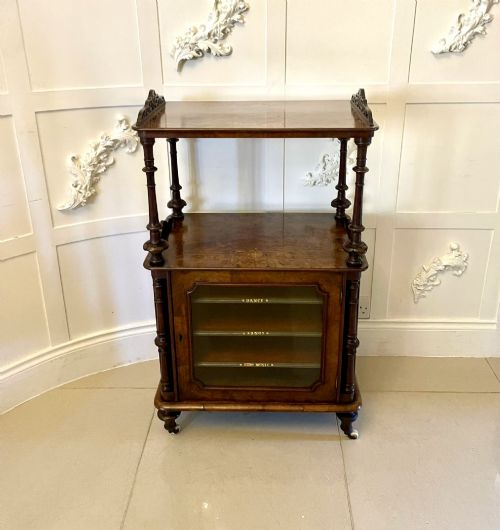
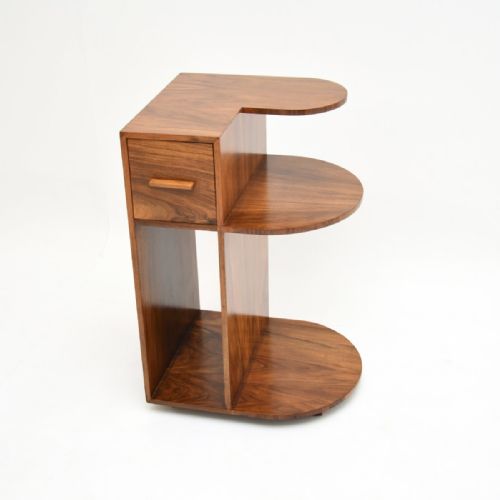
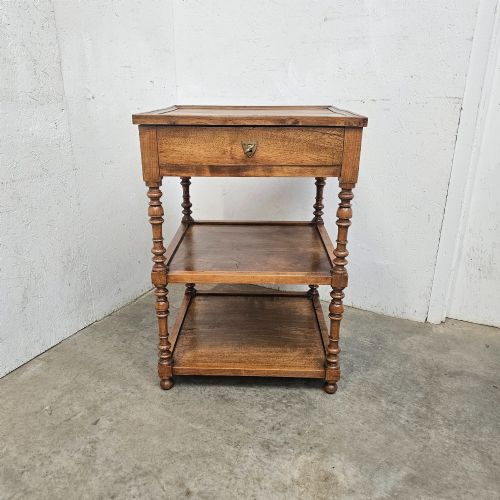
When you search for a tiered walnut side cabinet, you encounter a selection of multi-level furniture pieces constructed from walnut, burr walnut, and walnut veneer. These items emerge across periods spanning the Victorian era through to Art Deco designs of 1930, alongside 19th-century examples.
The forms vary significantly, including side tables, music cabinets, etageres, bookcases, and buffets. You are likely to meet tiered modernist tables, marquetry what-nots, and music cabinets featuring drawers or shelving.
Origins stretch from English workshops to French provincial and Spanish Renaissance revival pieces. The unifying element is the tiered structure combined with the characteristic dark grain of walnut.
How they were made
Cabinet makers utilised solid walnut, burr walnut, and walnut veneer applied to secondary timbers to create rich, figured surfaces. Decorative elements often relied on brass mounts, ormolu, ebonised wood details, and fruitwood or ebony inlay.
Construction techniques include turned legs, marquetry panels, and tiered shelf supports fitted with casters in later 1930s modernist pieces. Glass panels and gilt mounts also appear on Victorian display items.
Tiered Walnut Side Cabinet Retail Price Guide 2026
Typical asking prices for tiered walnut side cabinet among the pieces listed under this phrase on Sellingantiques today, from the lower quarter to the upper quarter. They describe what is for sale here now, not the wider market.
Listings feature walnut, burr walnut, and walnut veneer, combined with decorative brass, ormolu, and ebonised wood details.
What varies in quality
The standard of a piece rests primarily on the choice of timber figure, such as the density and movement within burr walnut veneers. Marquetry execution and the precision of inlaid details further separate standard production from finer work.
Structural integrity of tiered shelves and the quality of applied metal mounts, whether brass or ormolu, dictate the overall grade. Original hardware and casters contribute to the integrity of the piece.
Gordovil Spain·Hille
The Tiered Walnut Side Cabinet Glossary
- Burr walnut
- A type of timber taken from the growth deformity on a walnut tree, yielding highly figured, swirling grain patterns. It was favoured by Victorian and Edwardian cabinet makers for decorative veneer.
- Canterbury
- A low, multi-tiered cabinet or stand originally designed for holding sheet music, books, or portfolios. These often feature vertical partitions and lower drawers.
- Etagere
- A piece of furniture consisting of a set of open shelves for displaying small objects or ornaments. They frequently appear in French and Victorian inventories.
- Marquetry
- The art and craft of applying pieces of veneer to a structure to form decorative designs. Craftsmen utilised various coloured woods to create pictorial or geometric motifs.
- Purdonium
- A specialised domestic cabinet designed for storing coal next to a fireplace. They typically house a metal liner and match the surrounding living room furniture.
Tiered Walnut Side Cabinet: Frequently Asked Questions
What is a tiered walnut side cabinet used for?
These cabinets serve multiple functions around the home, acting as display surfaces for decorative objects, lamp tables in sitting rooms, or specialised storage for music and books. The tiered design allows for organised placement of items across different levels without taking up excessive floor space.
Historically, specific variations accommodated sheet music near pianos or held coal beside fireplaces. Today, they function primarily as accent furniture that brings warmth and historic character to a room.
How do I date a tiered walnut side cabinet?
Dating relies on observing the stylistic markers and construction methods inherent to specific eras. Victorian examples often incorporate heavy burr walnut, marquetry inlay, and elaborate turnings, while Edwardian pieces lean towards refined music cabinets.
Art Deco items from around 1930 display cleaner modernist lines, simpler geometric tiers, and occasional casters. Comparing the secondary timbers and finishing techniques helps narrow down the period of manufacture.
Are walnut veneers a sign of lower quality?
Walnut veneer is a traditional technique rather than a shortcut, used by master craftsmen to display striking grain patterns like burr walnut that would be unstable or unavailable in solid timber. High-quality pieces feature thick, well-applied veneers over sturdy core woods.
Assessing a veneered piece involves looking at the symmetry of the grain matching and the stability of the edges where the veneer meets the solid frame.
How do I care for antique walnut furniture?
Maintaining walnut furniture requires keeping pieces away from direct sunlight and dramatic shifts in room temperature to prevent the wood or veneer from drying out. Regular dusting with a soft, dry cloth preserves the polished finish.
Applying appropriate wax occasionally helps nourish the timber and maintain the natural lustre of the grain. Avoid chemical sprays that can strip historic finishes over time.