

Tiered Standing Bookcase
These tiered standing bookcase options are vertical shelving units designed to hold volumes while saving floor space in a study or library.
Tiered Standing Bookcase
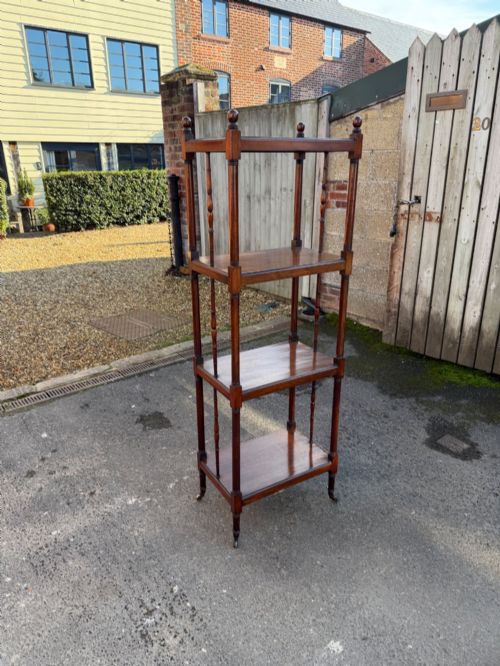
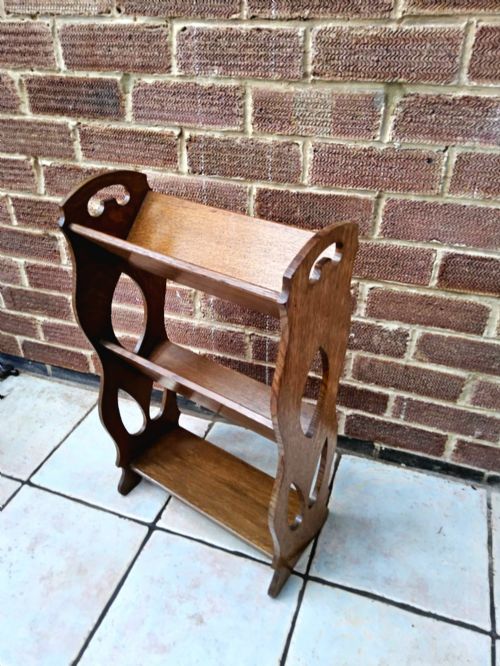
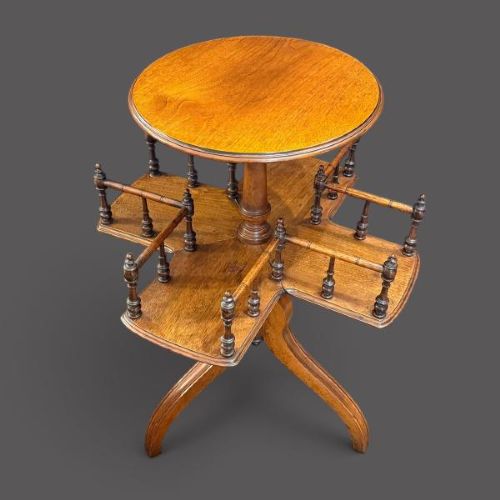
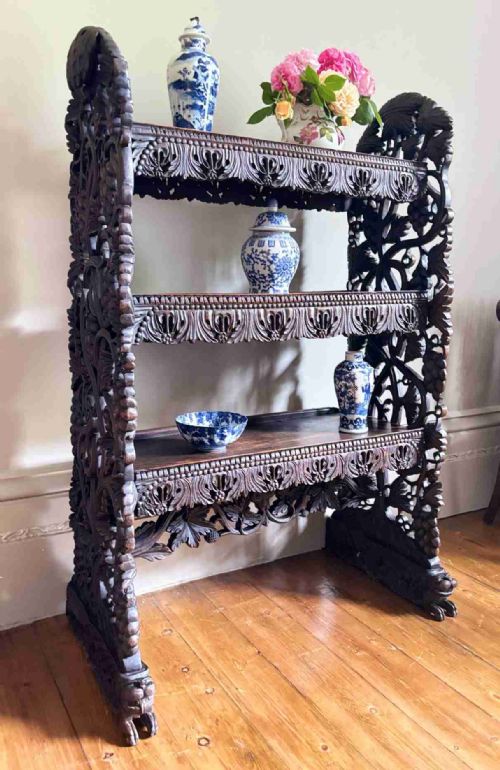
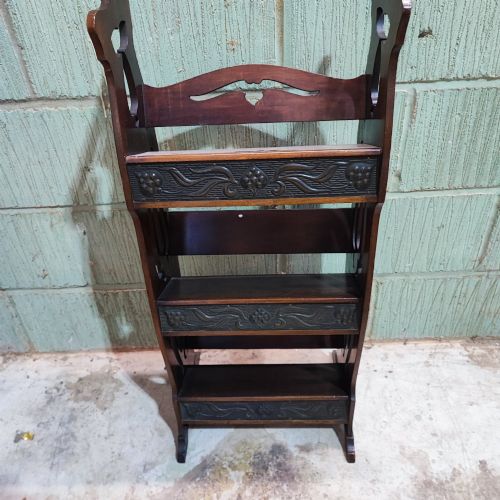
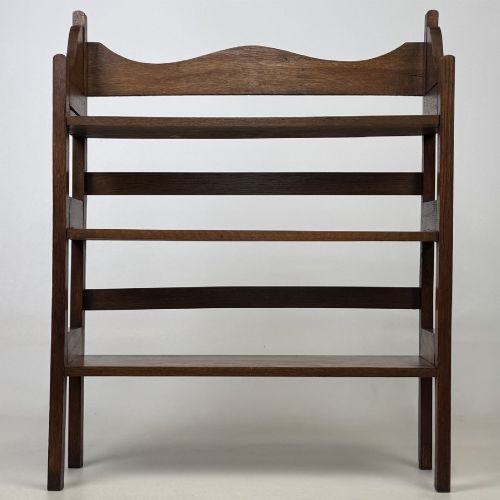
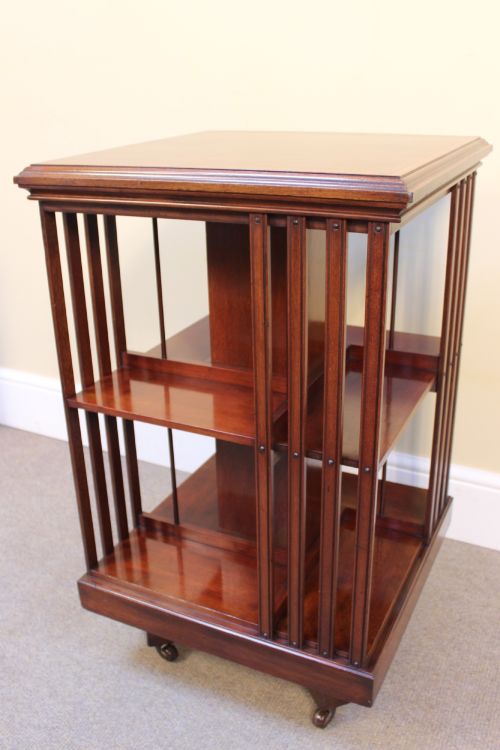
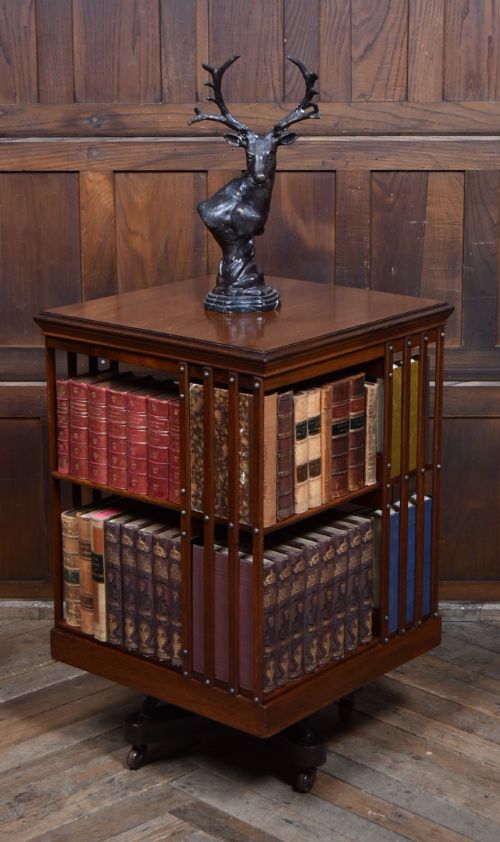
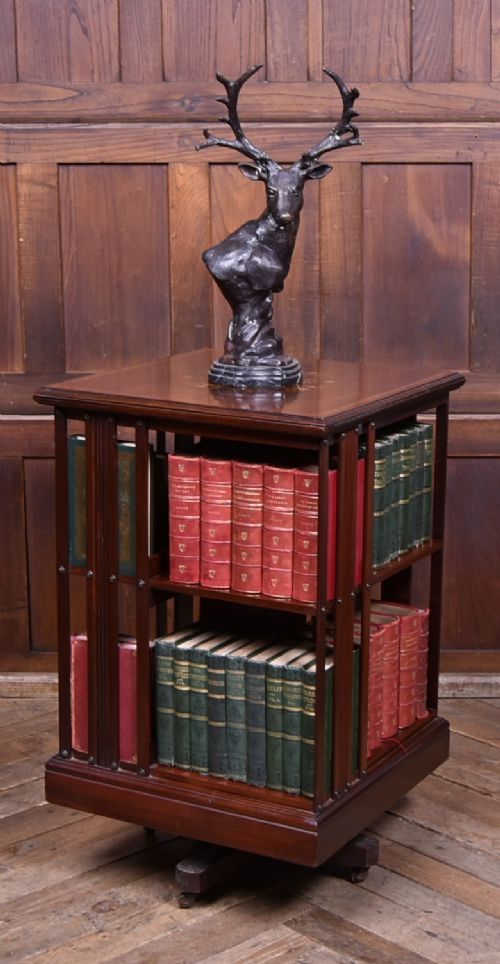
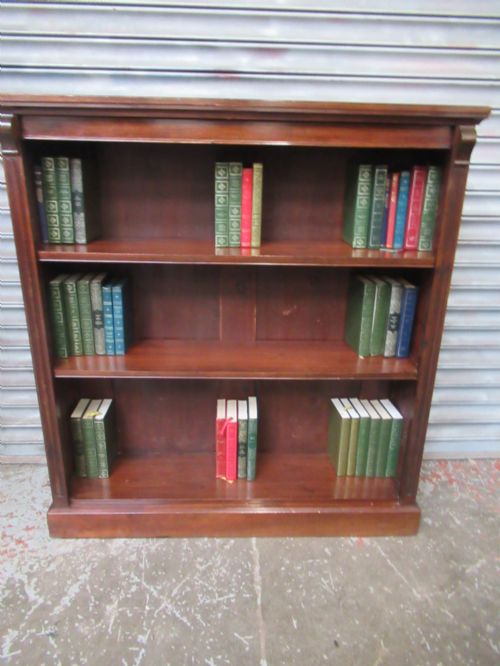
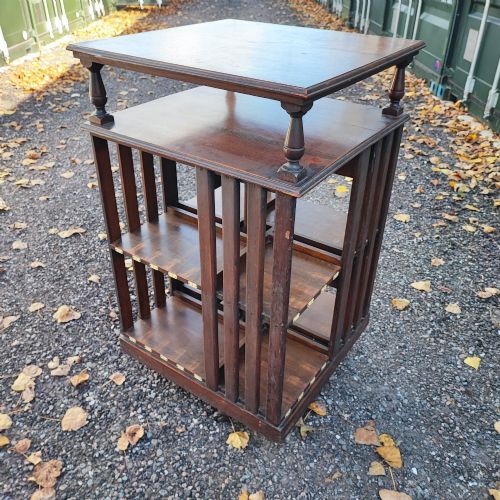
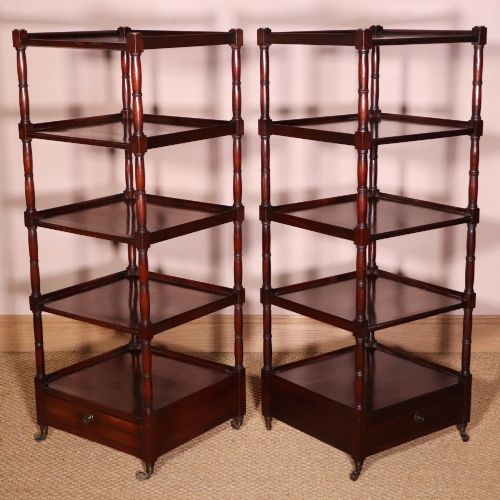
A tiered standing bookcase is a vertical furniture piece designed to hold books and display objects across multiple levels of shelving. When you explore this selection, you encounter forms ranging from revolving circular designs to stacked open shelves and multi-tiered whatnots.
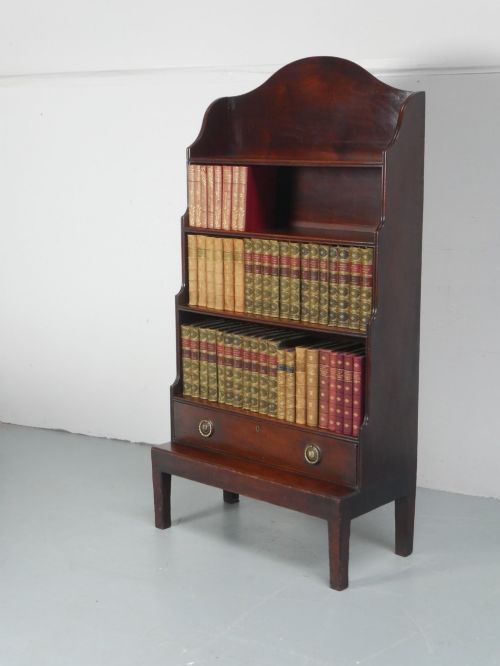
The pieces on this page span several centuries, with prominent examples originating from the Georgian, Victorian, and Edwardian eras. Makers utilised various formats, including narrow waterfall profiles and sturdy corner arrangements, to suit different interior spaces.
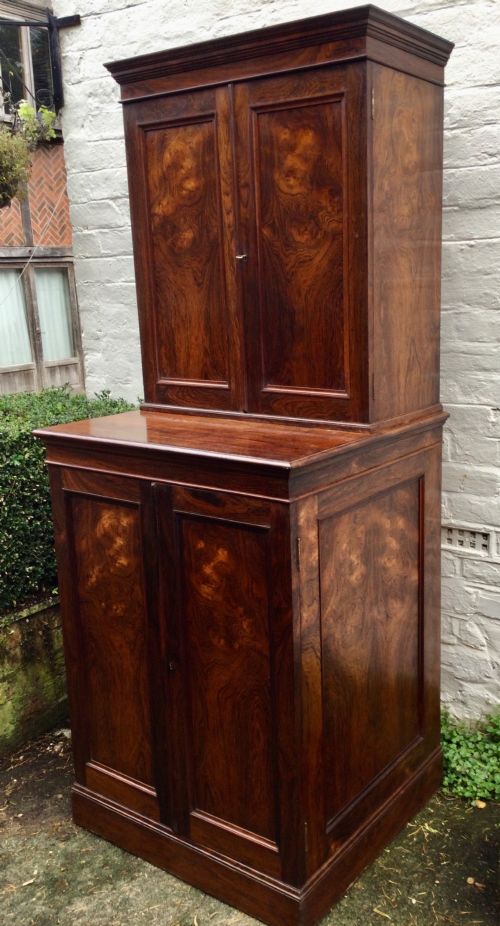
Mahogany and oak dominate the listings, frequently appearing alongside rosewood, satinwood, and walnut in both revolving and stationary formats. These woods provide the structural support necessary for stacked tiers of heavy volumes.
Materials and Construction
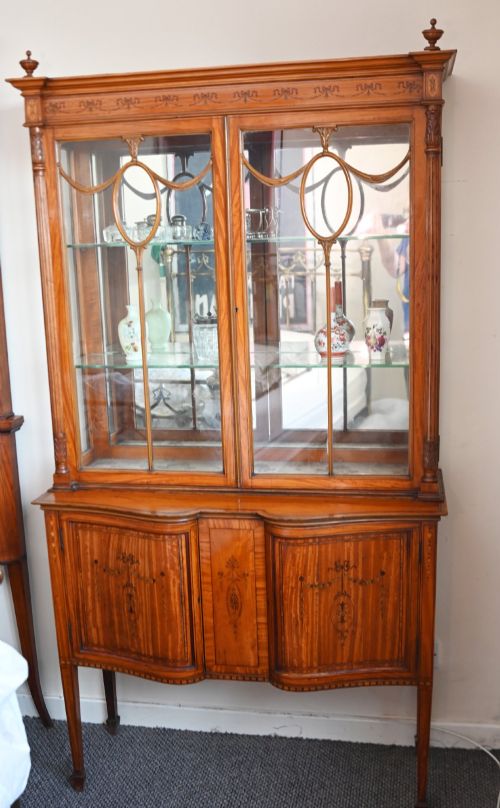
Cabinet makers constructed these multi-level units using dense hardwoods like mahogany, oak, and rosewood, often enhanced with brass galleries, slender pillars, and inlaid satinwood details. Structural integrity required sturdy joinery to support the weight of books across multiple stacked tiers.
Revolving mechanisms relied on internal wooden or brass pivot systems concealed beneath the lowest shelf to allow smooth rotation. Surface finishes included polished mahogany veneers, lacquered treatments, and hand-rubbed wax on solid oak and walnut.
Tiered Standing Bookcase Retail Price Guide 2026
Typical asking prices for tiered standing bookcase among the pieces listed under this phrase on Sellingantiques today, from the lower quarter to the upper quarter. They describe what is for sale here now, not the wider market.
Victorian scholars gave revolving bookcases the delightful nickname 'lazy susans for heavy reading'.
Judging Quality and Execution
The distinction between standard utility furniture and superior examples lies in the selection of timber figures, such as burr walnut or figured mahogany, and the precision of the joinery. Fine pieces display meticulous attention to detail in carved elements, slatted sides, and raised galleries.
Hardware choice and mechanical execution separate ordinary items from exceptional ones, particularly in revolving models that must turn smoothly without listing. Superior examples incorporate high-grade brass fittings and harmonious proportions across every tier.
Gillows
The Tiered Standing Bookcase Glossary
- Waterfall bookcase
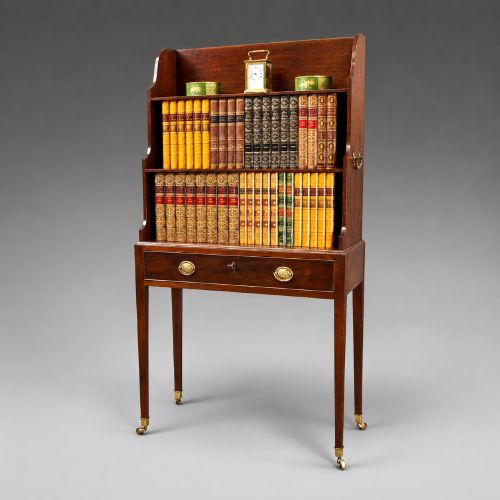
- A tiered shelving unit where each lower shelf is wider than the one above it, creating a stepped profile.
- Whatnot
- A multi-tiered piece of movable furniture with open shelves used for displaying books, ornaments, and small objects.
- Revolving bookcase
- A freestanding tiered bookcase built on a rotating base to allow access to books from all sides.
- Gallery
- A raised ornamental rail or rim fitted along the edge of a shelf to prevent items from sliding off.
- Burr walnut
- Wood taken from the warted excrescence of a walnut tree, prized for its swirling, highly figured grain patterns.
Tiered Standing Bookcase: Frequently Asked Questions
What is a tiered standing bookcase used for?
These pieces provide vertical storage for libraries and studies where floor space is limited. Multiple tiers keep reference volumes and display items organised within arm's reach.
They also function as decorative display units in sitting rooms, holding collections of smaller books and decorative objects.
How do revolving bookcases work?
Revolving models sit upon a concealed central pivot mechanism fitted into a stable base. This allows the entire tiered tower to spin smoothly in either direction.
Users can access every side of the bookcase without moving the furniture or walking around the unit.
How do I identify a Victorian bookcase?
Victorian pieces frequently feature dense timbers like mahogany and burr walnut, sometimes decorated with barley twist columns or brass galleries. Construction from this period tends to be heavy and robust.
Stylistic cues often include carved details and darker wood finishes popular during the nineteenth century.
Where should I place a whatnot?
Whatnots suit corners, alcoves, or wall spaces where a full-sized cabinet would overwhelm the room. Their open tiers benefit from placement in well-lit areas.
Because they are finished on multiple sides, many variants work effectively as freestanding room accents.