






Tiered Open Shelves
These tiered open shelves bring practical levels of display to a room, drawing on centuries of cabinet-making in mahogany, walnut and rosewood.
Tiered Open Shelves
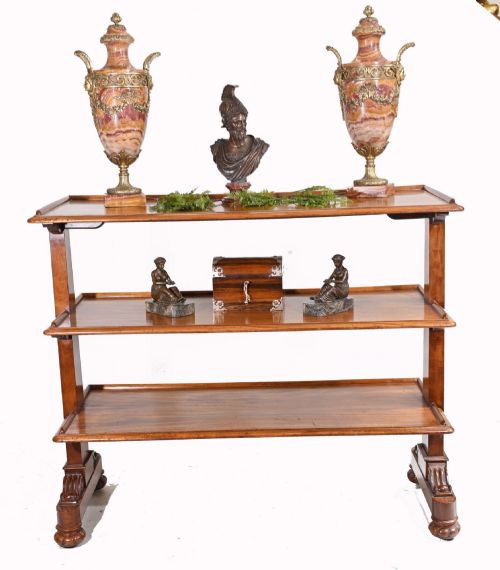
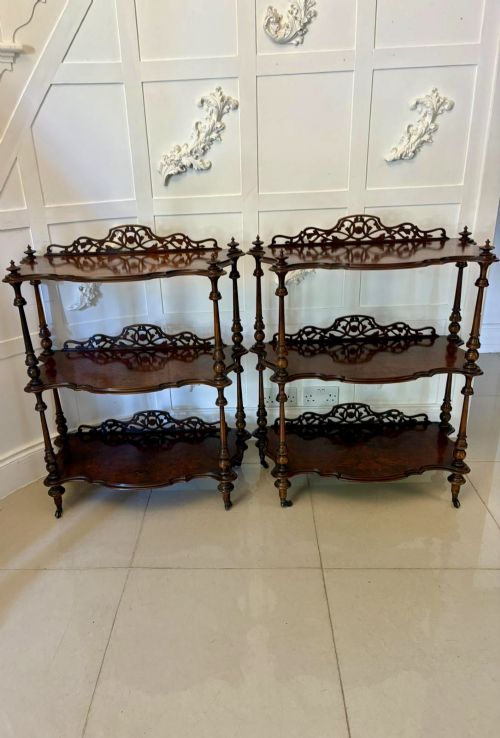
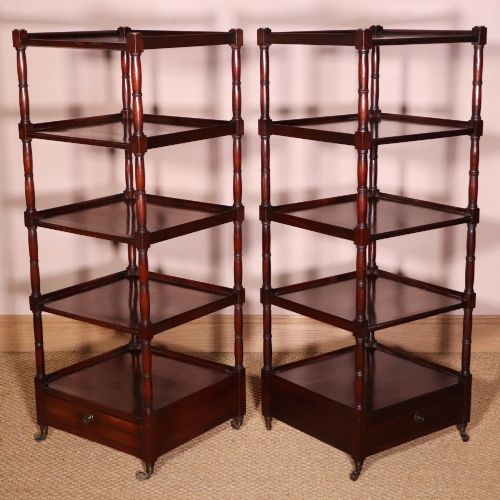
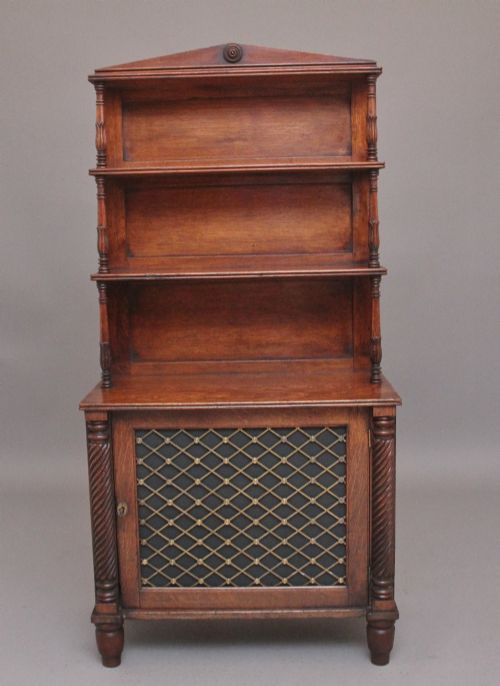
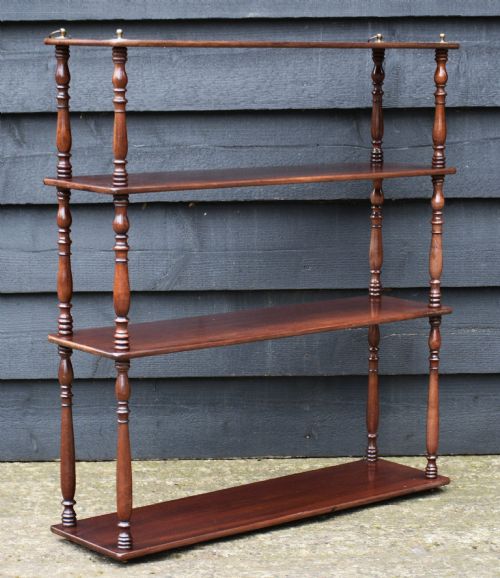
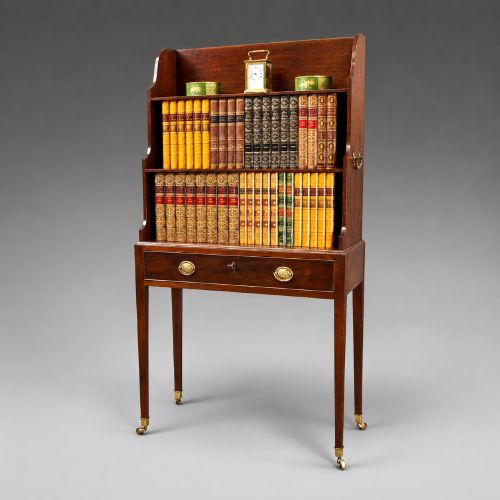
Tiered open shelves encompass traditional whatnots, etageres and waterfall bookcases designed to hold books and display objects across multiple levels. You will frequently encounter nineteenth-century mahogany and walnut examples, alongside lighter Edwardian iterations.
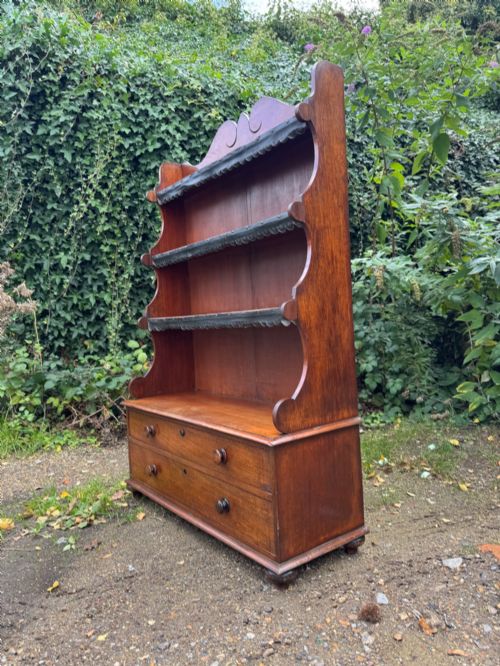
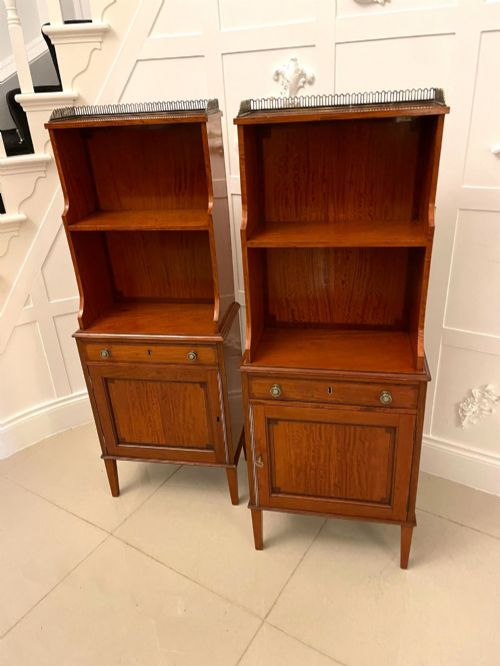
The form spans freestanding corner units, music stands and wall-hanging shelves originating from the Georgian, Regency and Victorian periods. Lower tiers often incorporate enclosed cupboards while upper tiers remain entirely open.
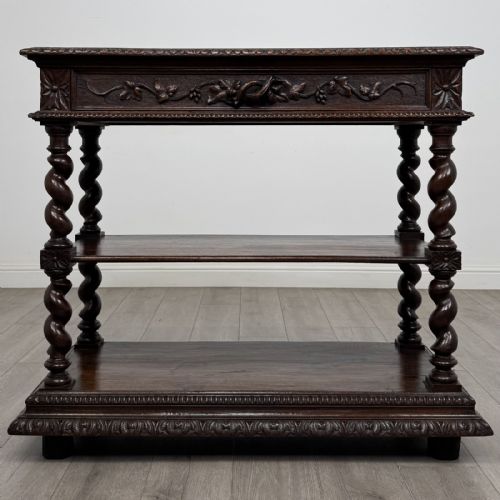
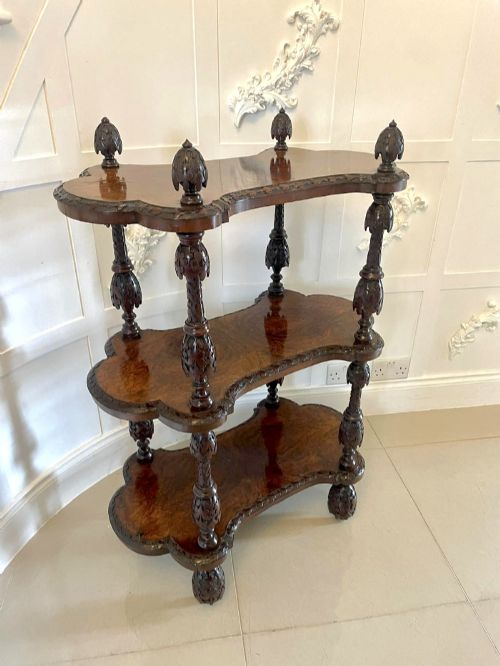
Makers utilised rich timbers such as satinwood, burr walnut and rosewood to construct graduated platforms supported by slender pillars, turned legs or barley twist uprights.
How they were made
Cabinet-makers selected dense hardwoods including mahogany, oak and rosewood, frequently employing burr walnut veneers for decorative grain patterns on tier surfaces. Brass fittings, galleries and turned supports added structural definition and detail.
Construction methods relied on precise joinery to stack multiple graduating tiers securely, balancing weight across slender upright columns or bracketed wall fixings. Fretwork panels and carved edges were hand-finished on finer pieces.
Tiered Open Shelves Retail Price Guide 2026
Typical asking prices for tiered open shelves among the pieces listed under this phrase on Sellingantiques today, from the lower quarter to the upper quarter. They describe what is for sale here now, not the wider market.
Materials recorded across these open shelves include solid mahogany, oak, rosewood, walnut, burr walnut, satinwood, brass and glass.
What varies in quality
The distinction between standard utility pieces and exhibition-grade examples lies in the selection of timber, such as highly figured burr walnut or richly grained satinwood. Finer tiers display meticulous attention to turned columns, intricate pierced fretwork and solid brass galleries rather than simpler pine or oak frames.
Proportion and structural harmony separate superior pieces, where graduating shelves diminish gracefully from base to top. The integration of functional additions, like drawer linings or turned feet, demonstrates the maker's original ambition.
Gillows
The Tiered Open Shelves Glossary
- Whatnot
- A freestanding piece of furniture comprising multiple open tiers used for displaying ornaments or books. Originating in the eighteenth century, these structures often feature slender vertical supports.
- Etagere
- A set of open shelves or tiered stands designed for small display items. These French-influenced pieces frequently utilise exotic timbers like rosewood and satinwood.
- Waterfall bookcase
- A graduating set of open shelves where each tier steps back from the one below it. This profile creates a cascade effect popular in the Georgian and Regency periods.
- Gallery
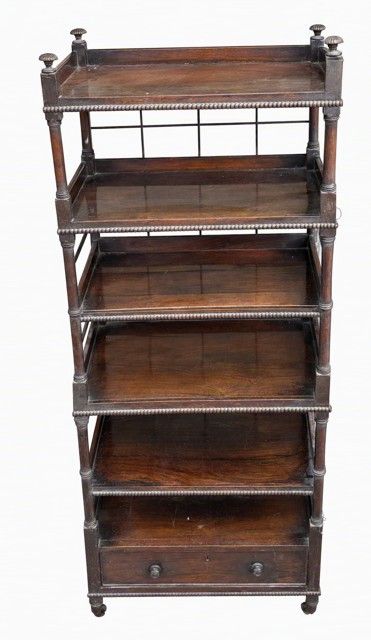
- A raised decorative rail surrounding the edge of a shelf to keep items from sliding off. These fixtures are commonly cast or turned in brass.
- Barley twist
- A type of turned column resembling the spiral twist of barley sugar. Craftsmen utilised this decorative woodworking technique heavily during the Victorian period.
Tiered Open Shelves: Frequently Asked Questions
What is a whatnot shelf?
A whatnot is a multi-tiered piece of freestanding furniture designed specifically for displaying small ornaments, ceramics and books. They became popular in homes during the nineteenth century as living spaces required more surface area for collections.
Most examples feature three to six open levels supported by slender turned columns or pillars. Some versions include a small enclosed cupboard section at the base.
How do I style tiered shelves?
Tiered open shelves suit corners or flat walls where vertical display space is needed without dominating the room. Their open construction keeps light flowing through a space while holding books or decorative objects.
Balance heavier books on the lower tiers to maintain structural visual weight, leaving the upper levels for smaller ceramics or glassware. Avoid overcrowding the individual tiers so the timber grain remains visible.
How do I identify Victorian shelves?
Victorian tiered shelves frequently employ dark timbers such as rosewood, walnut and burr walnut. Details often include turned barley twist uprights, pierced fretwork galleries and occasional brass fittings.
Earlier Victorian pieces tend to feature heavy mahogany construction, while later nineteenth-century examples embrace elaborate serpentine shaping and exhibition-grade veneers.