





Tiered Mahogany Display Table
A tiered mahogany display table organises objects across multiple surfaces, combining practical display space with refined period cabinetmaking.
Tiered Mahogany Display Table
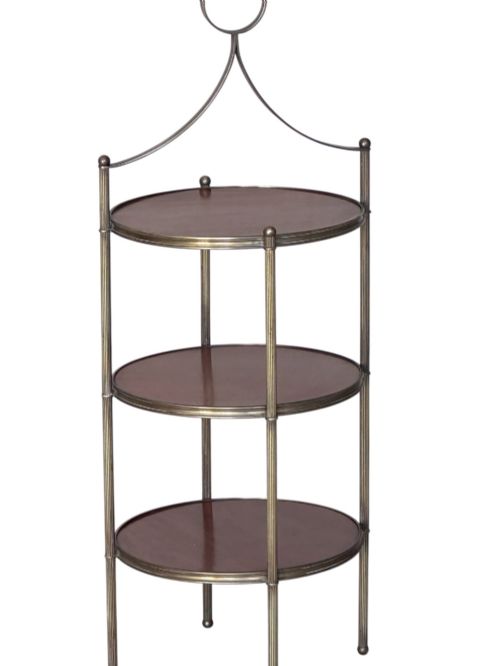
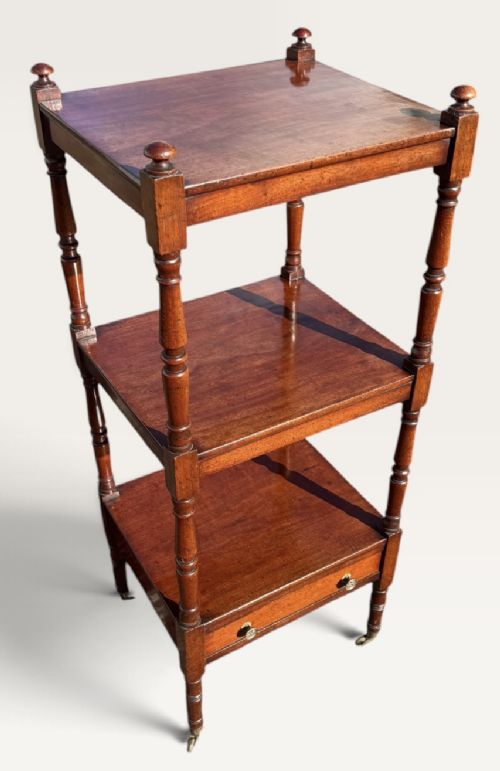
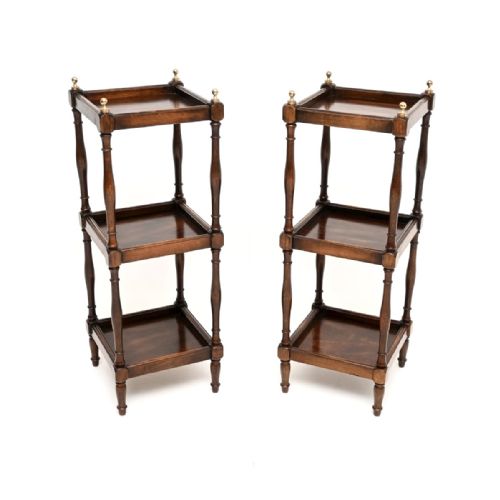
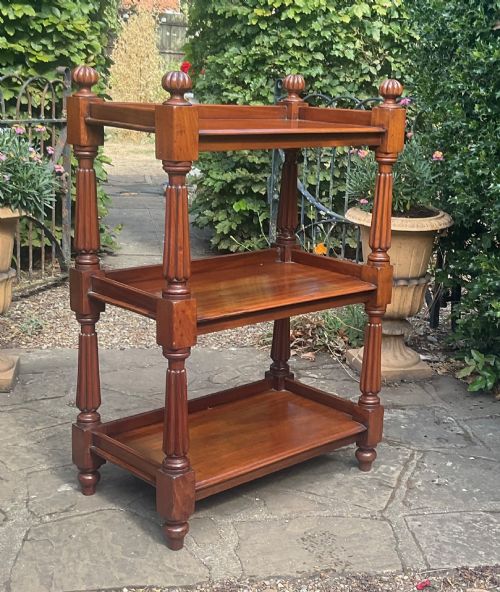
A tiered mahogany display table spans forms such as occasional tables, etageres, whatnots, and dumb waiters originating from Georgian, Victorian, and Edwardian periods. These pieces provide graduated levels supported on uprights, intended for holding lamps, books, or decorative objects.
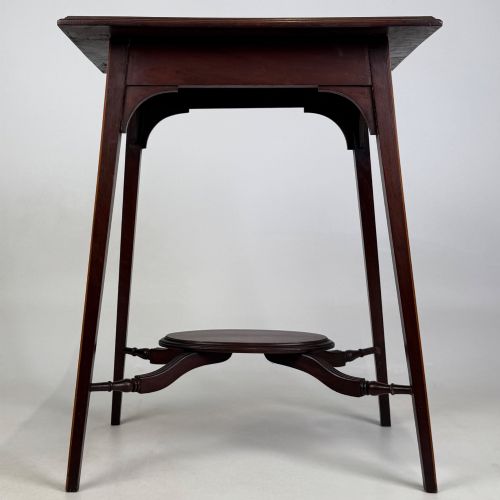
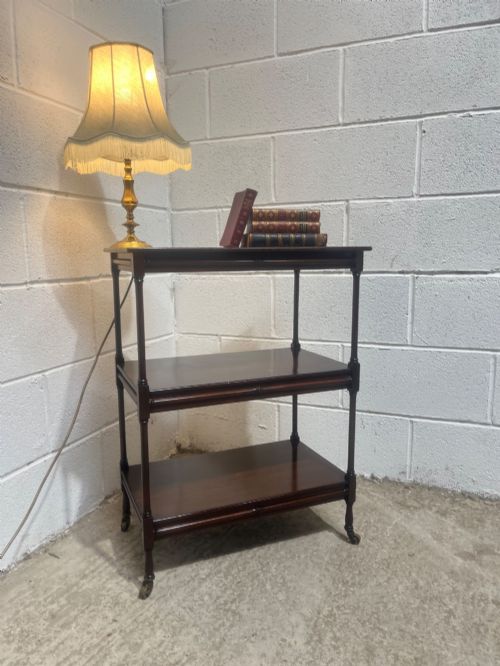
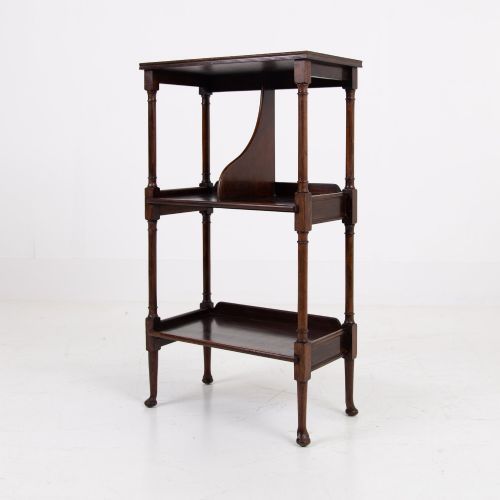
The most common version met on this page is the two-tier or three-tier occasional table or etagere in mahogany, frequently dating from the Edwardian era or the nineteenth century. These tables balance utility with decorative presence, often featuring simple rectilinear or oval formats.
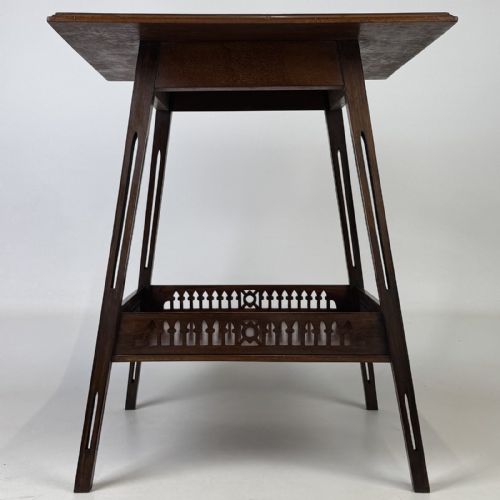
Related forms in the evidence include side tables, plant stands, and corner washstands, alongside revival styles like Sheraton Revival and Regency Revival. Buyers select these tables to integrate period warmth and tiered surface area into domestic interiors.
How they were made
Construction relies primarily on solid and veneered mahogany, shaped into slender legs, turned uprights, and graduated tiers. Cabinetmakers combined timber strength with structural lightness to support multiple shelves without bulk.
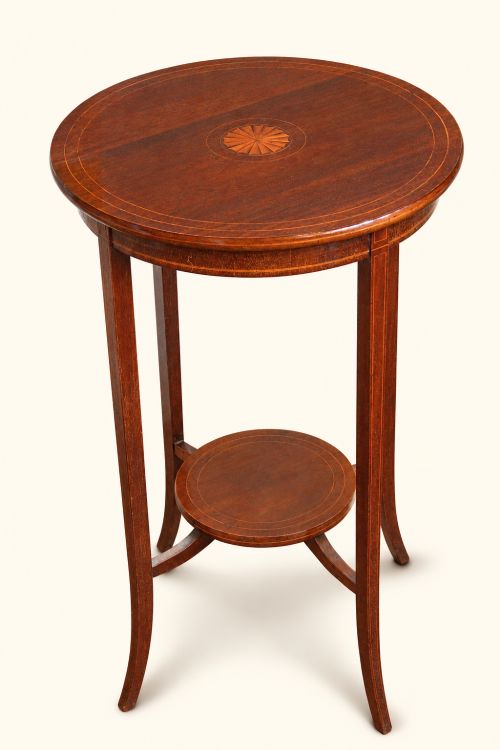
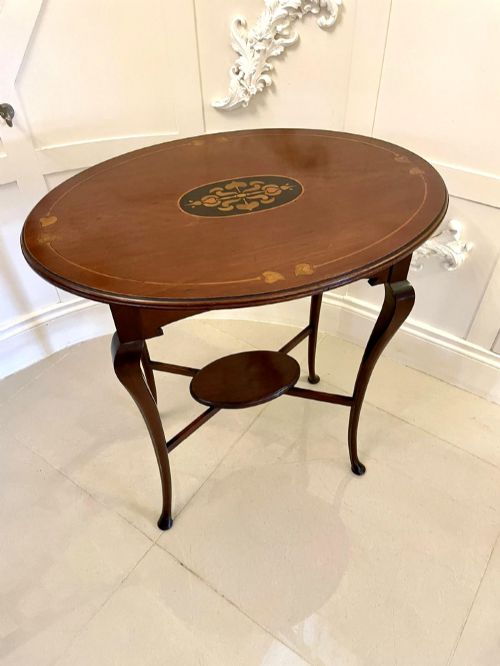
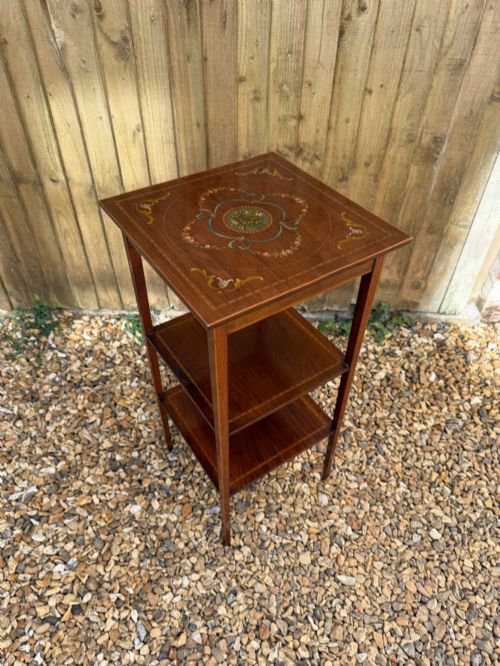
Surface detailing often incorporates contrasting timbers, utilising satinwood, boxwood, and marquetry inlay to outline borders and panels. Brass fittings, occasional painted decoration, and marble inserts appear on selected French and English examples.
Joinery methods varied by period, employing traditional framing and turning techniques suited to the particular form, whether a multi-tiered etagere or a folding cake stand.
Tiered Mahogany Display Table Retail Price Guide 2026
Typical asking prices for tiered mahogany display table among the pieces listed under this phrase on Sellingantiques today, from the lower quarter to the upper quarter. They describe what is for sale here now, not the wider market.
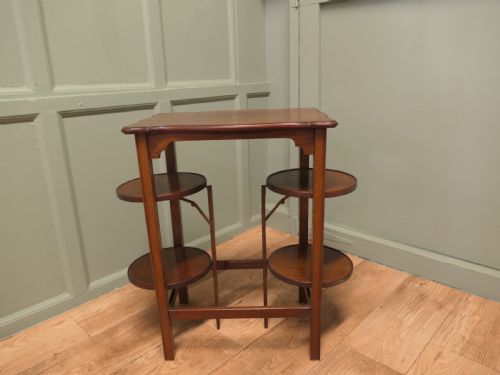
One piece folds away as a monoplane folding tea table cake stand, ready for sudden Edwardian gatherings.
What varies in quality
Quality rests in the crispness of the turning, the precision of the inlay work, and the balance of the proportions between tiers. Superior examples display carefully chosen mahogany grain matched across shelves and refined edge moulding.
The sophistication of the secondary detailing, such as finely executed boxwood or satinwood inlay and substantial brass mounts, separates standard production pieces from finer cabinetwork. Structural stability across multiple tiers remains essential to the integrity of the design.
Liberty and Co
The Tiered Mahogany Display Table Glossary
- Etagere
- A set of open shelves or tiers used for displaying small objects or ornaments. This French form became popular in English furniture design during the nineteenth century.
- Whatnot
- A piece of furniture consisting of several open shelves above one another, used for books or ornaments. These pieces evolved in various heights from the Georgian period onward.
- Dumb waiter
- A tiered freestanding piece of furniture designed to hold food, dishes, or drinks without requiring a servant. Eighteenth and nineteenth-century examples often feature rotating or graduated circular trays.
- Satinwood inlay
- A decorative technique using contrasting light satinwood inserted into mahogany surfaces. This creates geometric borders or floral motifs particularly characteristic of revival styles.
- Occasional table
- A small table intended for flexible use in a room, such as beside a chair or lamp. Edwardian and Victorian makers produced numerous tiered variations of these tables.
Tiered Mahogany Display Table: Frequently Asked Questions
What is a tiered mahogany display table used for?
These tables provide stacked surfaces to display decorative objects, lamps, or books within a compact footprint. The multiple tiers allow items to be arranged at different heights.
Historically, forms like whatnots and etageres served similar display and storage functions in drawing rooms and parlours.
How do I tell an Edwardian tiered table from a Georgian one?
Georgian examples generally exhibit heavier proportions, simpler structural lines, and dense native timber patination developed over centuries. Edwardian pieces often incorporate lighter framing, delicate inlay work, and revival styling influences.
Examining the construction methods and secondary woods helps clarify the specific period of manufacture.
Where should I place a tiered table in my home?
These tables fit well beside seating areas as lamp tables or against walls in hallways and sitting rooms. Their stacked tiers maximise display space without requiring a large floor area.
Care should be taken to avoid placing them in direct sunlight or near heat sources to protect the mahogany finish.
What is the difference between an etagere and a whatnot?
An etagere is typically an open shelving unit designed primarily for display, frequently with French stylistic influences. A whatnot generally refers to the traditional English multi-tiered shelving stand used for general household storage and display.
Both terms describe tiered furniture forms found across the nineteenth and early twentieth centuries.