
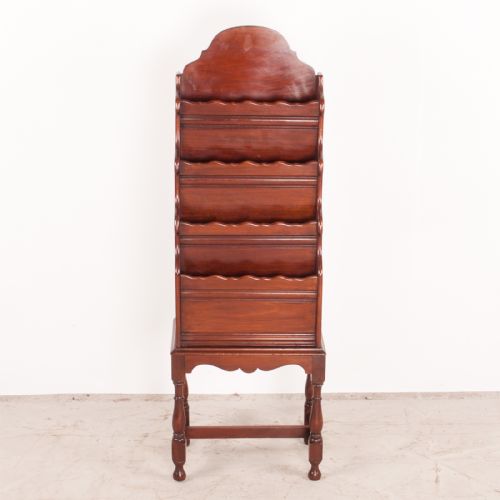


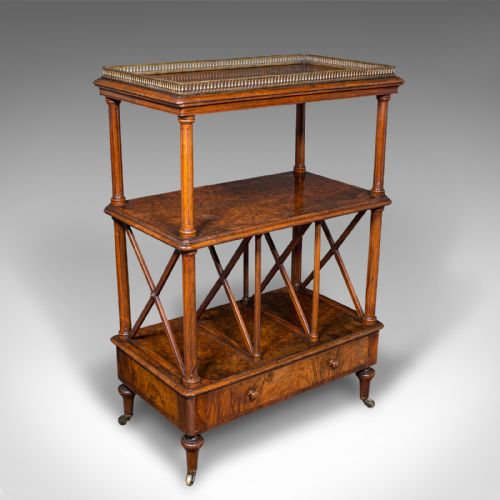


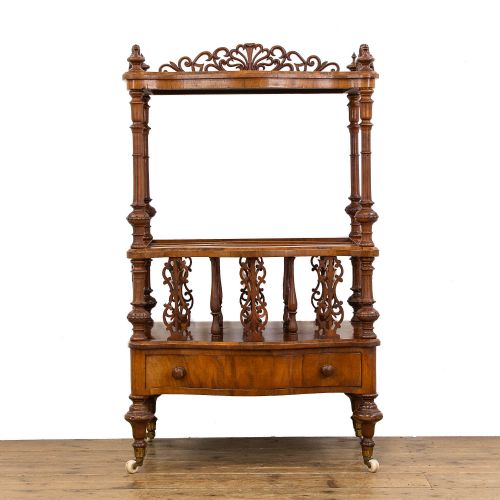

Tiered Magazine Rack
These tiered magazine racks combine compartments and shelves for papers, bringing period timber and brass into a room.

Tiered Magazine Rack
A tiered magazine rack serves to hold periodicals and books within domestic spaces, often taking the form of a Canterbury or whatnot with multiple levels. The pieces found here span Victorian, Regency, and Arts and Crafts eras, stretching from the early nineteenth century into the nineteen-twenties.
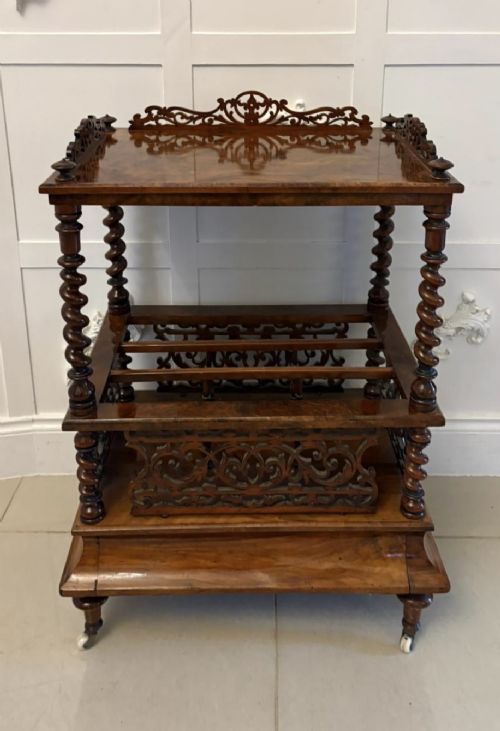
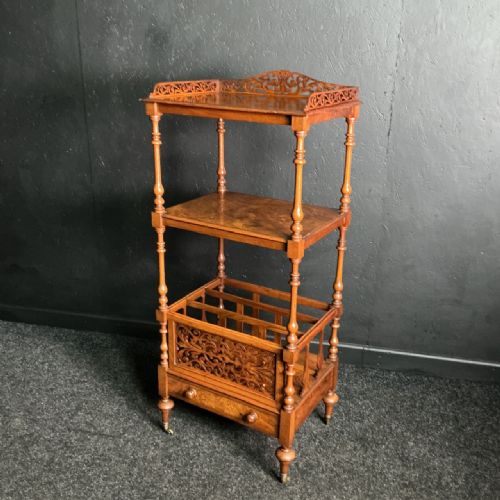
Burr walnut, mahogany, oak, and rosewood appear frequently among the listings, shaped into freestanding racks, book troughs, and open-front slope-shelf designs. Buyers are most likely to encounter Victorian burr walnut examples featuring partitioned sections and lower tiers or drawers.
Form and function merge in these pieces through integrated dividers, carrying handles, and occasional tables that double as storage. Whether in grand mahogany or golden oak, each variant offers a specific method for keeping journals and volumes close to hand.
How they were made
Cabinetmakers utilised dense hardwoods such as mahogany, rosewood, and burr walnut, often selecting figured veneers for visual depth on top surfaces and sides. These timbers were joined with traditional cabinetry methods to support the weight of books and papers across multiple tiers.
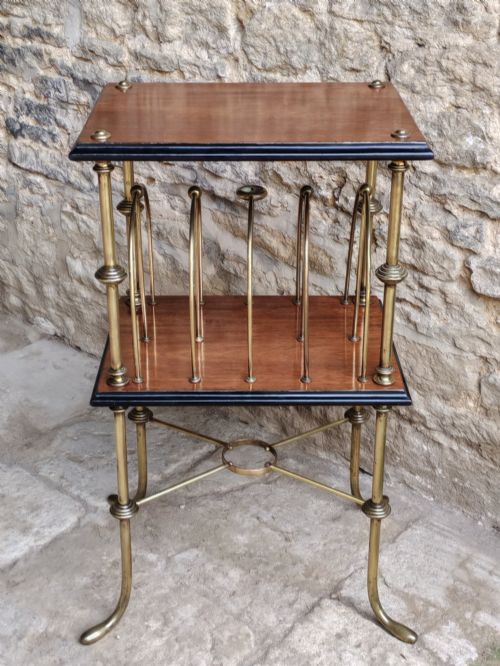
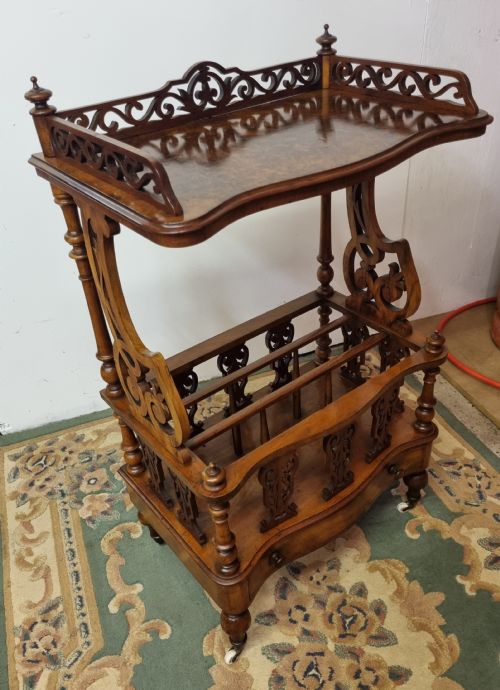
Metal elements like brass castors, handles, and inlay provide structural accents and mobility, while ceramic components occasionally appear in fittings. Pierced fretwork and ebony inlay demonstrate the detailed handwork applied to Victorian and Regency frames.
Listings feature walnut, mahogany, oak, and rosewood across Victorian, Regency, and Arts and Crafts periods.
What varies in quality
The choice of timber grain sets apart finer examples, particularly where burr walnut or figured rosewood veneers exhibit rich natural patterns across expansive surfaces. Superior construction shows in the crispness of pierced fretwork and the careful integration of drawers and lower tiers.
Proportion and stability define the architecture of these stands, distinguishing robust freestanding furniture from simpler utility items. Well-executed details, such as inlaid stringing and turned uprights, indicate a higher grade of workshop production.
The Tiered Magazine Rack Glossary
- Canterbury
- A low, partitioned stand designed for holding sheet music, books, or magazines, often fitted with castors and carrying handles. Victorian examples frequently incorporate lower drawers.
- Whatnot
- A piece of open shelving with multiple tiers used for displaying or storing books and ornaments. They often combine display space with magazine storage.
- Book Trough
- An open-fronted trough or slope-shelf designed to hold volumes upright for easy selection by the fireside. These often date from the Arts and Crafts period.
- Etagere
- A piece of furniture consisting of a set of open shelves for displaying small objects. They share similarities in tiered construction with magazine racks.
- Fretwork
- Ornamental design perforated through wood using a scroll saw or piercing technique. It appears frequently on the partitions of Victorian pieces.
Tiered Magazine Rack: Frequently Asked Questions
What is a Canterbury?
A Canterbury is a low stand with partitioned sections originally built for sheet music and papers. They evolved to hold periodicals and books in nineteenth-century sitting rooms.
Most feature carrying handles and small wheels or castors for moving across carpets. Many incorporate a drawer beneath the main compartments.
How do I date a rack?
Dating relies on timber choices, construction methods, and stylistic cues recorded in the piece. Victorian examples often feature burr walnut and pierced fretwork.
Earlier Regency pieces lean towards mahogany and brass, while nineteen-twenties items show simpler oak or plain mahogany forms. Secondary woods and fixings also offer clues to age.
Where should I place one?
These racks suit living rooms, studies, and beside fireside armchairs where reading materials collect. Freestanding versions work well away from walls.
Table-top variants sit easily beside seating, serving a dual purpose as an occasional table. Their open tiers keep daily reading accessible without cluttering surfaces.
Are they sturdy enough for modern magazines?
Period pieces were built from solid hardwoods like mahogany and oak to support heavy volumes and bound folios. Their robust frames handle modern periodicals without difficulty.
Care should be taken when moving them loaded, utilising the original castors or lifting them properly. The internal partitions provide natural support for upright items.