


Tiered Glass Cabinet
A tiered glass cabinet brings together practical shelving and clear display, offering a structured way to house books and objects.
Tiered Glass Cabinet
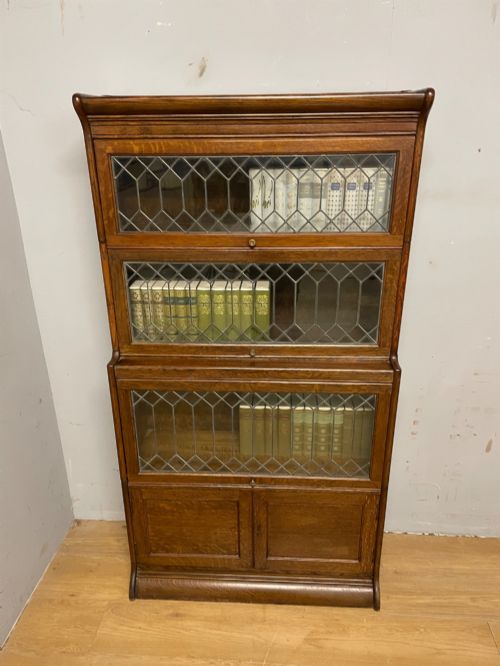
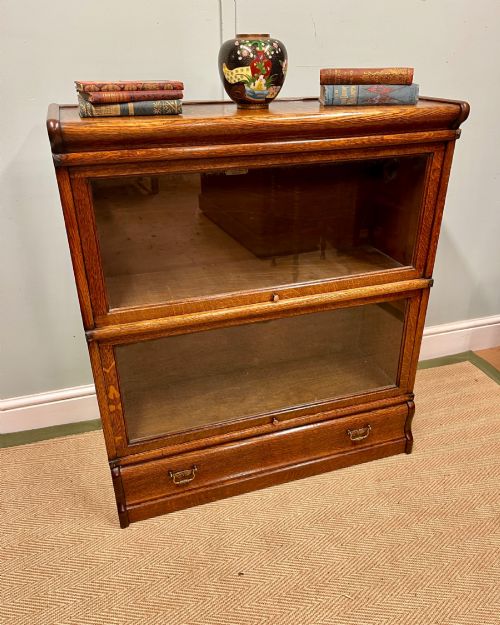
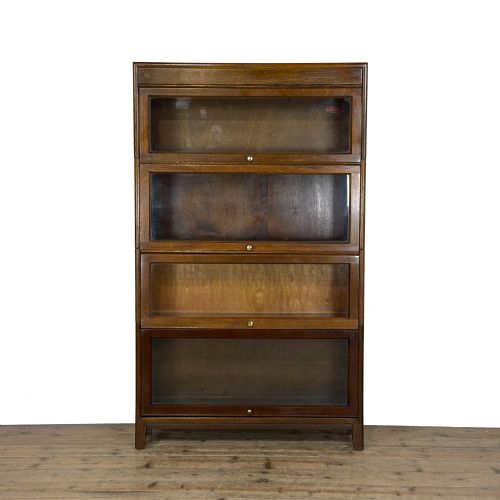
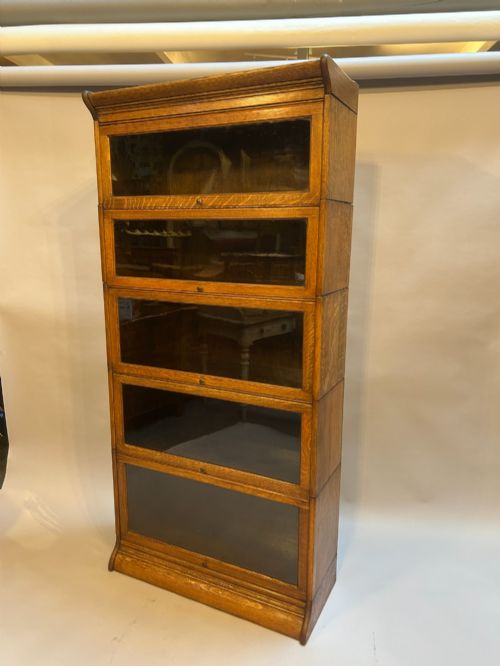
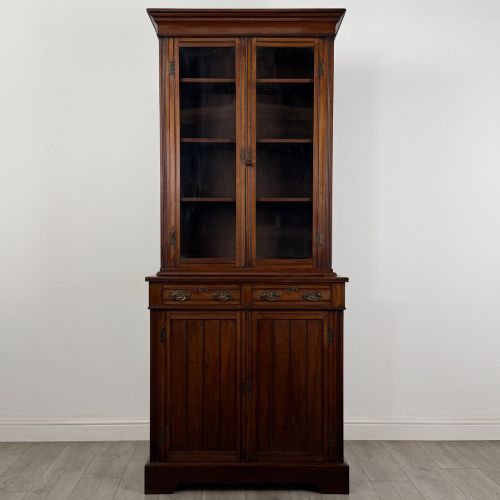
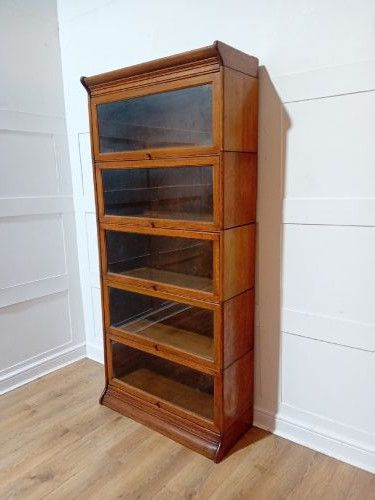
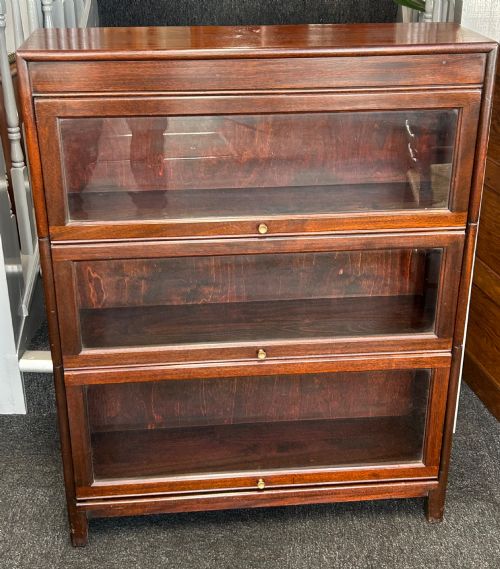
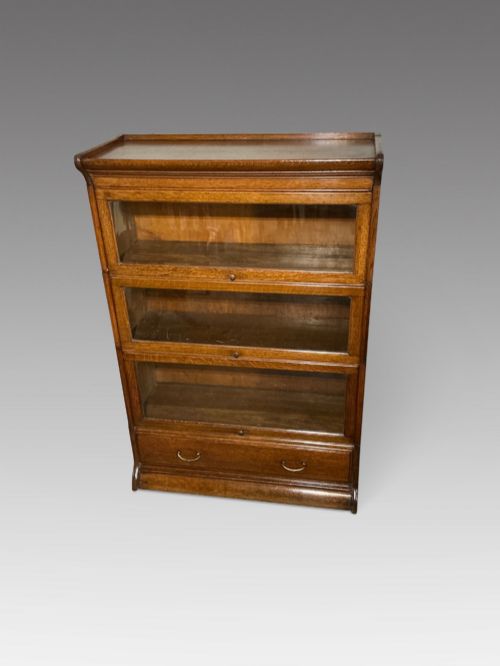
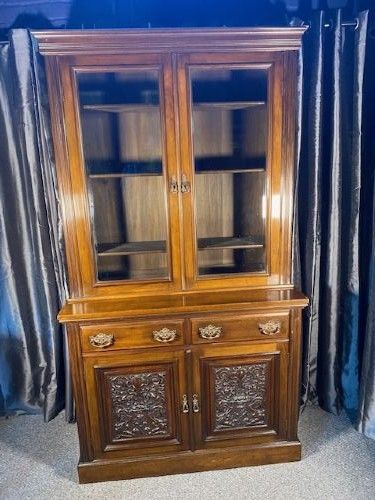
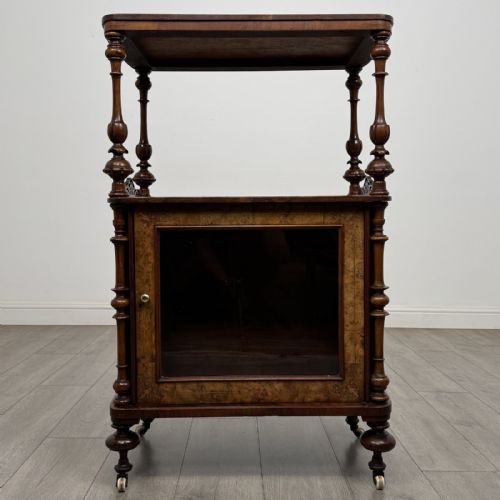
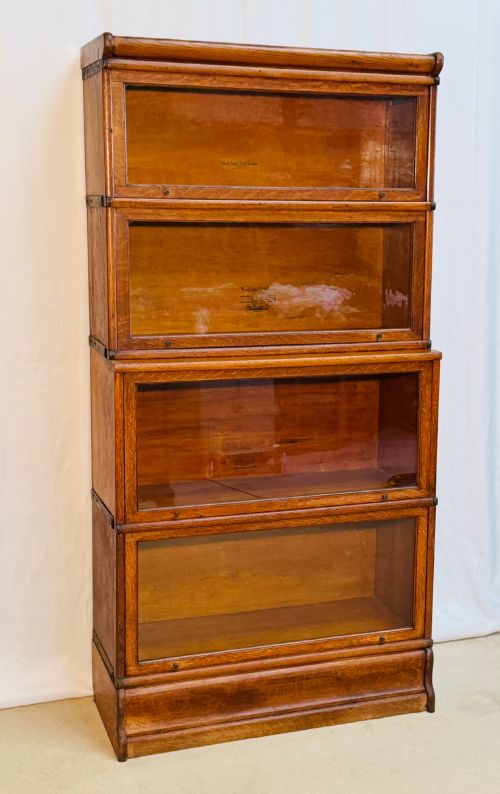
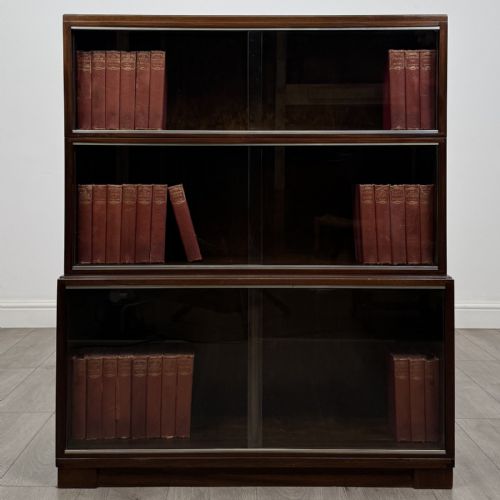
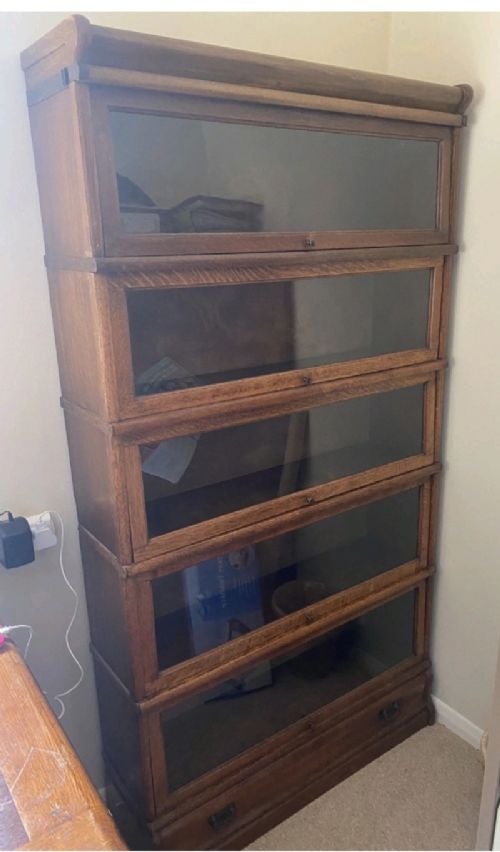
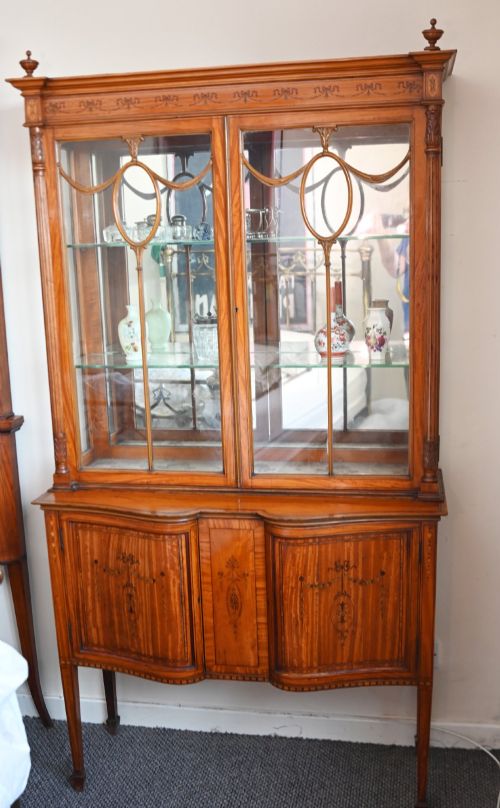
When you search for a tiered glass cabinet, you encounter sectional bookcases, stacking units, and multi-layered display pieces primarily originating from the nineteenth and early twentieth centuries. These forms include barrister bookcases, sectional cabinets, and glazed display stands designed to hold collections while keeping dust at bay.
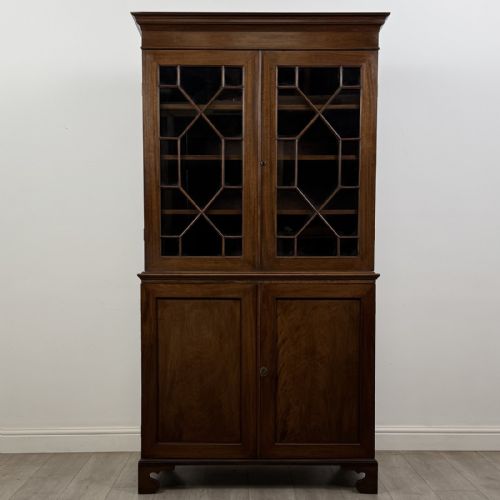
The pieces appearing on this page span the Victorian, Edwardian, and Art Deco periods, alongside styles such as Sheraton Revival and Arts and Crafts. Oak and mahogany dominate the structural timbers, paired with glass doors that range from sliding panels to leaded panes and upward-lifting barrister mechanisms.
Most examples function as modular stacking systems or tall glazed bookcases with distinct horizontal tiers. Makers such as Globe Wernicke, Gunn, Minty of Oxford, and Lebus produced many of the sectional stacking formats seen here.
Materials and construction
Makers utilised solid timbers like oak and mahogany, often incorporating burr walnut veneers, satinwood, and pine for framing and interior surfaces. Brass hardware, lead framing for glazed panels, and ormolu mounts appear on specific refined examples from the Victorian and Edwardian eras.
Construction methods relied heavily on sectional stacking designs, where individual glazed tiers interlock or sit atop a drawer base. Sliding glass doors, astragal glazing bars, and balanced lifting mechanisms define the operation of the display compartments.
Tiered Glass Cabinet Retail Price Guide 2026
Typical asking prices for tiered glass cabinet among the pieces listed under this phrase on Sellingantiques today, from the lower quarter to the upper quarter. They describe what is for sale here now, not the wider market.
Listings feature oak, mahogany, burr walnut, and pine, spanning the Victorian, Edwardian, and Art Deco periods across multiple sectional formats.
Distinctions in standard
The grade of timber and the precision of the sectional joinery separate standard utility pieces from finer examples. Solid mahogany and burr walnut with marquetry inlay or ormolu mounts represent a higher tier of craftsmanship than basic pine or standard oak utility cupboards.
The sophistication of the glass mechanism, such as smoothly operating barrister lifting actions or intact leaded panes, indicates the original manufacturing ambition. Original maker stamps from firms like Globe Wernicke or Gunn add notable provenance to sectional stacking designs.
Gunn·Minty of Oxford·Globe Wernicke·Lebus·Heal's
The Tiered Glass Cabinet Glossary
- Barrister bookcase
- A sectional bookcase featuring glass-fronted tiers that lift and slide into the cabinet above each shelf. These units stack independently to form tall shelving towers.
- Globe Wernicke
- A prominent manufacturing system of modular barrister bookcases popular in the late nineteenth and early twentieth centuries. The firm popularised standardised stacking wooden office and library furniture.
- Astragal glazed
- A window or cabinet door divided into smaller glass panes held together by narrow wooden strips called glazing bars. This method provides structural support and a decorative grid pattern.
- Burr walnut
- Timber taken from the wart-like growth on a walnut tree, yielding highly figured grain patterns. Cabinetmakers sliced this wood into thin veneers for decorative surfaces on high-status furniture.
- Sectional bookcase
- A cabinet built from separate, removable tiers that stack on top of a base plinth and beneath a top cornice. This modular construction allowed owners to expand their shelving incrementally.
Tiered Glass Cabinet: Frequently Asked Questions
How do barrister bookcases work?
Barrister bookcases utilise individual stacking tiers, each fitted with a glass door that swings upward and slides into the recess above the books. This mechanism protects volumes from dust while allowing independent access to each shelf.
The modular design means the cabinet disassembles into separate horizontal sections, making relocation straightforward.
Can these cabinets hold heavy books?
Solid oak and mahogany sectional cabinets were engineered to support heavy professional libraries and ledgers. The rigid frame of each stacking tier distributes weight directly down through the base.
Heavier volumes sit comfortably on the lower sections, which often include a deep drawer in the plinth.
How do I identify the period of a stacking cabinet?
Cabinet periods are identified through timber choice, hardware details, and maker marks stamped on the interior wood or brass fittings. Victorian and Edwardian pieces often feature richer mahogany veneers and leaded glass, while 1920s stacking units show simpler oak frames.
Manufacturer stamps from firms active around 1900 to 1930 provide precise chronological markers.
Where should I place a glass display cabinet?
Glass-fronted cabinets suit studies, living rooms, and dining spaces where books or collections require protection from light and dust. Placing them away from direct sunlight preserves the original timber finish and polished veneers.
Allow sufficient clearance above stacking modules if you intend to lift the glass doors during use.