
Tiered Display Unit
A tiered display unit gathers books and curios across multiple levels, offering a practical arrangement for surface storage.
Tiered Display Unit
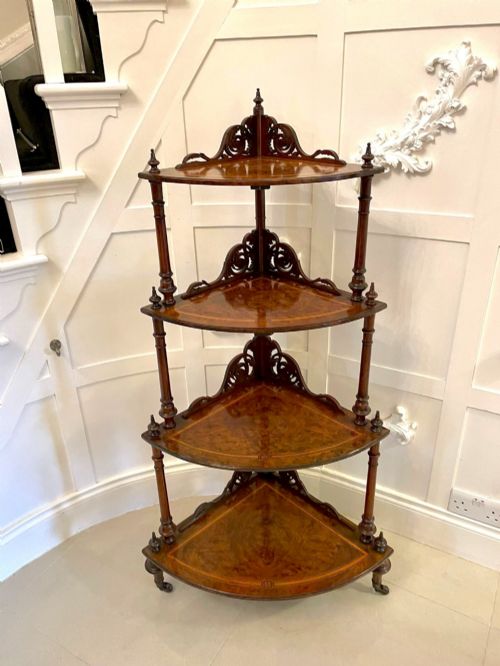
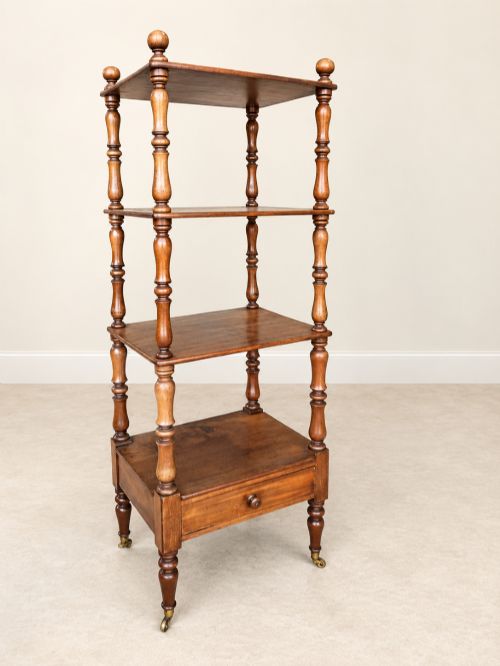
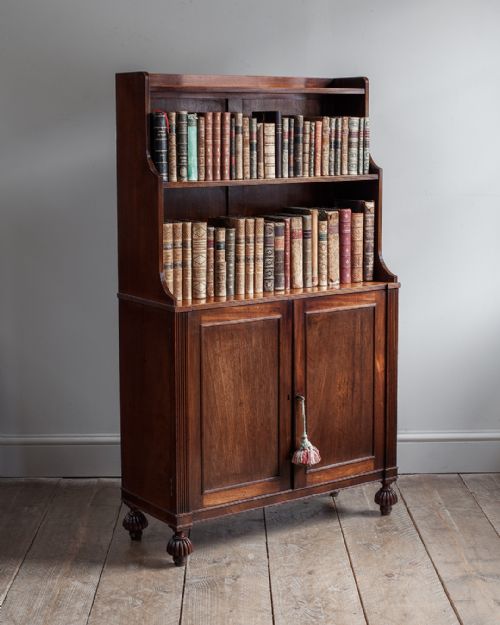
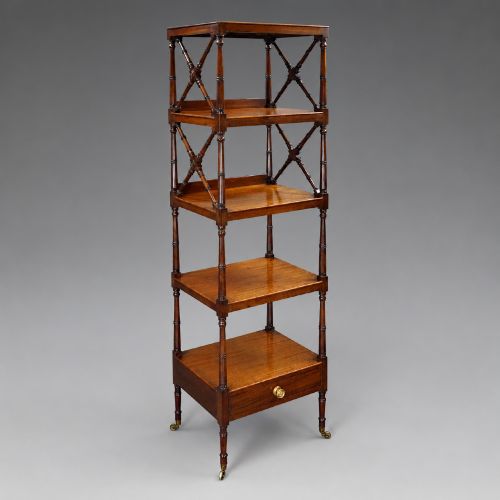
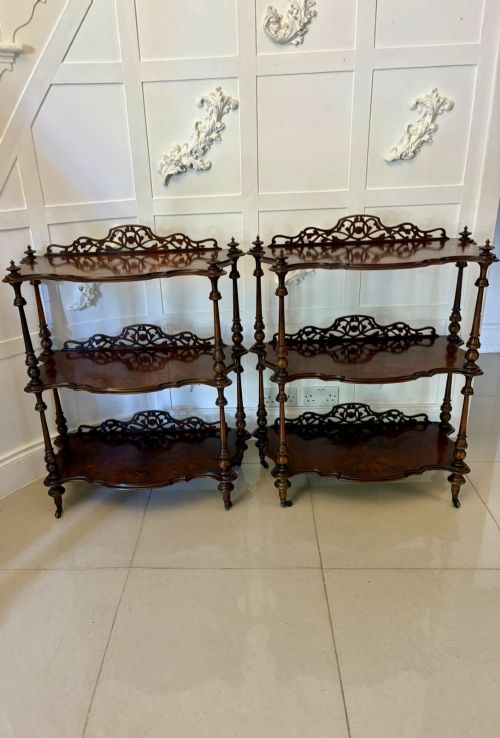
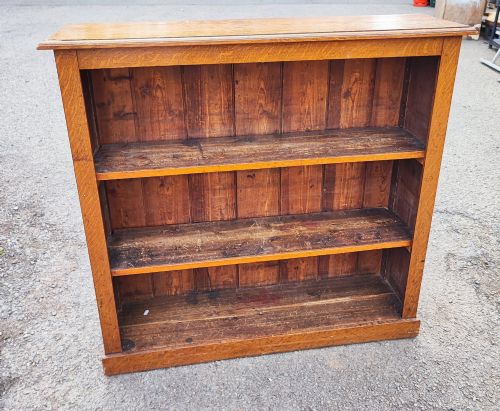
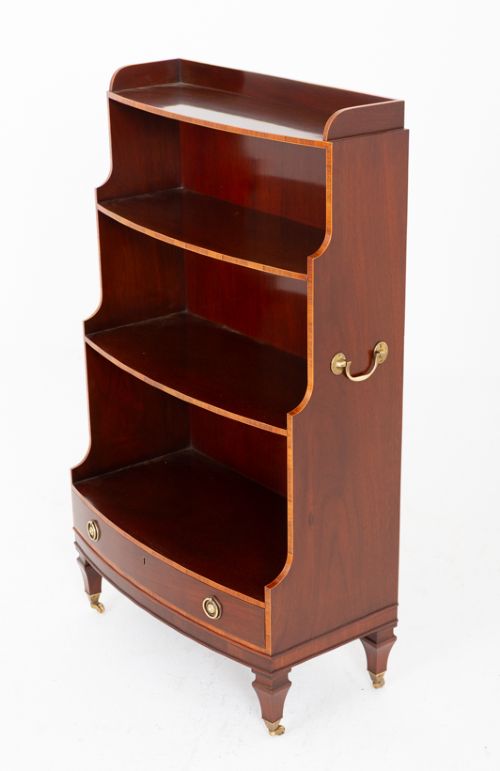
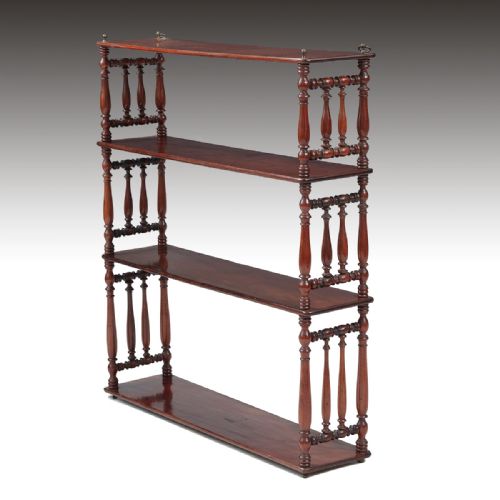
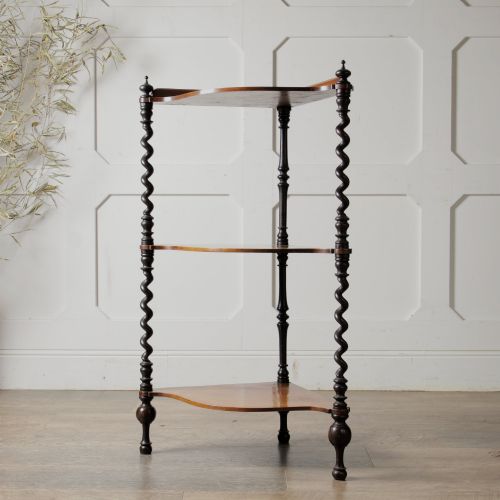
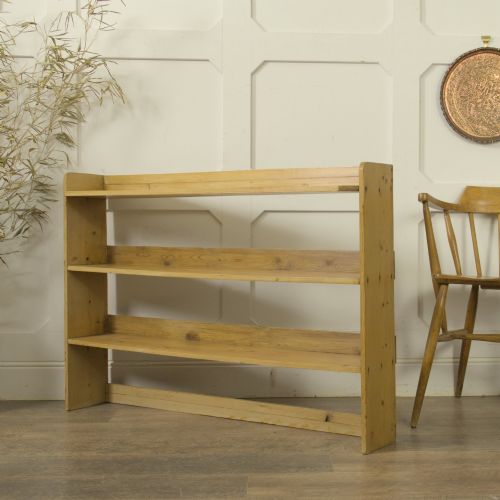
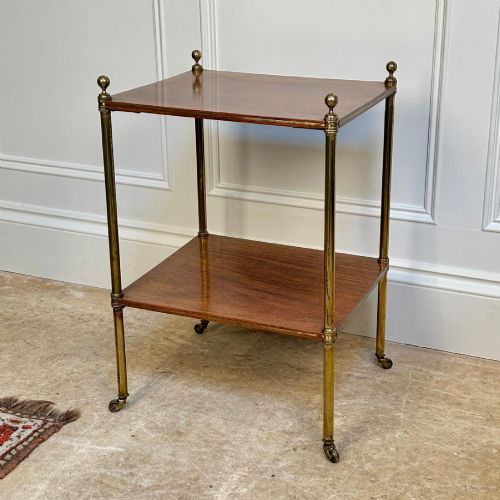
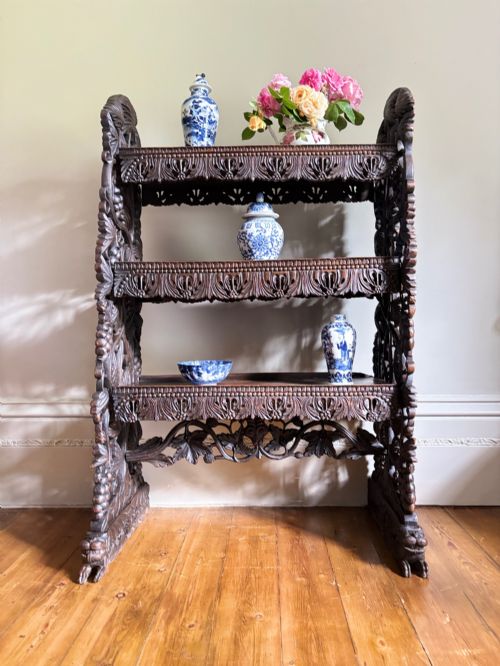
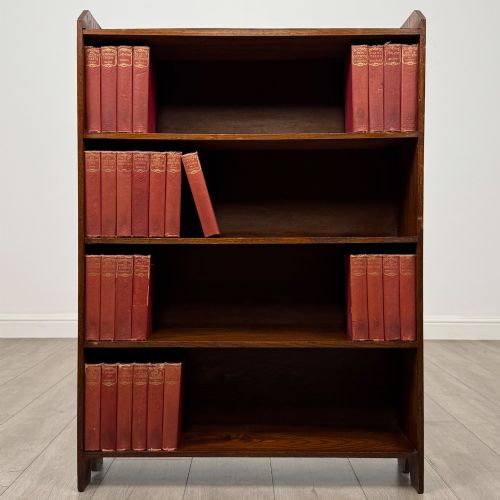
A tiered display unit provides graduated shelving for books, ceramics, and ornaments in domestic spaces. These pieces appear in forms such as whatnots, etageres, waterfall bookcases, and wall shelves.
Most examples found here date from the nineteenth century, including the Victorian and Regency periods, alongside Edwardian and later interpretations. Materials range from traditional timbers like mahogany, walnut, and rosewood to pine, oak, and brass.
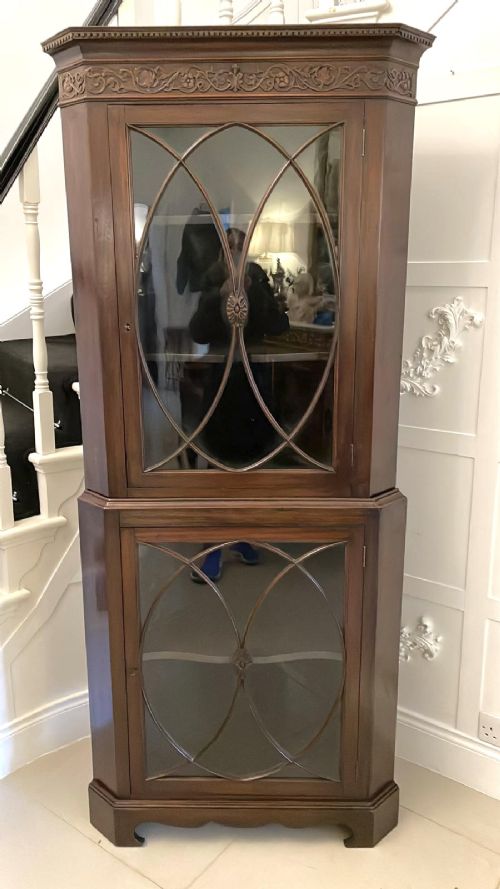
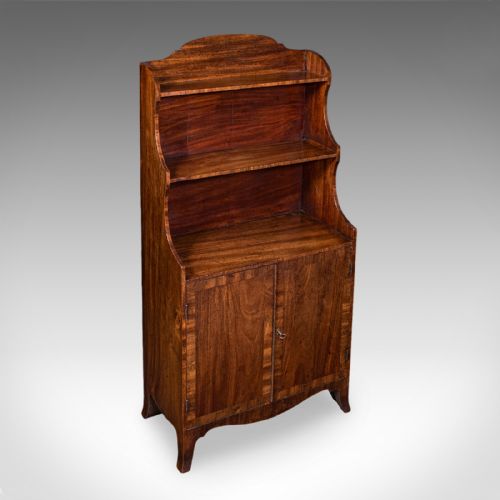
Buyers encounter variations spanning corner cabinets, hanging shelves, and freestanding buffets. The design generally employs stacked open tiers or enclosed cupboards below graduating shelves.
How they were made
Cabinet makers utilised dense hardwoods such as mahogany, walnut, and rosewood, often selecting figured veneers like burr walnut for decorative surfaces. Pine and oak served for kitchen dressers, corner cabinets, and simpler shelving units.
Joinery techniques included turned uprights, barley twist supports, and brass castors for mobility on larger floor-standing pieces. Inlays, astragal glazing, and carved details distinguish the finer architectural forms from utilitarian kitchen furniture.
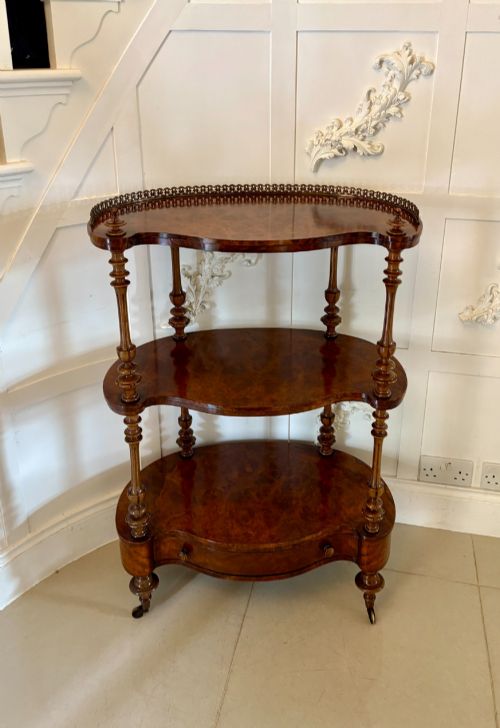
Some nineteenth-century whatnots sit atop tiny brass wheels, ready to roll out of the way when the cleaning maid approaches.
What varies in quality
The selection of timber grain and veneer figure dictates the visual impact of walnut and mahogany pieces. Richly figured burr walnut and carefully matched rosewood separate standard utility items from decorative reception room furniture.
Structural refinement shows in the turning of upright supports, the integration of brass castors, and the crispness of carved mouldings or inlay work. Proportions remain balanced on superior examples, whereas lesser items can appear heavy or plain.
The Tiered Display Unit Glossary
- Etagere
- A set of open shelves for displaying small objects. This French form typically incorporates slender uprights and delicate framing.
- Waterfall bookcase
- A set of graduated open shelves where each tier steps back from the one below. The stepped profile resembles the descent of water.
- Astragal glazed
- Fitted with small wooden or metal bars holding individual panes of glass within a cabinet door. This method creates a grid pattern common on eighteenth and nineteenth-century bookcases.
- Buffet
- A sideboard or low shelving unit used for serving food or displaying tableware. Examples include multi-tiered timber constructions raised on castors.
Tiered Display Unit: Frequently Asked Questions
Where should a tiered display unit go?
These units suit corners, living rooms, and studies where vertical storage preserves floor space. Freestanding whatnots and etageres function well against open walls.
Corner cabinets utilise unused angles in dining rooms and parlours, while wall shelves mount directly above seating or side tables.
How do I clean mahogany and walnut furniture?
Dust surfaces regularly with a soft, dry cloth to prevent dirt accumulation. Avoid silicone sprays that can damage antique polishes.
Apply a traditional beeswax sparingly to nourish hardwood timbers and maintain a natural sheen. Keep pieces away from direct heat sources to prevent timber splitting.
What is the difference between a whatnot and an etagere?
A whatnot generally refers to British multi-tiered shelving stands from the nineteenth century, often supported by turned columns. They frequently incorporate a small enclosed cupboard at the base.
An etagere shares a similar multi-level structure but often follows continental design influences with lighter framing. Both serve to display decorative objects and small book collections.