
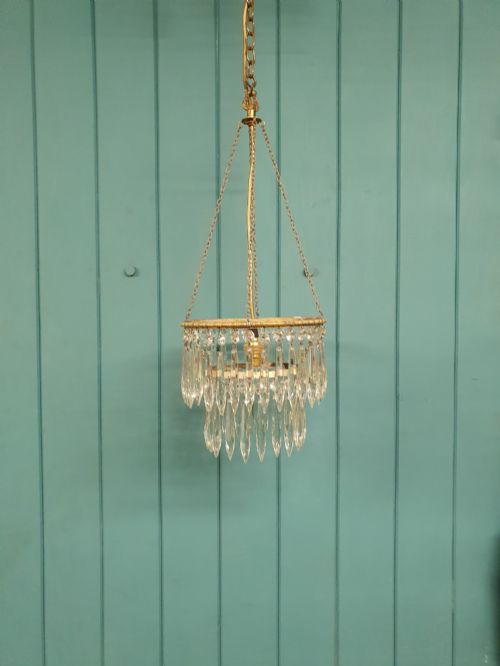
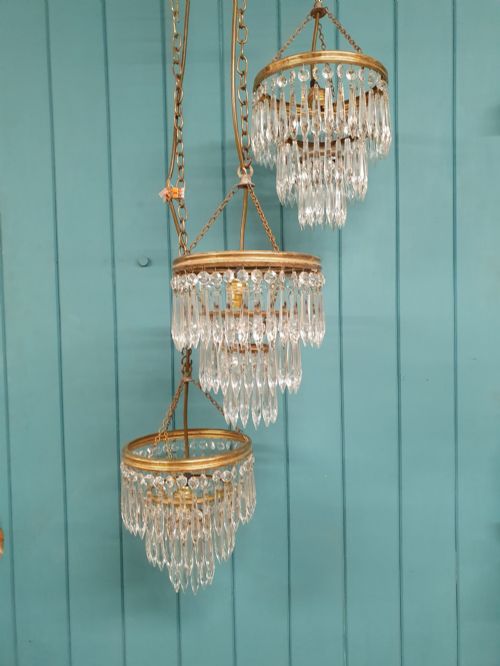
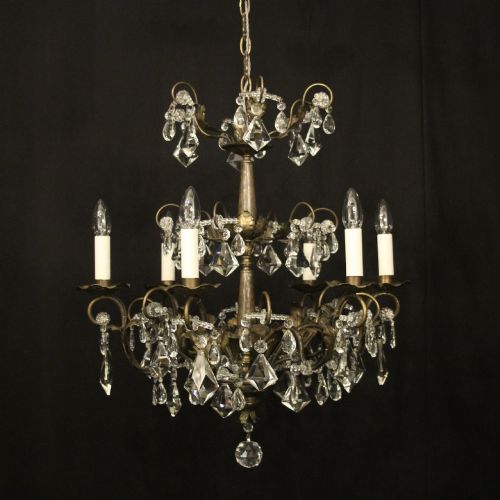
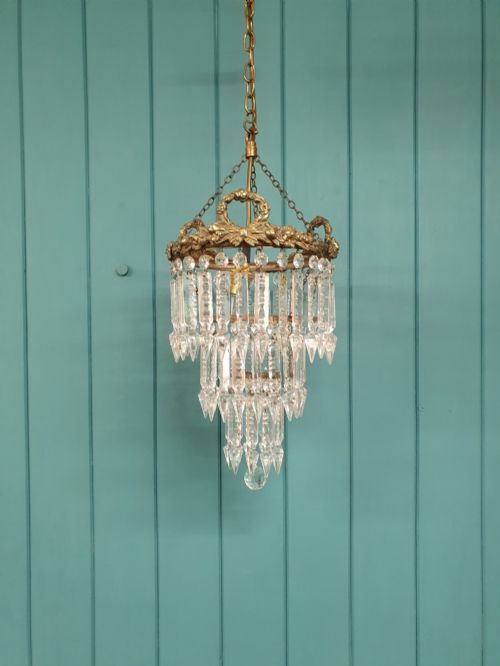



Tiered Crystal Droplet Light
These tiered crystal droplet light fixtures catch the light across a room, bringing brightness and sparkle through layers of glass.
Tiered Crystal Droplet Light
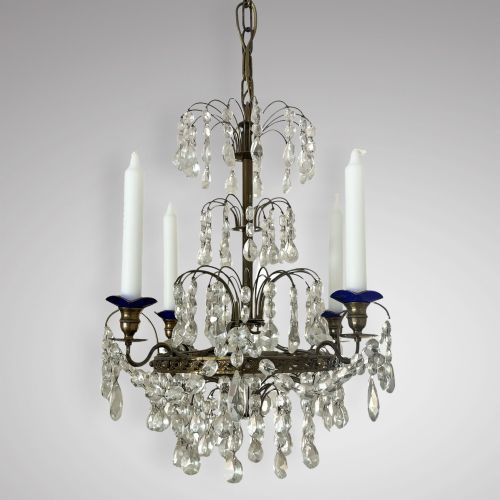
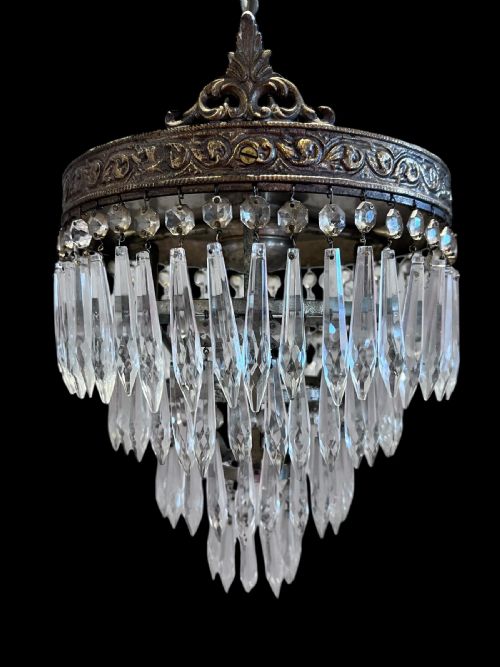
A tiered crystal droplet light brings together multi-level frames holding hanging glass pendants, creating an impressive presence overhead. These fittings draw the eye upward with cascading tiers that catch and refract illumination from every angle.
Buyers browsing this selection encounter pieces originating from the Edwardian era through to the 1930s. The assortment spans various forms including grand chandeliers, smaller ceiling lights, and matching wall lights.
Styles range across this inventory from French Empire Revival and Italian Neo-Classical to Art Deco and Mid-Century Modern designs. Pieces vary from single-light ceiling fixtures up to grand multi-arm ballrooms lights carrying dozens of lamps.
Materials and construction
Frameworks rely primarily on brass, metal, and silvered metal to support the heavy glass components. These metal structures are shaped into multiple tiers, rings, or baskets designed to hold numerous hanging elements securely.
Glass elements include cut crystal, cut glass, and plain crystal glass fashioned into distinct droplet, spike, or bead configurations. Each individual piece of glass is hand-hung from the metal frame to create the cascading drape characteristic of these fixtures.
The listings here span the Edwardian period through the 1930s, utilising brass, silvered metal, cut crystal, and glass.
Assessing quality and craftsmanship
Superior examples distinguish themselves through the clarity and depth of the cut crystal components. Hand-cut glass refracts light with sharper brilliance than moulded alternatives, while heavier metal frames provide greater structural integrity.
The complexity of the tier arrangement and the sheer density of hanging droplets dictate the visual impact of each fixture. More ambitious designs incorporate elaborate brasswork and numerous graduated tiers that require skilled assembly.
The Tiered Crystal Droplet Light Glossary
- Drop
- A pendant piece of cut glass or crystal suspended from the frame. These elements catch and multiply the illumination from the bulbs.
- Plafoniere
- A ceiling-mounted light fitting that sits relatively flat against the ceiling surface. These fixtures often feature cascading crystals beneath a shallow bowl or frame.
- Lustre
- A light fixture adorned with hanging glass pendants or prisms. This term frequently describes smaller chandeliers from the early twentieth century.
- Spike
- A slender, pointed glass or metal element incorporated into the decorative profile of certain chandeliers. These additions create a distinctive silhouette against the ceiling.
Tiered Crystal Droplet Light: Frequently Asked Questions
How do I clean a tiered crystal droplet light?
Cleaning requires patience and a gentle touch to preserve the delicate metalwork and glass pendants. Many owners remove individual drops for washing in warm soapy water before drying them thoroughly.
Alternatively, specialised spray cleaners can be applied while the droplets remain on the frame, provided a catch cloth is placed underneath to protect the floor.
Can these antique lights use modern bulbs?
Most of these fixtures accept standard modern lamp fittings with appropriate wiring updates performed by a qualified electrician. It is wise to check the maximum wattage recommendations to ensure the metal frame and wiring remain safe.
LED bulbs work particularly well because they emit less heat while providing ample brightness to make the crystal droplets sparkle.
Where should I hang a large tiered chandelier?
Grand multi-tier fixtures require high ceilings and substantial structural support in the ceiling joists. Hallways, dining rooms, and principal reception spaces offer suitable clearance for fixtures that hang lower into the room.
Smaller single-light versions or wall sconces suit more intimate spaces where ceiling height is restricted.
How do I date a crystal chandelier?
Dating relies on examining the metal composition, the style of the glass cutting, and the wiring methods used. Edwardian and 1930s pieces often exhibit specific characteristics such as brass frames and particular droplet shapes typical of those decades.
Stylistic influences like Art Deco or French Empire Revival provide further clues to the period of manufacture.