
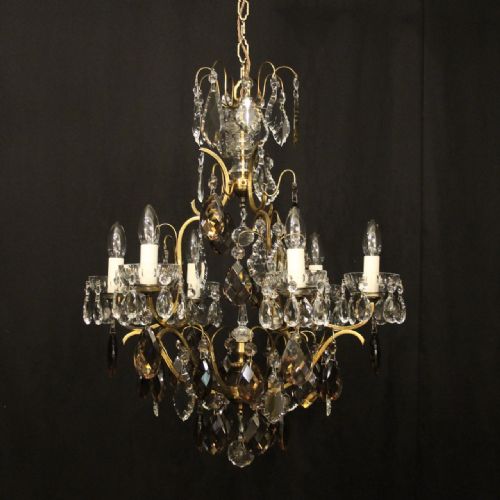


Classic Crystal Ceiling Pendant
A classic crystal ceiling pendant brings sparkle and presence overhead, offering a formal focal point for rooms with height.
Classic Crystal Ceiling Pendant
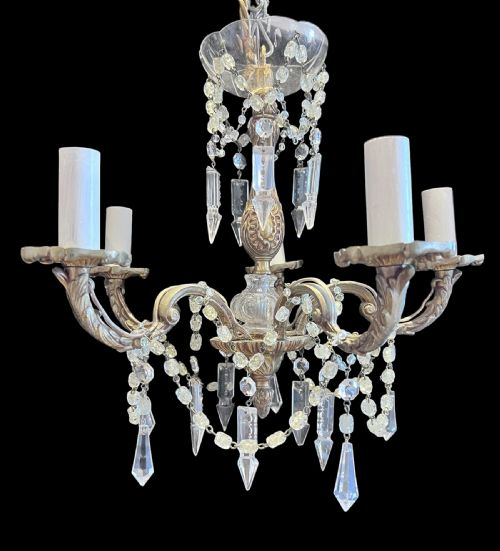
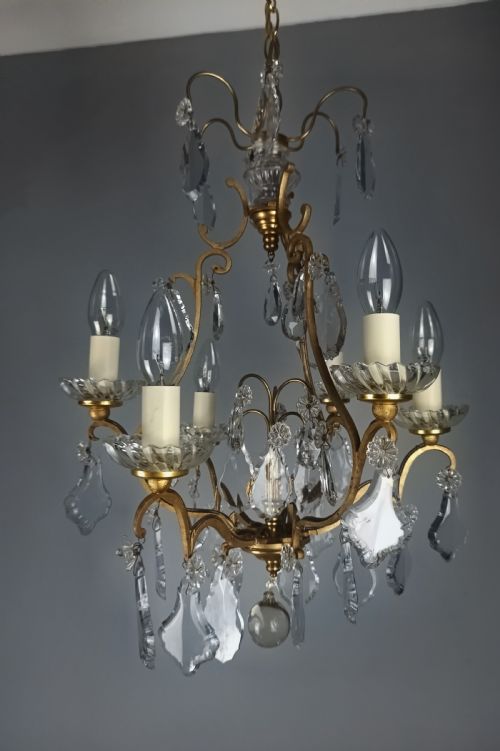
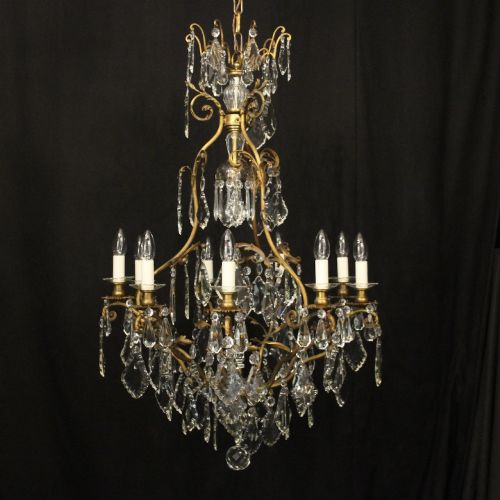
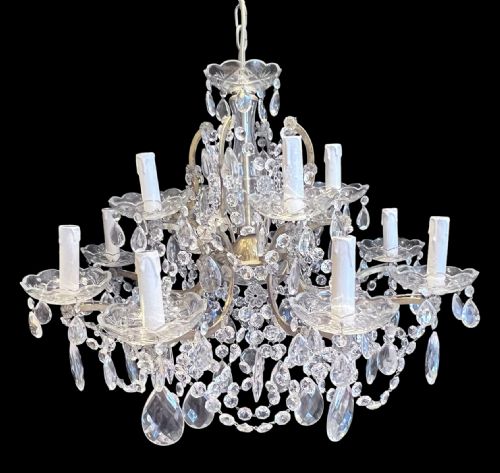
A classic crystal ceiling pendant typically takes the form of a chandelier or ceiling lighting fixture suspended from above. These fixtures distribute light through cut glass and crystal drops, reflecting illumination across the room.
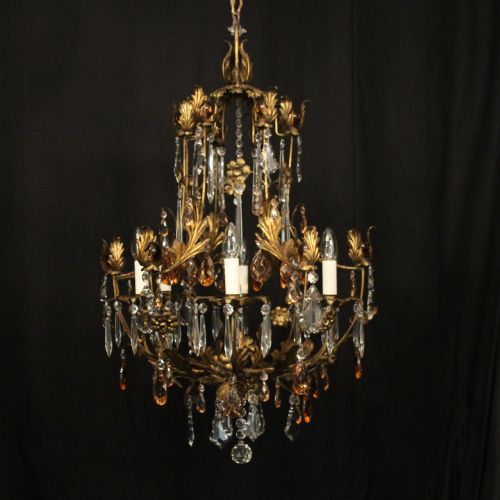
The selections gathered under the search for a classic crystal ceiling pendant span from the eighteenth century through the Edwardian era and into the early twentieth century. Common design influences include French Empire, Italian Rococo, and Maria Theresa styles.
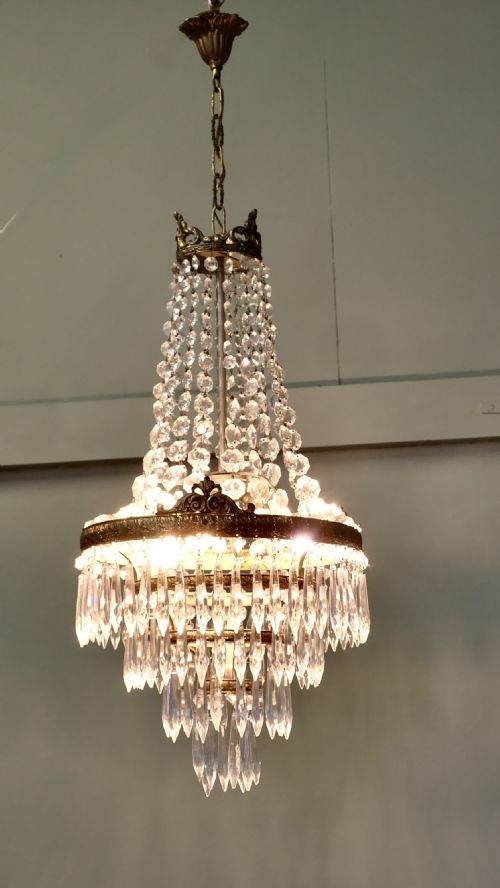
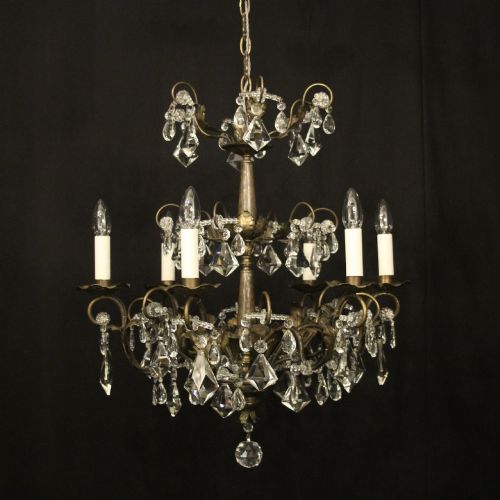
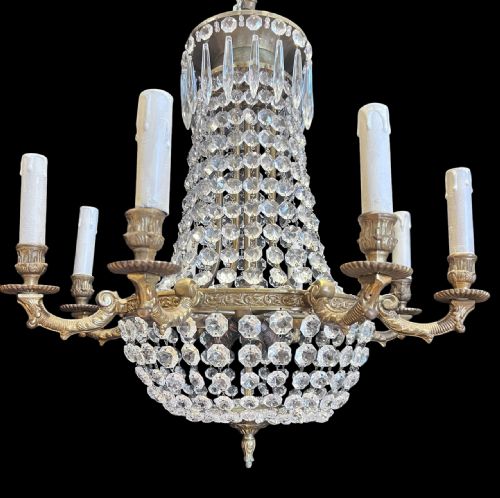
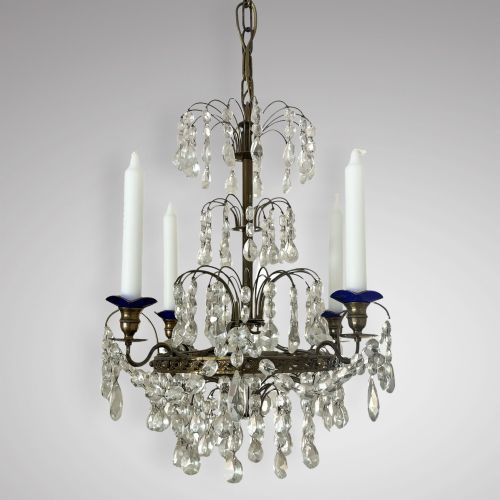
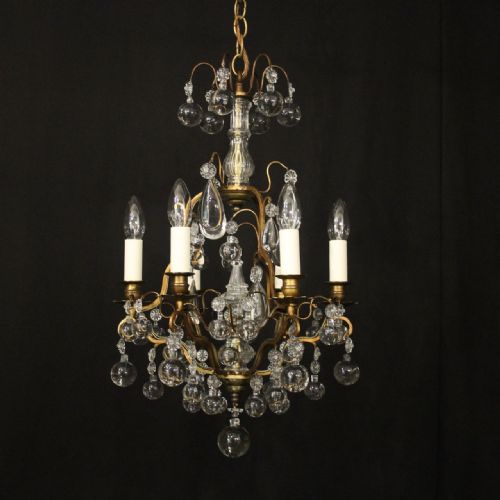
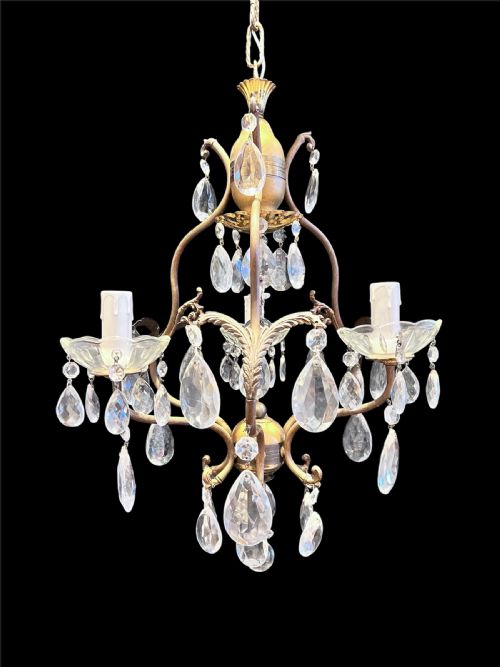
Buyers will encounter varied configurations, ranging from intimate single-light fixtures to large twelve-light or fifteen-light multi-tiered arrangements. Forms such as birdcage, bag tent, and waterfall silhouettes appear frequently among these listings.
Assessing quality and craftsmanship
Quality rests in the precision of the glass cutting and the structural integrity of the metal armature. Finer pieces display crisp facets on the crystal drops and substantial bronze or brass framing capable of supporting numerous lights without sagging.
The complexity of the design also distinguishes the range, moving from simpler single-light pendants to elaborate multi-tiered arrangements with extensive tent and waterfall configurations. Original gilding and integrated colour in the crystal further elevate the character of the piece.
Even a modest single-light pendant manages to scatter afternoon sunlight across the wallpaper like an uninvited disco.
The Classic Crystal Ceiling Pendant Glossary
- Crystal
- A high-clarity glass containing lead oxide, which increases brilliance and refractive index. This material forms the primary light-catching drops on these fixtures.
- Tent and waterfall
- A chandelier style featuring an upper canopy of strings of beads forming a tent shape, dropping down into a cascading waterfall of crystals below. This configuration maximises the reflective surface area.
- Maria Theresa
- A distinct chandelier style characterised by flat metal arms covered in glass plates and secured with rosettes. These fixtures often incorporate elaborate crests and coloured crystal highlights.
- Gilt metal
- Metal treated with a gold-coloured finish or gold leaf applied to the surface. It provides a warm metallic border to the hanging crystal elements.
Classic Crystal Ceiling Pendant: Frequently Asked Questions
What rooms suit a crystal ceiling pendant?
These fixtures work well in reception rooms, dining areas, and hallways with adequate ceiling clearance. Their reflective properties brighten darker spaces while adding a formal decorative element.
Larger multi-tiered examples require high ceilings to maintain proper proportions within the room. Smaller single-light or compact versions fit more intimate spaces without overwhelming the interior.
How do I identify a Maria Theresa chandelier?
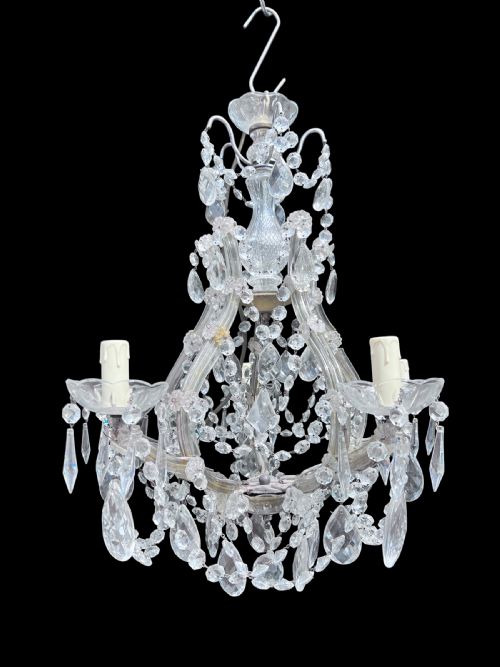
Maria Theresa fixtures feature flat metal arms covered by glass strips held in place by star-shaped rosettes. They often display a central column and an ornate upper crown.
Colourful crystal accents and flat glass framing distinguish this style from standard brass or bronze-framed waterfall chandeliers.
What is a bag tent chandelier?
A bag tent chandelier incorporates a gathered net or bag shape formed from interwoven crystal beads suspended beneath the frame. This distinctive silhouette concentrates the crystal mass closer to the light source.
Such designs frequently date to the early twentieth century and offer a compact alternative to sprawling multi-armed chandeliers.
How do periods differ among these pendants?
Eighteenth and nineteenth-century pieces often display hand-cut crystal and heavier cast bronze or brass armatures. Edwardian and early twentieth-century examples introduce varied regional styles such as Italian Florentine and French Empire revivals.
Makers across these periods utilised similar core materials like glass, crystal, and gilded metal, but varied the assembly patterns and frame contours.