
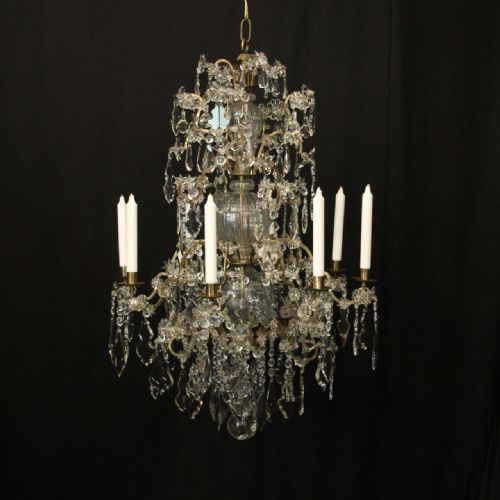

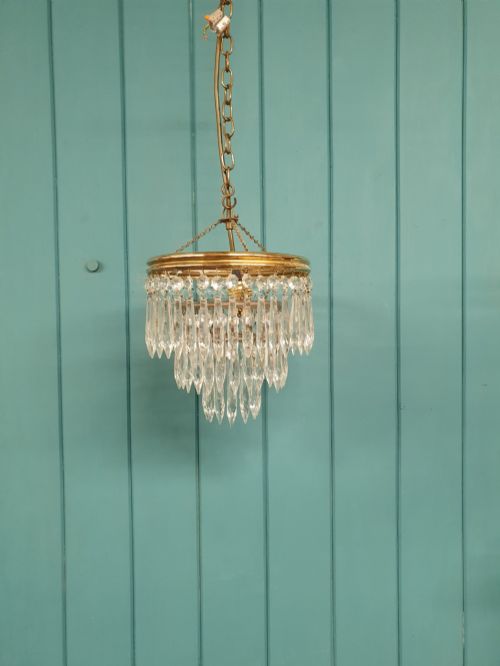

Tiered Crystal Ceiling Light
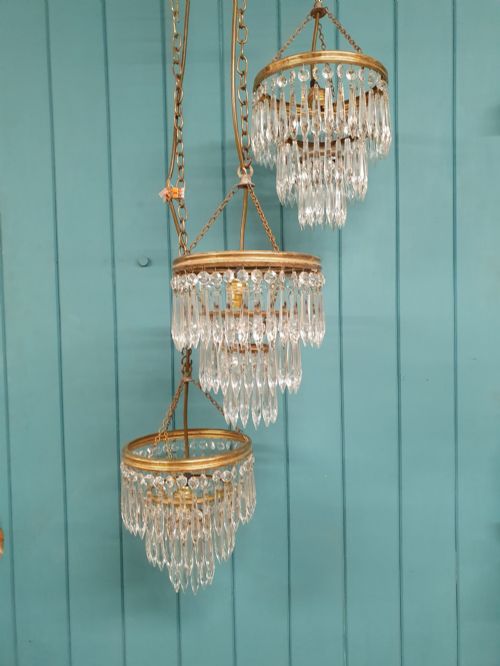
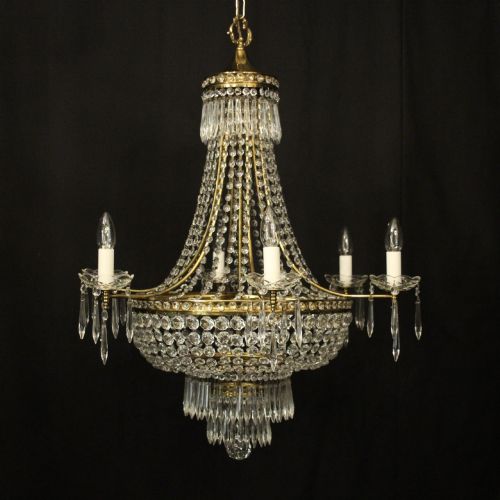
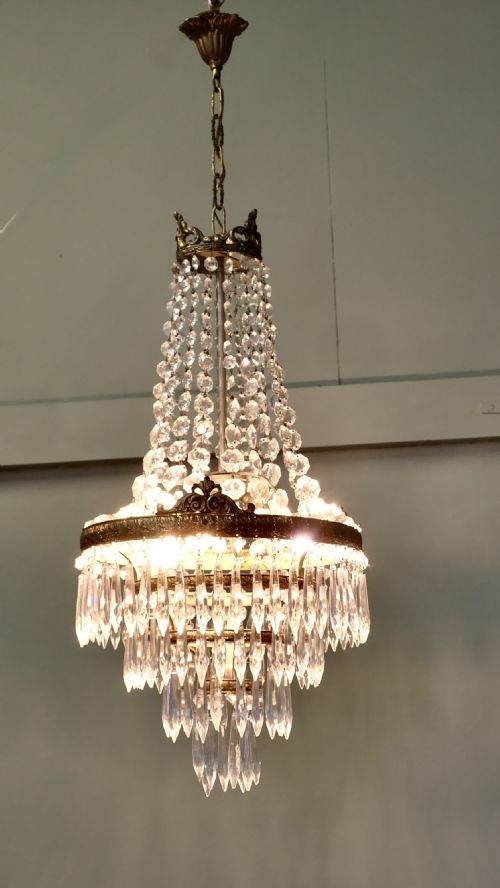
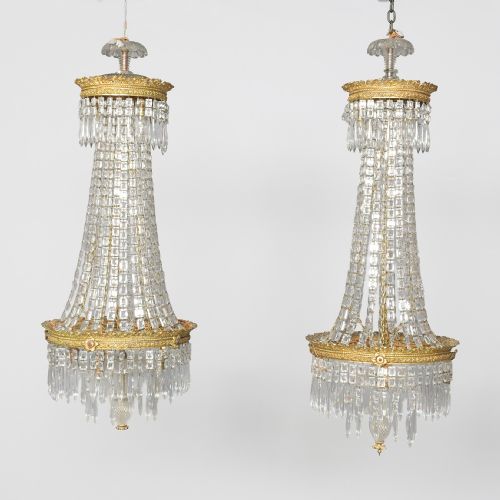
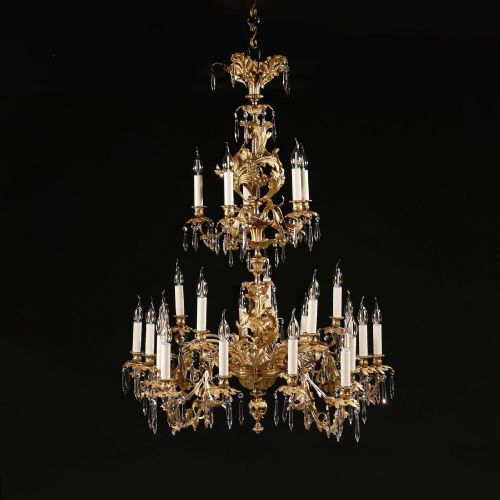
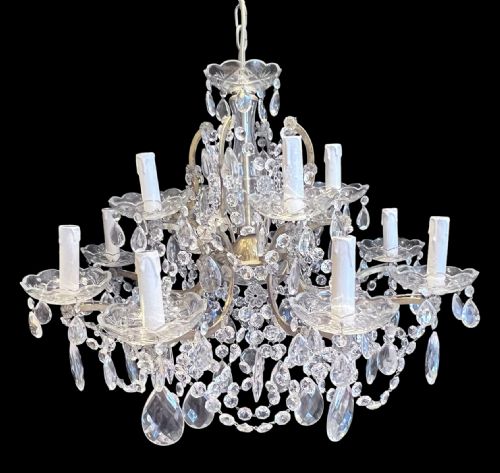
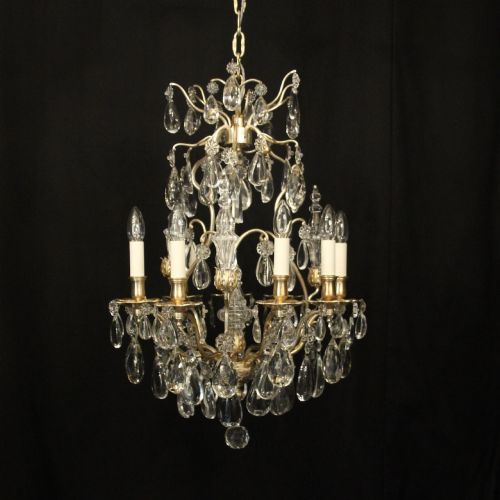
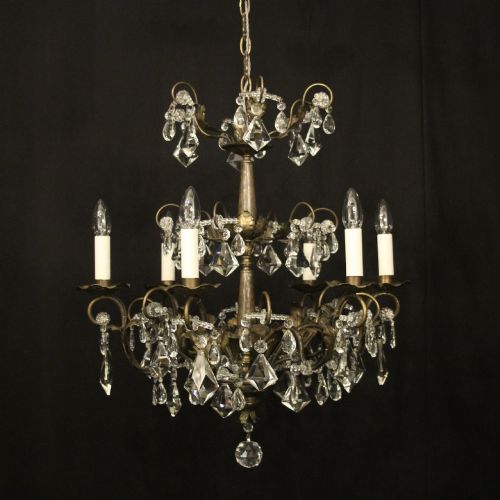
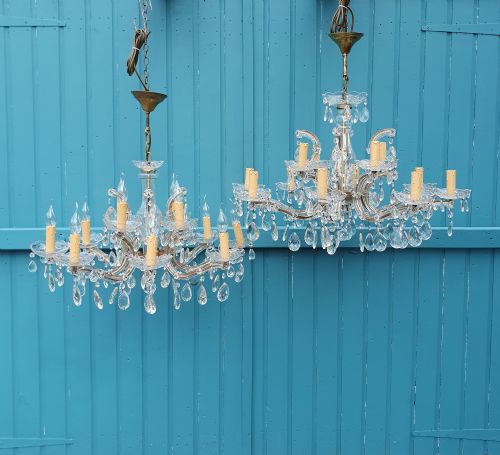
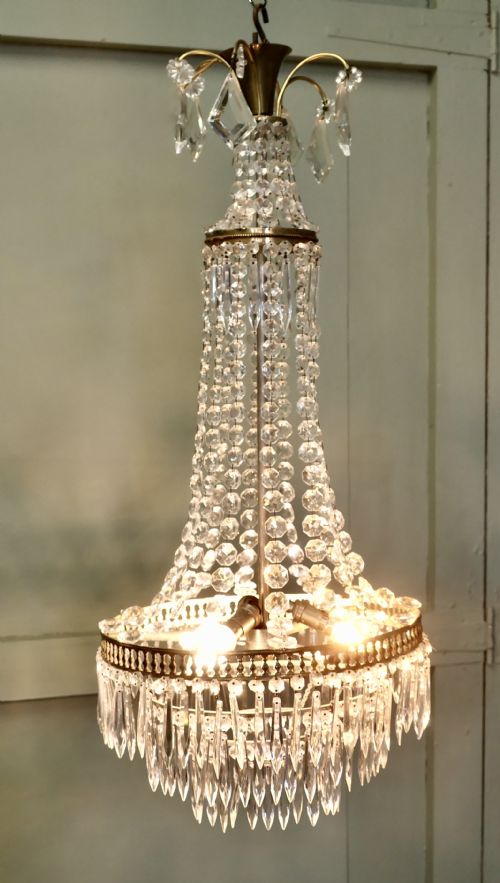
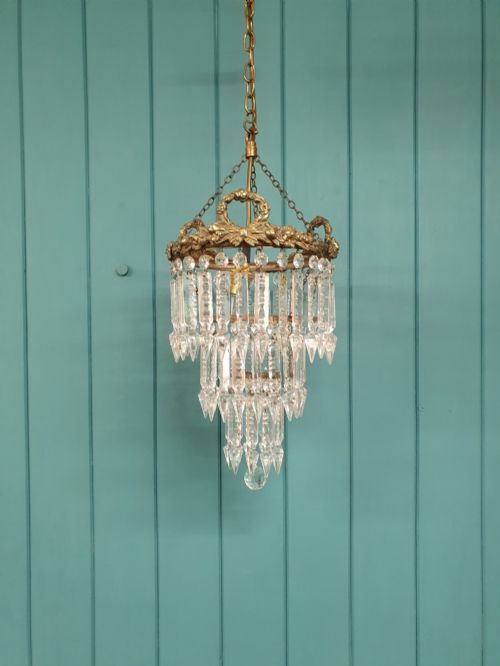
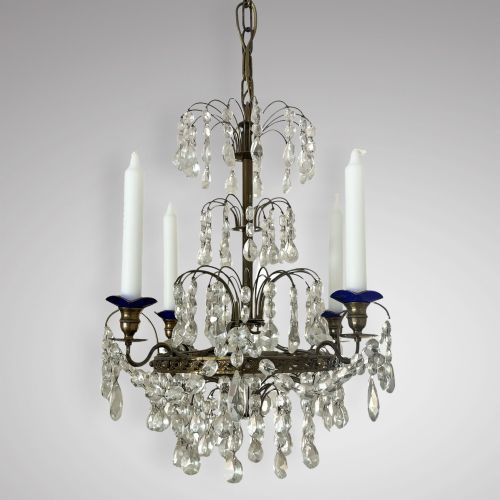
These tiered crystal ceiling light fixtures bring cascading brilliance to a room, driven by heavy prism drops and metal frames.
Tiered Crystal Ceiling Light
A tiered crystal ceiling light appears across various historical periods, with early twentieth-century examples frequently taking form as multi-tiered chandeliers, pendant lights, and ceiling lighting. These pieces combine metal frames with cascading drops to create multi-level illumination in domestic spaces.
The selections available range from compact spike chandeliers to large multi-arm fixtures originating from French, Italian, English, and Swedish workshops. French Empire and Rococo revival styles sit alongside simpler early twentieth-century designs, often featuring tent and waterfall configurations.
Materials and construction methods
Makers constructed these fixtures using brass, gilt bronze, silver-gilded metal, and standard metal for the structural frames, supporting arms, and hanging hardware. These metal structures hold the weight of numerous glass elements while providing secure mounting points for electrical or candle components.
Glass and crystal components include cut glass, moulded crystal glass, and individual cut crystal drops suspended in tent, waterfall, and tiered arrangements. Individual pieces are wired or pinned together to form the characteristic cascading tiers seen in the listings.
Tiered Crystal Ceiling Light Retail Price Guide 2026
Typical asking prices for tiered crystal ceiling light among the pieces listed under this phrase on Sellingantiques today, from the lower quarter to the upper quarter. They describe what is for sale here now, not the wider market.
Materials documented across the inventory include brass, gilt bronze, cut crystal, and standard metal structures.
Elements of quality
The calibre of a fixture depends on the weight and clarity of the crystal glass drops and the complexity of the metal framework. Hand-cut crystal prisms with deep facets refract light more sharply than moulded alternatives, while solid brass or gilt bronze frames provide superior durability compared to simpler metal alloys.
Design cohesion also determines distinction, seen in the proportion of the tiers, the density of the lustre drops, and the integration of decorative elements such as beaded arms and finials. Pieces displaying balanced multi-tier proportions and detailed casting reflect higher craftsmanship.
Baccarat
The Tiered Crystal Ceiling Light Glossary
- Waterfall chandelier
- A lighting fixture where crystal drops cascade in overlapping tiers resembling falling water. This design focuses attention on the density of the glass arrangement.
- Spike chandelier
- A form featuring central upright metal spikes or tiers ornamented with glass drops and lustres. They often appear in compact early twentieth-century formats.
- Tent and waterfall
- A configuration combining an upper tent-like section of strung crystals with a lower cascading waterfall drop. It draws upon French Empire design traditions.
- Lustre
- A cut glass or crystal pendant suspended from a chandelier to reflect and refract light. Lustres vary in shape from simple drops to complex multi-faceted prisms.
- Gilt bronze
- Copper alloy treated with a gold coating, frequently utilised for decorative mounts and frames on nineteenth-century pieces. It offers a rich metallic lustre.
Tiered Crystal Ceiling Light: Frequently Asked Questions
How do I hang a heavy crystal chandelier safely?
Suspension requires fixing directly into ceiling joists or structural timber using heavy-duty ceiling hooks rated for the specific weight of the brass and crystal assembly. Professional electrical installation ensures the wiring supports multi-light configurations safely.
Lowering the fixture to standard ceiling heights depends on the length of the original chain and wiring flex provided with the antique.
How should I clean a tiered crystal ceiling light?
Routine maintenance involves wiping individual crystal drops in situ using a lint-free cloth dampened with a mild solution of warm water and isopropyl alcohol. This removes dust without damaging the metalwork or loosening the wire pins.
Deep cleaning requires removing the crystal drops entirely, washing them by hand, and drying them thoroughly before reattaching them to the brass or bronze frame.
Are these lights compatible with modern electrical standards?
Most antique fixtures accommodate modern candelabra bulbs, though older brass and metal frames benefit from rewiring by a qualified electrician to meet current safety regulations. Earth grounding must be verified, particularly on heavy metal and bronze chandeliers.
LED candle bulbs offer a low-heat alternative that reduces thermal strain on vintage glass and gilt finishes.