




Tiered Corner Cupboard
A tiered corner cupboard makes use of overlooked angles, bringing proportion and practical storage to rooms where floor space matters.
Tiered Corner Cupboard
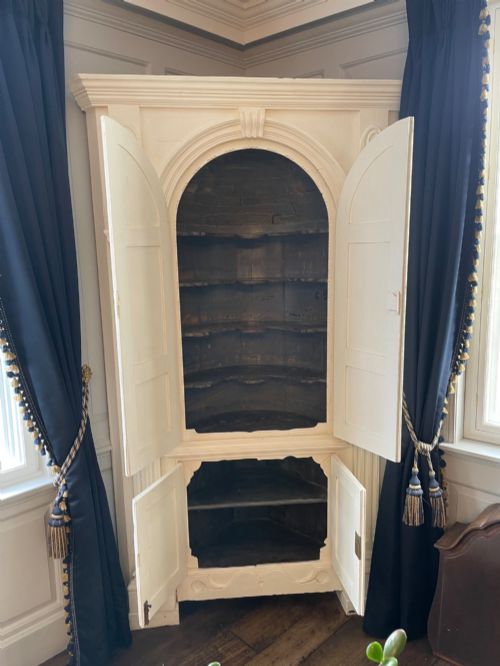
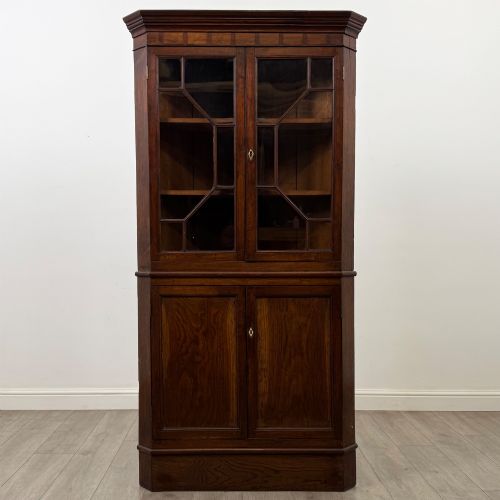
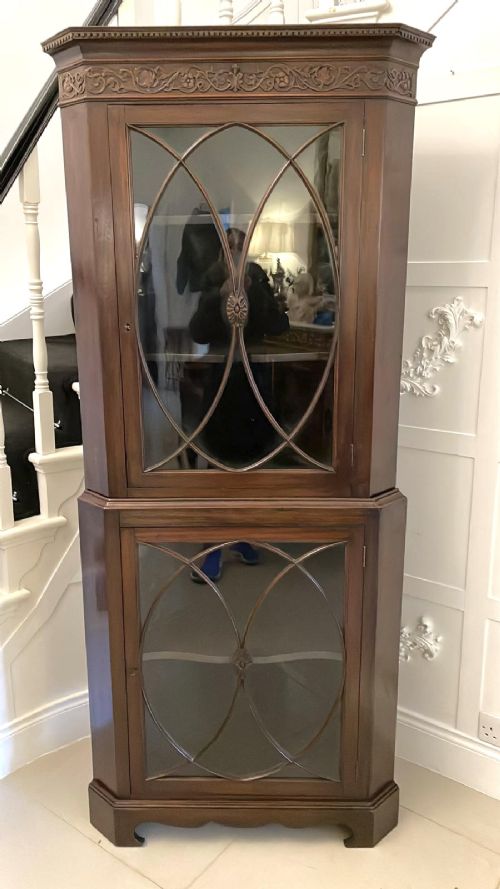
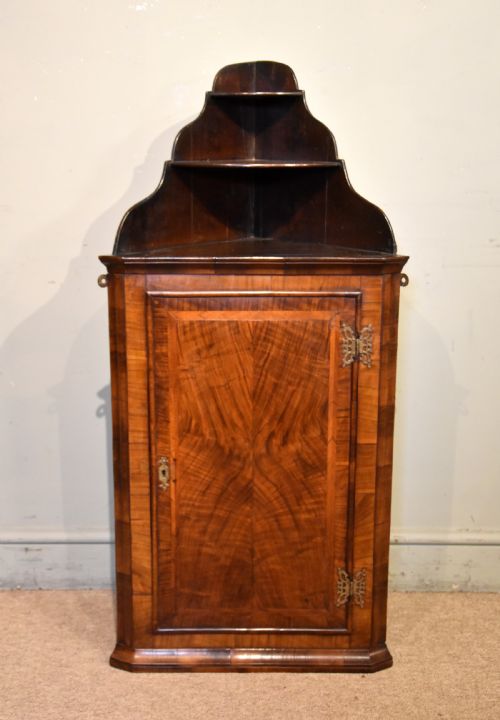
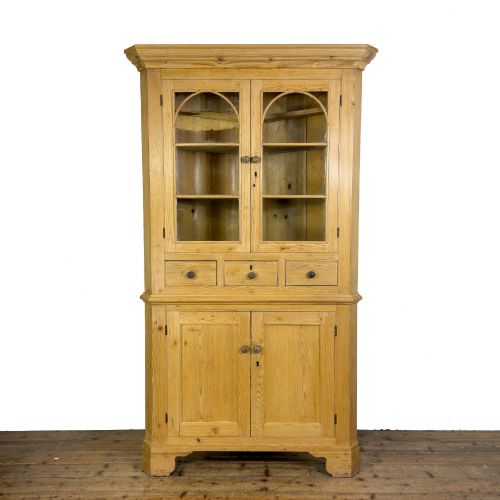
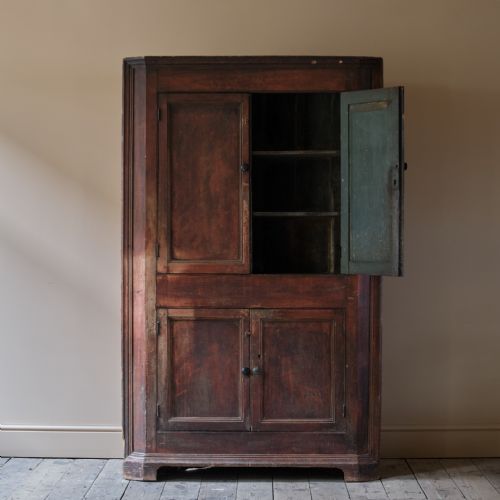
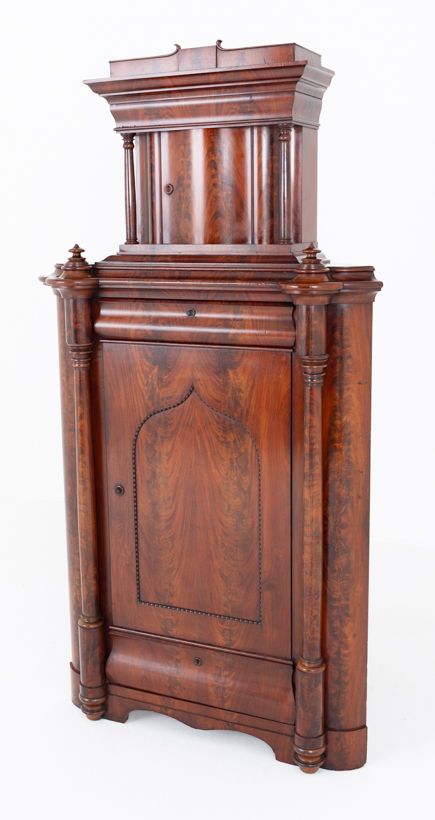
A tiered corner cupboard occupies dead space in a room, turning empty angles into focal points for display or concealed storage. These pieces range from compact wall-mounted boxes to substantial floor-standing double units with panelled doors.
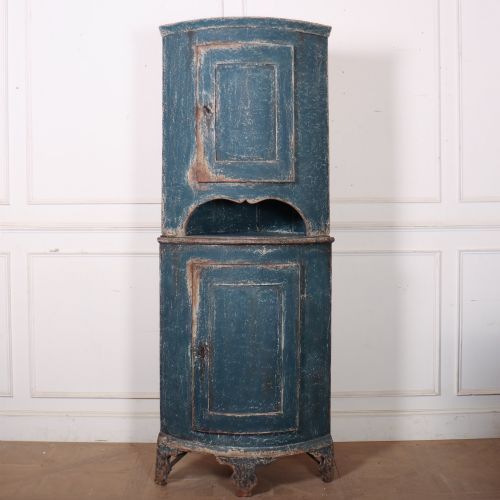
The selection draws heavily on the Georgian and Victorian eras, alongside Edwardian interpretations and country pieces in pine and oak. Walnut, mahogany and painted finishes appear frequently, often scaled to fit domestic interiors of various periods.
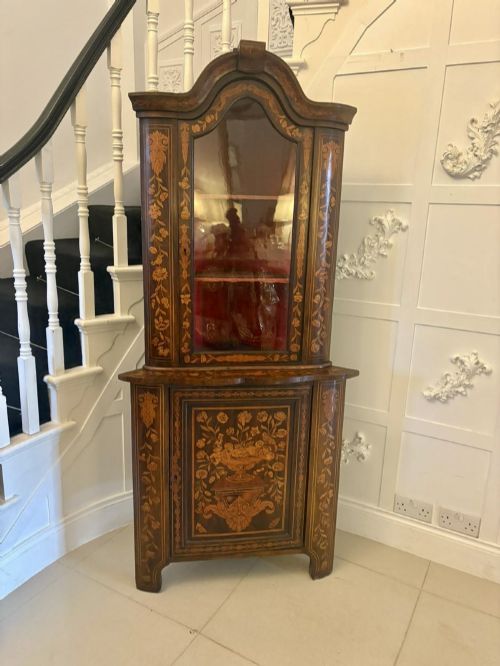
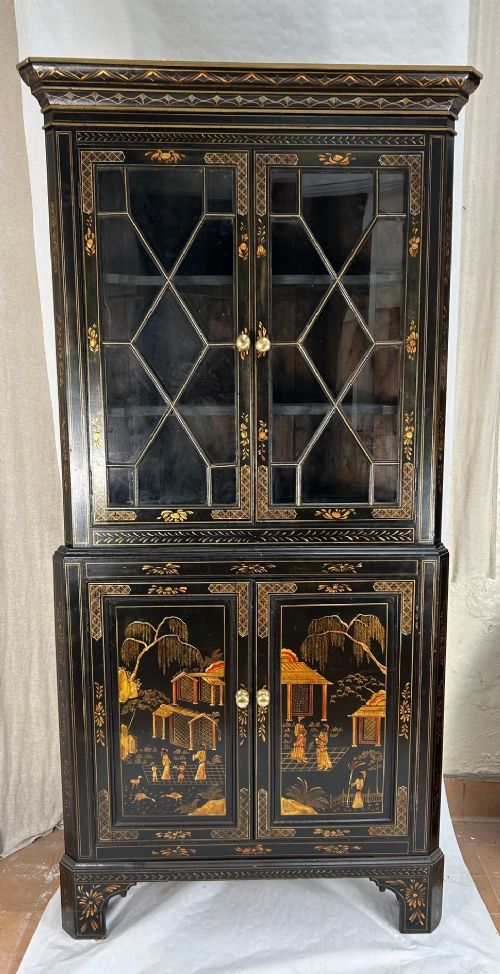
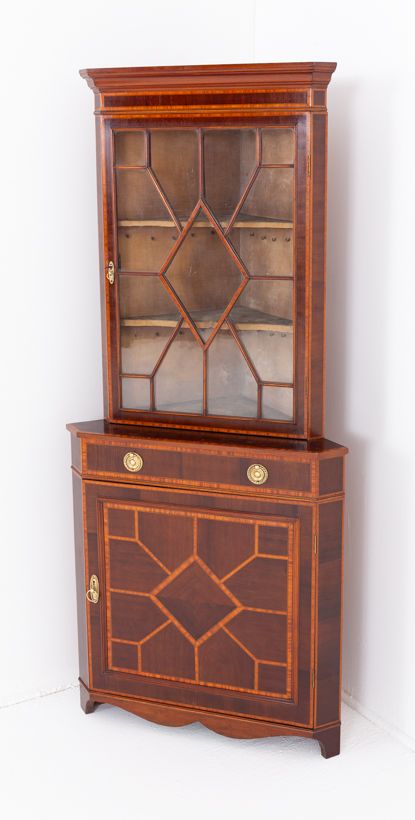
Makers utilised different configurations, including bowfronts, glazed display sections and multi-tiered arrangements that combine shelving with enclosed lower cupboards. Pieces emerge from diverse origins, spanning British workshops to Scandinavian country traditions.
Judging Quality
Quality rests in the precision of the angles and the choice of timber grain, particularly where veneers or solid mahogany boards meet at the margins. Finer examples display thoughtful proportions that soften the inherent bulk of a right-angled piece.
The execution of secondary details, such as inlaid stringing, carved mouldings and the fit of brass hardware, separates standard utility pieces from more ambitious cabinet work. Original glass panes and intact panel construction preserve the integrity of the piece.
Tiered Corner Cupboard Retail Price Guide 2026
Typical asking prices for tiered corner cupboard among the pieces listed under this phrase on Sellingantiques today, from the lower quarter to the upper quarter. They describe what is for sale here now, not the wider market.
Many corner cupboards survived precisely because moving them to a different house required dismantling the angles.
The Tiered Corner Cupboard Glossary
- Bowfront
- A cabinet front that curves outward in a convex shape, softening the sharp angles of the corner unit. This profile gained popularity during the Georgian period.
- Astragal
- A small moulding profile used to divide glass panes within a cabinet door into smaller sections. These delicate wooden strips create a light grid pattern across the display area.
- Marquetry
- The art of applying pieces of veneer to a structure to form decorative patterns or pictures. Dutch examples frequently employ this technique with floral motifs.
- Panelled
- A construction method where solid timber panels float within a grooved frame to prevent warping. This technique appears widely on oak and pine cupboard doors.
Tiered Corner Cupboard: Frequently Asked Questions
How do I fit a corner cupboard into a modern room?
Measure the wall depth and angle carefully, as these units require precise right-angled clearance to sit flush against the skirting boards. Wall-hung versions free up floor area, while floor-standing cabinets anchor a neglected corner.
Consider the door swing to ensure adjacent furniture does not block access. Placing one in a dining room or hallway turns a transitional space into a display area.
What is the difference between wall-mounted and standing corner cupboards?
Wall-mounted cupboards hang directly from structural fixings, offering compact storage without consuming floor space. Floor-standing models rest on plinths or bracket feet, providing much greater interior capacity.
Standing versions often feature a lower cupboard paired with an upper display section, whereas wall-hung variants are typically single-door units.
How can I tell a Georgian piece from a later revival?
Examine the secondary timbers used inside the carcass, such as oak or deal linings, which often reveal the true period of manufacture. Construction methods like hand-cut dovetails and timber shrinkage patterns also point to genuine age.
Revival pieces, such as those from the Edwardian era, tend to feature more uniform machine-sawn components and cleaner, less oxidised internal surfaces.
How do I care for antique mahogany and oak?
Keep wooden furniture away from direct sunlight and sudden temperature shifts to prevent the timber from splitting or warping. Dust regularly with a soft, dry cloth and apply a quality wax polish sparingly.
Avoid silicone-based sprays, as they build up over time and dull the natural patina of the polished surface.