
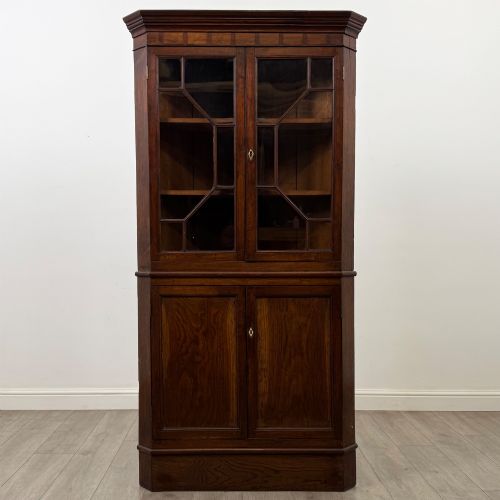

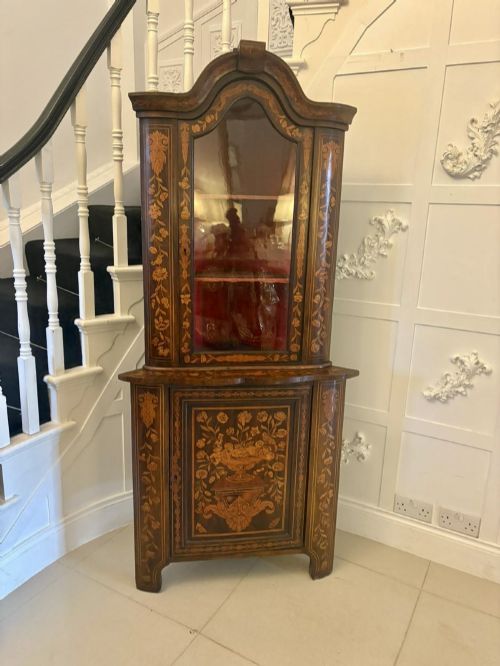
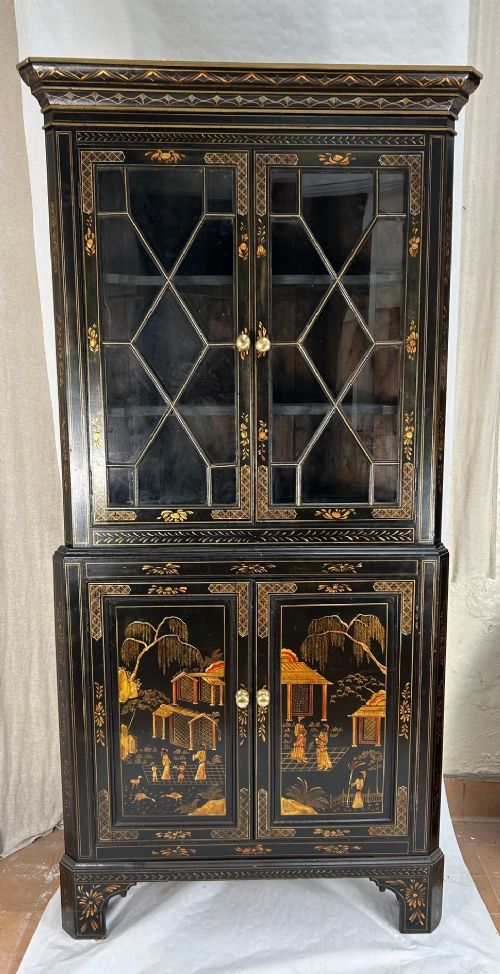
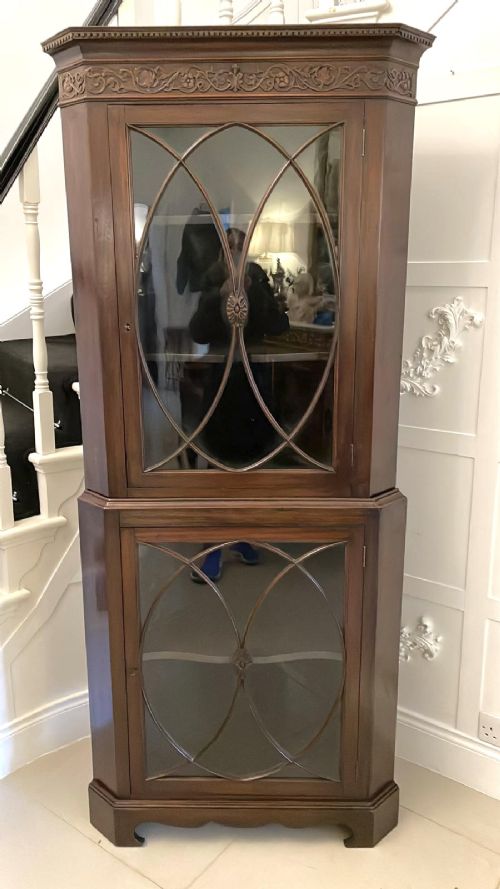




Tiered Corner Cabinet
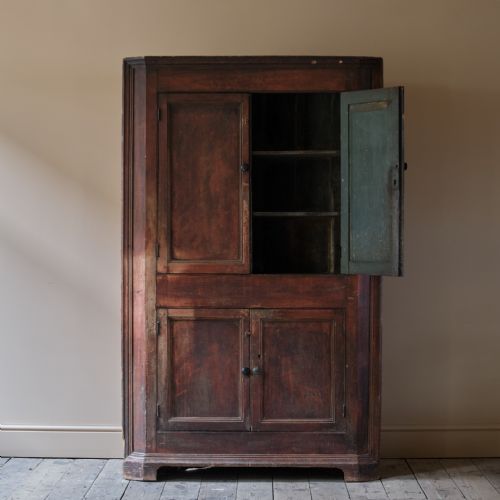
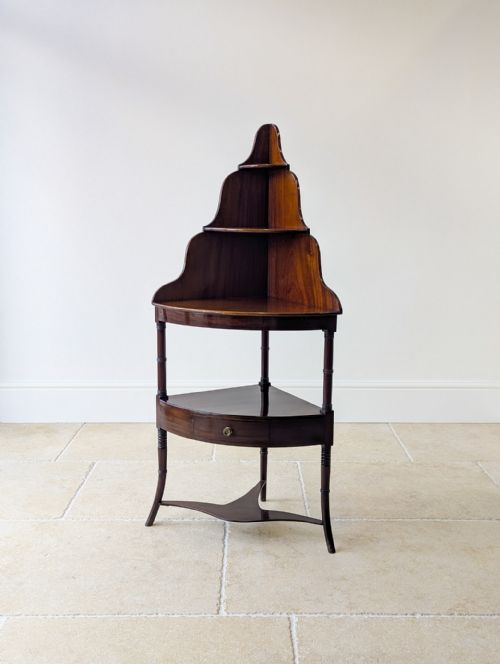
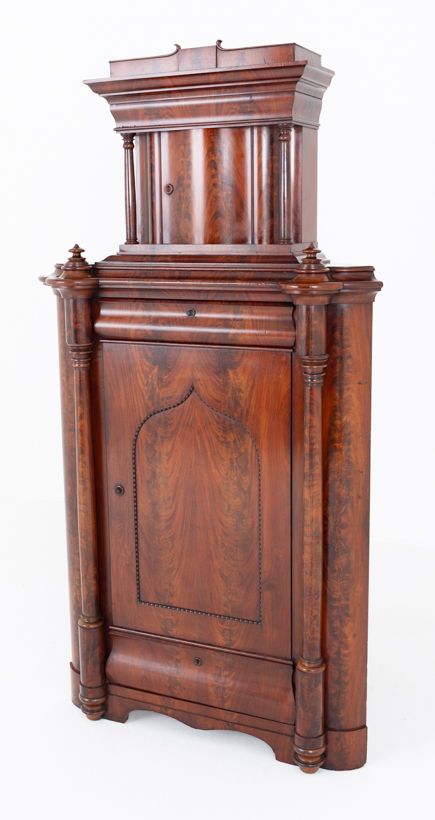
A tiered corner cabinet uses unutilised wall space efficiently while displaying treasured objects across multiple graduating levels.
Tiered Corner Cabinet
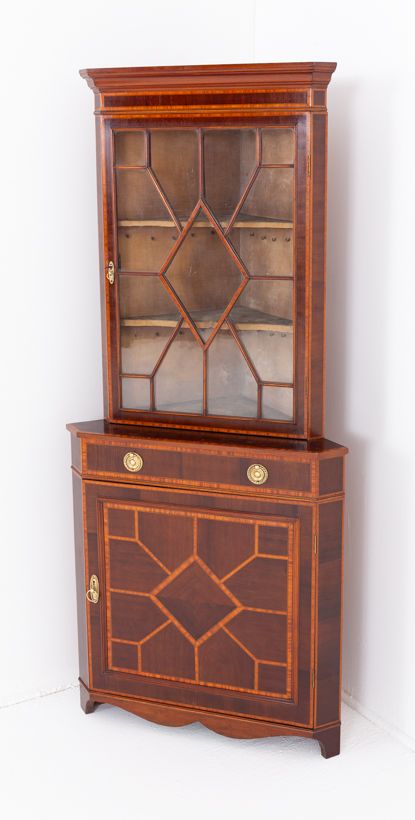
A tiered corner cabinet is designed to fit snugly into room angles, maximising awkward spaces through efficient geometric planning. These pieces combine vertical display capacity with the practical storage of a cupboard base.
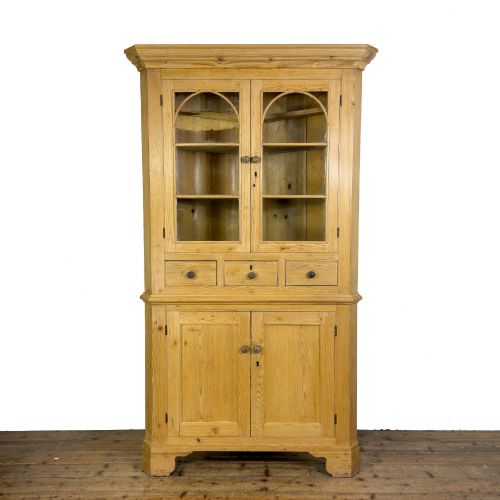
The selections span eras from the Georgian and Victorian periods to Edwardian examples, appearing in forms such as corner cupboards, etageres, and multi-shelf display units. Mahogany and oak dominate the construction, accompanied by walnut, pine, and occasional satinwood details.
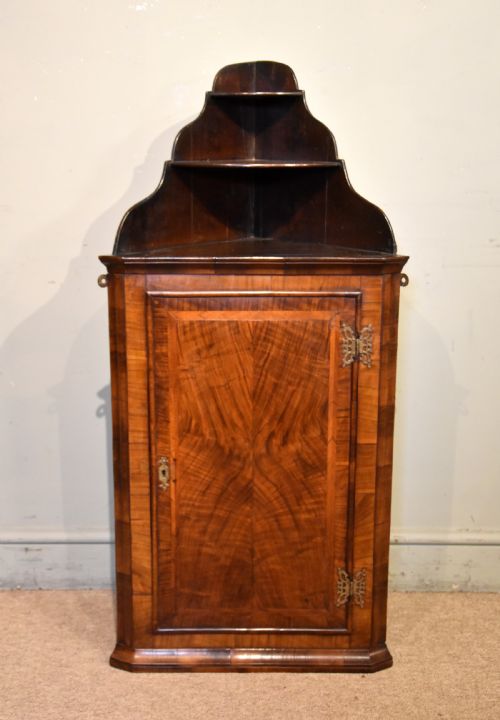
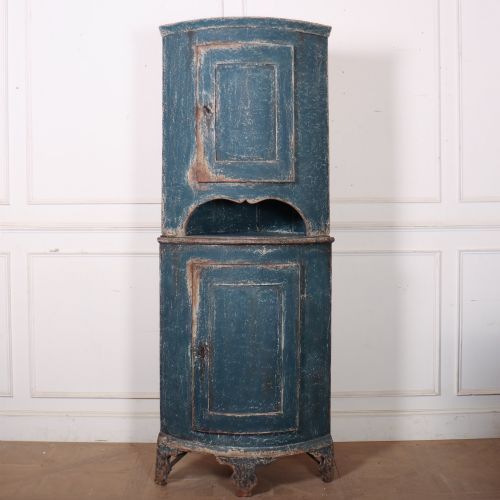
Makers adapted these cabinets for specific spatial needs, producing tall floor-standing cupboards alongside multi-tiered open shelves. The surfaces range from simple painted finishes to elaborate marquetry and inlaid Sheraton Revival motifs.
Materials and construction methods
Cabinet makers built these structures using solid hardwoods like mahogany, oak, and walnut, frequently combining them with secondary woods like pine for internal framing. Selected timbers provide structural stability while supporting the weight of glass doors or multiple stacked shelves.
Surface decoration relies on traditional techniques such as crossbanding, satinwood inlay, and marquetry work to create contrast across panelled doors and friezes. Glazed sections utilise timber glazing bars to divide glass panes within cabinet doors.
Turned elements, carved details, and occasional brass hardware complete the construction, securing doors and supporting tiered shelves. Finish applications range from clear polish highlighting wood grain to traditional paint layers.
Listings feature woods such as mahogany, oak, walnut, pine, and satinwood across Georgian, Victorian, and Edwardian periods.
Assessing craftsmanship and construction
Quality reveals itself in the selection of timber figures, where matched veneers and carefully chosen solid boards create cohesive visual depth. Superior examples demonstrate precise joinery in the corner joints and door frames, ensuring the piece maintains structural integrity under load.
The refinement of decorative elements differentiates standard utilitarian storage from high-status items. Finely executed inlay work, well-turned supports, and original brass fittings indicate a higher standard of workshop production.
The Tiered Corner Cabinet Glossary
- Astragal glazed
- Glazing bars dividing glass panes into smaller geometric sections within a cabinet door. This method provides structural rigidity while framing the interior display.
- Marquetry
- The art of applying pieces of veneer to a structure to form decorative patterns and pictures. It often incorporates varied timber tones to achieve pictorial depth.
- Bowfronted
- A convex curved cabinet front that projects outward from the corner walls. This contour softens the sharp angle of the corner installation.
- Whatnot
- A piece of furniture consisting of a set of open shelves for displaying small objects. These tiered stands frequently feature turned vertical supports.
Tiered Corner Cabinet: Frequently Asked Questions
How do I clean a wooden corner cabinet?
Dust surfaces regularly with a soft, dry cloth to prevent particulate buildup on the timber.
Apply a quality furniture wax periodically to nourish the wood grain and maintain the polished finish without leaving heavy residues.
Are these cabinets suitable for small rooms?
The corner placement utilises dead space in room angles, keeping floor areas open while providing significant vertical storage.
Their footprint remains minimal compared to standard rectangular cupboards, making them practical for compact interiors.
How do I identify a Georgian corner cabinet?
Look for characteristic timber selections like dense mahogany or oak, often featuring panelled doors and classical architectural moulding profiles.
Construction details typically include hand-cut dovetails and period brass H-hinges or butterfly hinges.
Can these units support heavy items?
Solid hardwood construction in older pieces provides robust support for books, ceramics, and glassware.
Wall-mounted or tall floor-standing versions should be secured safely to the wall to prevent tipping when loaded.