
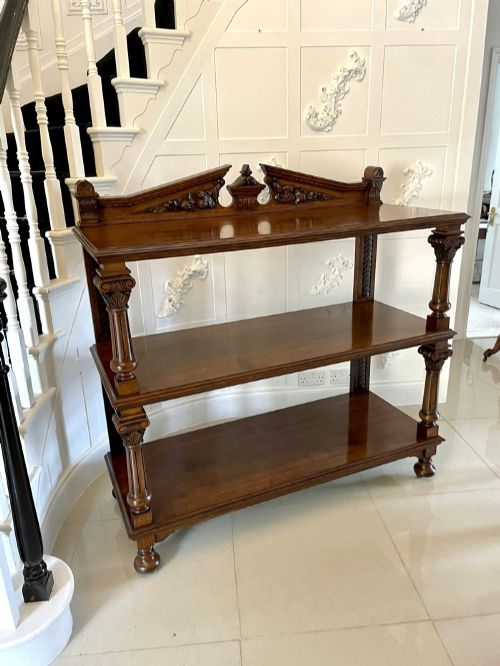
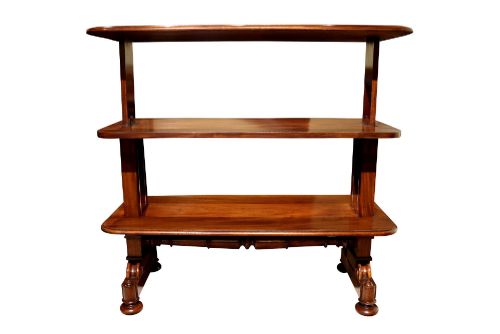
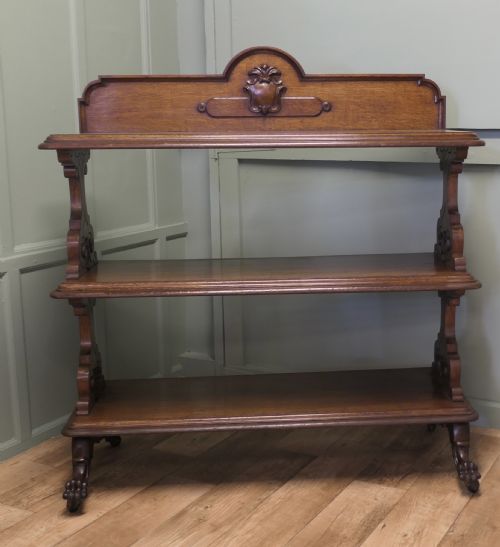
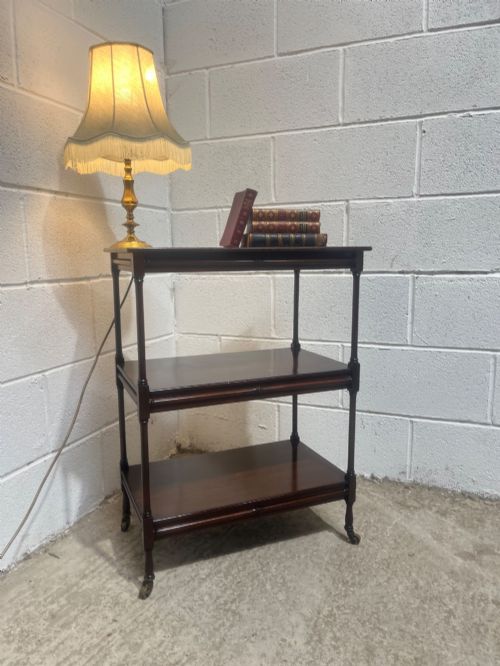


Three Tier Waiter Table
A three tier waiter table provides tiered shelving for serving or display, combining practical mobility with period charm.
Three Tier Waiter Table
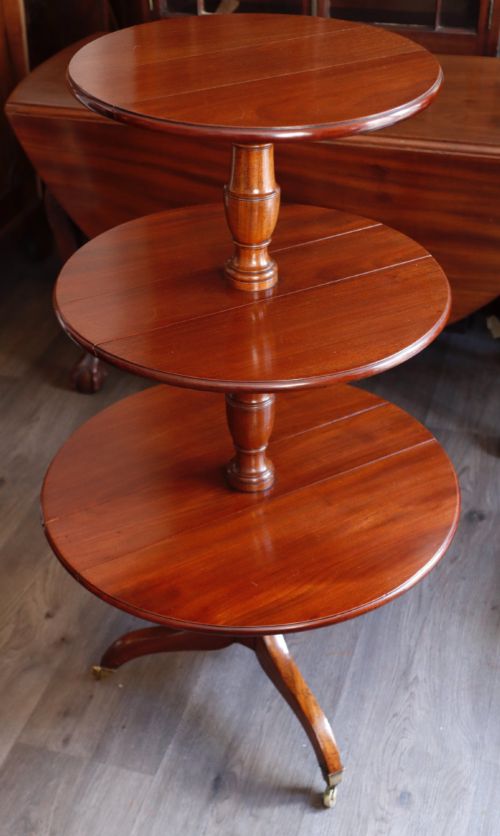
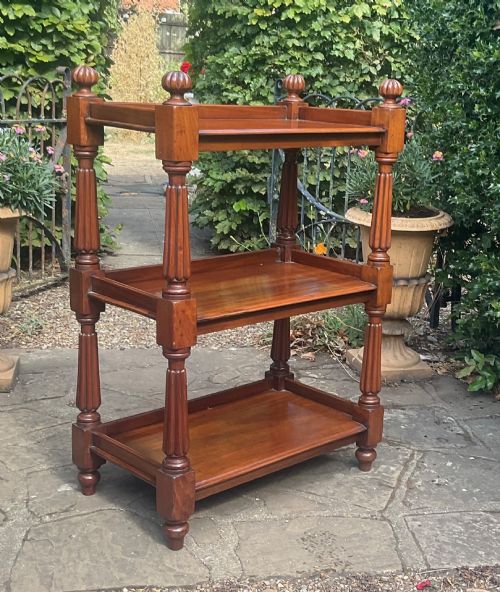
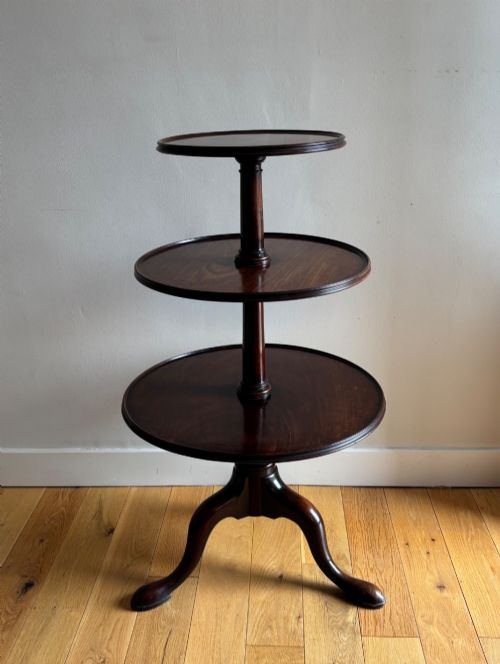
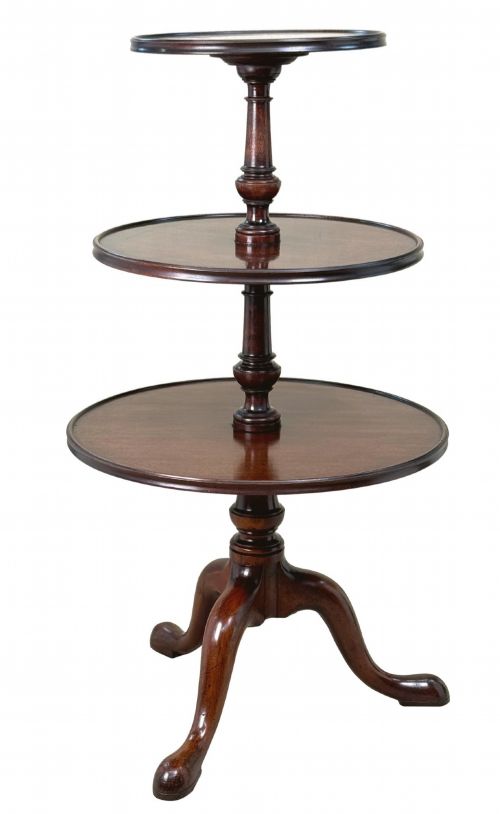
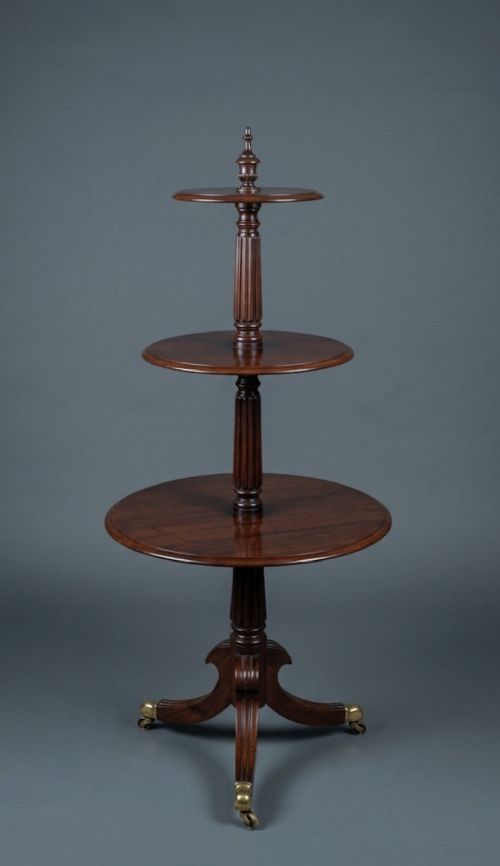
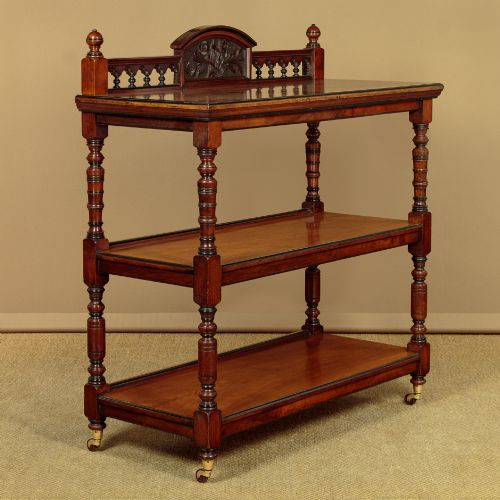
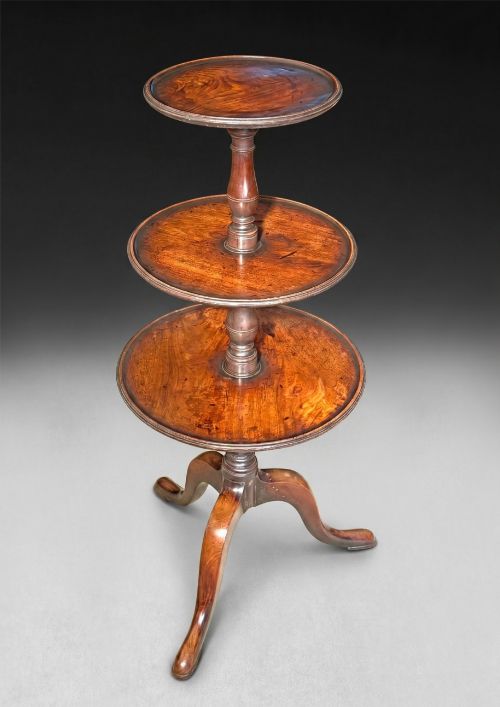
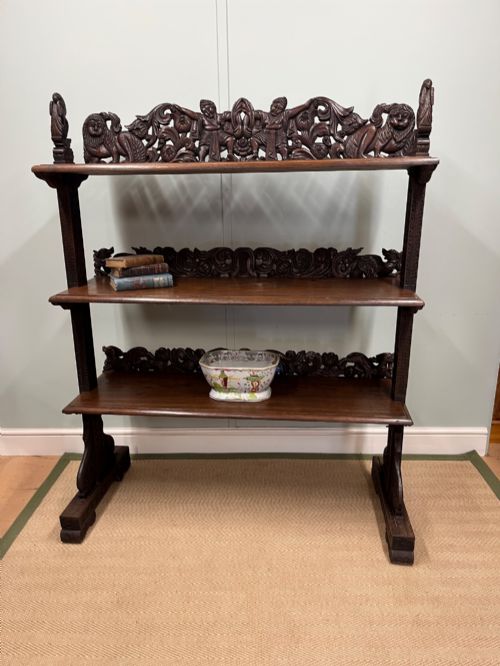
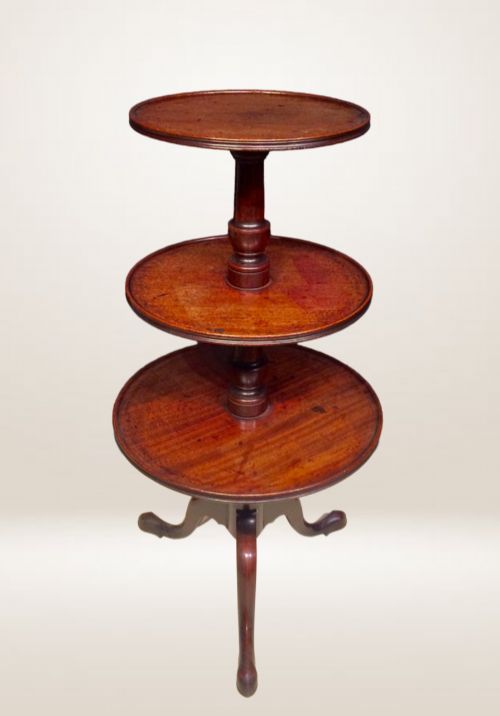
The form appears under several designations in the evidence, including dumb waiters, etageres, and tiered tables. These pieces often feature circular revolving tiers supported on a central tripod pedestal or rectangular frames fitted with castors.
Examples span from the eighteenth century through to the late nineteenth century, incorporating styles such as George III, William IV, and the Aesthetic Movement. The core purpose remains a multi-level surface that saves space while serving guests.
Materials and construction methods
Makers relied primarily on timber such as mahogany, walnut, burr walnut, oak, and teak, frequently selecting solid boards or fine veneers for the graduated tiers. Brass components appear in hardware, mounts, and original castors that allow smooth movement across floors.
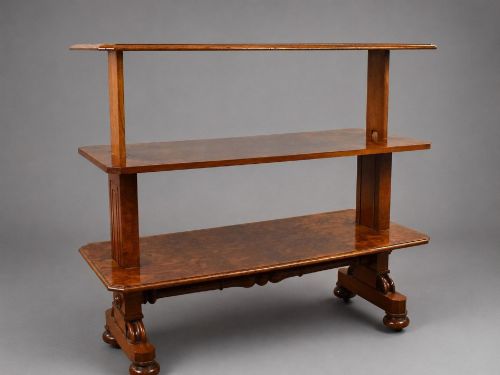
Joinery methods include turned pedestals with tripod legs for circular revolving tables, alongside framed uprights for rectangular trolleys and etageres. Mechanisms such as rise and fall actions or telescopic columns demonstrate advanced engineering in nineteenth-century workshops.
Listings feature mahogany, oak, walnut, burr walnut, teak, and rosewood across Georgian, Victorian, and Regency periods.
Assessing craftsmanship and proportion
Quality rests in the selection of figured timber, such as Cuban mahogany or fiddleback mahogany, matched carefully across each tier. The balance of the central column and the stability of the tripod base determine how well the piece functions in daily use.
Fine examples display crisp turned details on the pedestals and secure, well-fitted brass castors that belong to the period of manufacture. The graduation of the tiers and the precision of any revolving mechanism separate standard utility items from finer parlour pieces.
Gillows
The Three Tier Waiter Table Glossary
- Dumb Waiter
- A tiered stand used for holding food or tableware without the need for a servant present. These tables typically feature graduated circular trays on a central column.
- Etagere
- A piece of furniture consisting of a set of open shelves for displaying small objects. This form shares similarities with tiered serving tables.
- Tripod Pedestal
- A central column supported by three spreading legs. This design provides stability for revolving tiers.
- Rise and Fall
- A mechanical adjustment allowing the height of a tier or surface to be altered. This clever engineering appears on specific nineteenth-century buffet designs.
- Castors
- Small wheel attachments fixed to the base of furniture legs. Original brass examples assist in identifying period mobility.
Three Tier Waiter Table: Frequently Asked Questions
What is a three tier waiter table used for?
These tables served historically to hold extra dishes, wine bottles, or tea service items near a dining table. They allowed households to manage meals without constant attendance from staff.
Today, they function well as display stands for plants, books, or collections in living spaces. Their multiple tiers maximise vertical surface area in compact rooms.
How do I identify a Georgian three tier waiter table?
Georgian examples often feature solid mahogany construction with a central turned pillar and three arched legs. The tiers are frequently graduated in size, with the largest at the bottom.
Many of these earlier tables include revolving tops supported by birdcage mechanisms. The timber colour tends to be a rich, warm brown developed over centuries.
Are these tables sturdy enough for daily use?
Most pieces are built from dense hardwoods like mahogany or oak and remain robust when placed on even floors. The central tripod base offers reliable balance for everyday decorative items.
Care should be taken when moving heavy pieces, particularly those with delicate revolving mechanisms or original castors. Regular placement away from direct heat sources protects the timber joints.