


Graduated Tier Side Table
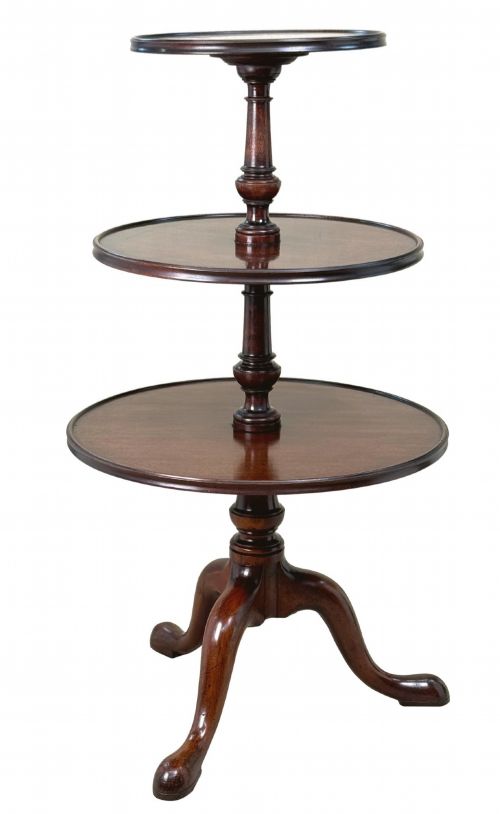
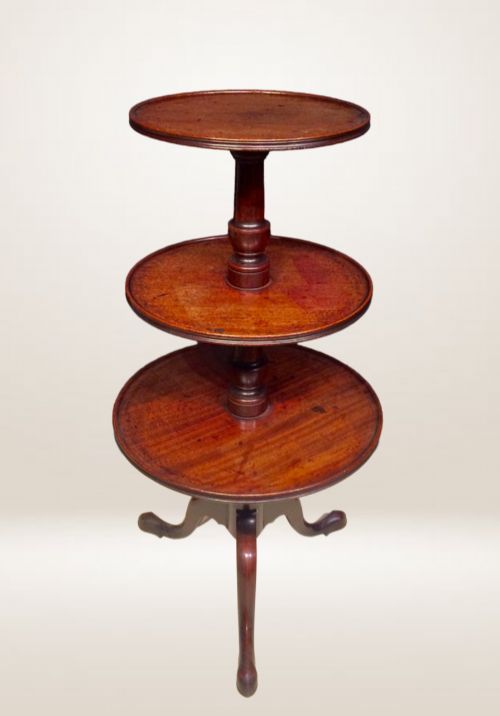
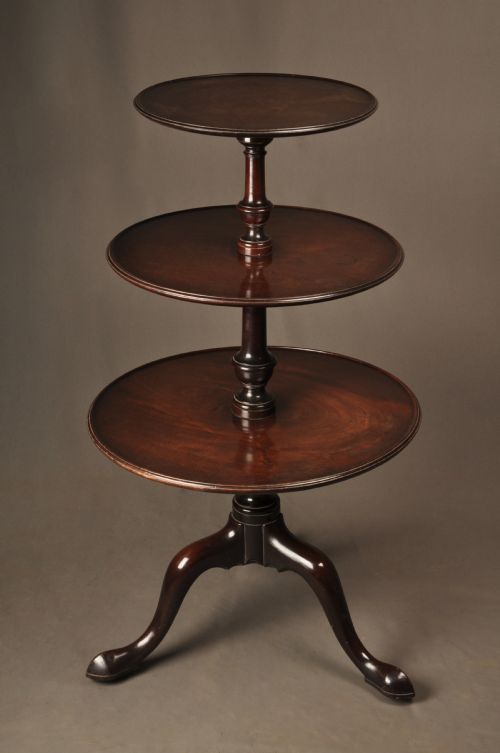
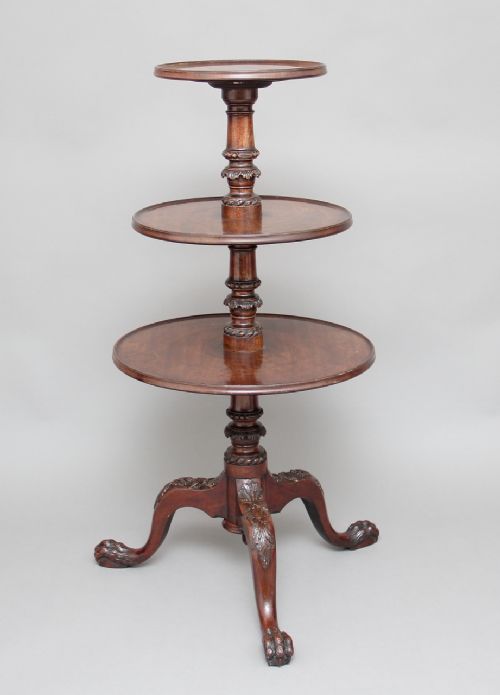
These graduated tier side table examples are sturdy mahogany serving pieces from the Georgian and Edwardian eras, offering stacked circular tiers for practical display.
Graduated Tier Side Table
When you search for a graduated tier side table, you are looking at multi-level serving furniture designed to hold dishes or objects across stacked wooden platforms. The pieces seen here span the Georgian, eighteenth century, nineteenth century, and Edwardian periods, taking the form of dumb waiters, occasional tables, nests of tables, and tier tables.
The version you are most likely to meet on this page is the classic mahogany dumb waiter, often featuring three circular graduating tiers supported by a central column. These tables originate from English country houses and workshops, built primarily to assist with dining and serving.
Alongside the traditional multi-tiered serving stands, the selection includes occasional tables and nesting sets in the Edwardian style. Each variation shares the characteristic stepped arrangement of horizontal surfaces, utilising vertical space efficiently.
How they were made
The primary material across these listings is solid mahogany, including dense Cuban mahogany chosen for its rich grain and weight. Cabinetmakers shaped these hardwoods by hand, turning central support pillars on lathes and constructing graduated circular tiers with precise joinery.
Hardware played a functional role in construction, with brass components appearing on folding mechanisms and castors. These metal additions allowed multi-tiered serving tables to be moved easily or adjusted for storage without compromising the stability of the stacked wooden platforms.
Early dining tables sometimes doubled as silent guests, holding extra port and dessert while diners gossiped freely without the servants listening in.
What varies in quality
The distinction between standard examples and finer pieces lies in the selection of timber and the sophistication of the turning on the central column. Superior specimens utilise dense Cuban mahogany with deep figuring, whereas simpler items rely on plain stock.
Engineering details also set examples apart, particularly the precision of folding mechanisms and the integrity of the graduated tier joints. Tables that maintain rigid alignment across multiple stacked levels demonstrate superior cabinetmaking skill.
The Graduated Tier Side Table Glossary
- Cuban Mahogany
- A dense and heavy hardwood native to the Caribbean, prized in eighteenth-century cabinetmaking for its rich colour and stability. It was frequently utilised for high-status serving tables.
- Dumb Waiter
- A tiered piece of dining room furniture designed to hold plates, glasses, and food without the need for a human servant. These tables typically feature two or three circular platforms stacked vertically.
- Tier Table
- A multi-level table featuring horizontal surfaces placed one above the other on a central support. This form maximises display and utility within a compact footprint.
- Nesting Tables
- A set of graduated tables designed to fit neatly beneath one another when not in use. They appear in Edwardian variations within this selection.
- Occasional Table
- A small, movable table intended for specific, intermittent use rather than permanent placement. These pieces provide supplementary surface space in living and dining rooms.
Graduated Tier Side Table: Frequently Asked Questions
What is a graduated tier side table?
A graduated tier side table is a multi-level piece of furniture featuring stacked circular surfaces that decrease in diameter from bottom to top. These tables were traditionally used in dining rooms for serving food and holding tableware.
Today, they function as versatile display stands and occasional tables in living spaces. The form combines vertical height with a compact footprint, making efficient use of floor space.
How were dumb waiters used?
Dumb waiters were placed beside dining tables to hold extra dishes, wine bottles, and cutlery during meals. This allowed diners to help themselves without servants present in the room.
Over time, their usage shifted from formal dining assistance to general display and serving purposes in country houses. Their tiered structure made them ideal for presenting multiple items simultaneously.
What woods were used for these tables?
The listings on this page are constructed from mahogany, including solid timber and dense Cuban mahogany variants. Cabinetmakers favored mahogany for its strength, dark colour, and ability to hold fine turned details.
Brass was also utilised for hardware components such as castors and folding mechanisms. These materials ensured the multi-level structures remained durable and functional.
How do I date a tiered table?
Dating relies on identifying stylistic markers from periods such as the Georgian era, the eighteenth century, the nineteenth century, or the Edwardian period. Georgian examples often feature turned central columns and heavy mahogany construction.
Later Edwardian versions introduce lighter forms, such as nests of tables. Examining the timber grain and construction methods helps place each piece within its historical context.