

Three Tier Display Shelves
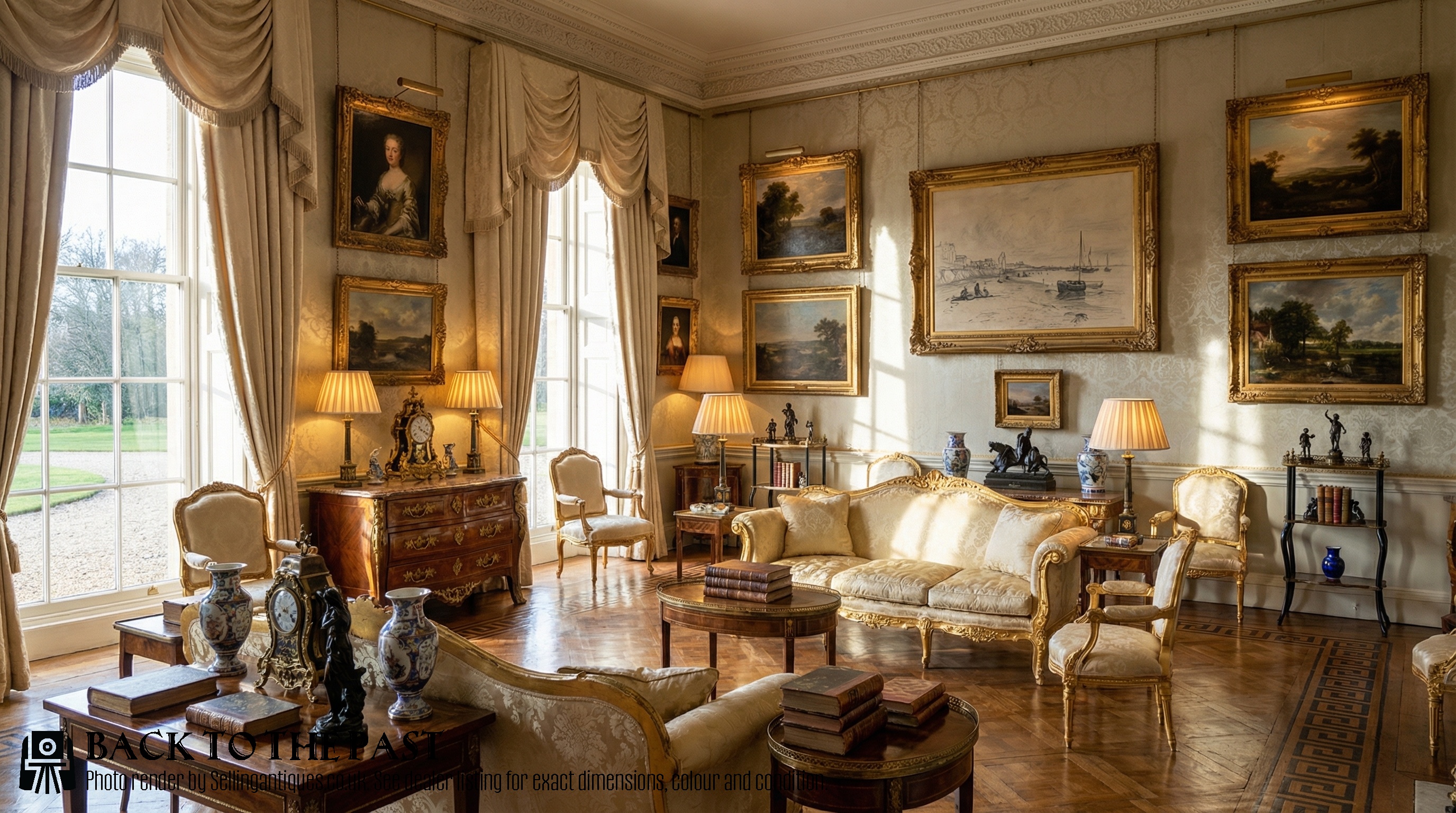
Three tier display shelves are tiered stands and etageres designed to exhibit decorative objects, serving as versatile focal points in period rooms.
Three Tier Display Shelves
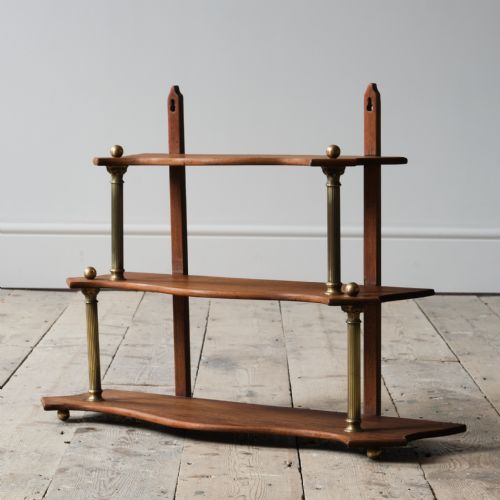
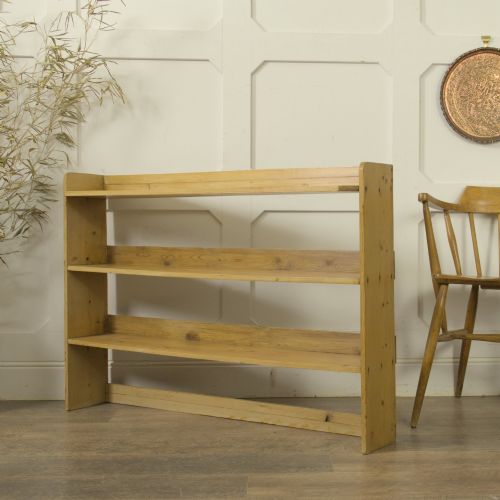
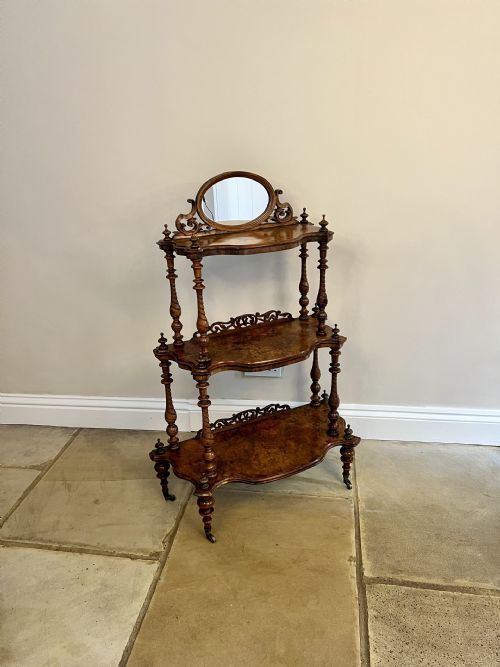
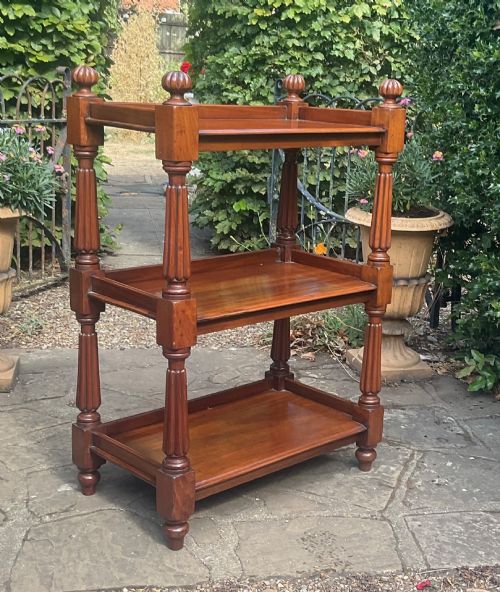
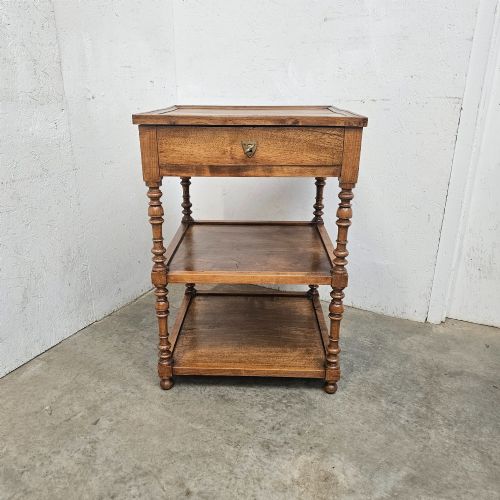
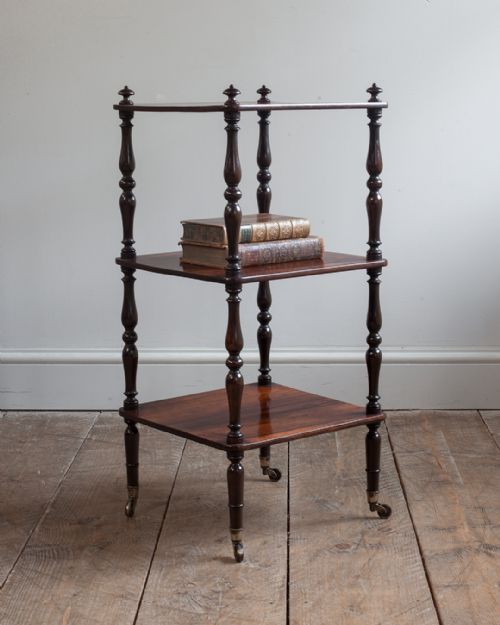
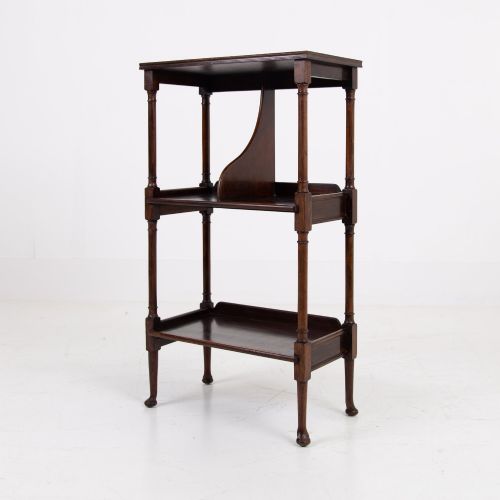
Three tier display shelves span several distinct forms, most commonly appearing as whatnots, etageres, and wall-hanging shelves from the nineteenth and early twentieth centuries. These pieces function primarily to hold books, ceramics, and ornaments across multiple open levels supported by uprights or turned legs.
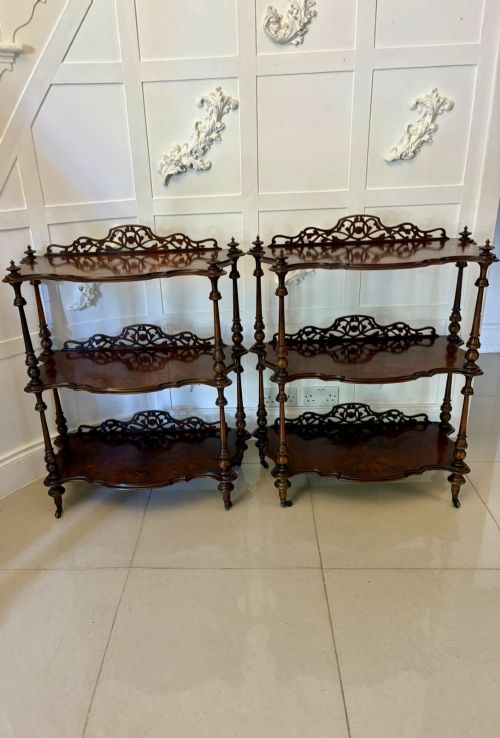
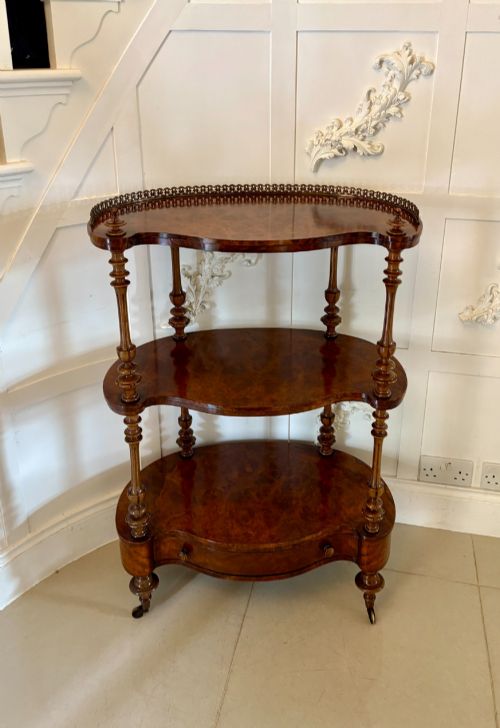
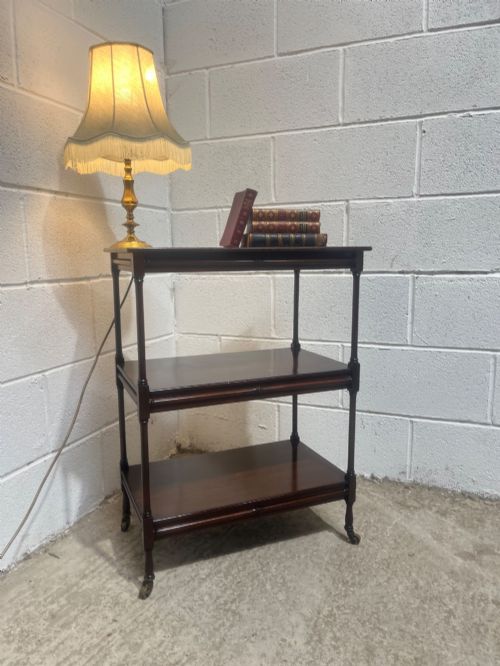
The nineteenth-century examples dominate the selection, heavily weighted towards Victorian burr walnut and mahogany pieces alongside Regency and Edwardian variants. Buyers frequently encounter corner formats, slender wall units, and central standing buffets reflecting diverse regional influences such as French Provincial and Louis XVI styles.
How they were made
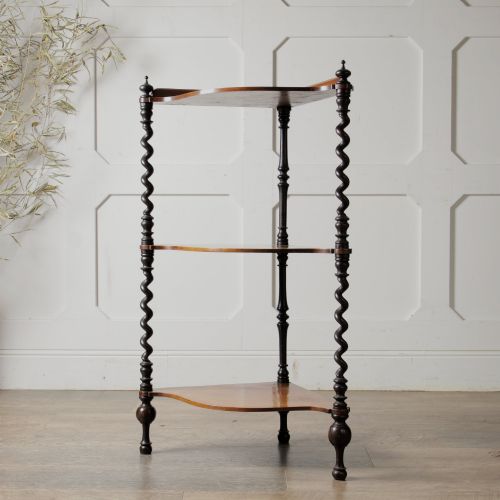
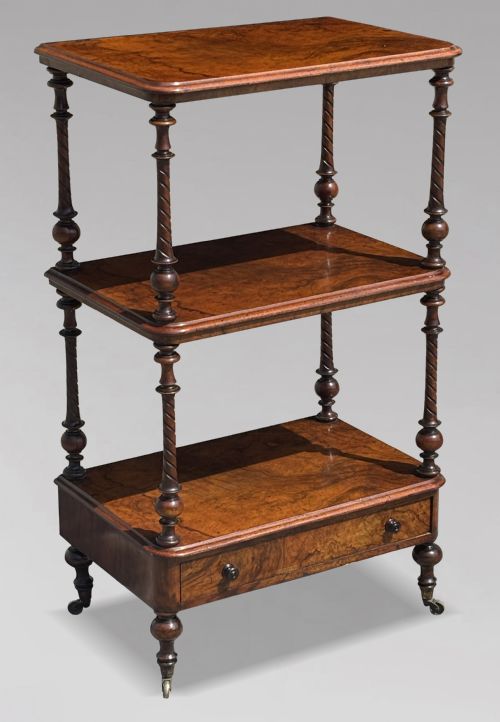
Cabinetmakers utilised dense timbers including mahogany, walnut, rosewood, and oak, often selecting burr walnut veneers for rich surface figuring and visual depth. Structural integrity relies on joined shelving platforms secured by turned columns, barley twist supports, or brass mounts.
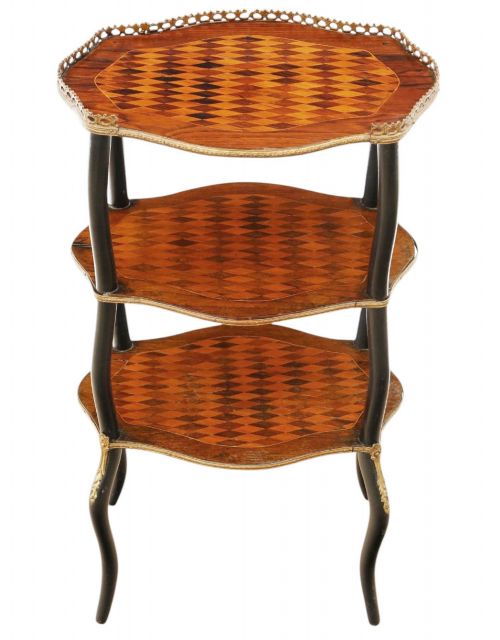
Secondary detailing incorporates ebonised finishes, parquetry inlay, and carved ornamentation that elevate the architectural profile of each tier. Construction techniques balance load-bearing capacity with delicate proportions suitable for domestic display.
Some nineteenth-century makers cleverly built these tier structures on tiny castors so homeowners could chase the afternoon sun around the drawing room.
What varies in quality
The standard of timber selection and veneer matching defines the upper tier of these pieces, where burr walnut or figured mahogany displays continuous grain patterns across all levels. Superior examples exhibit refined turning on the upright supports and crisp detailing in any applied parquetry or brass mountings.
Construction robustness also separates ordinary items from exceptional ones, seen in the stability of the tiered joints and the precision of the shelf alignment. Original surfaces retaining a mellow patina contrast with heavy modern refinishing that obscures the natural warmth of the wood.
Globe Wernicke·Samson And Son London
The Three Tier Display Shelves Glossary
- Whatnot
- A movable set of open shelves designed for displaying ornaments or books, developed in the eighteenth century and popular throughout the Victorian period. These pieces typically feature three or more tiers supported on slender legs or columns.
- Etagere
- A piece of furniture consisting of a series of open shelves for displaying small objects, often possessing French stylistic origins. The term frequently overlaps with whatnot in nineteenth-century British inventory records.
- Burr walnut
- A prized timber harvested from the wart-like growths on walnut trees, yielding complex swirling grain patterns. Cabinetmakers sliced this wood into thin veneers to ornament the primary surfaces of high-status furniture.
- Barley twist
- A decorative turning technique resembling the helical spiral of a screw, commonly used on the vertical supports of Victorian stands. This method adds dynamic movement and textural contrast to structural columns.
- Parquetry
- Geometric wood mosaic work used for floors and cabinet surfaces, formed by fitting small pieces of veneer together. It appears on finer etageres to create contrasting border patterns.
Three Tier Display Shelves: Frequently Asked Questions
What is the difference between a whatnot and an etagere?
A whatnot is a traditional British multi-tiered shelving unit used for general storage and display in nineteenth-century interiors. An etagere often denotes a lighter, more decorative piece influenced by French design.
Both terms describe tiered display shelves, though etageres tend to feature more pronounced ornamental mounts or marquetry.
Where should I place three tier display shelves?
These compact units suit corners, tight alcoves, or flanking positions beside larger case furniture where floor space is limited. Wall-hanging versions attach directly to plaster surfaces to utilise vertical room capacity.
Standing models work well behind seating or against central walls to hold collections of small ceramics or books.
How do I care for antique mahogany shelves?
Maintain the wood by applying a natural beeswax polish sparingly and buffing gently with a soft lint-free cloth. Avoid placing these pieces in direct sunlight or near heat sources to prevent timber shrinkage and veneer lifting.
Dust the individual tiers regularly using a dry cloth to protect the historic polish.
How can I tell a Victorian whatnot from a Regency one?
Regency pieces often display cleaner classical lines, lighter proportions, and simpler brass or mahogany framing characteristic of the early nineteenth century. Victorian iterations frequently embrace denser timbers like burr walnut, heavier turned supports, and more elaborate carved ornamentation.
Examining the underside and joint construction helps confirm the manufacturing era.