



Three Door Side Cabinet
A three door side cabinet brings substantial storage and grand proportions to a room, offering generous shelving behind three separate doors.
Three Door Side Cabinet
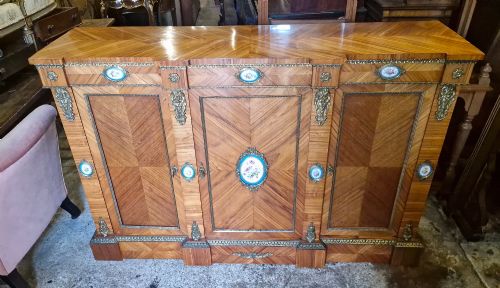
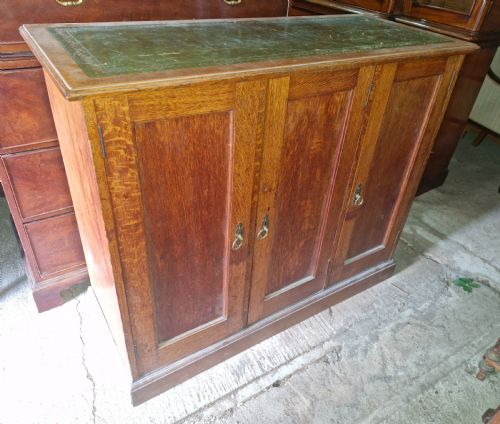
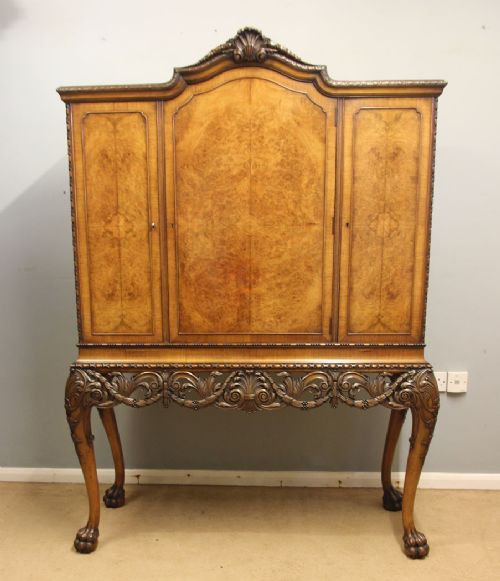
You are most likely to meet walnut, burr walnut, and mahogany examples from the Victorian era and the nineteen-twenties, frequently enhanced with marquetry or ormolu mounts. Oak and pine versions also appear, ranging from rustic farmhouse cupboards to solid revival styles.
The form spans straightforward utilitarian cupboards to elaborate breakfront display cabinets designed for formal reception rooms. Buyers choose a three door side cabinet for its imposing horizontal presence and the deep capacity provided by the triple-bay interior.
Materials and construction
Cabinet makers utilised figured timbers such as burr walnut, curl mahogany, and rosewood for primary visible surfaces, applying them as striking veneers over stable secondary woods. Solid oak and pine construction appears in vernacular and kitchen pieces, often finished with a wax polish.
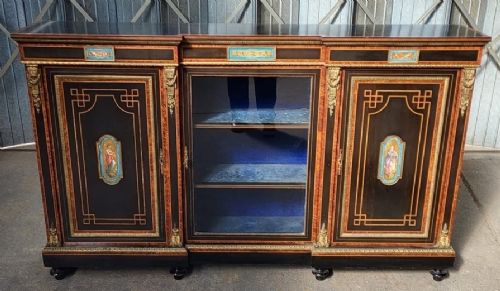
Decorative embellishments include brass hardware, ormolu mounts, inlaid marquetry, and ebonised wood details. Mirrored doors and glass panels are integrated into display cabinets and chiffoniers of the Victorian period.
Three Door Side Cabinet Retail Price Guide 2026
Typical asking prices for three door side cabinet among the pieces listed under this phrase on Sellingantiques today, from the lower quarter to the upper quarter. They describe what is for sale here now, not the wider market.
A Hungarian pine kitchen dresser brings unexpected rustic charm alongside formal walnut breakfront bookcases.
Judging quality and character
The standard of a three door side cabinet rests on the choice of timber figure, particularly the symmetry and depth of burr walnut or curl mahogany veneers. Finer pieces display meticulous marquetry and crisply cast ormolu mounts rather than plain timber surfaces.
Structural harmony dictates the success of the piece, from the balanced proportions of a breakfront profile to the seamless operation of three distinct doors. Superior examples maintain original glass, brassware, and surface patination that reflect the period of origin.
The Three Door Side Cabinet Glossary
- Breakfront
- A cabinet design where the central section projects forward from the two flanking bays, creating architectural depth. This layout is typical of larger sideboards and bookcases.
- Ormolu
- Gilded bronze mounts applied to furniture for decorative enrichment, frequently seen on nineteenth century ebonised and walnut pieces. The technique adds metallic contrast to dark wood.
- Marquetry
- Elaborate patterns formed from fitted veneer pieces applied to the wooden surface of a cabinet. It is commonly found on high quality Victorian burr walnut furniture.
- Chiffonier
- A low sideboard or cabinet with a raised back or mirror, developed in the nineteenth century for living rooms. These pieces often combine storage cupboards with display space.
- Ebonised
- Wood stained or painted to resemble ebony, popular in Victorian cabinet making. This dark finish highlights gilt mounts and brass details.
Three Door Side Cabinet: Frequently Asked Questions
Where does a three door side cabinet work best?
These cabinets suit dining rooms, large hallways, or spacious living areas where their wide footprint fills a blank wall effectively. Their low height also allows the top surface to display lamps, ceramics, or artwork.
Because they provide three separate storage compartments, they easily conceal dining silver, glassware, or household linens while keeping everyday items organised.
How do I date a three door side cabinet?
Dating relies on timber choice, construction methods, and stylistic details recorded across Victorian and early twentieth century examples. Walnut and rosewood with ormolu usually point to the nineteenth century, while simpler oak versions often date to the nineteen-twenties or nineteen-thirties.
Examining the interior timbers, drawer linings, and backboards provides further clues to the manufacturing period.
Can these cabinets hold books and display items?
Many variations incorporate glass doors or open shelving above the base, functioning as bookcases and display cabinets. Solid wood door versions conceal contents entirely, making them practical for general storage.
Selecting the right interior layout depends on whether you wish to exhibit collections or hide clutter out of sight.
What is the difference between a sideboard and a side cabinet?
While both terms describe low storage furniture, sideboards traditionally featured a serving function in dining spaces with accompanying drawers and cupboards. Side cabinets often focus purely on enclosed cupboard space behind doors, functioning flexibly across various rooms.
Over time, makers and sellers have used both terms interchangeably for triple-door case furniture.