

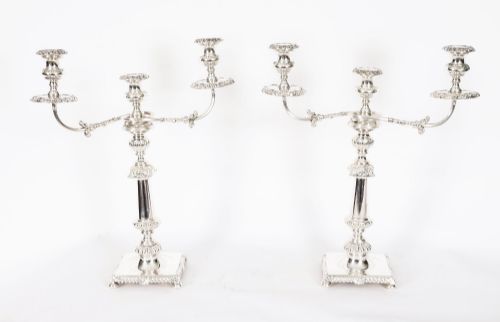
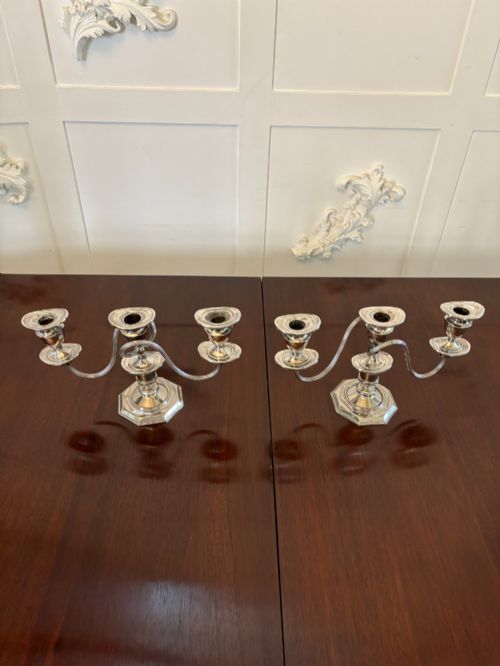
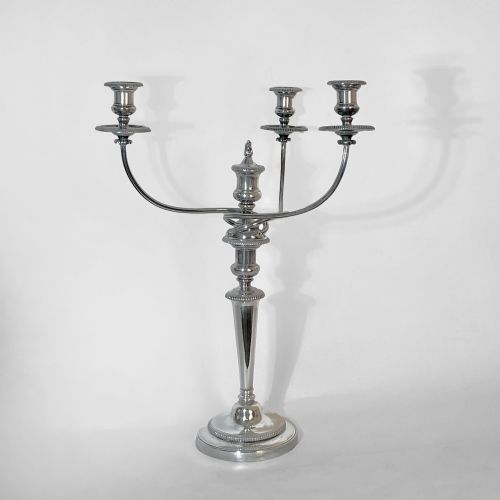
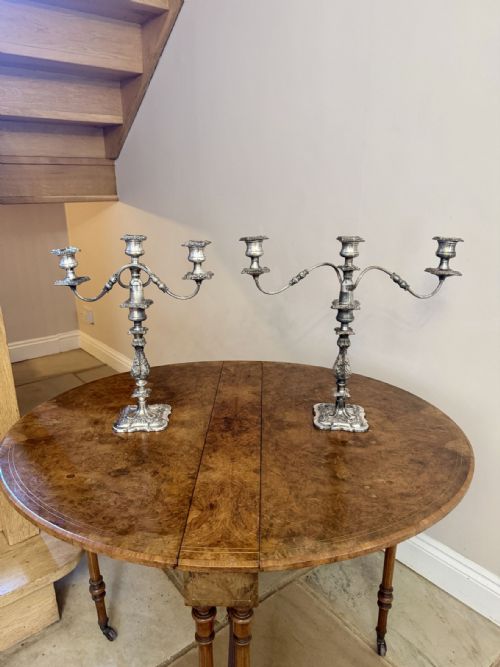

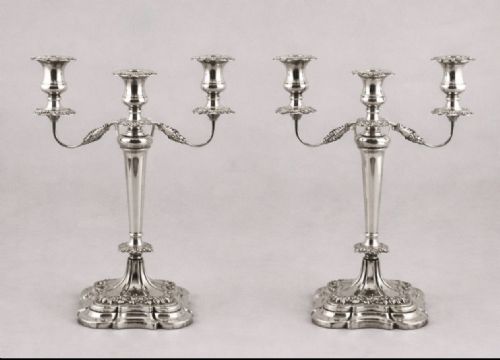


Three Branch Silver Candlestick
A three branch silver candlestick brings formal light to a dining table, holding multiple candles on stems of sterling silver, silver plate or Old Sheffield Plate.
Three Branch Silver Candlestick
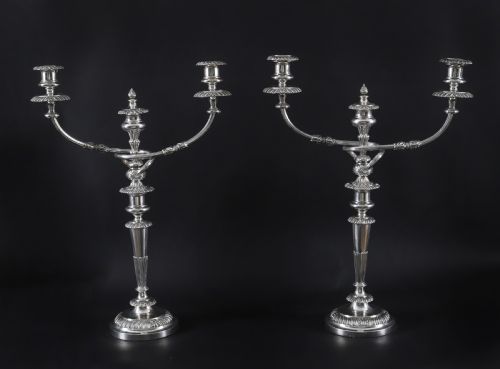
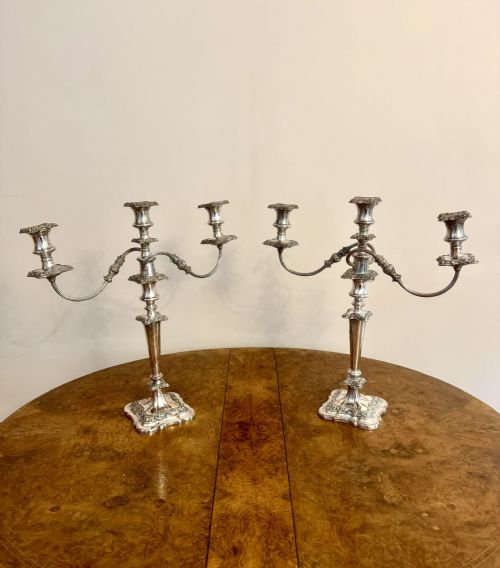
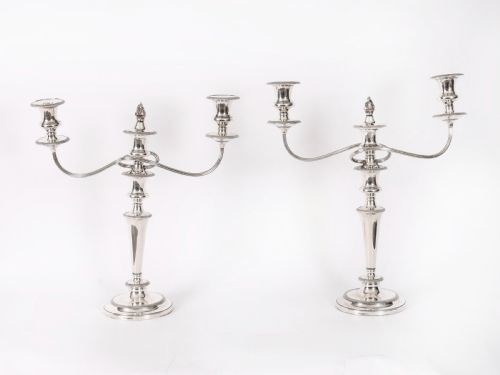
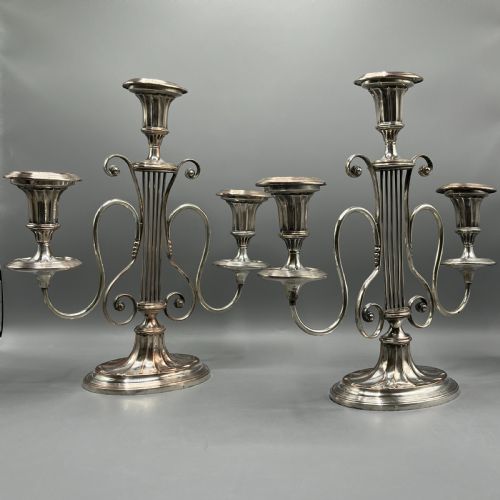
A three branch silver candlestick typically takes the form of a three-light candelabrum, grouping three candles on a single base. You will frequently encounter silver plated, Old Sheffield Plate and sterling silver examples spanning the eighteenth, nineteenth and twentieth centuries.
The designs draw on Georgian, Regency, Victorian and Rococo Revival styles, ranging from plain circular bases to ornate cast enrichment. Makers utilised copper cores for plated items and solid metal for sterling pieces, producing pairs suited for centrepieces.
How they were made
Old Sheffield Plate pieces combine a layer of silver fused to a copper base, often showing a thin sliver of copper at the cut edges. Later items rely on electroplated nickel silver or solid sterling silver formed into branches and weighted bases.
Casting and chasing created the ornate foliage and scrollwork seen on Victorian and Rococo revival examples. Plated items gained durability through heavier silver deposits applied over base metals.
Three Branch Silver Candlestick Retail Price Guide 2026
Typical asking prices for three branch silver candlestick among the pieces listed under this phrase on Sellingantiques today, from the lower quarter to the upper quarter. They describe what is for sale here now, not the wider market.
Listings feature periods spanning from the eighteenth century to the 1960s, executed in sterling silver, silver plate and Old Sheffield Plate.
What varies in quality
The weight and crispness of the casting separate simpler production pieces from the finest work by known makers. Crisp detail in the foliage and well-balanced branches indicate superior craftsmanship.
The condition of the plating dictates visual appeal, with excessive wear revealing the underlying copper or base metal. Original matching pairs command greater attention than assembled sets or single items.
Garrard & Co·Matthew Boulton·Barker Ellis·Blagden, Hodgson & Co
The Three Branch Silver Candlestick Glossary
- Old Sheffield Plate
- A method of fusing a thin sheet of silver onto a copper ingot before rolling them together into sheets. This technique predates modern electroplating and leaves characteristic copper edges.
- Electroplated Nickel Silver
- A base metal alloy of copper, nickel and zinc coated with a thin layer of silver using an electrical current. It became common during the nineteenth century.
- Candelabra
- A branched candlestick designed to hold multiple tapers from a single central stem. The terms three branch silver candlestick and candelabrum often describe the same lighting form.
- Rococo Revival
- A nineteenth-century design style mimicking the flowing curves, scrollwork and natural motifs of the mid-eighteenth century. It appears frequently on ornate Victorian lighting.
- Sterling Silver
- An alloy consisting of pure silver and other metals, usually copper, to increase durability while maintaining a high purity standard. Items made this way carry hallmarks indicating their origin and silver content.
Three Branch Silver Candlestick: Frequently Asked Questions
How do I clean my silver candelabrum safely?
Use a soft cloth and a gentle silver polish formulated to protect delicate surfaces and plated finishes. Avoid abrasive pads that can wear through thin plating.
Wash away residue with warm soapy water and dry thoroughly to prevent tarnishing in the detailed scrollwork.
What is the difference between silver plate and Old Sheffield Plate?
Old Sheffield Plate uses a mechanical fusion process to bond a sheet of silver to a copper base before forming. This creates a distinct layered structure visible at raw edges.
Standard silver plate relies on electrical currents to deposit a thin layer of silver onto a base metal like nickel silver or copper.
Can I use standard tapers in these branches?
Most antique sockets accommodate standard dinner tapers, though minor variations in nineteenth-century sizing occur. You can use damp paper or plastic candle fitting grips if a taper leans.
Check the nozzle diameter before purchasing candles to ensure a secure fit without forcing the wax.
How do I date a piece without hallmarks?
Examine the construction methods, such as screw threads, base weighting materials and edge seams on plated items. Old Sheffield Plate construction points toward the eighteenth or early nineteenth century.
Stylistic cues like Rococo Revival curves or plain Regency lines help narrow the manufacturing period when maker marks are absent.