


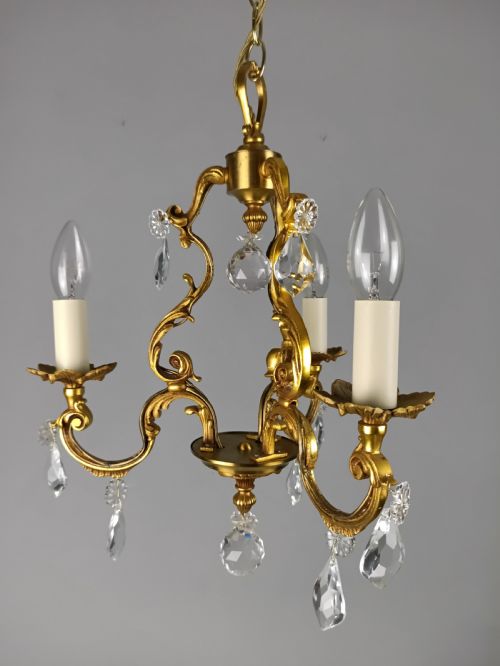


Three Arm Chandelier
When you want a three arm chandelier, you are looking for compact overhead lighting that brings period character to a smaller room.
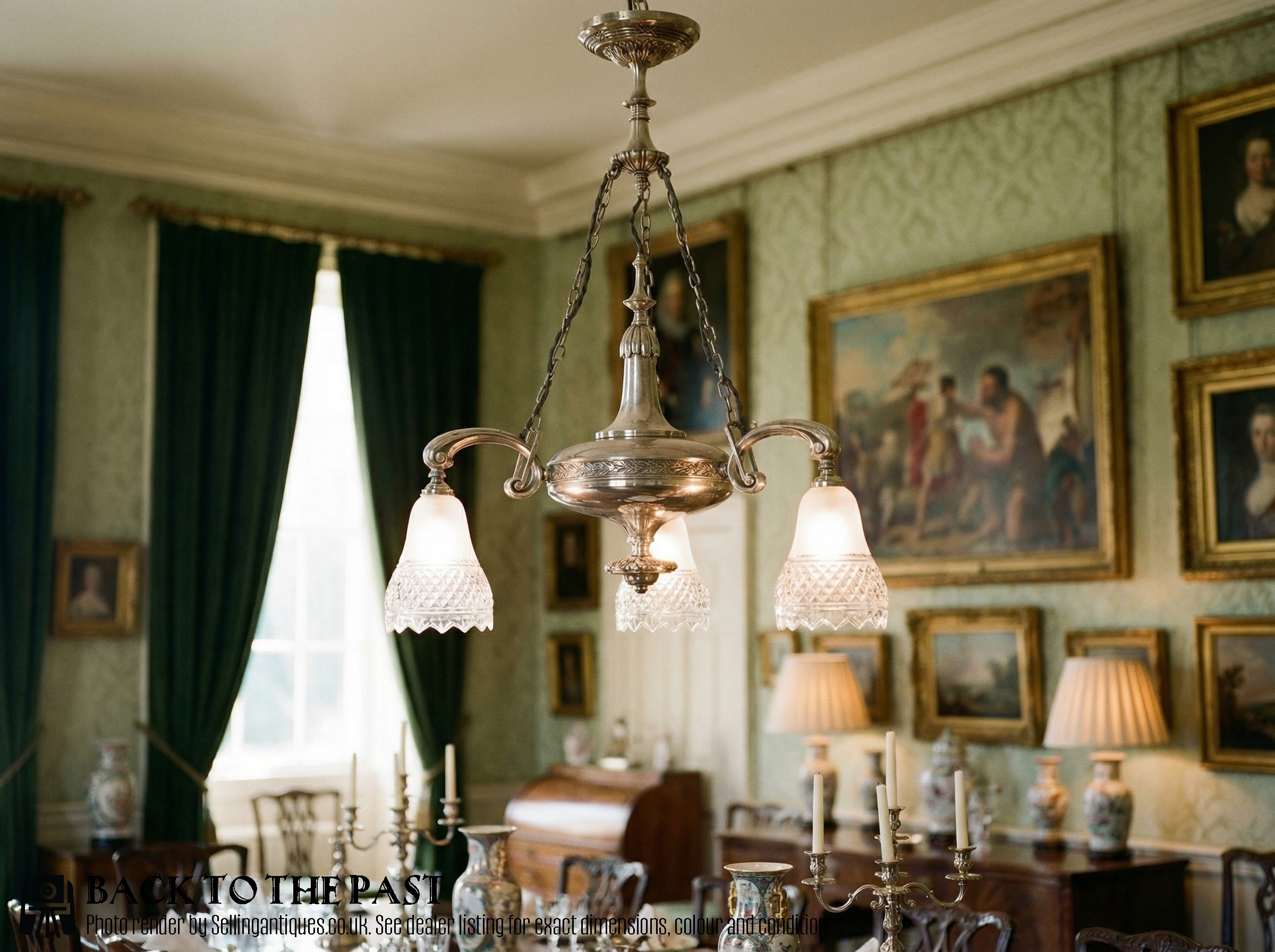
Three Arm Chandelier
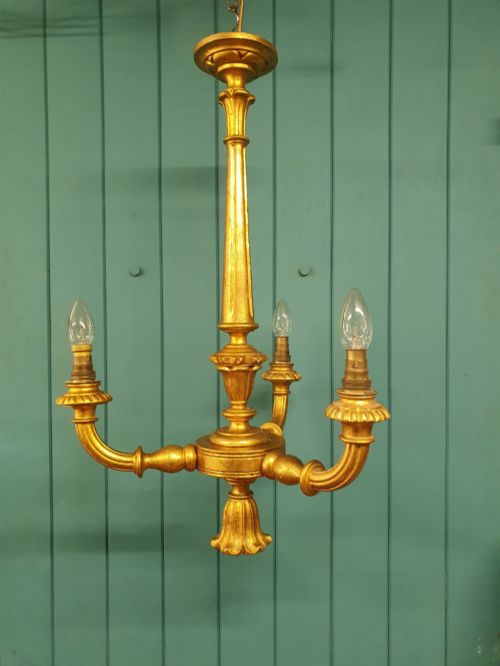
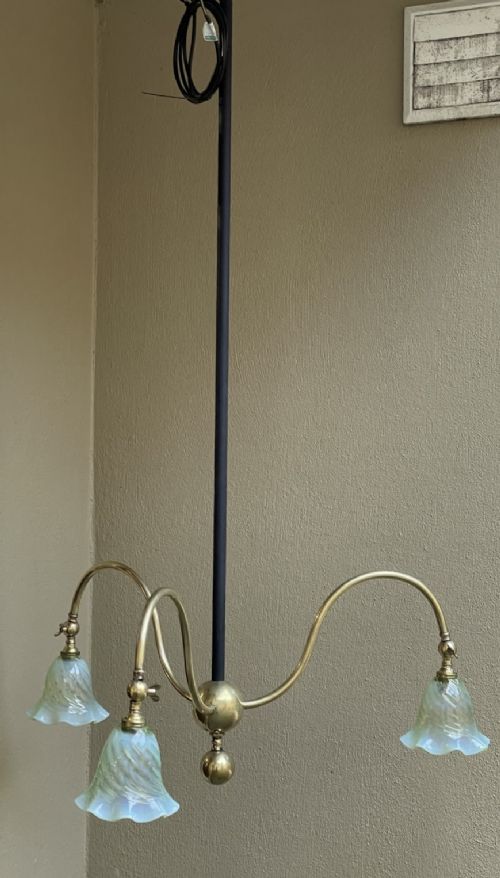
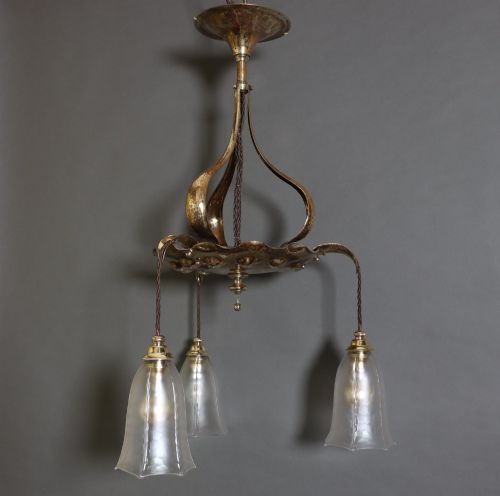
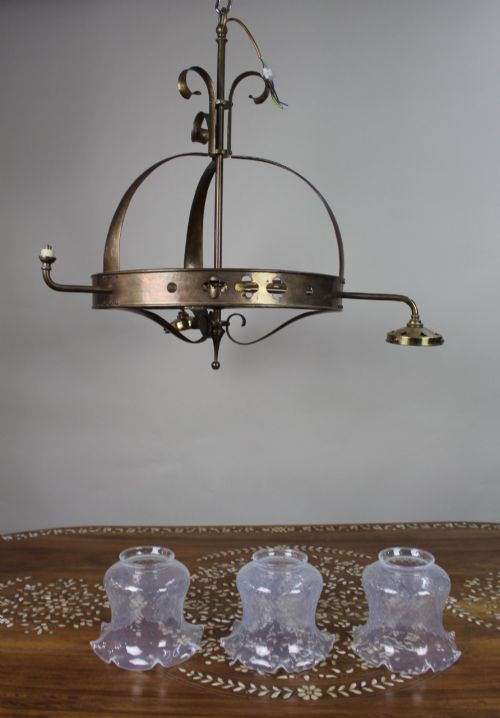
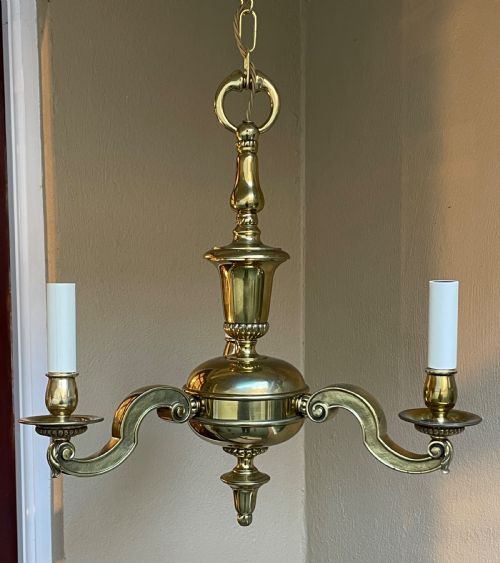
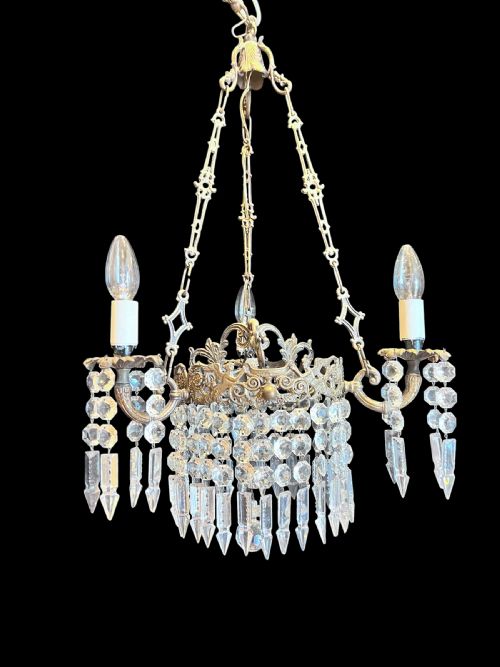
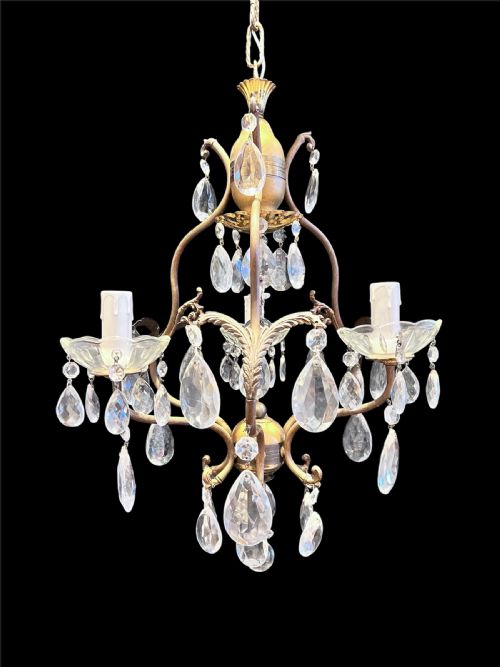
A three arm chandelier provides three distinct light points across various historical styles, ranging from French Rococo and Empire to Arts and Crafts and Art Deco. You will frequently meet smaller brass and gilt metal examples equipped with crystal drops or glass shades, alongside rustic wrought iron and carved giltwood variants.
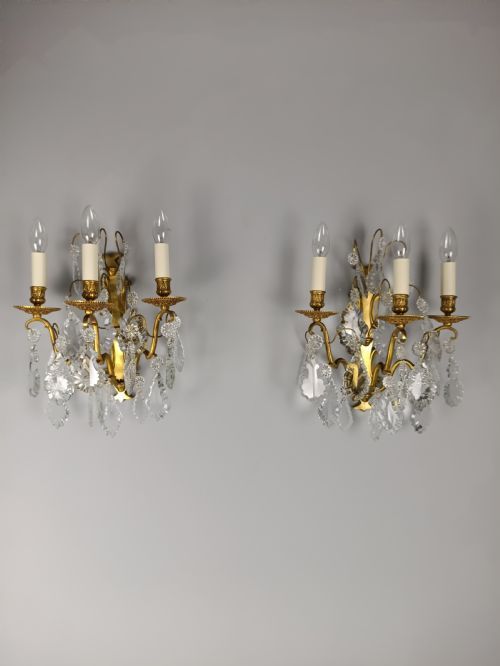
The selection spans the nineteenth century through the Edwardian era and into the nineteen-twenties and nineteen-thirties. Ceiling lights predominate, though pairs of wall lights and converted table lamps also appear within the records.
How they were made
Craftsmen utilised cast and gilded brass, bronze, and giltwood, shaping metal and wood to form the arms and frames. Glass and crystal feature heavily in the form of hanging drops, pendeloques, and pressed or opalescent shades.
Early methods relied on heavy casting and hand carving, whilst later pieces incorporated stamped components and specialised gasolier or early electric fittings. Surface finishes range from hand-gilding and gesso to polished or patinated brass and nickel silver.
Three Arm Chandelier Retail Price Guide 2026
Typical asking prices for three arm chandelier among the pieces listed under this phrase on Sellingantiques today, from the lower quarter to the upper quarter. They describe what is for sale here now, not the wider market.
Materials recorded across the archive include brass, gilt bronze, crystal, wrought iron, and gesso.
What varies in quality
The standard of a three arm chandelier rests upon the crispness of the metal casting or the depth of the wood carving. Fine examples display sharply rendered details, substantial weight, and well-integrated structural components rather than crude assembly.
Quality also shows in the materials selected for the ornamentation, such as the clarity and cut of crystal drops and the artistic merit of associated glass shades. Pieces retaining original gilding or high-grade patination stand apart from lesser iterations.
The Three Arm Chandelier Glossary
- Gasolier
- A decorative ceiling light fixture originally designed and wired for gas lighting before conversion to electricity. These fixtures often feature heavier brass tubing and specialised keys.
- Giltwood
- Timber that has been coated with a thin layer of gold leaf or gold paint over a prepared gesso ground. This technique creates a rich metallic sheen on carved wooden chandelier frames.
- Gesso
- A plaster-like mixture applied to wood surfaces as a base for gilding or painting. It allows craftsmen to carve intricate relief details before applying gold leaf.
- Opalescent glass
- Glass that exhibits a milky, iridescent quality, scattering light into soft hues. It is frequently found on shades associated with nineteenth-century and early twentieth-century light fittings.
Three Arm Chandelier: Frequently Asked Questions
Where should I hang a three arm chandelier?
These compact fixtures suit smaller spaces such as entrance halls, landings, or intimate dining areas where a larger multi-arm light would overwhelm the proportions.
Their limited spread allows them to provide concentrated illumination without dominating a modest ceiling height.
How do I identify an Edwardian chandelier?
Edwardian examples often feature lighter silver or brass frameworks, sometimes incorporating delicate glass shades or early electrical conversions.
They tend to reflect a transition away from heavy Victorian ornamentation towards cleaner, more refined domestic lighting designs.
Can these chandeliers take modern light bulbs?
Most antique fittings require modern adaptation or rewiring to accommodate contemporary bulb fittings safely.
An electrician can easily adjust the internal wiring while preserving the external historical appearance of the arms and ceiling rose.