
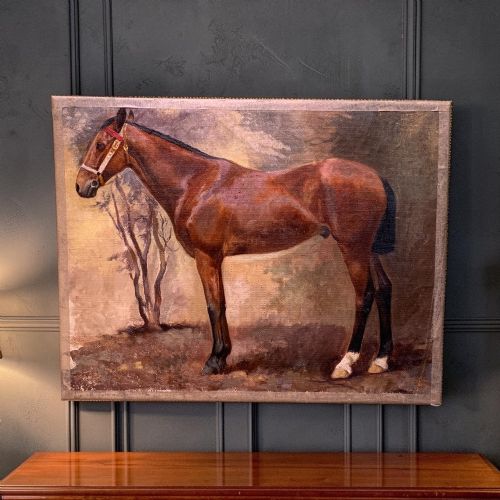
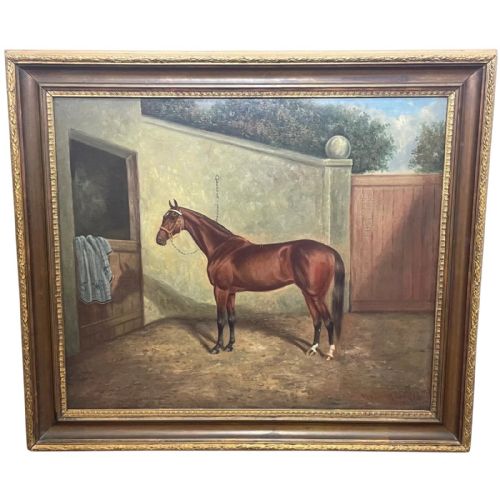
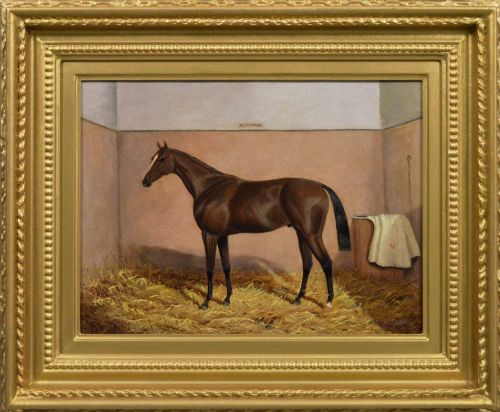
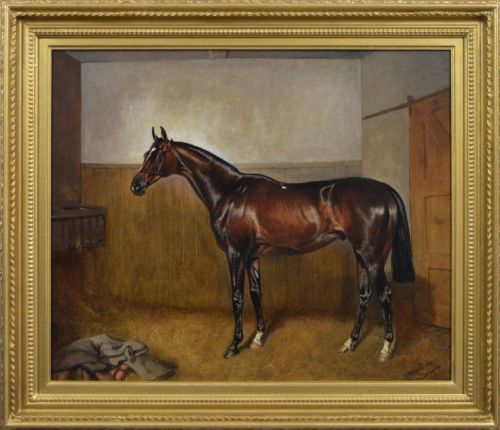
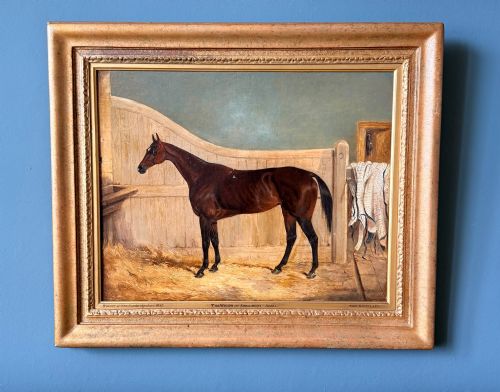
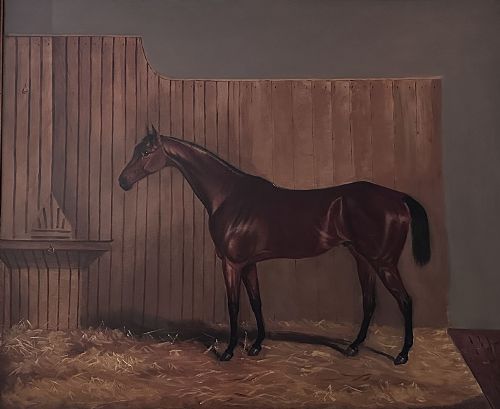
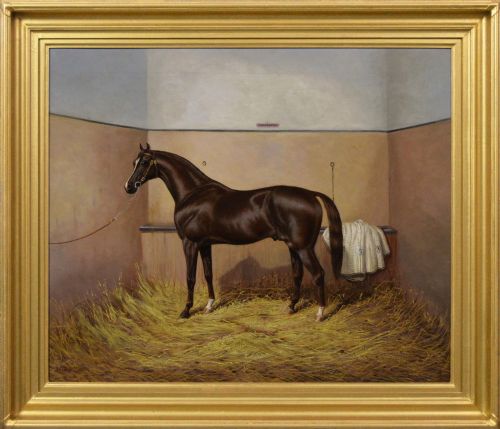
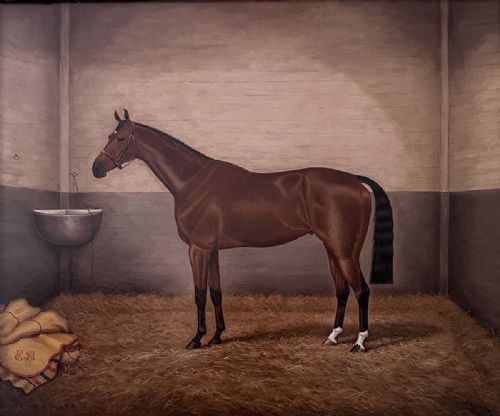


Thoroughbred Horse Oil Painting
A thoroughbred horse oil painting captures equine power and racing history, ranging from Victorian works to early twentieth-century pieces.
Thoroughbred Horse Oil Painting
A thoroughbred horse oil painting depicts famous racers, stable portraits, and historical winners across the nineteenth and early twentieth centuries. These works belong to the traditions of Victorian sporting art and British realism, recording notable animals and famous jockeys.
Most examples found here date from the Victorian and Edwardian periods, stretching from the eighteen-seventies into the nineteen-twenties. The subjects include named champions like Spion Kop, Flying Fox, and Persimmon, alongside anonymous bay and chestnut runners.
The compositions vary from side-on conformation portraits in stables to dramatic trackside victory scenes with jockeys up in silk colours. They serve as historical documents of the turf as much as fine art pieces for the wall.
How they were made
Artists painted these works using oil paint applied to stretched canvas, often housed within wood and giltwood frames. The medium allowed for rich depth in the depiction of glossy coats, muscle tone, and atmospheric turf or stable backgrounds.
Gold leaf featured heavily on the ornate frames that accompanied these sporting commissions, highlighting the prestige of the animal portrayed. The canvas support provided the durability necessary for large-scale equine portraiture over generations.
Listings feature oil on canvas mediums set within wood and giltwood frames, spanning the Victorian and Edwardian periods.
What varies in quality
Quality rests upon the artist's anatomical accuracy in rendering the complex musculature and noble head of the thoroughbred. Lesser works display stiff, generic forms, whereas superior paintings capture the distinct personality and conformation of a celebrated runner.
The handling of light on the animal's coat and the integration of the horse within its landscape or stable setting define the upper tier. Masterful brushwork brings movement and tension to the racecourse scenes, distinguishing professional sporting artists from commercial copyists.
Frederick Albert Clark·John Alfred Wheeler·Thomas Walker Bretland·Edward Lloyd of Ellesmere·Samuel Spode·Walter Herbert Wheeler
The Thoroughbred Horse Oil Painting Glossary
- Conformation
- The physical build and bodily structure of the horse. Artists skilled in equine portraiture paid strict attention to correct proportions.
- Giltwood
- Wood that has been covered with a thin layer of gold leaf. Many nineteenth-century frames utilise this technique to enhance the artwork.
- Sporting art
- A genre of painting dedicated to equine subjects, racing, and field sports. This tradition flourished in Britain throughout the Victorian era.
- Bay
- A coat colour of the horse characterised by a reddish-brown body with black mane, tail, and lower legs. This colour appears frequently in nineteenth-century racing portraits.
Thoroughbred Horse Oil Painting: Frequently Asked Questions
How do I date a thoroughbred horse oil painting?
Dating relies on the style of the clothing worn by jockeys, the framing materials, and clues within the title or inscribed signatures on the canvas. Archival records of famous racehorses also help narrow down the exact year of a race victory.
Victorian and Edwardian works often display distinct lettering styles on the stretcher bars or canvas reverses. Comparing the painter's active dates in historical art records provides further verification.
Who were the notable equine artists?
Painters such as Albert Clark, John Alfred Wheeler, and Samuel Spode specialised in recording famous racehorse winners for owners and trainers. Their works captured the prominent bloodstock and legendary jockeys of the nineteenth century.
Many of these artists possessed deep knowledge of racing anatomy and spent time in stables and at major tracks like Epsom and Kempton Park. Their paintings remain key historical records of British turf history.
How should I hang a sporting oil painting?
These paintings look best displayed at eye level in spaces with controlled lighting to prevent glare on the oil surface and giltwood frame. Avoid placing them in direct sunlight or above active fireplaces where fluctuating heat can damage the canvas.
Pairing them with traditional period interiors or library settings complements their rich equestrian heritage. Ensure the wall fixings match the substantial weight of antique canvas and timber frames.
What is the difference between a stable portrait and a racing scene?
A stable portrait focuses solely on the animal standing quietly within its quarters, emphasising its physical conformation and coat condition. These compositions are static, calm, and intimate.
In contrast, racing scenes capture the drama of the turf with jockeys up in team colours, pounding hooves, and competitive tension. These dynamic works celebrate specific historical race wins.