

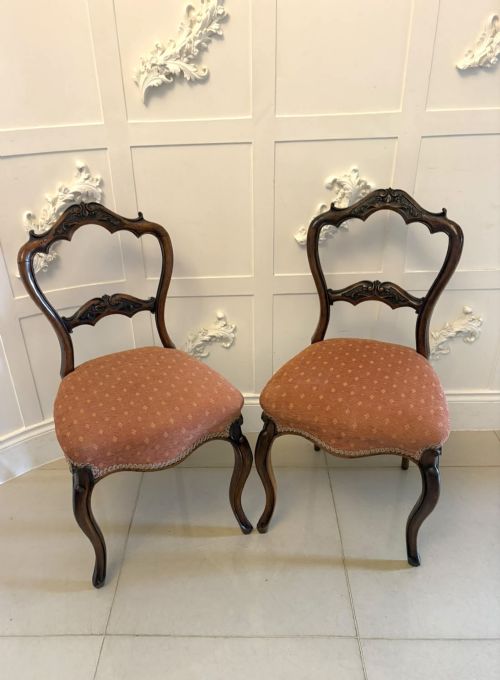
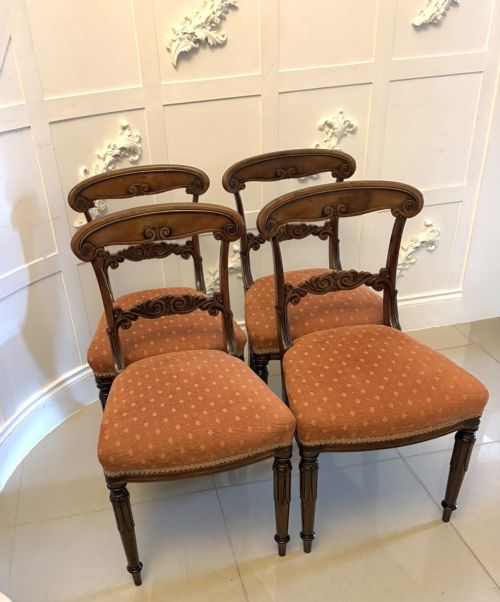
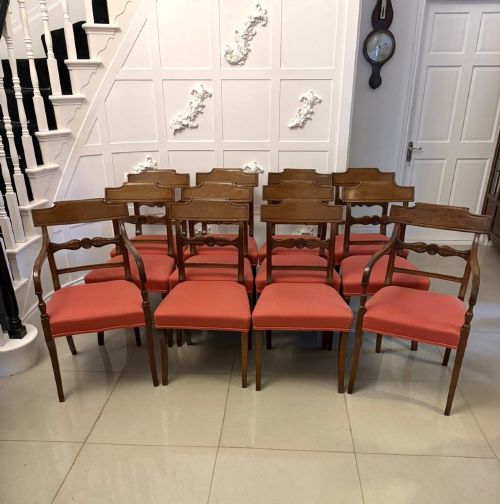
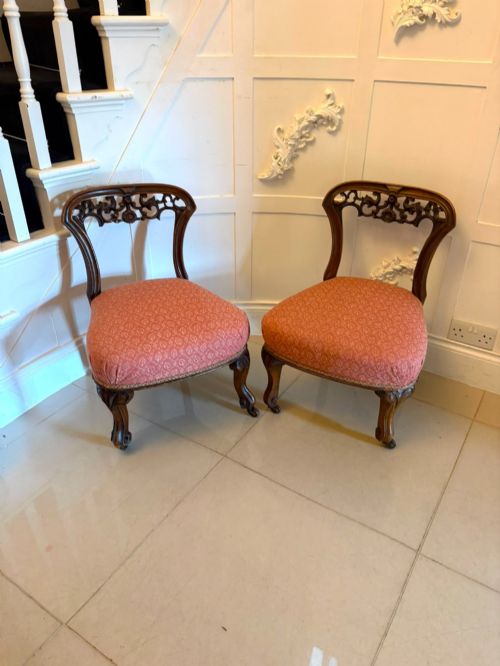


Terracotta Side Chairs
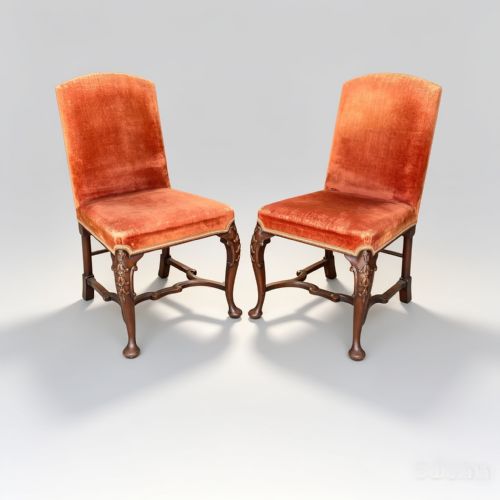
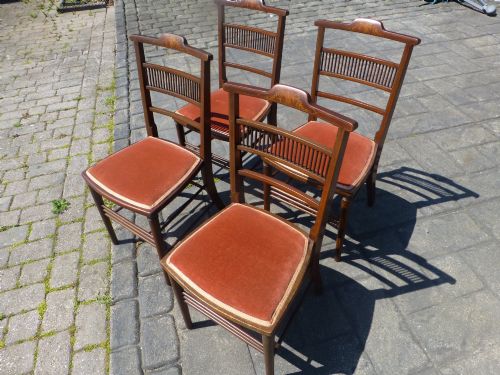
These terracotta side chairs bring warmth and distinct earthy tones to a dining room or hall.
Terracotta Side Chairs
When you search for terracotta side chairs, you encounter seating built across multiple eras, including Victorian, Regency, and the eighteenth century. These pieces predominantly take the form of dining chairs and occasional side chairs used for extra seating around the home.
The material descriptions in the current selection highlight traditional woods rather than ceramic terracotta bodies, indicating that the term likely describes the rich, warm reddish-brown finish or upholstery tones of the timber. Walnut and mahogany form the structural core of these items, often accompanied by period upholstery.
Makers and workshops from Edinburgh to English regional centres produced these chairs in sets and pairs. You find both George II styles and later Victorian revivals represented within the group.
How they were made
Makers constructed these chairs primarily using solid hardwoods such as mahogany, walnut, and rosewood. These timbers provided the structural strength required for pierced splat backs, carved frames, and tulip legs.
Detailed ornamentation involved specialist techniques like boxwood inlay and intricate hand carving. Upholstered versions incorporated traditional textile coverings, fabrics, and velvet secured over supportive internal padding.
Terracotta Side Chairs Retail Price Guide 2026
Typical asking prices for terracotta side chairs among the pieces listed under this phrase on Sellingantiques today, from the lower quarter to the upper quarter. They describe what is for sale here now, not the wider market.
Dining chairs and side chairs dominate the selection, appearing individually and in sets up to twelve.
What varies in quality
The standard of carving and joinery determines the grade of each chair. Crisp hand-carving on walnut or mahogany frames distinguishes finer examples from simpler production pieces.
Completeness within sets and the integrity of original timber patination heavily influence the standing of an item. Matching sets of six, eight, or twelve carry greater consistency than assembled groups.
Morison and Co of Edinburgh·Munro
The Terracotta Side Chairs Glossary
- Splats
- The vertical central strip of wood in the back of a chair. Pierced splats feature open cut-out designs typical of eighteenth-century and revival seating.
- Tulip legs
- Turned or carved furniture legs shaped to resemble the bulbous profile of a tulip flower. This form appears frequently on mid-nineteenth-century seating.
- Regency
- An English design period spanning the early nineteenth century. Furniture from this era often draws inspiration from classical Greek and Roman forms.
- George II
- A mid-eighteenth-century English design style associated with robust walnut frames and ornate carved details. Later revival pieces often emulate these classic proportions.
- Boxwood inlay
- A decorative technique involving small contrasting pieces of pale boxwood fitted into recesses within a darker wood surface.
Terracotta Side Chairs: Frequently Asked Questions
What periods do these chairs represent?
The pieces span from the eighteenth century through the Regency era and into the late Victorian period. You encounter styles ranging from George II revival to Edwardian designs.
Dates cluster around the mid-to-late nineteenth century, reflecting popular revival movements of those decades.
How were side chairs originally used?
Side chairs served multiple domestic functions in dining rooms, halls, and parlours. They provided movable seating that could be placed against walls when not surrounding a dining table.
Larger sets accommodated formal dining, while pairs and single chairs filled smaller reception spaces.
Are these chairs sold in sets?
Listings include individual chairs, pairs, and larger sets containing four, six, eight, or twelve pieces. Matched sets usually originate from dining room environments.
Pairs and single items more commonly function as hall chairs or occasional seating.
What woods appear in these pieces?
Mahogany and walnut form the primary timber framework for the vast majority of these chairs. Rosewood also appears in select Regency examples.
Decorative elements occasionally incorporate boxwood inlay alongside various upholstered fabrics and velvet.