
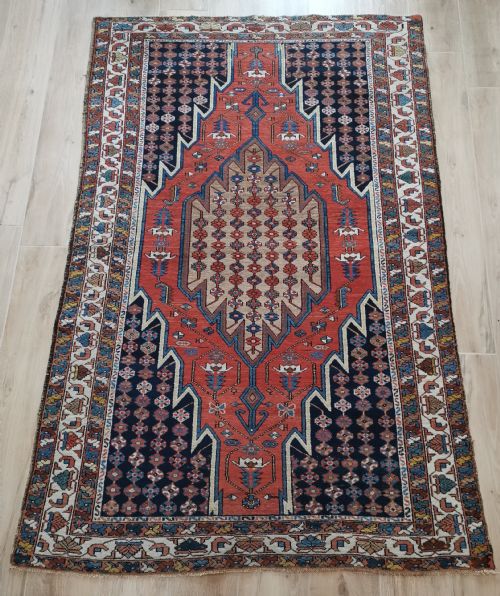

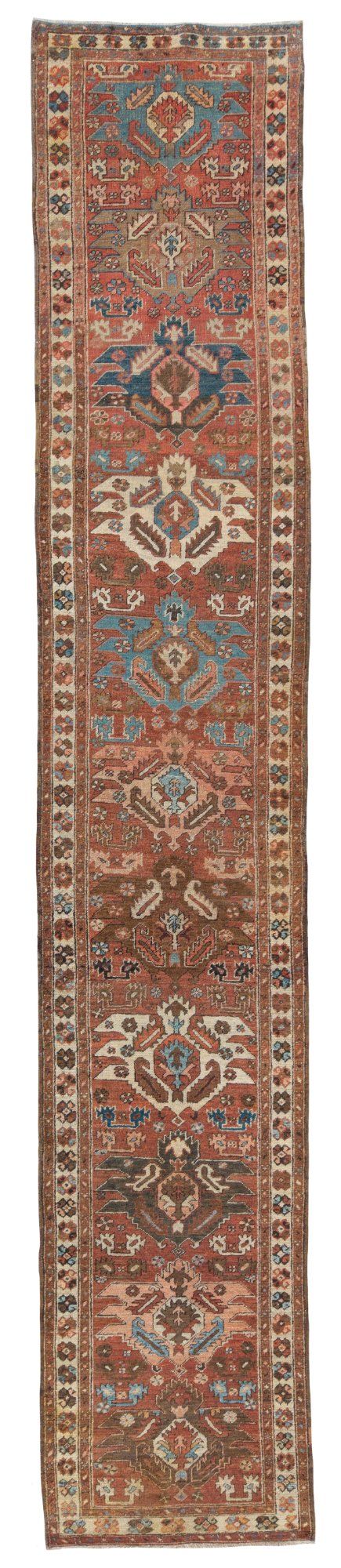
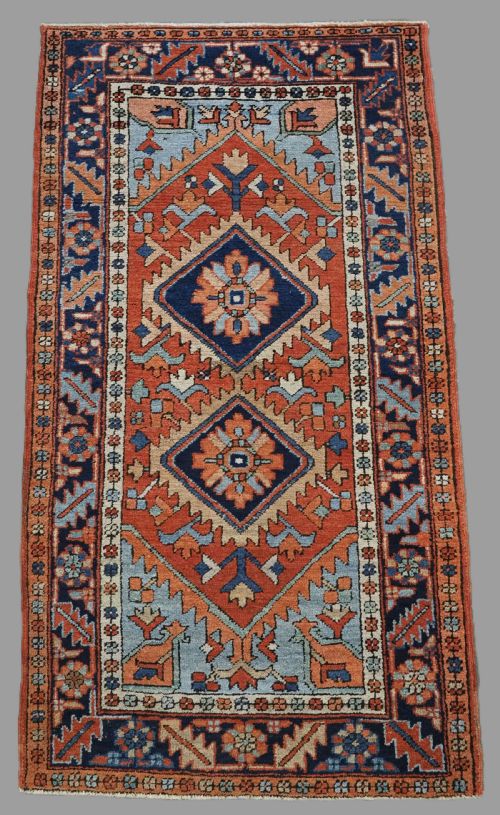
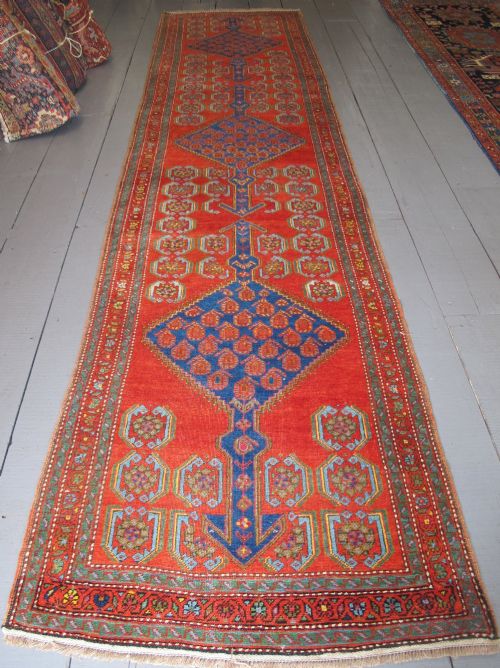
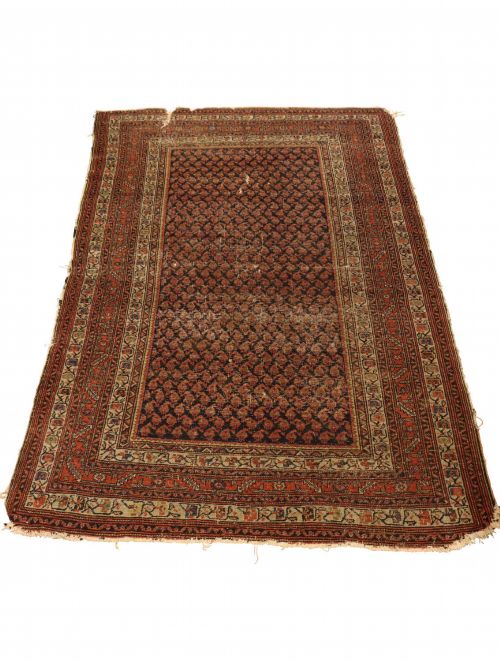


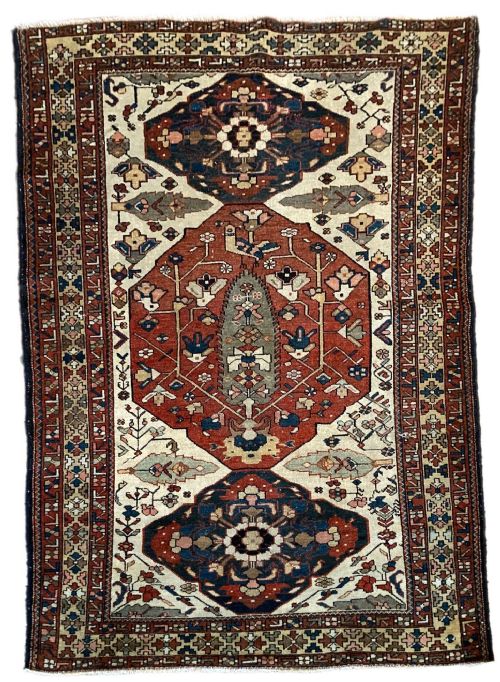
Terracotta Red Rug Runner
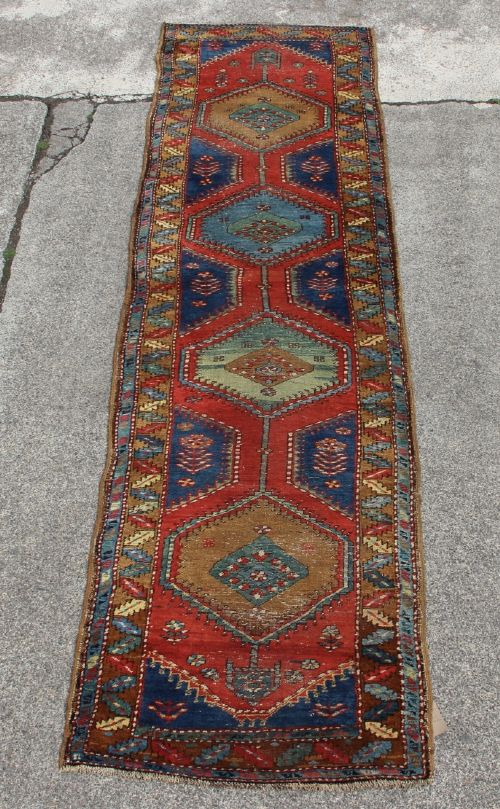
When a terracotta red rug runner catches the eye, you are looking at a hand-knotted long format textile defined by earthy warmth and tribal geometry.
Terracotta Red Rug Runner
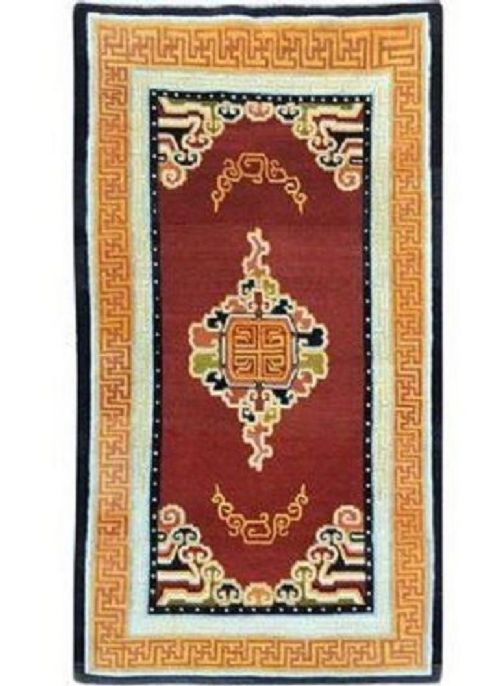
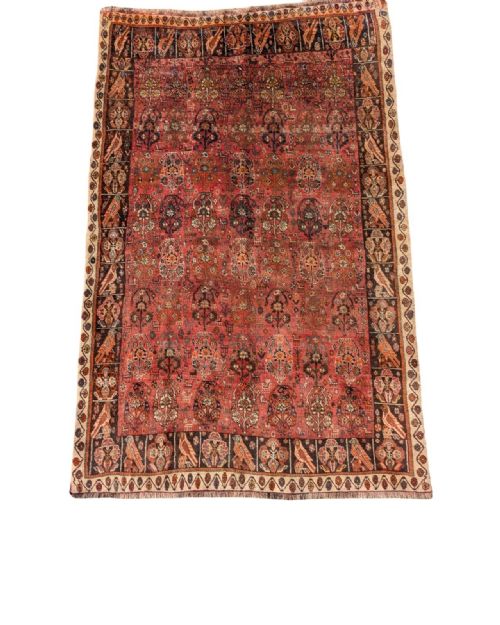
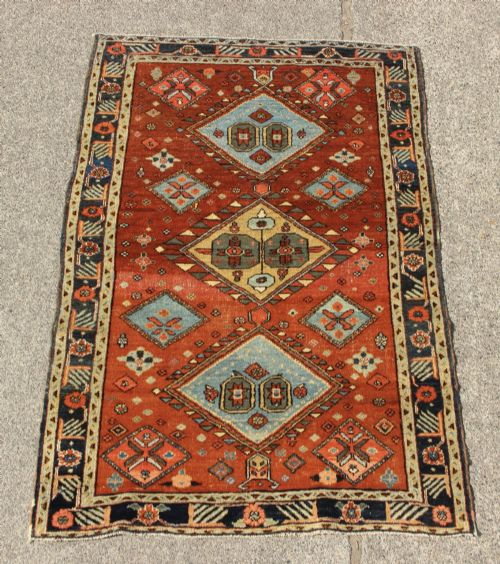
A terracotta red rug runner provides a long, narrow format suited to hallways and corridors. These textiles originate largely from Persian, Caucasian, and Central Asian weaving traditions spanning the nineteenth and early twentieth centuries.
The inventory on this page centres on regional styles such as Heriz, Bakshaish, Kurdish, and Hamadan. Buyers encounter narrow formats designed specifically for linear spaces alongside broader long rugs.
Woven by tribal and village makers, these pieces employ repeating motifs and geometric medallions. The terracotta palette draws from natural dyes that create depth across the wool surface.
Materials and Construction
Construction relies on hand-spun wool for the pile, combined with cotton foundations in many village pieces. Goat hair appears occasionally in tribal weaving for durable outer cords.
Natural dyes yield the characteristic terracotta reds, blues, and golds found across these textiles. Artisans tie dense knots by hand, resulting in a flexible yet resilient structure built for heavy foot traffic.
Every runner holds the hidden geometry of a weaver improvising tribal stories straight onto the loom.
Assessing Quality
Knot density and structural tightness dictate the resilience of the textile underfoot. Tightly packed knots secure the wool pile against wear in high-traffic corridors.
The complexity and execution of the design influence visual depth. Balanced proportions in geometric medallions and saturation in natural dye batches separate standard village pieces from finer workshop productions.
The Terracotta Red Rug Runner Glossary
- Runner
- A long, narrow carpet format intended for corridors, staircases, and hallways. These pieces measure significantly longer than they are wide.
- Heriz
- A region in North-West Persia known for bold, geometric medallion designs and durable construction. Rugs from this area often feature large-scale central motifs.
- Natural Dyes
- Colouring agents derived from plants, roots, and insects rather than synthetic chemicals. These dyes mature gracefully over decades.
- Boteh
- A stylised almond or paisley motif representing a floral spray or cypress tree. This ancient design appears frequently in Persian and Caucasian weaving.
- Hand-Knotted
- A technique where individual strands of wool are tied by hand onto a warp foundation. This method creates the pile characteristic of traditional rugs.
Terracotta Red Rug Runner: Frequently Asked Questions
Where should a runner be placed?
Runners suit narrow spaces such as hallways, corridors, and gallery landings. Their elongated proportions guide movement through a home while protecting timber or stone flooring.
Placement in entrance halls also introduces warmth and texture immediately upon entry. Selecting the correct length ensures the textile sits comfortably without obstructing doors.
How do I care for antique wool runners?
Routine maintenance involves gentle vacuuming without a rotating brush roll to protect the wool pile. Professional cleaning should occur periodically using methods suitable for vegetable-dyed textiles.
Underlay placement prevents sliding and cushions the weave against hard floors. Keeping the textile away from direct sunlight preserves the terracotta red tones.
What defines a Bakshaish runner?
Bakshaish runners originate from a village region in North-West Persia and typically date to the nineteenth century. They display spacious, large-scale geometric patterns rendered in muted terracotta and blue palettes.
Their drawing tends to be more relaxed and abstract than formal city carpets. This artistic freedom gives them a distinct presence in modern interiors.
How can I tell tribal rugs apart?
Tribal rugs display geometric motifs, ram horns, and stylized guls rooted in nomadic traditions. Village and regional groups use specific wool textures, knotting directions, and colour combinations unique to their community.
Analysing the border patterns and abrash colour variations helps identify the provenance. Kurdish, Kazak, and Khamseh pieces each carry distinct structural markers.