





Terracotta Kurdish Rug
A terracotta kurdish rug brings grounded tribal geometry and saturated earthy tones into a room.
Terracotta Kurdish Rug
A terracotta kurdish rug is a hand-knotted tribal textile produced by weavers across western Persia and eastern Anatolia. These pieces range from small bag faces and chantehs to substantial room-size carpets, narrow hallway runners, and long kelleh formats.
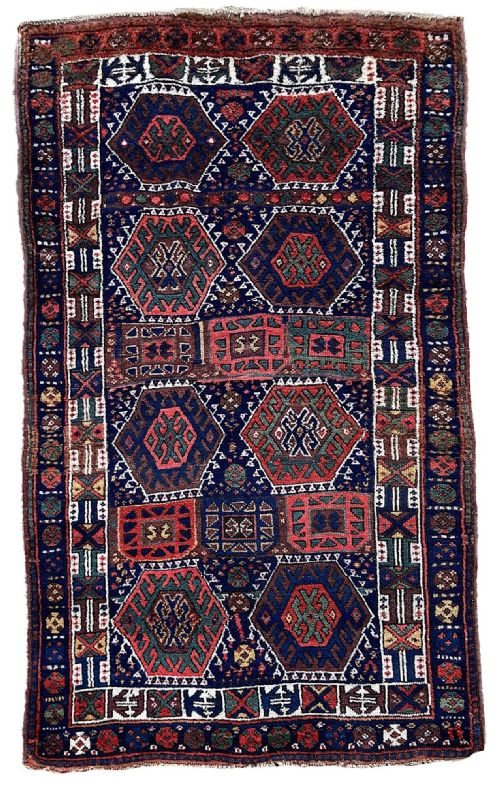
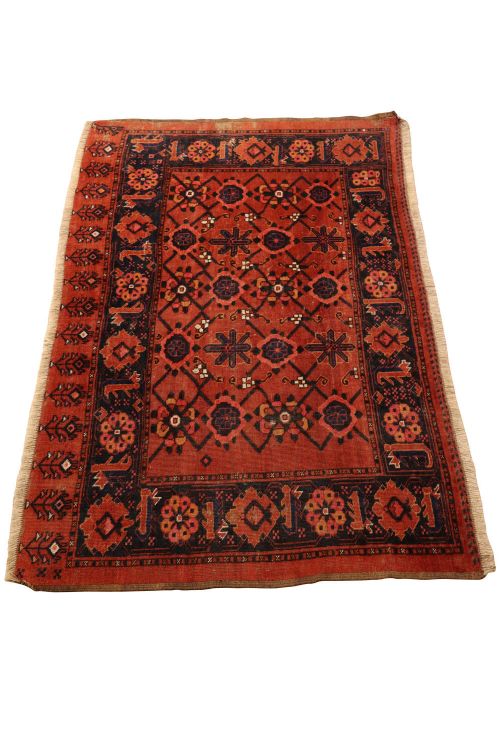
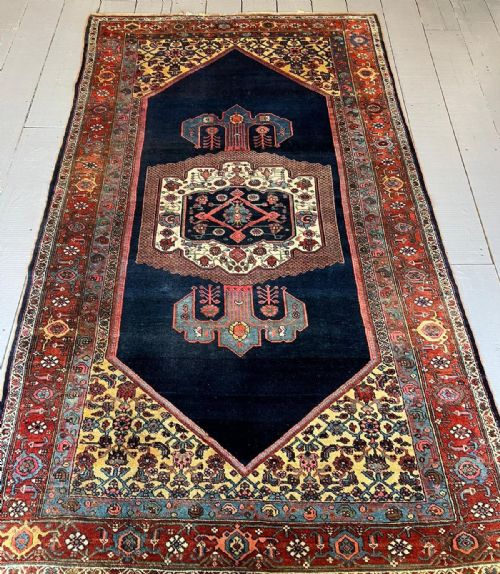
The most common formats met on this page are village-made area rugs and narrow runners dating from the late nineteenth century to the early decades of the twentieth century. Examples often display traditional motifs such as Memling guls, geometric medallions, and stylized birds perched on trees.
Originating from tribal and village contexts, these textiles reflect the weaving traditions of groups including the Bidjar, Hamadan, and Sauj Bulagh regions. Their robust construction suits them for domestic spaces needing warmth and durable floor coverings.
How they were made
Weavers constructed these pieces using wool for both the pile and the foundation threads, often combining cotton for warp and weft in later village productions. Hand-spun wool provides a resilient pile that ages with a rich patina under foot traffic.
Natural dyes impart the characteristic terracotta and earthy palette found in these tribal works. Artisans sourced colours from local plants and minerals, creating subtle variations and abrash within the field of the rug.
Current listings span production dates from the early nineteenth century through to the 1930s.
What varies in quality
Quality in a terracotta kurdish rug depends on the density of the knotting and the handled weight of the textile. Tighter knot structures allow for sharper rendering of geometric patterns and greater longevity on the floor.
The purity and depth of the natural dyes separate standard village pieces from superior works. Pliable wool foundations and balanced proportions contribute to the overall integrity of the weaving.
The Terracotta Kurdish Rug Glossary
- Gul
- A medallion or repeating octagonal motif frequently found in tribal carpets. These symbols often identify specific tribal groups or weaving districts.
- Abrash
- A variation in colour tone caused by changes in dye batches or hand-spun wool lots. This subtle striping effect indicates genuine natural dyeing.
- Kelleh
- A long, rectangular format of carpet traditionally used in Persian rooms. These elongated pieces typically measure significantly longer than they are wide.
- Chanteh
- A small woven bag or pouch produced by nomadic and village weavers. Collectors prize surviving examples for their compact design and fine detail.
- Warp
- The vertical foundation threads stretched tightly on the loom before knotting begins. The fringe of the rug is formed by the ends of these structural threads.
Terracotta Kurdish Rug: Frequently Asked Questions
Where were these rugs made?
These textiles originate from the tribal and village regions of western Persia, including Hamadan and Bidjar, as well as eastern Anatolia.
Weavers working within these communities passed down specific geometric patterns and structural techniques across generations.
How do I care for a tribal rug?
Vacuum these wool textiles gently without using a rotating brush bar to protect the hand-knotted pile.
Professional cleaning by specialists familiar with antique vegetable-dyed wool ensures the natural colours remain stable over time.
What is a runner format?
Runners are narrow, elongated carpets designed specifically for hallways, corridors, and staircases.
Tribal weavers produced these long formats to fit domestic architectural spaces while displaying continuous repeating motifs.
How do I date an older rug?
Dating relies on examining the wool characteristics, natural dye palette, and structural conventions of the weaving.
Pieces from the nineteenth century generally exhibit softer wool handling and distinct dye variations compared to later productions.