



Terracotta Cityscape Painting
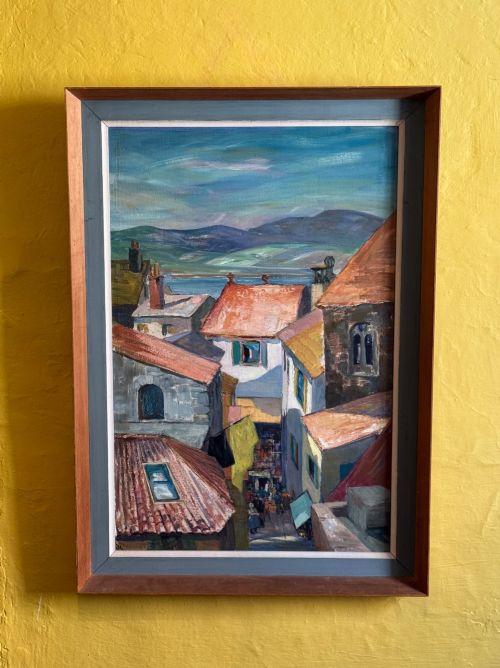
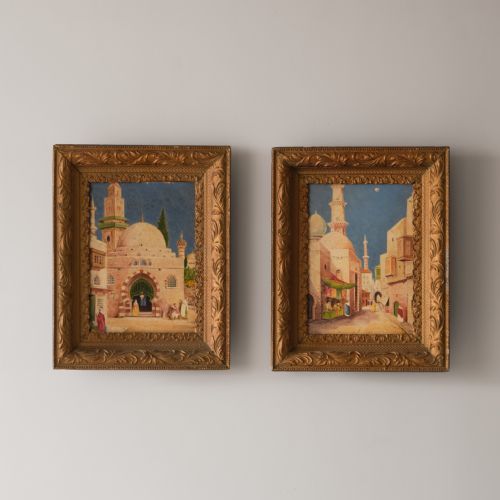
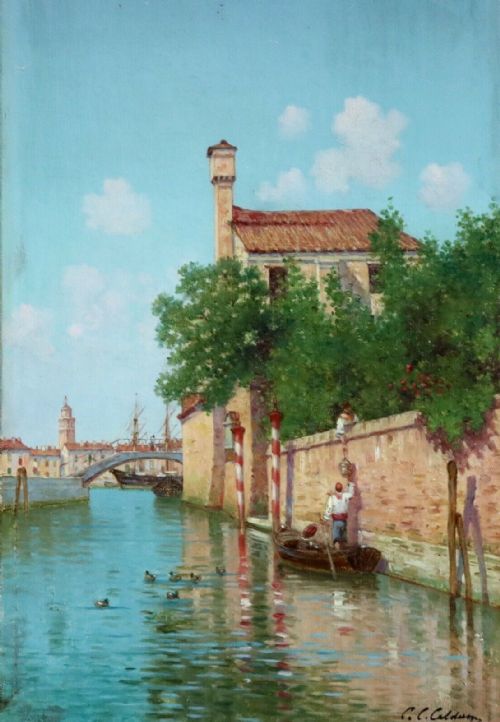
These terracotta cityscape painting works capture urban stone and warmth through paper, canvas, and board across several centuries.
Terracotta Cityscape Painting
A terracotta cityscape painting brings architectural warmth to walls through depictions of urban scenes, bridges, and old buildings rendered in earthy tones. Buyers seeking a terracotta cityscape painting typically encounter works executed in oil paint, watercolour, or mixed media on canvas, paper, or board.
The selections span distinct periods including the nineteenth century, eighteen hundred, nineteen thirty, nineteen forty, nineteen fifty, and nineteen sixty. Styles range from naive art and impressionism to mid-century modern and mid-century expressionism.
Subject matter frequently centres on historic locations such as Venice, London, Baghdad, and Lincoln. Formats include framed paintings, wall art, and fine art pieces.
Materials and construction
Artists built these urban views using oil paint, impasto, watercolour, ink, and gouache applied to canvas, heavy paper, or prepared board. Oil paintings often incorporate thick impasto layers to build texture on the surface of the canvas or board.
Watercolour and ink works rely on fluid application upon paper supports, capturing light and atmosphere with transparent washes. Many of these artworks are housed within gilt wood frames that complement the warm tones of the composition.
Terracotta Cityscape Painting Retail Price Guide 2026
Typical asking prices for terracotta cityscape painting among the pieces listed under this phrase on Sellingantiques today, from the lower quarter to the upper quarter. They describe what is for sale here now, not the wider market.
Listings feature works created between the nineteenth century and nineteen sixty, utilising oil paint, watercolour, ink, and mixed media on canvas, paper, and board.
Distinctions in quality
Quality in these urban works rests upon the surety of the draughtsmanship and the artist's handling of light within architectural spaces. Stronger examples display confident brushwork or watercolour washes that define urban structures without stiffness.
The coherence of the palette and the preservation of the original support material further distinguish superior works from lesser examples. Framing also plays a role, where period gilt wood enhances the visual weight of the painting.
Claude Jousset·Fred Lawson·Jack Merriott·David Law·Charles Clement Calderon·John Thirtle
The Terracotta Cityscape Painting Glossary
- Impasto
- Paint applied thickly to a canvas or board, standing out from the surface so that texture remains visible. This technique adds physical depth to architectural elements within an urban view.
- Gilt wood
- Wood carved and coated with gold leaf or gold-coloured finish to form a decorative frame. These frames enclose many traditional and mid-century paintings.
- Mixed media
- An artwork created using more than one medium or material combined on the support. Artists utilise this approach to introduce varied textures.
- Naive art
- Art produced by a self-taught creator, characterised by a childlike simplicity in perspective and proportion. Such pieces offer direct charm.
- Impressionism
- A style focused on capturing the visual impression of a moment, particularly through shifting light and unblended brush strokes. French and British practitioners developed this approach across the nineteenth and twentieth centuries.
Terracotta Cityscape Painting: Frequently Asked Questions
What periods do these paintings come from?
The works span from the early nineteenth century through to the mid-twentieth century. Key dates represented include the eighteen hundreds, nineteen thirty, nineteen forty, nineteen fifty, and nineteen sixty.
This broad timeline encompasses diverse movements from traditional topographical views to mid-century expressionism and abstract modernism.
What materials were used by the artists?
Painters employed oil paint, watercolour, ink, and mixed media across supports such as canvas, paper, and board. Many works also feature textured impasto applications to build up architectural surfaces.
Frames are commonly fashioned from gilt wood, adding traditional presentation to the artworks.
How should I care for these works?
Keep paintings away from direct sunlight and damp environments to protect paper, canvas, and wooden supports. Maintain stable indoor temperatures to prevent warping of boards or stretching of canvases.
Dust gilt wood frames gently with a dry cloth and avoid touching painted surfaces directly.