
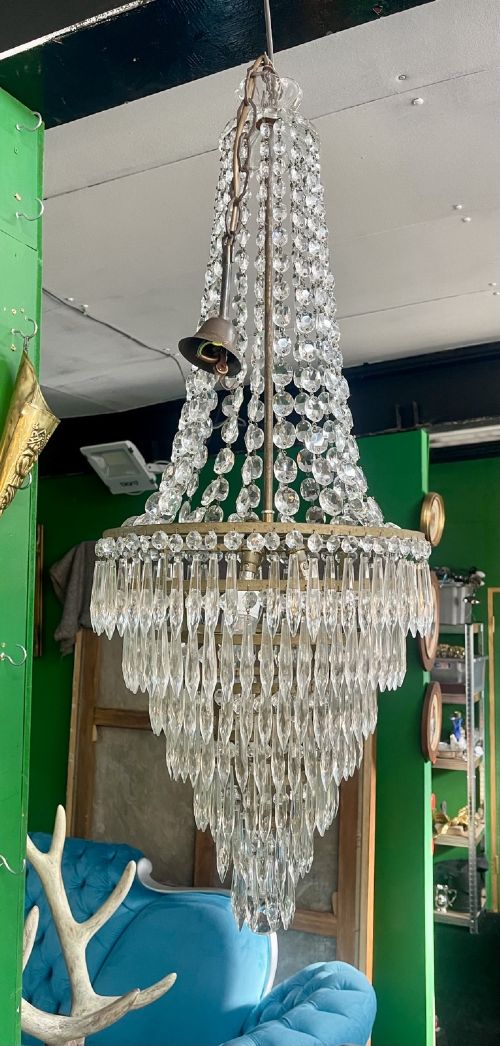
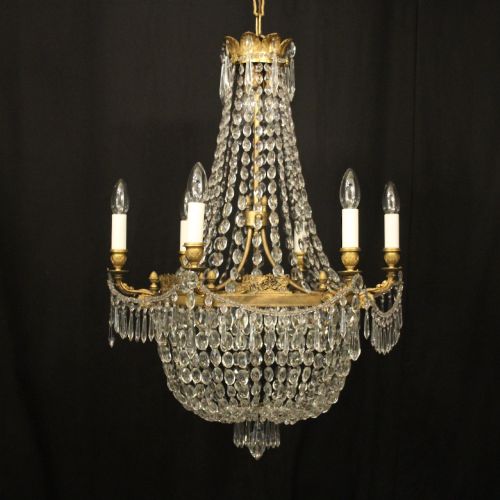
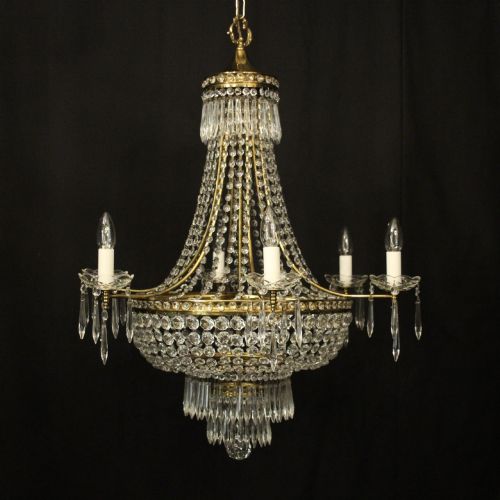
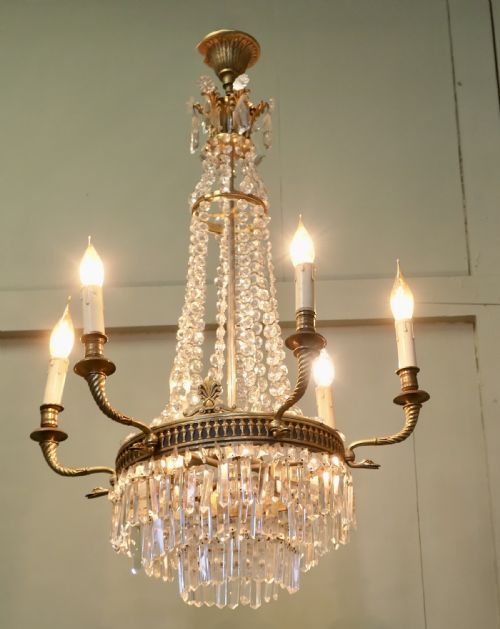
Tent and Waterfall Lights
Tent and waterfall lights bring dramatic illumination and cascading crystal to high ceilings, drawing the eye upwards through tiers of glittering glass drops.
Tent and Waterfall Lights
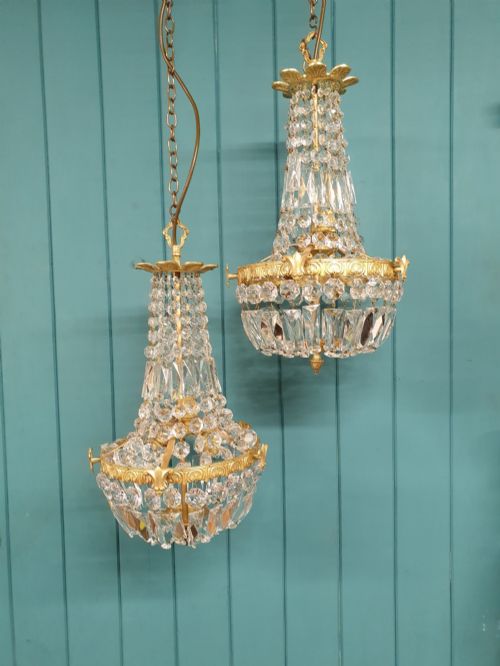
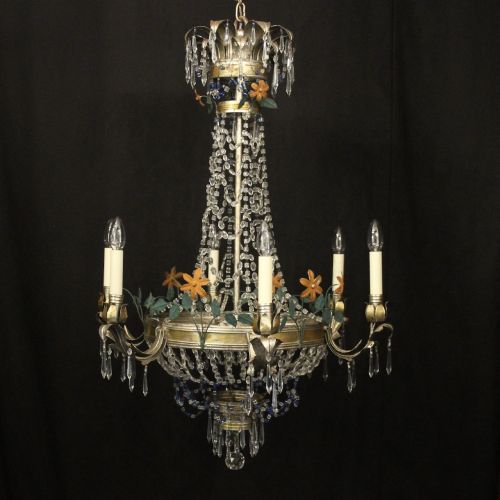
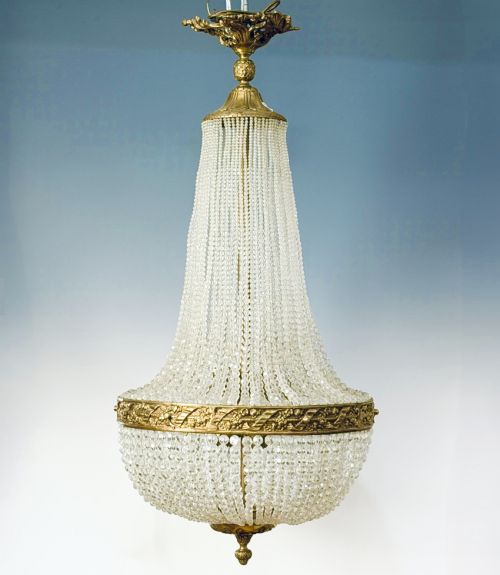
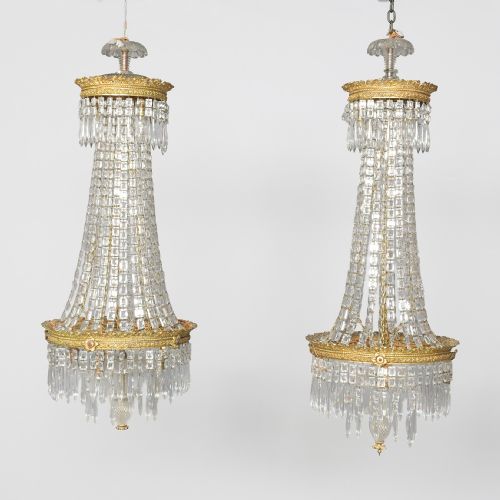
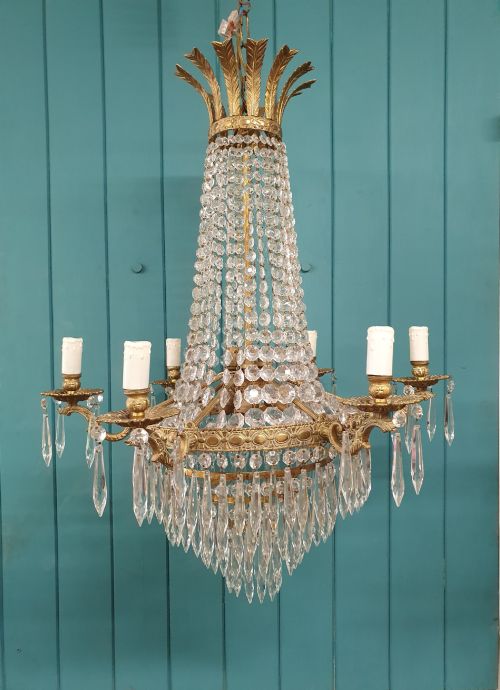
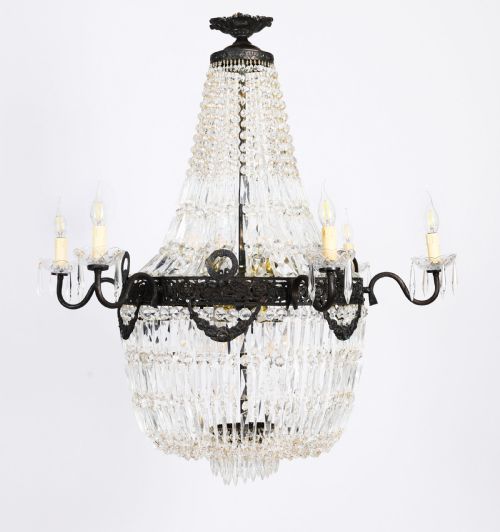
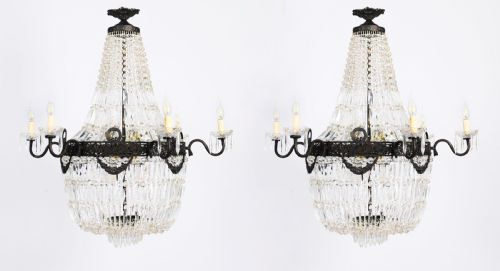
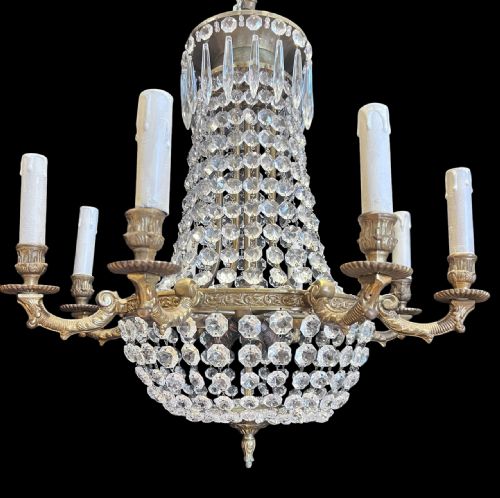
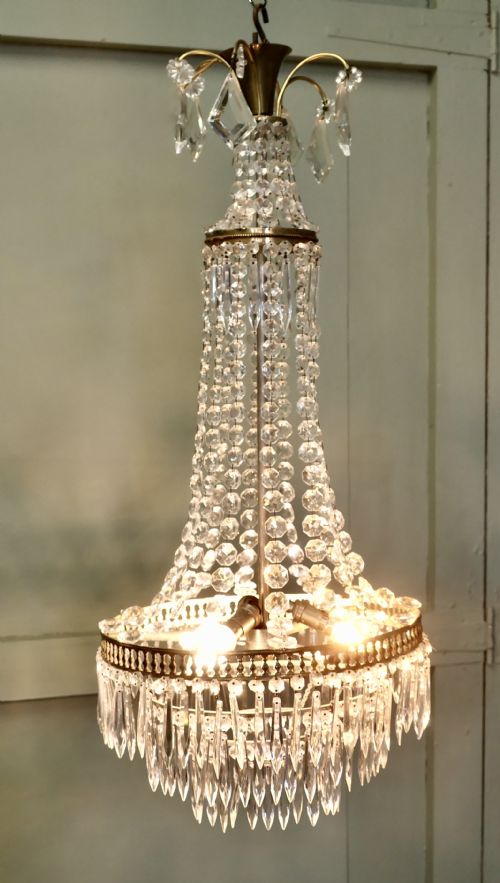
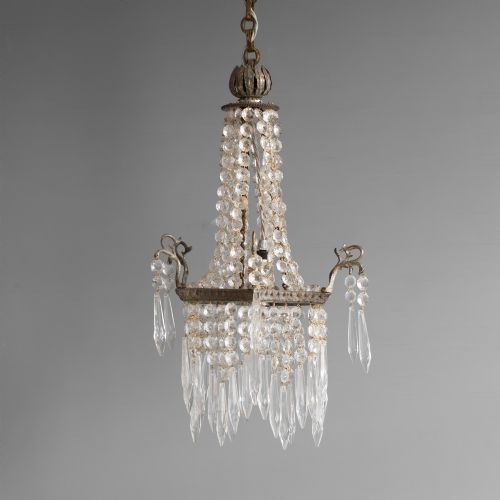
When you search for tent and waterfall lights, you encounter grand hanging fixtures defined by an upper conical crown of crystal strings forming a tent, combined with cascading drops below. The selection centres predominantly on chandeliers and pendant lights originating from the nineteenth and early twentieth centuries.
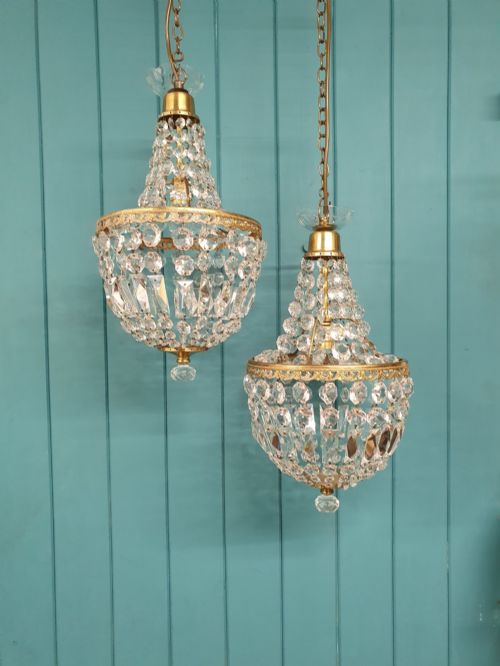
French influence dominates these listings, with styles spanning French Empire, Regency, and Louis Revival aesthetics alongside Edwardian variations. You will find examples ranging from small single-light hall fittings to massive multi-light ballroom pieces.
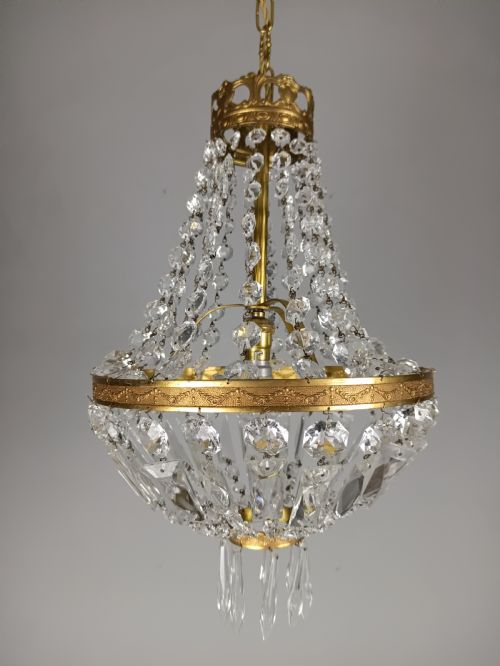
The primary forms utilise a metal frame of brass, bronze, or gilded metal to support dense arrays of cut glass and crystal prisms. These fixtures frequently incorporate bag sections, spikes, and leaf decorations that distinguish particular regional designs.
Materials and Construction
Makers constructed the foundational framework using cast brass, bronze, and metal mounts to support the substantial weight of the glass. Gilt finishes and detailed leaf or cherub decorations often embellished the metal components.
The characteristic upper tent formation relies on precision-cut crystal glass strands strung together in neat rows. These connect to lower waterfall drops, bag sections, and prisms designed to refract light across the room.
Assessing Quality and Craftsmanship
Quality rests heavily on the clarity and cutting of the crystal and glass elements. Finer examples feature hand-cut prisms and heavy crystal drops that catch and disperse light with sharp brilliance.
The weight and detail of the metalwork further separate standard pieces from superior examples. Cast bronze frames with refined chasing and original gilding indicate higher tiers of period production.
The Tent and Waterfall Lights Glossary
- Tent
- The upper section of a chandelier where strings of crystal beads stretch outward from a central ring to form a conical canopy. This architectural silhouette defines the classic Empire style.
- Waterfall
- A cascading tier of glass drops and prisms suspended beneath the main body, creating a flowing effect reminiscent of falling water. This feature adds depth and movement to the lower portion of the fixture.
- Bag chandelier
- A lighting form featuring a flattened, bag-like gathering of crystal drops suspended at the base. These compact designs were popular during the Edwardian era.
- Prism
- A cut glass pendant designed to refract light into spectral colours. These elements hang from the arms and tiers of period chandeliers.
- Regency
- A stylistic period spanning the early nineteenth century characterised by classical revival motifs and grand decorative illumination. Pieces from this era often employ bold bronze and crystal arrangements.
Tent and Waterfall Lights: Frequently Asked Questions
How do I clean a crystal chandelier?
Maintenance requires careful hand-cleaning of each crystal drop and prism using a mild solution and soft cloth while the fixture hangs in place.
Taking down heavy brass and crystal structures risks damaging the antique mounting pins and delicate glass connections.
What rooms suit tent and waterfall chandeliers?
These grand hanging fixtures demand high ceilings and generous floor space to properly showcase their cascading glass tiers and multi-light arrangements.
Smaller hallways and intimate spaces benefit from compact single-light bag chandeliers or shorter Edwardian swag variations.
How do I identify a French Empire style light?
French Empire pieces typically combine heavy gilt bronze or brass frameworks with symmetrical arrangements of crystal tents and classical ornamentation.
These designs often date from the nineteenth or early twentieth centuries and reflect formal continental interior aesthetics.
Are these lights wired for modern use?
Most antique fixtures arrive adapted for contemporary electrical standards, though professional inspection remains essential before installation.
Rewiring older metal and glass assemblies ensures safe operation within modern domestic electrical circuits.