





Tekke Storage Bag
A tekke storage bag brings the geometric precision of nineteenth-century Central Asian weaving directly into modern interiors as a wall hanging.
Tekke Storage Bag
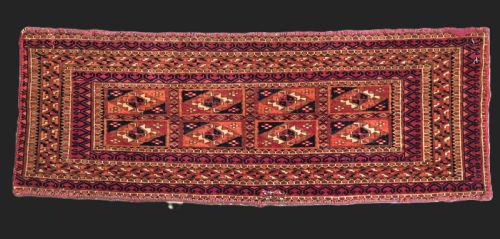
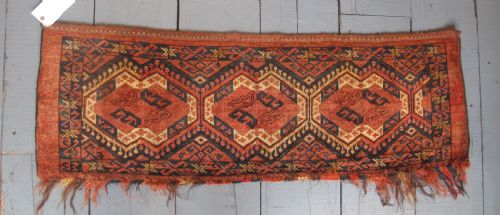
When you search for a tekke storage bag, you are looking at nineteenth-century tribal textiles originating from Turkmenistan and broader Central Asia. These items include torbas, mafrash faces, and chuvals created by Turkmen tribal groups.
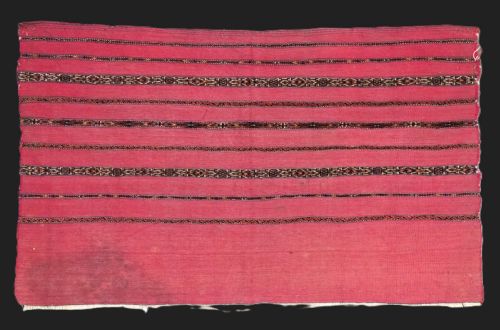
You are most likely to meet chuval faces and torbas bearing traditional guls on this page, often dating from the eighteen-eighties or the wider nineteenth century. Examples appear both as standalone bag faces and complete with their original plain weave backs or hanging loops.
These pieces encompass nomadic tribal styles that served practical storage functions within tent dwellings before entering the collector market. They survive in various formats, from multi-gul layouts to paired sets with preserved backs.
How they were made
The construction relies on wool and cotton foundations worked with natural dyes to produce deep red grounds and intricate secondary motifs. Weavers utilised fine weave techniques alongside flat woven details to build durable domestic objects.
The application of natural dye palettes ensures rich colour variations across individual pieces, while structural elements like hanging loops and plain weave backs demonstrate their original functional purpose.
Tekke Storage Bag Retail Price Guide 2026
Typical asking prices for tekke storage bag among the pieces listed under this phrase on Sellingantiques today, from the lower quarter to the upper quarter. They describe what is for sale here now, not the wider market.
Nomadic weavers packed these bags with family blankets before deciding they were simply too decorative to hide in the back of a tent.
What varies in quality
The standard of execution rests on knot density and the crispness of the gul drawing, separating standard weaving from exceptionally fine examples. Pieces displaying scarce motifs like the aina gul or turreted Salor guls command particular attention.
Survival of original components also determines distinction, with complete pieces retaining plain weave backs or matching pairs offering greater completeness than isolated fragments.
The Tekke Storage Bag Glossary
- Chuval
- A large tent bag used for household storage among Turkmen tribes. These were traditionally woven on vertical looms.
- Torba
- A smaller storage bag format used within nomadic dwellings. They frequently appear as wall hangings in contemporary spaces.
- Gul
- A primary medallion motif repeated across Turkmen carpets and storage bags. Each tribal group utilised distinct secondary and primary gul variations.
- Mafrash
- A rectangular storage container or bedding bag face. They share structural and decorative ties with chuval faces.
- Natural Dyes
- Organic colourants derived from plants and insects used before synthetic aniline dyes became widespread. They produce the characteristic soft patination seen on nineteenth-century textiles.
Tekke Storage Bag: Frequently Asked Questions
What is a tekke storage bag?
A tekke storage bag is a nineteenth-century Central Asian tribal textile designed for household storage inside nomadic tents. These pieces were woven by Turkmen weavers using wool and cotton.
They typically feature repeating geometric gul motifs on a red ground and function today primarily as decorative wall hangings or textile art.
How were these bags used?
Nomadic families utilised these woven bags to store bedding, clothing, and domestic possessions inside traditional yurt dwellings. Their robust construction and practical shapes suited a mobile lifestyle.
Many examples include original hanging loops or complete plain weave backs designed for suspension and daily containment.
How do I hang a textile bag?
Hanging a tribal textile requires careful weight distribution to protect the antique wool and cotton foundation from strain. Many collectors utilise custom mounting systems or display sleeves.
Avoid direct sunlight and high humidity to preserve the natural dyes and structural integrity of the weave over time.
How do I identify different guls?
Identifying guls involves examining the specific geometric medallions characteristic of different Turkmen tribes such as the Tekke or Salor. Variations in drawing and secondary ornaments define tribal attributions.
Reference literature helps distinguish between standard gul layouts and scarce variants like the aina gul.