
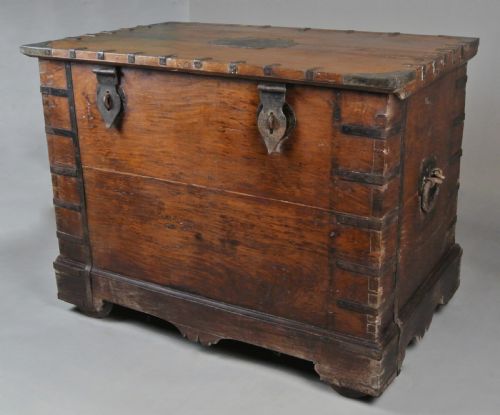
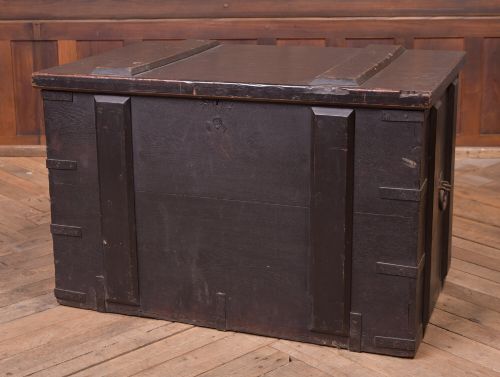
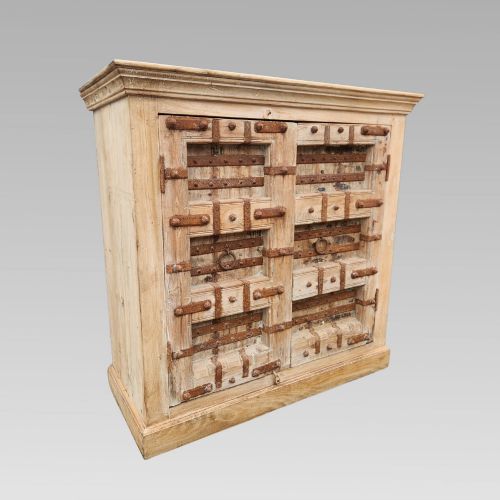
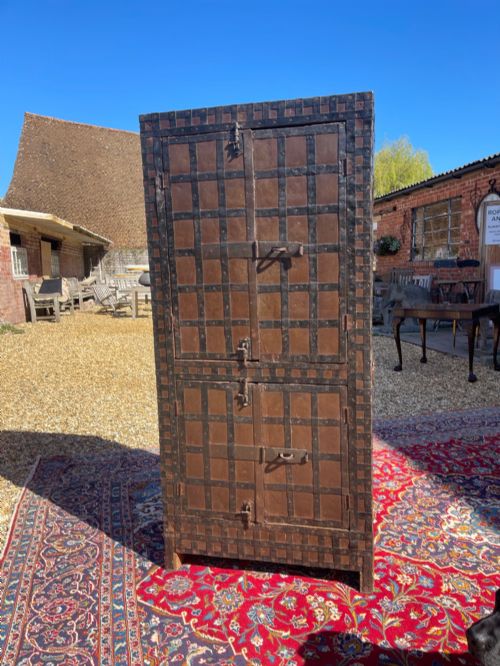


Teak Iron Bound Chest
These teak iron bound chests are robust storage pieces built for travel and trade, offering rugged utility and rich character for any room.
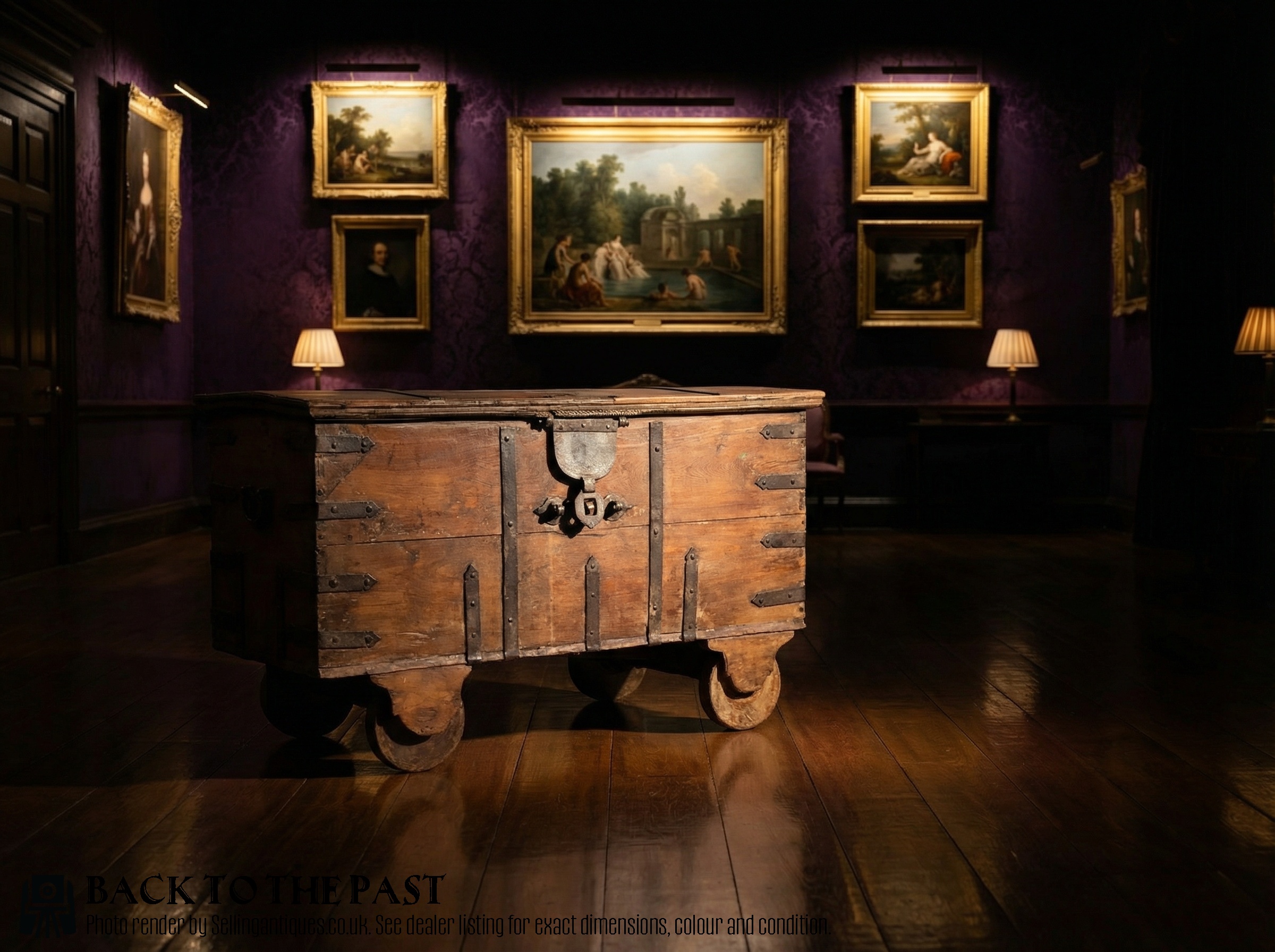
Teak Iron Bound Chest
When you search for a teak iron bound chest, you are looking at substantial storage furniture built for travel, trade, and domestic use. These pieces combine dense tropical timbers with metal reinforcement designed to withstand demanding journeys across land and sea.
On this page, you are most likely to meet nineteenth-century examples originating from colonial contexts and the Indian subcontinent. The forms range from large blanket boxes and dowry chests to fitted merchants chests and campaign secrataires.
Styles span traditional Indian and Anglo-Indian colonial designs, often featuring heavy strapwork and corner plates. They serve equally well as stationary coffee tables or functional storage containers in modern interiors.
How they were made
Construction relies on dense teak and related hardwoods chosen for durability and resistance to moisture and pests. Planks are joined securely and reinforced with exterior strapwork to protect the timber during transit.
Blacksmiths and metalworkers shaped iron and brass into corner braces, strap bands, and carrying handles. These metal elements are secured with numerous rivets or bolts, tying the wooden panels together into a rigid shell.
Listings feature teak, hardwood, iron, brass, and cast iron across nineteenth-century colonial and Anglo-Indian styles.
What varies in quality
Quality rests primarily on the integrity of the timber and the weight of the metal hardware. Finer pieces display heavier iron banding and more intricate brass mounts that serve both structural and decorative purposes.
Internal complexity also separates standard storage boxes from superior items. Fitted interiors with small drawers, secret compartments, or specialised campaign writing sections command greater interest from collectors.
The Teak Iron Bound Chest Glossary
- Teak
- A dense tropical hardwood prized for its oily grain and natural resistance to decay. It provides the heavy, durable carcass for these chests.
- Campaign se
- A portable desk or storage unit designed for military officers on the move. These pieces often feature flush brass handles and fitted internal compartments.
- Dowry chest
- A traditional trunk used to hold household linens and valuables accumulated for a marriage. They are frequently larger and more ornate than standard storage boxes.
- Strapwork
- Flat strips of iron or brass fixed across the exterior of a chest to reinforce the joints. It adds structural strength while creating a distinct geometric pattern.
Teak Iron Bound Chest: Frequently Asked Questions
What were teak iron bound chests used for?
These chests served primarily as secure containers for transporting personal belongings, trade goods, and valuables during long journeys. Merchants and military officers relied on their sturdy construction to protect contents from rough handling and moisture.
In domestic settings, families used them to store textiles, blankets, and dowry items safely. Today, their robust build allows them to function effectively as coffee tables with hidden storage.
How do I date a teak chest?
Dating relies heavily on the style of the hardware, construction methods, and the type of timber used. Nineteenth-century examples often feature hand-hammered iron straps and dovetail joinery executed by regional artisans.
Examining the fixings, locks, and handles provides further clues to the manufacturing period. Machine-cut screws and standardised bolts typically point towards the later decades of the nineteenth century and beyond.
Are these chests heavy to move?
Yes, they are exceptionally heavy due to the combination of dense teak wood and thick iron or brass reinforcement. Many include original side carrying handles designed for two people to lift them during transit.
When placing one in a home, it is wise to determine its final position beforehand. Felt pads placed beneath the base help protect wooden floors from the dense timber.
How do I care for the iron and wood?
Maintaining the wood involves applying a neutral wax or oil sparingly to nourish the dry teak grain. Keeping the chest away from direct heat sources prevents the timber from splitting over time.
For the metal bands, a light application of oil helps prevent rust and preserves the dark finish. Regular dusting keeps both surfaces stable without altering the aged patina.