


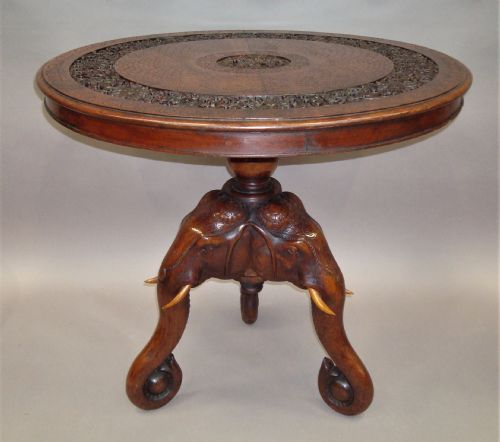
Teak Elephant Head Table
A teak elephant head table brings colonial character into a room, combining carved woodwork with distinct zoomorphic supports.
Teak Elephant Head Table
When you search for a teak elephant head table, you encounter carved occasional and side tables originating from the late nineteenth and early twentieth centuries. These pieces typically display regional colonial craftsmanship, predominantly from the Bombay Presidency and Burma.
You are most likely to meet circular, octagonal, or rectangular tops supported by intricately carved animal figures. The designs range from simple side tables to more elaborate tripod and pedestal forms.
The aesthetic bridges traditional local woodworking traditions with British colonial interior tastes. Such tables function effectively as plant stands, coffee tables, or accent pieces in a study or drawing room.
How they were made
The primary construction relies on dense tropical timbers such as teak and solid rosewood, shaped by hand using traditional carving techniques. Artisans utilised contrasting materials like bone and ebony inlay to ornament the surfaces with geometric or floral patterns.
Support structures frequently incorporate figural carving where elephant heads and trunks form the legs or pedestals. Additional decorative elements include brass accents and detailed pierce-work across the aprons and edges.
What varies in quality
The selection and preservation of the timber also influence the overall character, with dense grain and intact inlay work holding greater visual weight. Variations in the complexity of the geometric inlay and the stability of the joinery mark the differences across the range.
The Teak Elephant Head Table Glossary
- Anglo-Indian
- A descriptive term for decorative arts produced during the British period in India, combining local craftsmanship with European forms. These objects often display distinct regional carving traits.
- Bone Inlay
- A technique where small pieces of carved bone are pressed and glued into recesses within the wooden surface. This method creates striking contrasting patterns against dark hardwoods.
- Occasional Table
- A small, light table designed to be moved around a room as needed. Examples in this category frequently serve as display surfaces or bedside stands.
- Pedestal
- A structural support or base carrying a tabletop or decorative object. In these pieces, the pedestal often takes the form of carved animal figures or columns.
- Tripod Table
- A piece of furniture supported by three legs. This configuration provides stable placement on uneven historic flooring.
Teak Elephant Head Table: Frequently Asked Questions
How do I clean a teak elephant head table?
Dust the carved surfaces regularly with a soft, dry brush to prevent dirt buildup in the recesses. Avoid using harsh chemical sprays that can strip the natural finish of the timber.
Apply a minimal amount of appropriate furniture wax occasionally to nourish the wood and maintain its sheen. Keep the table away from direct heat sources and strong sunlight to prevent the timber from splitting or warping over time.
Where should I place an elephant table in my home?
These pieces work well as accent furniture in living rooms, hallways, or studies where their decorative bases can be appreciated. Their compact sizes make them suitable for holding lamps, small plants, or decorative objects.
Ensure the table sits on a level surface so the carved wooden legs bear weight evenly. Placing the piece away from heavy foot traffic protects delicate protruding details like tusks and trunks from accidental damage.
How do I identify the period of an antique table?
Examine the construction methods and the tools marks left on the underside and interior joints of the table. Hand-sawn boards and traditional joinery generally point towards nineteenth or early twentieth-century production.
Compare the stylistic motifs, such as the specific style of carving and inlay, with documented regional examples. Period pieces often exhibit natural patination and minor wear consistent with age and use.