
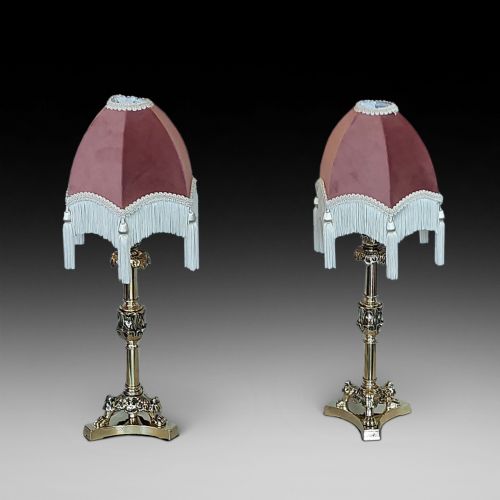


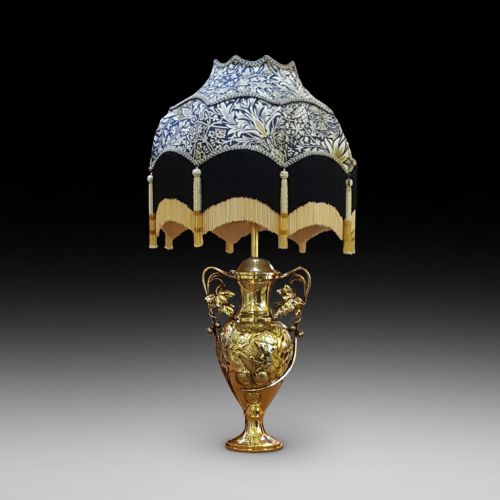
Tasselled Fabric Lampshade
These tasselled fabric lampshade options bring period warmth to a room, turning utilitarian lighting into soft, decorative focal points.
Tasselled Fabric Lampshade
A tasselled fabric lampshade sits atop table and floor lamps constructed from brass, pressed brass, and glass beads. These pieces span periods from the 1800s through the Edwardian era, incorporating Victorian, Regency, and Gothic Revival styles.
Buyers encounter table lamps and floor lamps in Art Nouveau, Orientalist, and Victorian Neoclassical designs. The selection draws on candlesticks converted to electric lamps and standard lamps originating from continental and British makers.
How they were made
Maker construction relies on brass and pressed brass frames, shaped into table lamps and floor lamps that house electrical wiring. These metal structures support fabric shades embellished with thread and fringe.
Detailing often includes glass beads incorporated into the fabric and fringe elements. Artisans utilised casting and pressing techniques to form the brass standards and converted candlesticks.
Early nineteenth-century brass candlesticks occasionally found a second career illuminating Victorian parlours after a discreet appointment with an electrician.
What varies in quality
Quality distinctions rest on the intricacy of the metalwork, from plain brass to detailed pressed brass and Art Nouveau casting. The execution of the shade elements, including glass beads and thread fringe, separates standard items from finer examples.
The integrity of conversion work on early brass candlesticks influences the overall standard of the piece. Superior examples maintain the proportions of the original 1800 or Victorian structure while integrating electrical components cleanly.
The Tasselled Fabric Lampshade Glossary
- Candlestick conversion
- A lighting fixture created by adapting an existing metal candle holder for electricity. This method retains the original period profile.
- Standard lamp
- A tall floor-standing lamp designed to illuminate a room from a raised height. These items often feature weighted brass bases for stability.
- Pressed brass
- Sheet metal shaped using mechanical dies to form decorative patterns. This technique gained popularity by the early twentieth century.
- Gothic Revival
- A design style inspired by medieval architecture and ornamentation. Pieces in this category display pointed arches and heavy decorative motifs.
Tasselled Fabric Lampshade: Frequently Asked Questions
How do I date a brass floor lamp?
Dating relies on the stylistic markers of the metalwork, such as Art Nouveau curves or Victorian Neoclassical symmetry. Examining the construction of the brass base and wiring entry points provides further clues to the period.
Comparison with documented examples from the Edwardian era or the 1800s helps narrow the production window. Makers often incorporated specific casting methods characteristic of their decade.
Can I use old converted candlesticks safely?
Converted candlesticks require inspection of the internal wiring to ensure modern electrical compliance. Professional rewiring protects the historic brass structure during daily use.
Checking the stability of the mounted lamp fitting prevents strain on the original metal stem. Safe operation allows these nineteenth-century items to function as practical table lamps.
What is pressed brass?
Pressed brass is sheet metal shaped under pressure in a mould to create repeating decorative reliefs. This process allowed makers to produce ornate lamp bases efficiently.
Items featuring pressed brass often date from the early twentieth century. The technique offers lighter construction compared to solid cast brass.
Where do floor lamps fit best?
Floor lamps suit corners or seating areas where height provides balanced illumination. Their substantial brass standards anchor the surrounding furniture arrangement.
Placing these tall fixtures away from heavy foot traffic protects delicate fringed shades. They serve as primary light sources in rooms with period interior schemes.