

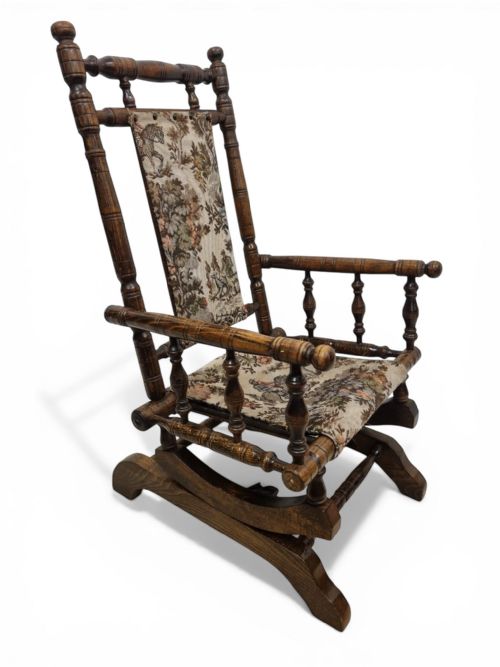


Tapestry Wooden Armchair
A tapestry wooden armchair brings warmth and texture to a room, combining solid timber frames with rich textile upholstery.
Tapestry Wooden Armchair
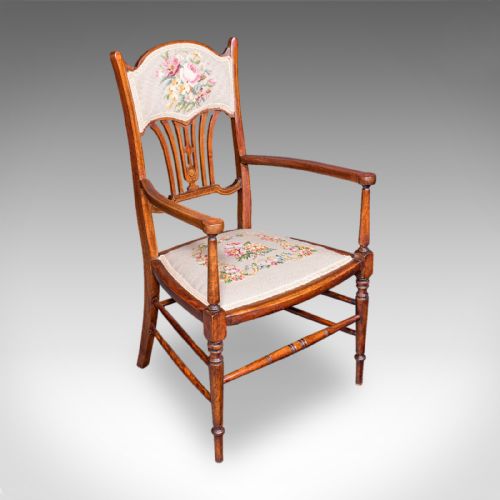
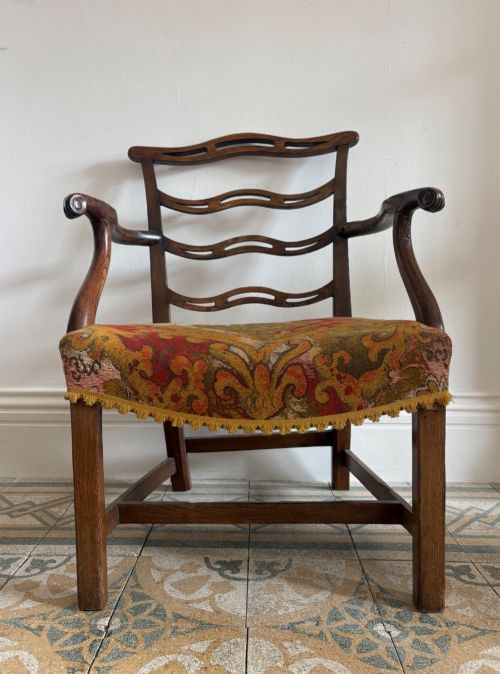
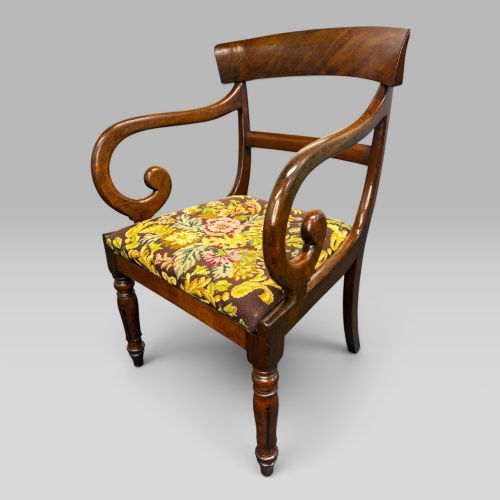
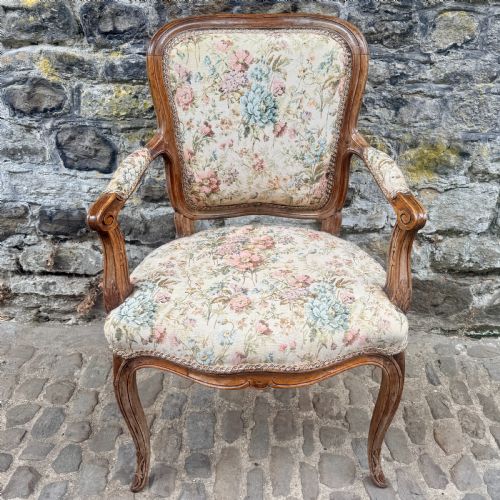
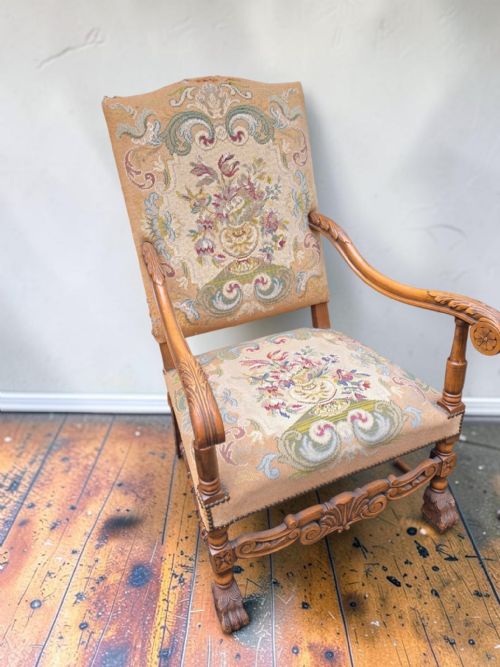
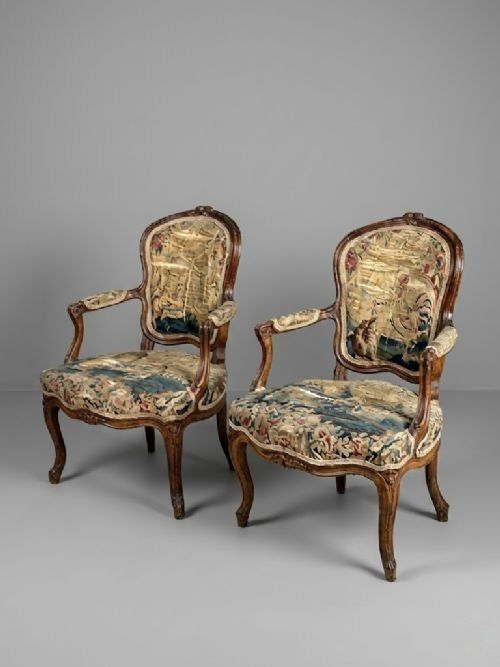
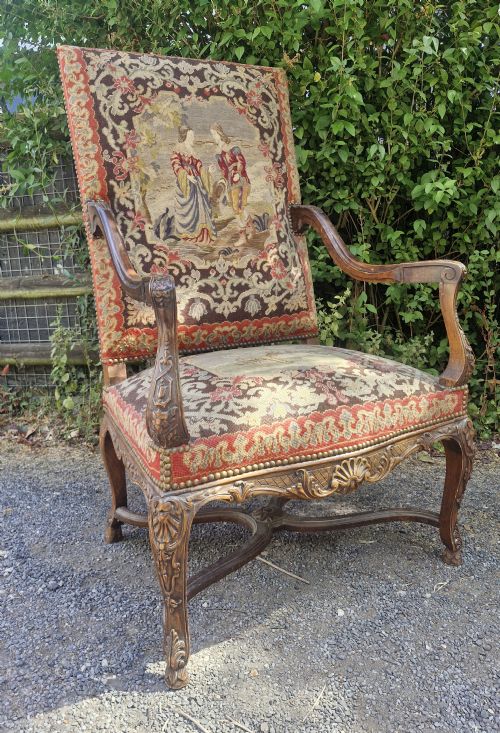
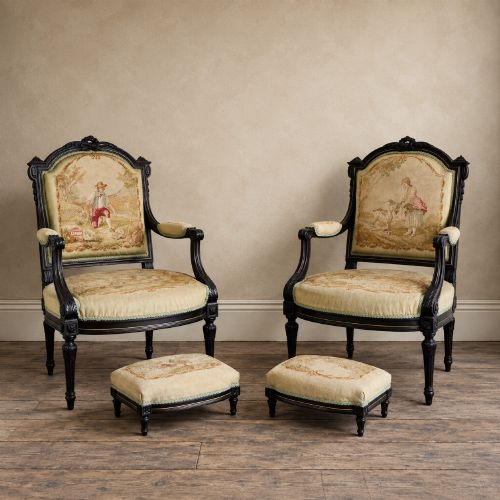
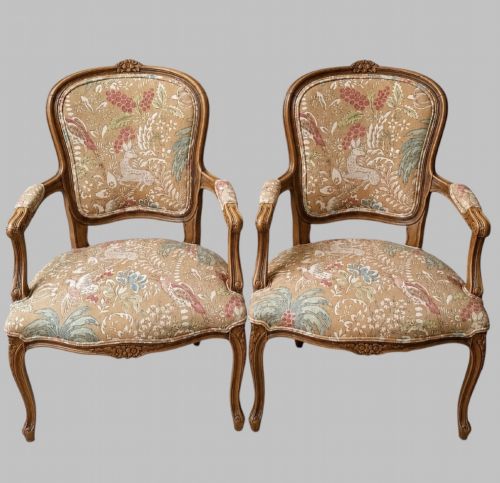
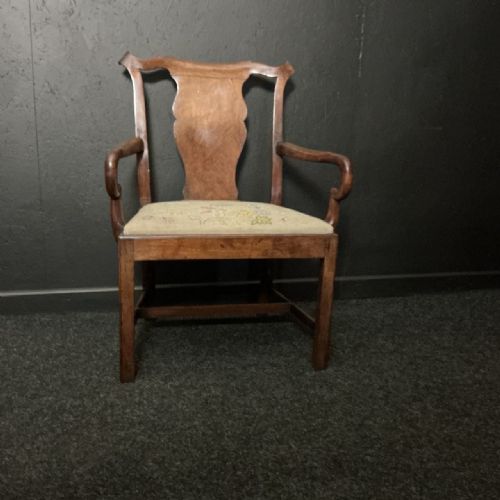
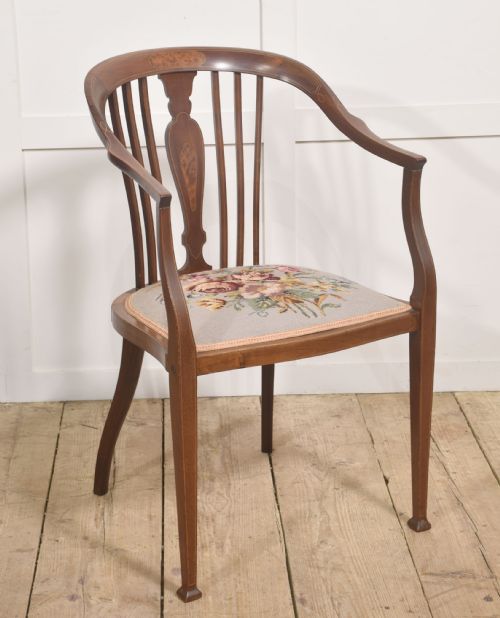
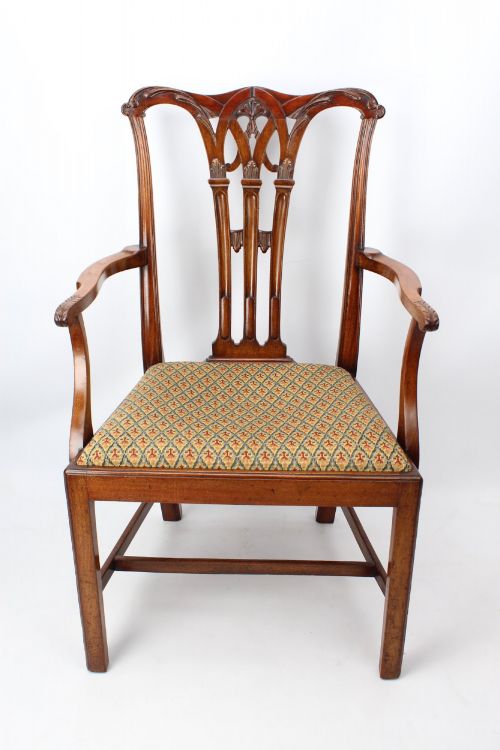
A tapestry wooden armchair is a seated timber frame paired with a woven textile seat or back panel. When searching for a tapestry wooden armchair, buyers encounter pieces spanning multiple centuries from Georgian origins to Edwardian sitting rooms. The selection includes various seating forms such as elbow chairs, carvers, and nursing chairs.
The most common versions on this page are walnut and mahogany frames upholstered in wool tapestry, needlework, or petit point. These range from French provincial designs to English country chairs and revival styles. They function as both practical seating and decorative focal points in a home.
How they were made
Frames are constructed from hardwoods such as mahogany, walnut, elm, beech, and satinwood, often shaped with carved details or turned components. Joinery techniques connect the structural timbers to support the weight of the sitter.
Upholstery involves applying textile panels, including tapestry fabric, wool, and needlework, secured to the wooden framework. Brass elements occasionally accent the construction or upholstery trim.
Listings feature frames in mahogany, walnut, elm, beech, and satinwood, paired with wool, tapestry, and needlework.
What varies in quality
The standard of timber selection and carving execution dictates the baseline quality of the frame. Denser hardwoods and crisper hand-carved motifs distinguish finer examples from simpler provincial work.
The finesse of the textile upholstery alters the overall character. Finely worked needlepoint, petit point, and detailed tapestry panels require greater skill than standard woven fabrics.
White, Allom & Co.
The Tapestry Wooden Armchair Glossary
- Carver chair
- An open armchair, often designed with armrests to match a set of dining chairs. These were traditionally used at the head of a dining table.
- Petit point
- A style of needlepoint worked on a fine mesh canvas using small stitches. This technique allows for high detail and intricate pictorial designs.
- Elbow chair
- An armchair with supportive rests for the arms. They are typically scaled for use at a desk or in a morning room.
- Needlework
- Hand-stitched textile work using yarn or thread on a canvas backing. It provides a durable and decorative surface for chair seats and backs.
- Fauteuil
- An open-framed wooden armchair with upholstered arm pads and a padded back. Originating in France, these pieces often feature exposed polished wood frames.
Tapestry Wooden Armchair: Frequently Asked Questions
Where should I place a tapestry wooden armchair?
These chairs suit living rooms, studies, and bedrooms where their textile panels add colour and warmth. They work well as occasional seating alongside sofas or positioned beside a fireplace.
Because the timber frames and upholstered elements benefit from stable conditions, avoid placing them in direct sunlight or damp areas to preserve the materials.
How do I clean the wooden frame?
Dust the timber regularly with a soft, dry cloth to prevent the buildup of dirt. Avoid harsh chemical polishes that can damage older finishes.
Applying a traditional beeswax occasionally helps nourish hardwood surfaces like mahogany and walnut while maintaining a gentle sheen.
How do I care for the tapestry upholstery?
Vacuum the fabric gently using a low-suction attachment with a brush guard to remove trapped dust particles. Protect the wool and textile panels from prolonged exposure to bright light to prevent fading.
Professional textile cleaning is recommended for deeper marks to avoid distorting the delicate needlework or petit point stitches.
How can I tell a Georgian chair from a Victorian one?
Georgian chairs, dating from the eighteenth century, frequently feature mahogany or walnut with restrained proportions and classic carving styles like Chippendale. They emphasise structural balance and understated elegance.
Victorian pieces from the nineteenth century often display heavier proportions, darker finishes, and eclectic revival influences, incorporating varied turning and more elaborate carving.