
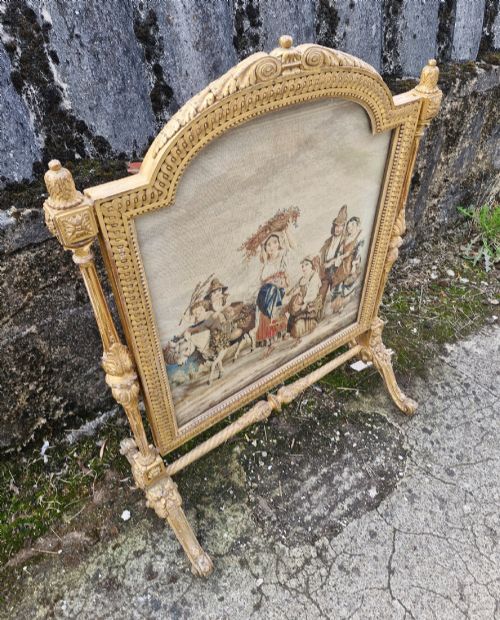
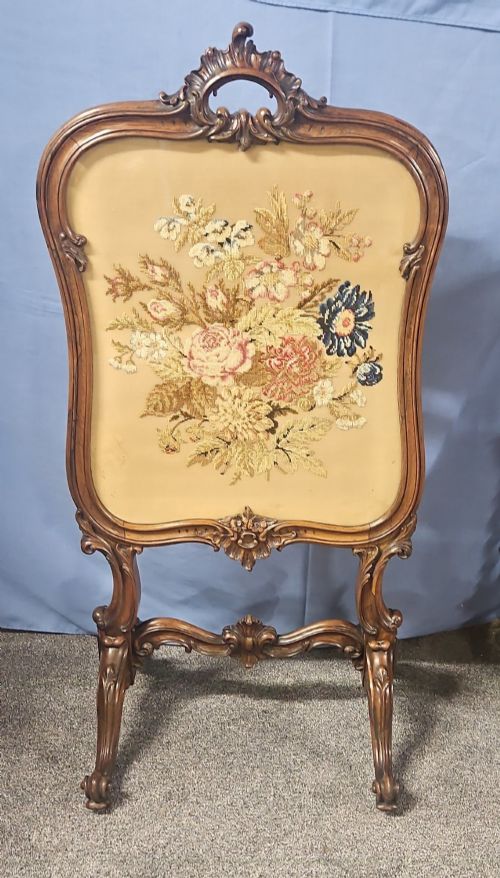
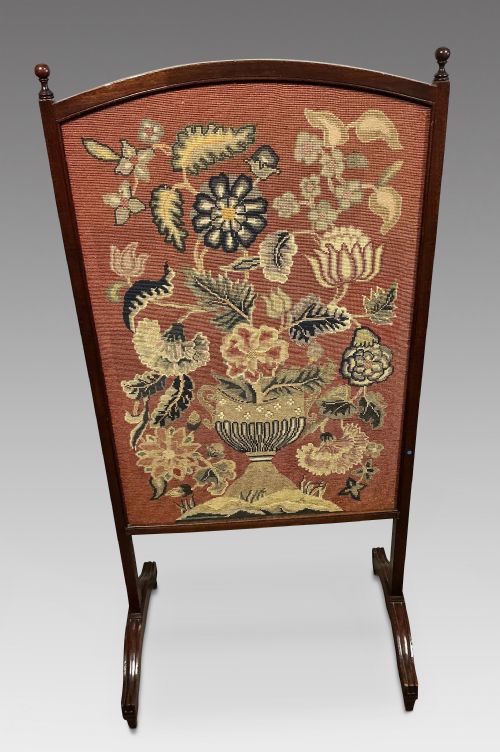


Tapestry Spark Guard
These tapestry spark guard pieces are practical hearth furniture designed to keep stray embers off the room, combining needlework panels with sturdy wooden or brass frames.
Tapestry Spark Guard
A tapestry spark guard functions as a decorative fire screen, shielding the room from heat and sparks while warming the hearth during warmer months. These examples span the nineteenth century, Victorian era, Edwardian period, and nineteen thirty.
You will most commonly encounter wooden frames in walnut, mahogany, and oak, alongside brass structures housing textile and wool panels. Some incorporate needlepoint or embroidered depictions such as coats of arms.
The forms vary from simple standing screens to metamorphic occasional tables that transform in utility. Frames range from carved Victorian Rococo Revival and Black Forest designs to flowing Art Nouveau brass work.
Materials and construction
Carved timber frames in walnut, mahogany, and oak provide the structural support for these hearth pieces, often shaped with bobbin turning or elaborate detailing. Black Forest and Victorian Rococo Revival examples demonstrate skilled woodwork.
One screen doubles as a table, proving that nineteenth century household items enjoyed pulling double shifts just as much as we do.
Judging the work
The refinement of the carved woodwork dictates much of the visual weight, distinguishing deeply detailed frames from simpler mouldings. Bobbin turned elements and elaborate crests require steady, precise handwork.
Needlework density and preservation separate standard panels from finer embroidered depictions like coats of arms. The integration of glass protection and the stability of metamorphic table mechanisms also influence the standard.
The Tapestry Spark Guard Glossary
- Tapestry spark guard
- A decorative barrier placed before a fireplace to block stray embers, typically featuring an embroidered fabric panel. It doubles as a room adornment when the hearth is unlit.
- Needlepoint
- A type of canvas work embroidery executed with a yarn threaded through a stiff open-weave mesh. This technique creates the durable pictorial panels seen on many screens.
- Metamorphic furniture
- An object designed to transform into another functional piece, such as a fire screen that converts into an occasional table. This clever dual purpose appealed to nineteenth and twentieth century makers.
- Bobbin turned
- A method of woodturning that creates a series of rounded, spool-like shapes along the length of a spindle or leg. It appears frequently on Victorian and mahogany frames.
- Black Forest
- A style of deeply carved wooden ornamentation originating from the German region, known for naturalistic motifs. These pieces display robust and tactile surface carving.
Tapestry Spark Guard: Frequently Asked Questions
What is a tapestry spark guard?
A tapestry spark guard is a protective hearth screen featuring a textile panel held within a wooden or brass frame. It keeps flying embers contained while adding colour and texture to the fireside.
Historically placed before unlit grates during warmer months, these pieces transformed a dark fireplace into a decorative focal point within the room.
How do I date a spark guard?
Dating relies on identifying the prevailing style of the wooden frame and the nature of the embroidery. Victorian pieces often show heavy walnut or mahogany carving, whereas Art Nouveau examples favour brass.
Changes in turning techniques, such as bobbin turning, and the integration of metamorphic table mechanisms help narrow down the period of manufacture.
Where should I place it?
These screens belong in front of a fireplace, either actively guarding the hearth or masking an empty grate during summer. They also function well as decorative room dividers.
Ensure the piece sits clear of direct, intense heat sources that might dry out the old timber or degrade the wool and textile panels.
How do I care for the textile panel?
Keep embroidered and wool panels away from direct sunlight to prevent fading of the threads. Gentle surface dusting helps maintain the fabric without disturbing the stitches.
Glass-covered panels require simple glass cleaner on the exterior, while exposed needlework benefits from professional textile conservation if heavily soiled.