
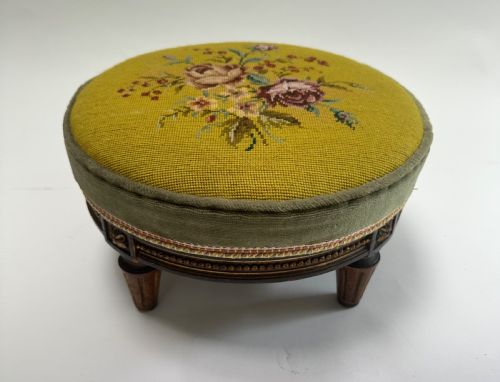
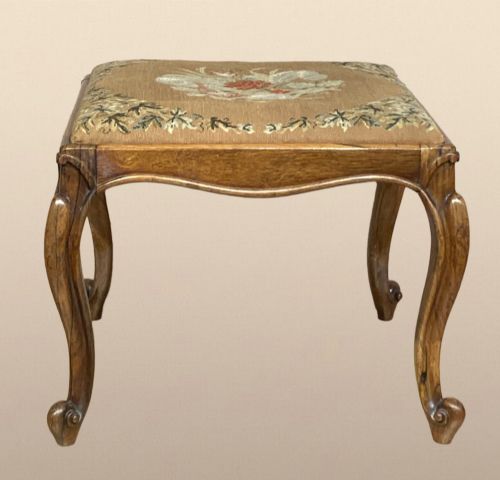
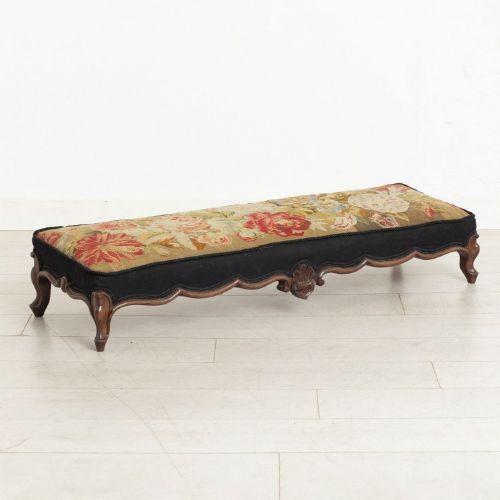


Tapestry Needlepoint Footstool
A tapestry needlepoint footstool brings centuries of textile artistry and sturdy timber frames into domestic spaces for daily comfort.
Tapestry Needlepoint Footstool
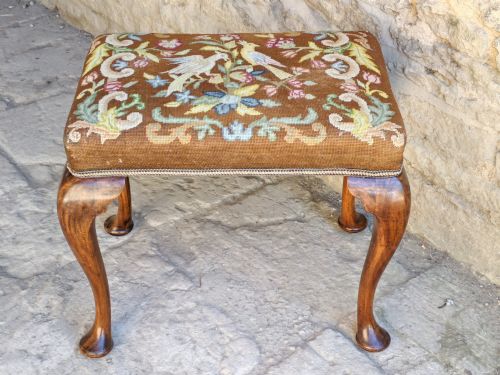
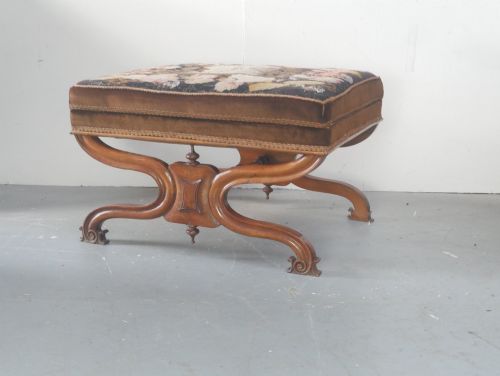
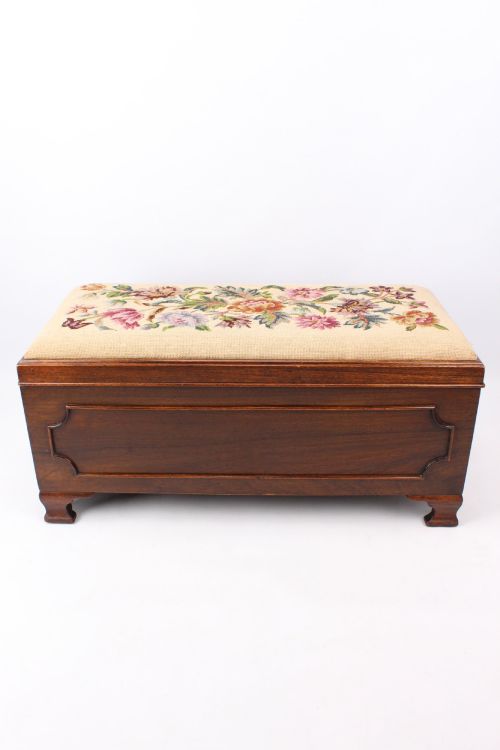
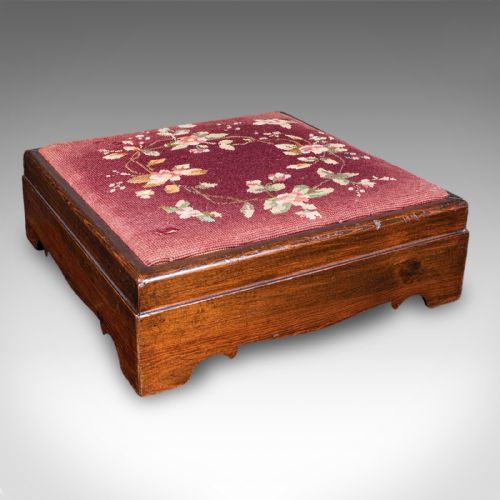
A tapestry needlepoint footstool spans low fireside rests, dressing table seats, and larger ottomans designed for domestic utility. Victorian examples in walnut or mahogany dominate the selection, often featuring needlework seats.
Makers produced these pieces in varied regional styles, from Scottish Baronial and Queen Anne to French revivals. Compact gout stools and piano stools sit alongside generous centre stools and long footstools.
Materials and Technique
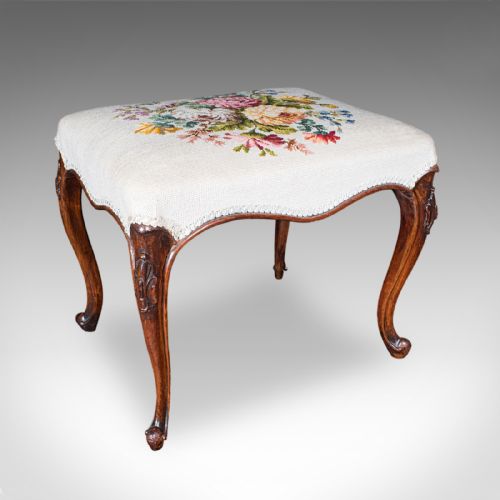
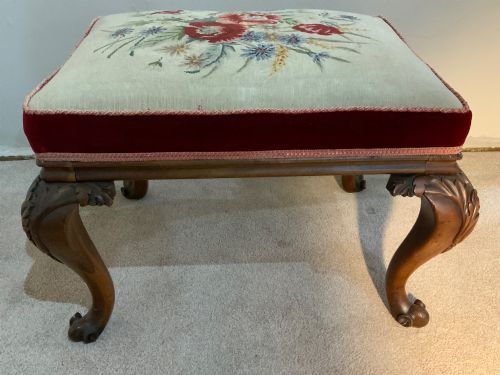
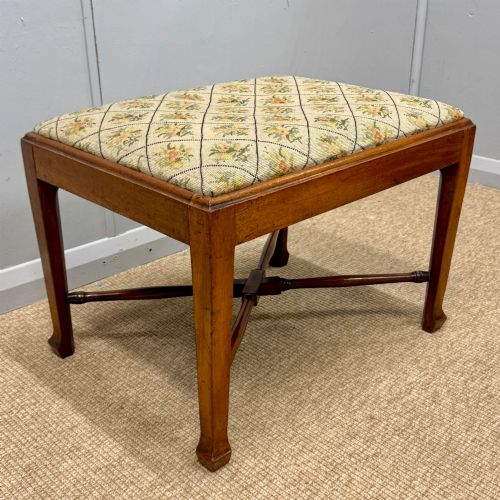
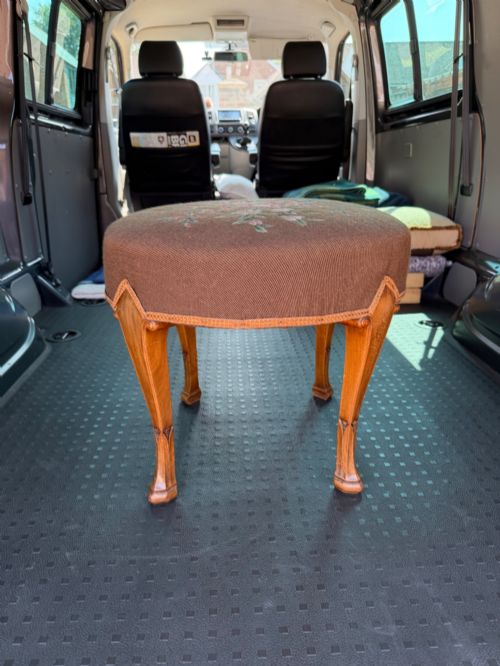
Frames rely on dense hardwoods such as walnut, mahogany, rosewood, and oak, shaped with carved cabriole legs, cross stretchers, or inlaid details like Tunbridge ware. Joinery secures the structural load beneath the upholstery.
The seats utilise wool tapestry and needlepoint textiles stretched over traditional stuffing. Original fabric survives on several pieces, displaying geometric kilim designs or floral needlework.
Gout stools offer an adjustable tilt so weary feet could find an easy angle after a long day.
Craftsmanship and Survival
Quality rests in the crispness of the timber carving and the structural integrity of the frame. Carved walnut and rosewood versions with retained original needlepoint represent the finer end of the scale.
The intricacy and preservation of the tapestry work dictate the distinction between standard utilitarian items and superior decorative examples. Intact needlepoint and robust joinery elevate the standing of a piece.
Jas Shoolbred
The Tapestry Needlepoint Footstool Glossary
- Needlepoint
- A form of counted thread embroidery stitched on canvas, creating the durable pictorial or geometric seat covers seen on these stools.
- Cabriole leg
- A furniture leg curving outward at the knee and inward at the ankle, characteristic of many Victorian and revival frames.
- Gout stool
- A small low footstool with an adjustable incline designed to elevate and rest feet affected by discomfort.
- Centre stool
- A large freestanding stool intended to sit in the middle of a room rather than against a wall.
- Cross stretcher
- Timber rails connecting the legs near the base to provide additional structural support and stability.
Tapestry Needlepoint Footstool: Frequently Asked Questions
How do I date a tapestry needlepoint footstool?
Dating relies on timber choices, leg profiles, and structural characteristics matching documented periods like the Victorian era or the nineteenth century.
Secondary indicators include the style of needlepoint work and whether the textile retains its original mounting.
Were these stools used purely for resting feet?
While many served as low foot rests or gout stools near firesides, larger variants functioned as dressing table seats, music stools, and centre ottomans.
Their robust timber frames supported multiple domestic seating and resting purposes.
How do I care for antique needlepoint upholstery?
Protect the wool tapestry from direct sunlight to prevent fading of the dyed yarns and keep the textile away from excessive moisture.
Gentle surface cleaning by a specialist preserves the integrity of the original stitches.
What timber types are most common?
Walnut and mahogany appear frequently across the surviving inventory, accompanied by rosewood, oak, and pitch pine on specific regional pieces.
Craftsmen selected these dense woods to handle the weight bearing demands of daily domestic use.