

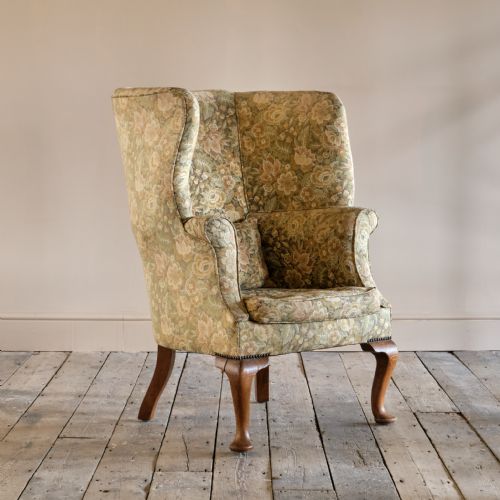


Tapestry Fireside Chair
A tapestry fireside chair brings warmth and traditional textile work to a room, offering low-slung or wing-backed comfort by the hearth.
Tapestry Fireside Chair
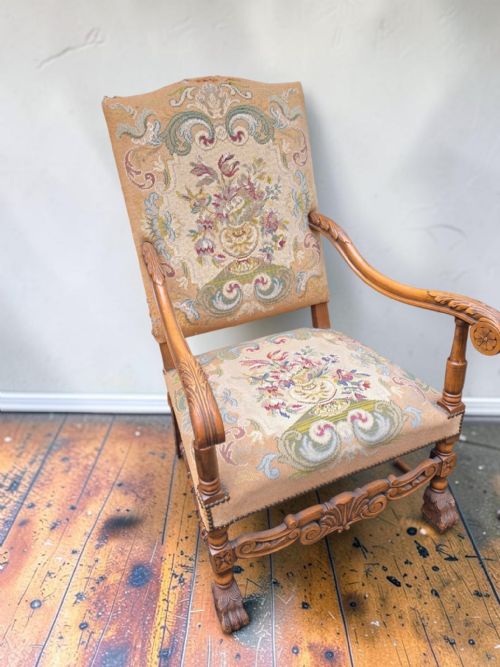
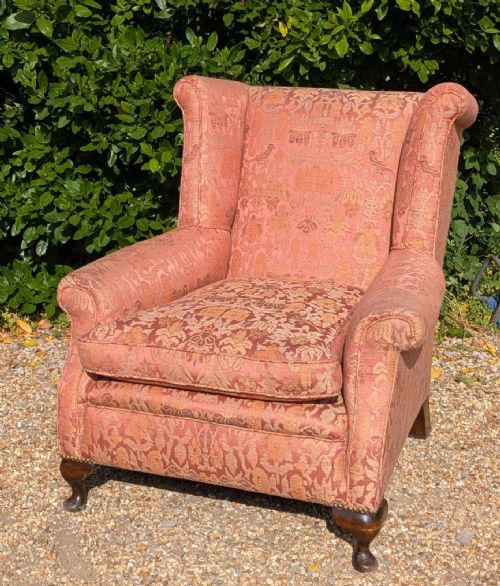
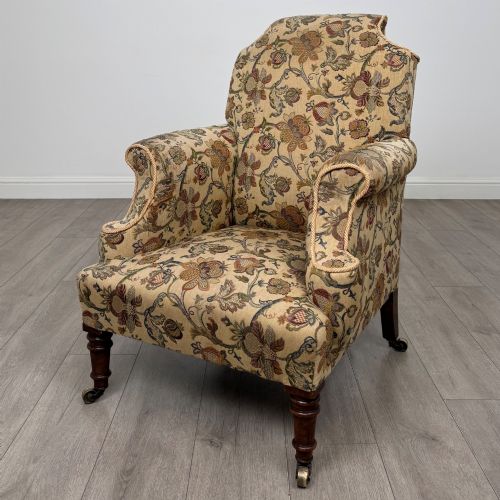
A tapestry fireside chair encompasses various low and high-backed seating forms designed for warmth and comfort near a hearth. When searching for a tapestry fireside chair, buyers encounter pieces primarily from the nineteenth and early twentieth centuries, including Victorian, Edwardian, and nineteen-twenties examples.
Stylistic influences span English country house taste alongside revivals like Queen Anne, Jacobean, and Carolean styles. Most items utilise patterned tapestry fabric or upholstery that complements the traditional wooden frames.
How they were made
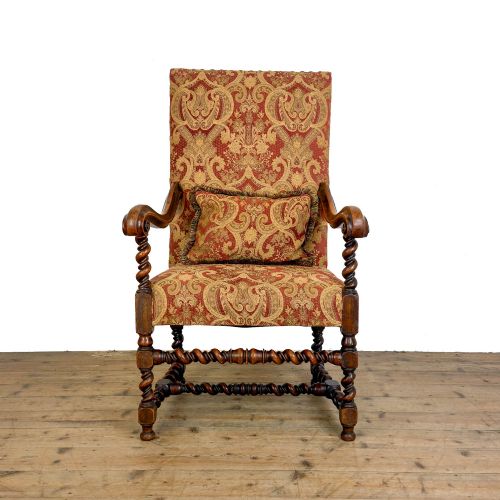
Makers constructed the structural frames of these chairs using hardwoods such as walnut and mahogany, frequently incorporating turned elements like bobbin turnings or carved details. Joinery relied on traditional cabinet-making techniques to support heavy daily use beside the fireplace.
Upholsters layered stuffing and springs within the wooden carcasses before securing outer covers of woven tapestry fabric. Brass tacks and finishing braids often secured the edges of the heavy textile upholstery to the timber frames.
Listings include nineteenth-century and early twentieth-century examples featuring walnut, mahogany, and brass.
What varies in quality
Quality shows in the selection and stability of the timber frame, where dense walnut or mahogany provides superior longevity compared to softer secondary woods. The intricacy of the carved or turned woodwork, such as elaborate bobbin turnings or claw and ball feet, distinguishes finer workshop output.
The execution and survival of the tapestry upholstery also determine standard, with tightly woven period textiles maintaining visual integrity better than degraded surfaces requiring complete replacement.
Howard & Sons·William Morris
The Tapestry Fireside Chair Glossary
- Wingback armchair
- An upholstered seat featuring protective side panels designed to shield the sitter from draughts near an open fire. These chairs often stand on carved wooden legs.
- Nursing chair
- A low-seated armchair historically designed for nursing infants, offering a comfortable posture close to hearth level. They frequently appear with walnut or mahogany frames.
- Bobbin turned
- A style of furniture turning that creates a series of rounded wooden spheres resembling spools of thread. This decorative technique appears on the structural legs and stretchers of various nineteenth-century chairs.
- Slipper chair
- An upholstered chair with low legs designed for bedrooms and dressing areas. They provide relaxed seating without armrests.
- Tapestry upholstery
- A heavy, decorative woven fabric used to cover seating frames. It often displays figurative or floral patterns suited to period interiors.
Tapestry Fireside Chair: Frequently Asked Questions
Where should I place a fireside chair?
These chairs suit living rooms, studies, and bedrooms where traditional seating adds character.
Position them near a fireplace or in a quiet reading corner to make the most of their supportive backs.
How do I identify a Victorian piece?
Look for dense mahogany or walnut frames paired with deep buttoning or period tapestry covers.
Stylistic cues often point to heavy proportions and revival details typical of the nineteenth century.
Can I use these chairs daily?
Many sturdy frames handle regular use, provided the internal webbing and padding remain sound.
Checking the stability of the wooden joints ensures the chair supports everyday sitting.