

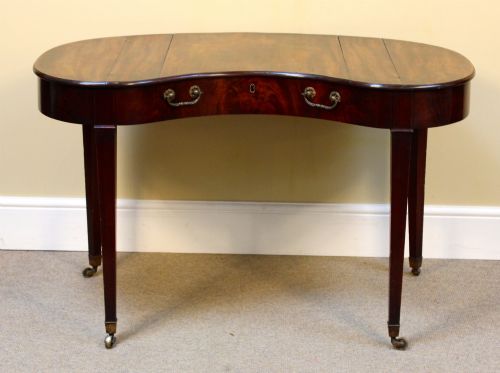
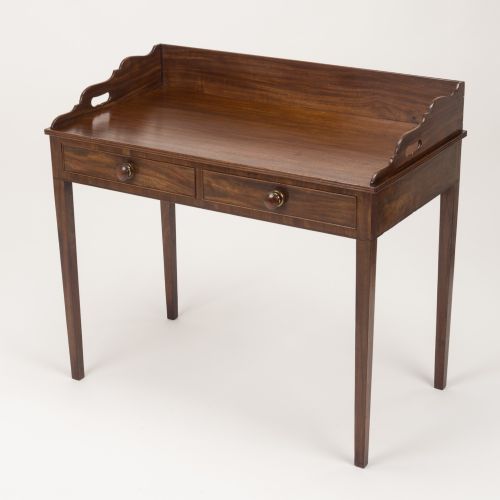

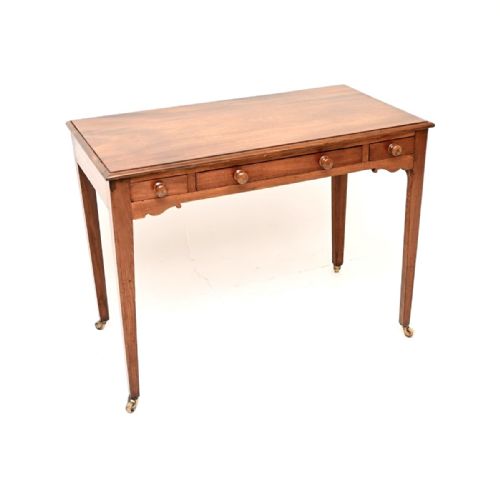

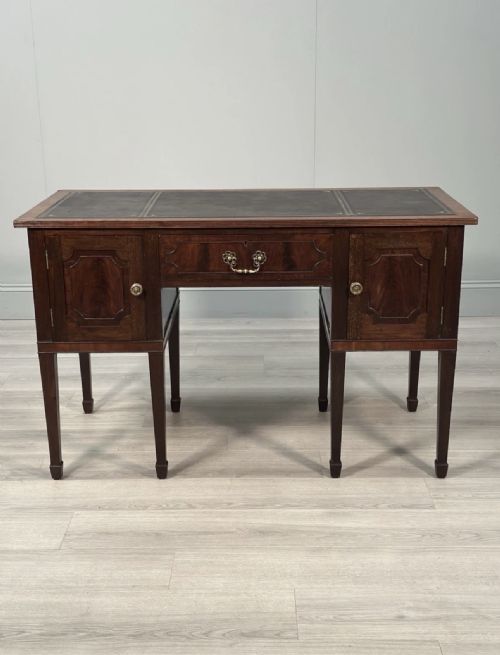


Tapered Leg Study Desk
A tapered leg study desk offers a clean workspace with timeless proportions, making it an essential piece for both traditional and modern writing rooms.
Tapered Leg Study Desk
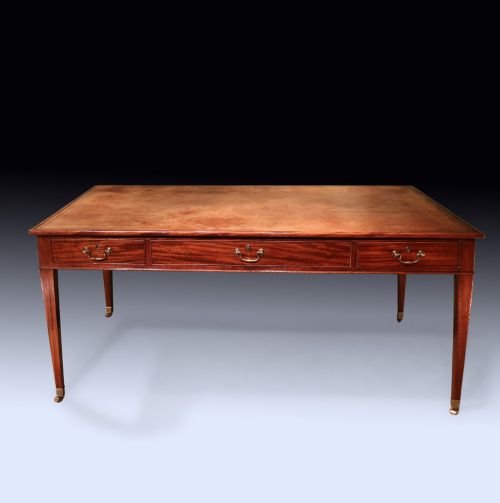
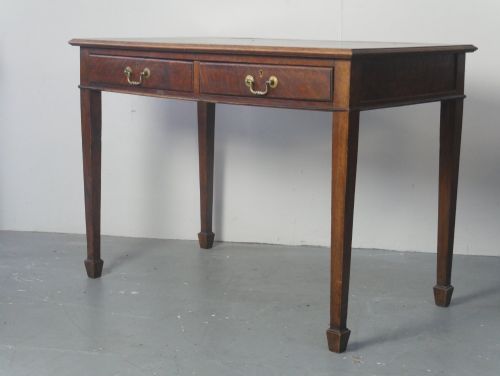
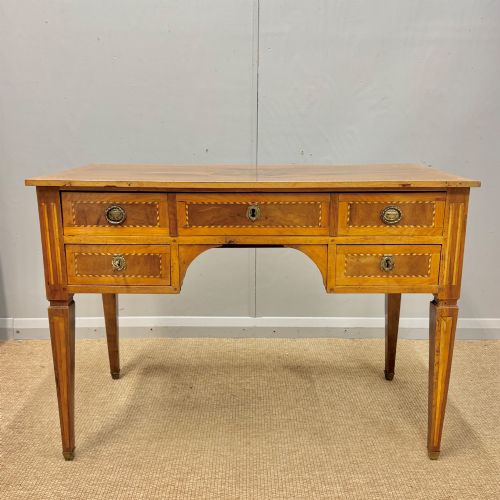
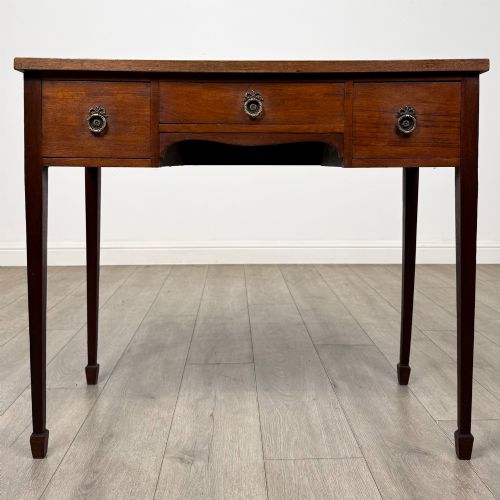
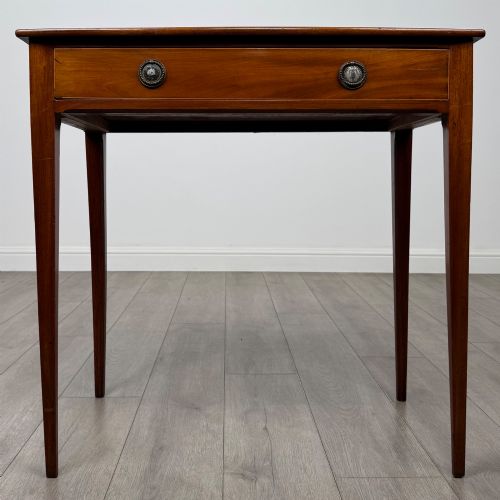
A tapered leg study desk provides a dedicated writing surface defined by straight lines and slender supports that narrow toward the floor. When searching for a tapered leg study desk, buyers encounter forms ranging from compact Edwardian examples to substantial Georgian writing tables.
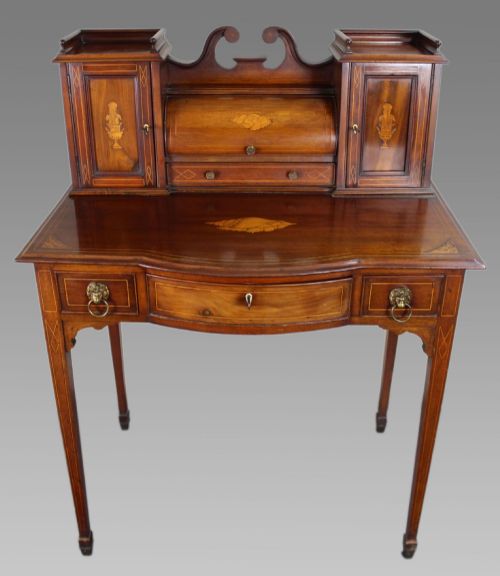
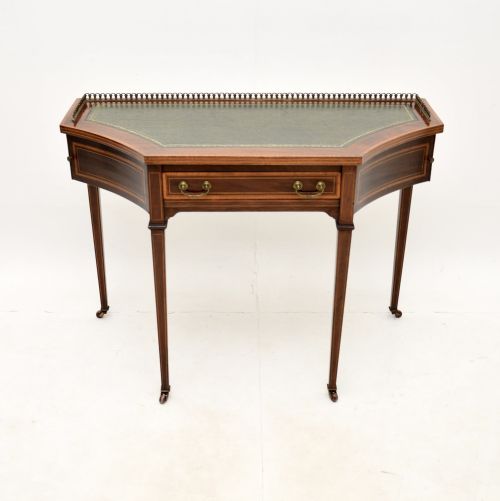
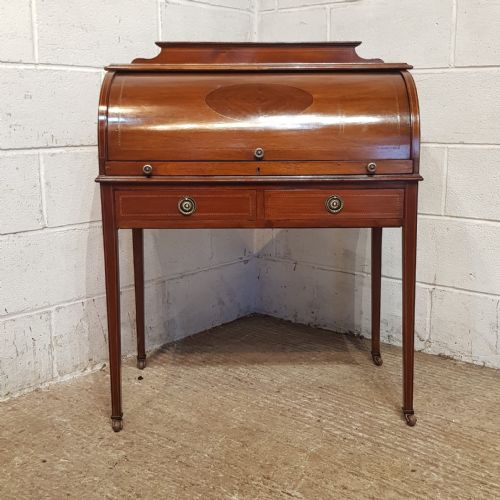
The pieces on this page span several distinct eras, with Edwardian and nineteenth-century items appearing most frequently alongside Georgian and early twentieth-century variations. These tables serve primarily as writing desks, writing tables, and specialised forms such as Carlton House desks or bonheur du jour units.
Materials vary widely across the selection, featuring predominant woods like mahogany, oak, and walnut, often enhanced by contrasting satinwood or boxwood inlay. Certain pieces incorporate leather writing surfaces and brass hardware, grounding the refined silhouettes in durable functionality.
How They Were Made
Cabinetmakers constructed these desks using durable hardwoods such as mahogany, oak, and walnut for the primary framework, ensuring structural stability for daily writing tasks. Secondary woods were frequently utilised for internal drawer linings and hidden framing.
Decorative surfaces relied on careful veneer work, incorporating satinwood, boxwood inlay, and tulipwood banding to create geometric borders and contrasting panels. Many examples also integrated fitted leather writing inserts and cast brass handles or mounts.
The defining tapered legs were shaped by hand to achieve a gradual narrowing effect toward the foot, balancing visual lightness with solid weight-bearing capacity.
Tapered Leg Study Desk Retail Price Guide 2026
Typical asking prices for tapered leg study desk among the pieces listed under this phrase on Sellingantiques today, from the lower quarter to the upper quarter. They describe what is for sale here now, not the wider market.
Listings feature mahogany, oak, walnut, and satinwood, spanning the Georgian, Victorian, and Edwardian eras.
What Varies in Quality
The sophistication of the timber selection and inlay work dictates the upper tier of these desks, where finely figured mahogany meets crisp boxwood and satinwood banding. Simpler constructions rely on solid oak or plain pine without decorative veneers.
Hardware and secondary detailing separate standard pieces from exceptional ones, particularly the presence of original brass fixtures, fitted interior compartments, and neatly tooled leather writing surfaces. Superior stability in the slender tapered legs indicates careful joinery and seasoned wood.
Jenners
The Tapered Leg Study Desk Glossary
- Tapered leg
- A support column that gradually narrows from the top down to the foot. This shape imparts a sense of visual lightness while maintaining structural strength.
- Inlay
- Pieces of contrasting timber set flush into the primary wood surface to form decorative patterns. Boxwood and satinwood are frequently used for this detailed work.
- Carlton House desk
- A distinctive writing table featuring a raised, curved superstructure of small drawers and compartments wrapping around the back and sides of the desk. These units provide extensive pigeonhole storage.
- Bonheur du jour
- A light nineteenth-century lady's writing desk, usually featuring a small cabinet or set of drawers upon the main writing surface. The phrase translates from French as daylight joy.
- Marquetry
- Elaborate veneer patterns arranged to form pictorial designs using various coloured woods. This technique appears on select freestanding tables from the nineteenth century.
Tapered Leg Study Desk: Frequently Asked Questions
What is a tapered leg study desk used for?
These tables provide a stable surface for writing, correspondence, and administrative tasks. They serve as functional workstations while maintaining a refined profile suitable for home studies or drawing rooms.
Many examples include small drawers beneath the writing surface for storing paper, ink, and writing instruments. Their compact proportions allow them to sit comfortably against walls or float freely in the middle of a room.
How do I identify an Edwardian desk?
Edwardian desks often display delicate satinwood or boxwood inlay set into rich mahogany surfaces, reflecting a revival of eighteenth-century neoclassical styles. They frequently incorporate tapered legs and light framing.
Cabinetmakers of this period produced numerous variations, including barrel-fronted desks and elaborate Carlton House configurations. The construction utilises machine-assisted joinery alongside traditional hand-finishing techniques.
Are these desks suitable for daily computer use?
Antique writing desks accommodate modern laptops and paperwork easily, provided the height and knee clearance match your chair. Their durable hardwood construction handles everyday workspace demands.
Care should be taken with antique leather writing inserts, which benefit from protective blotters or desk pads to prevent wear from modern electronics and writing instruments.
What distinguishes Georgian furniture styles?
Georgian pieces emphasise classical proportions, solid mahogany construction, and understated elegance without excessive ornamentation. The lines remain clean and balanced.
Desks from this era often feature sturdy brass pulls, handcrafted dovetail joints in the drawers, and subtle bracket or tapered feet that anchor the design.