
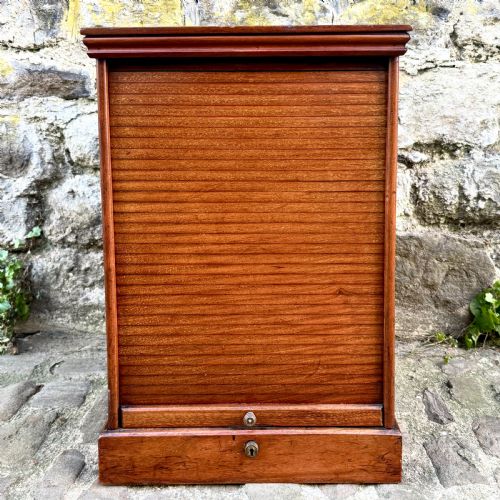
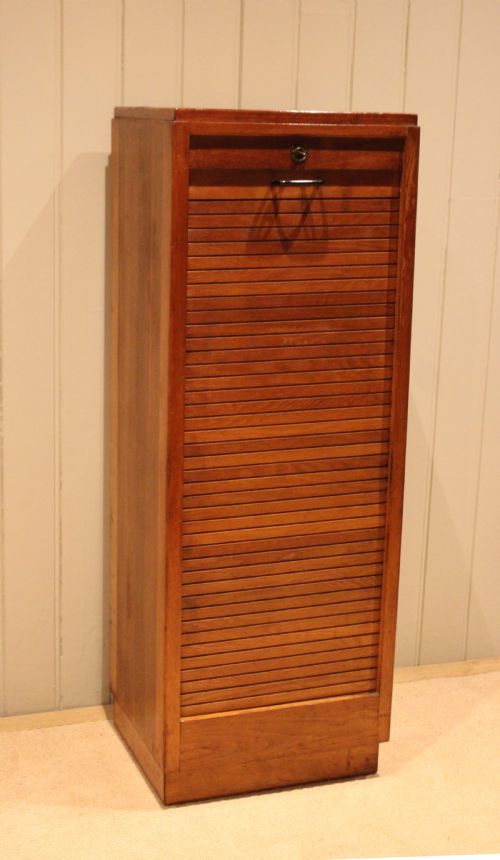
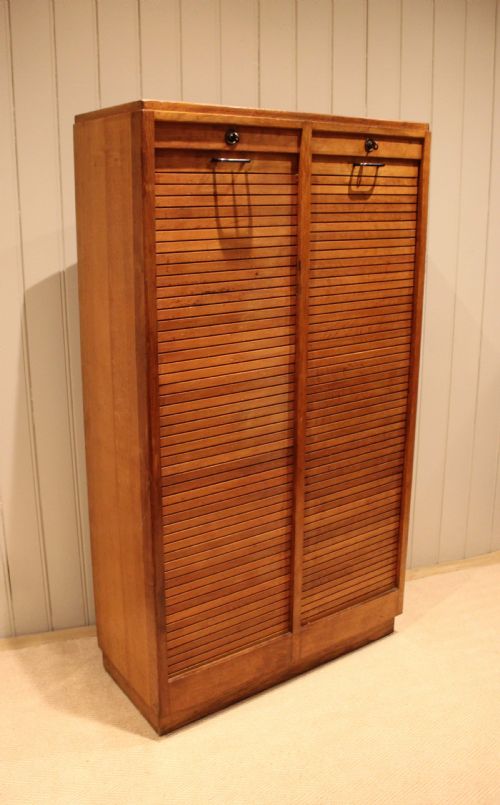
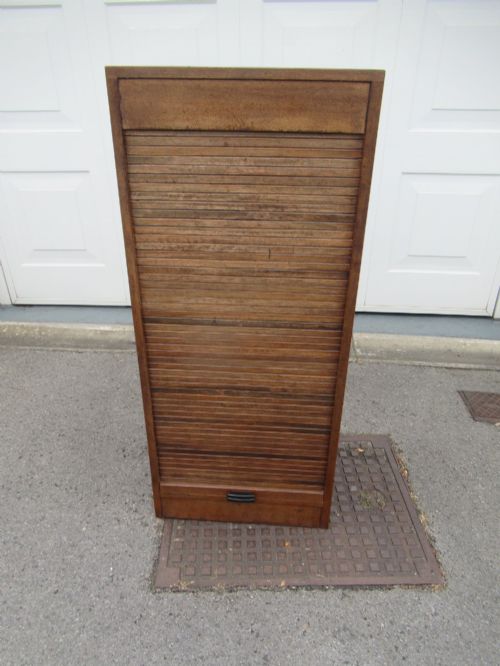
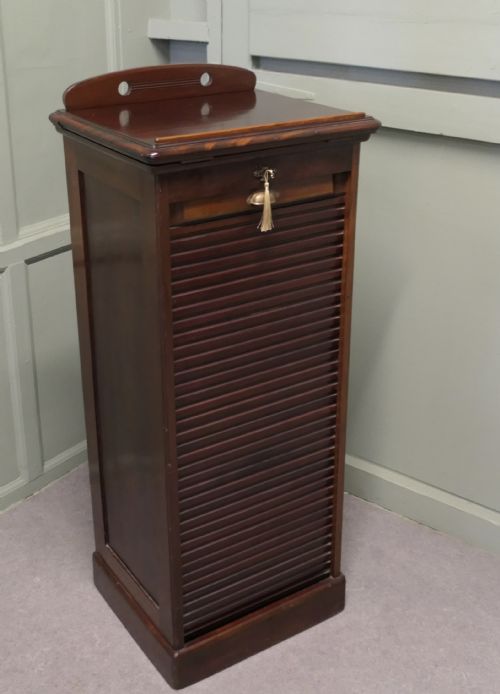


Tambour Front Office Cabinet
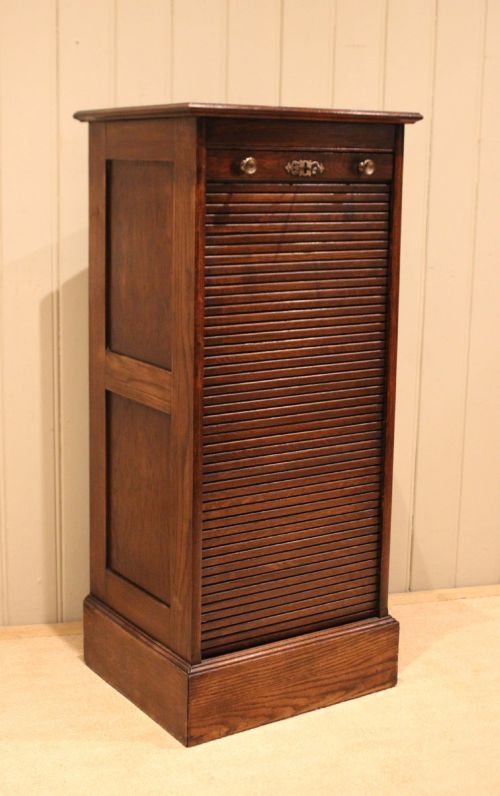
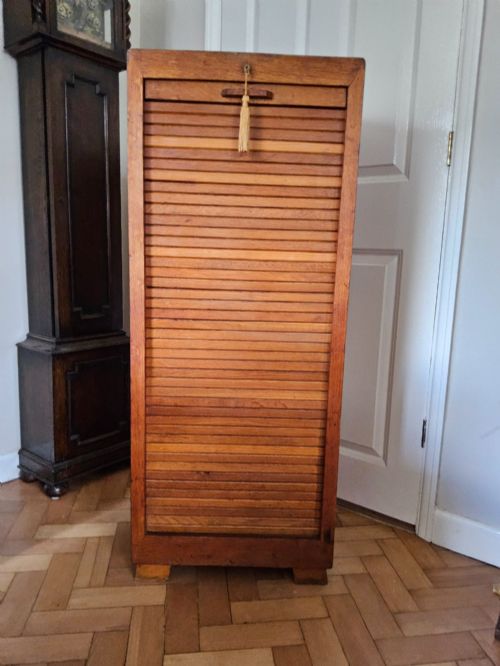
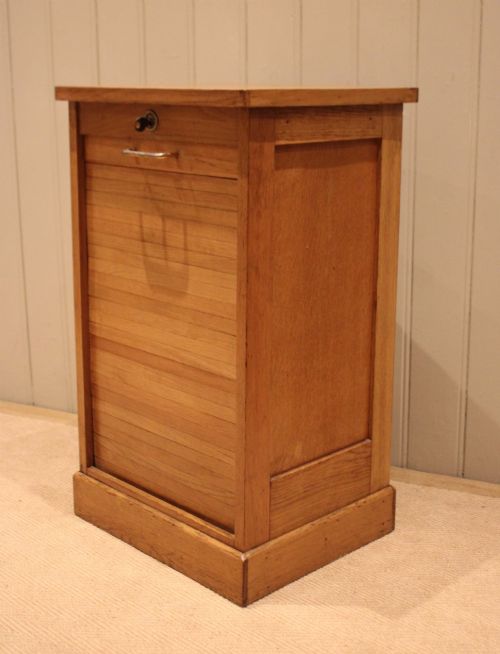
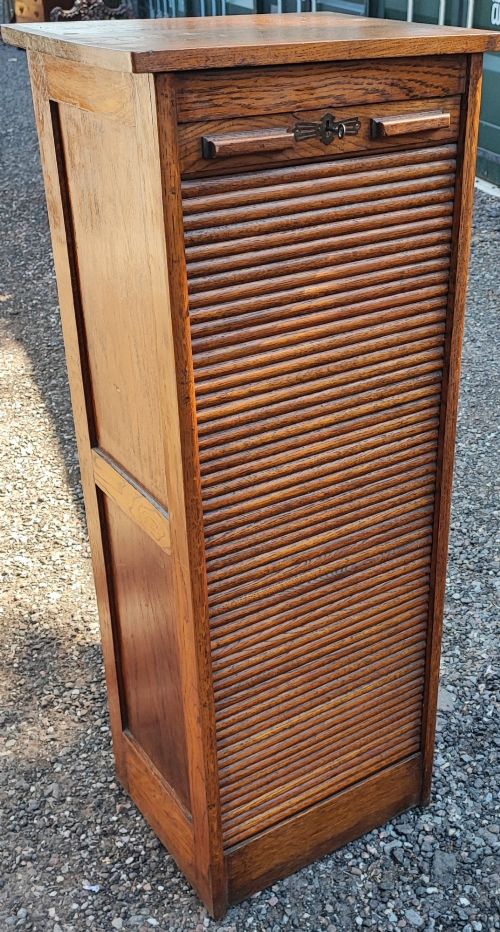
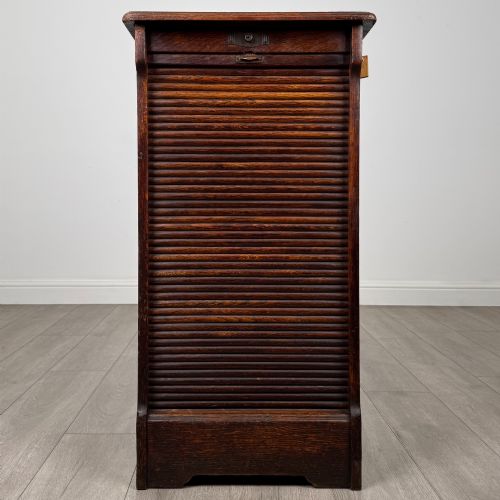
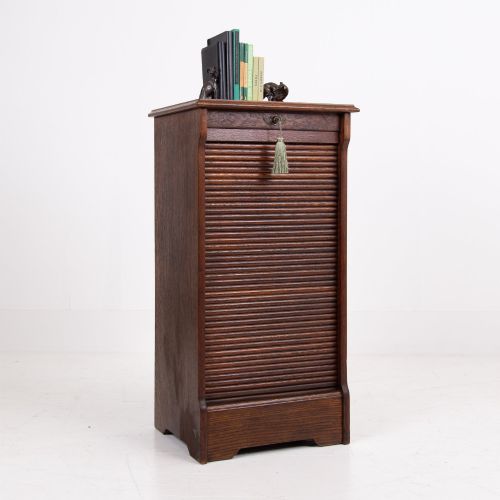
These tambour front office cabinet pieces bring sliding slatted timber shutters to workspace storage, hiding shelves and files behind flexible wooden curtains.
Tambour Front Office Cabinet
A tambour front office cabinet offers clever concealment for paperwork and stationery through a sliding slatted door that tracks smoothly around a curve. When you search for a tambour front office cabinet, you encounter versatile storage units designed for efficient organisation in professional and domestic settings alike.
The selections span distinct periods, with Edwardian and early twentieth century examples appearing frequently alongside Victorian, Art Deco, and 1930s pieces. Single and double door configurations emerge in various proportions, serving as dedicated filing cabinets, desks, and bureau bookcases.
Oak dominates the material palette, supported by mahogany, walnut, rosewood, and pine. These woods provide the sturdy carcass required to house the intricate mechanical track systems that make the rolling shutters function.
What varies in quality
The smoothness of the sliding action distinguishes superior pieces, relying on the precision of the wooden tracks and the flexibility of the fabric backing. A well-maintained shutter glides without catching or sagging along its curved path.
Timber selection and grain matching elevate the character of finer cabinets, particularly in mahogany, walnut, and figured oak examples. Superior construction employs robust internal framing that prevents the carcass from twisting and binding the tambour mechanism over time.
Listings feature woods including oak, mahogany, walnut, rosewood, pine, and steel, spanning periods from the eighteenth century through the 1940s.
The Tambour Front Office Cabinet Glossary
- Tambour
- A flexible shutter made from narrow strips of wood attached to canvas or linen backing. It allows the door to slide around a curved track and disappear into the body of the cabinet.
- Bureau
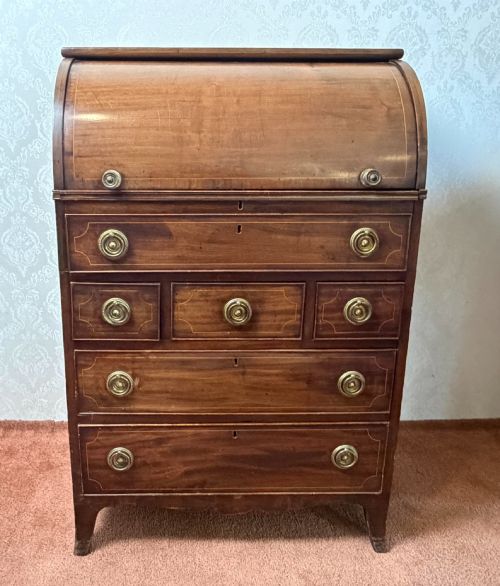
- A desk featuring a sloping hinged writing flap that covers pigeonholes and small drawers. Many examples combine this writing surface with tambour enclosures above.
- Filing cabinet
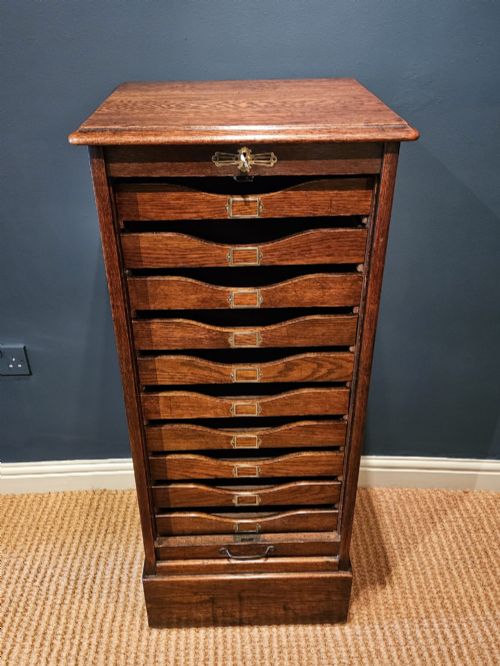
- A piece of furniture designed specifically to hold documents, correspondence, and office records. These units often utilise vertical drawer arrangements or internal shelving behind roller shutters.
- Rolltop
- A style of desk or cabinet where the upper section encloses in a tambour cylinder. This design keeps working papers secure and hidden from view when not in use.
Tambour Front Office Cabinet: Frequently Asked Questions
How do I maintain a tambour door?
Keep the internal wooden tracks clean and free from dust using a dry cloth or soft brush. Avoid heavy commercial waxes or oils that might gum up the canvas backing or cause slats to stick.
Ensure the cabinet sits level on the floor so the frame does not twist, which can cause the sliding shutter to bind in its tracks.
Were these cabinets used in homes?
While originally designed for commercial offices, law practices, and administrative workspaces, these compact storage units quickly found a place in Edwardian and Victorian domestic studies.
Their ability to conceal paperwork made them popular for managing household accounts and correspondence without cluttering living spaces.
How do I date an oak tambour cabinet?
Look at the hardware style, timber choice, and construction methods to establish an era. Edwardian and early twentieth century pieces frequently feature quarter-sawn oak with prominent medullary rays.
Earlier Victorian and Georgian examples tend to utilise denser mahogany or walnut, often incorporating hand-cut dovetails and brass locks stamped with period manufacturer marks.