


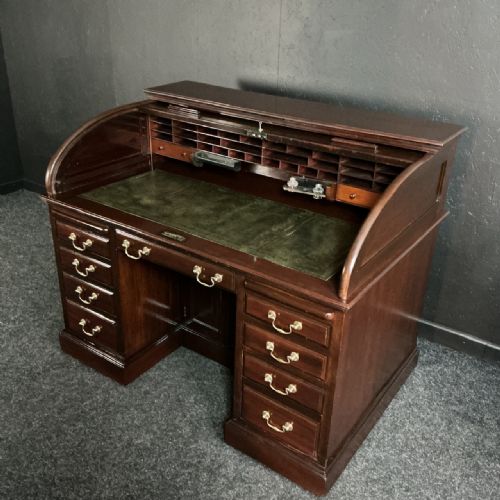


Tambour Cylinder Bureau
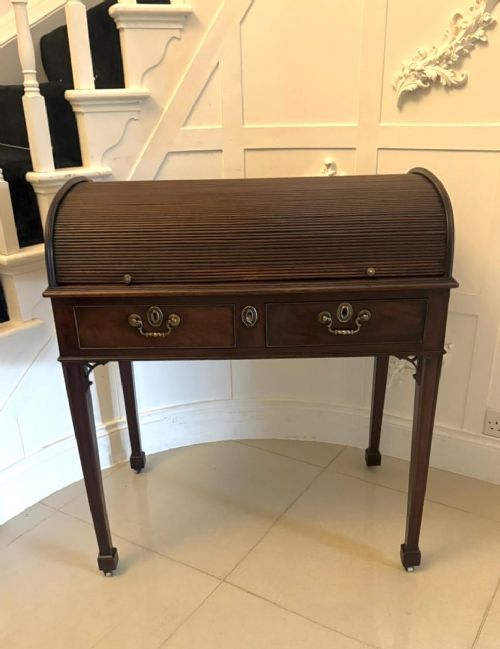
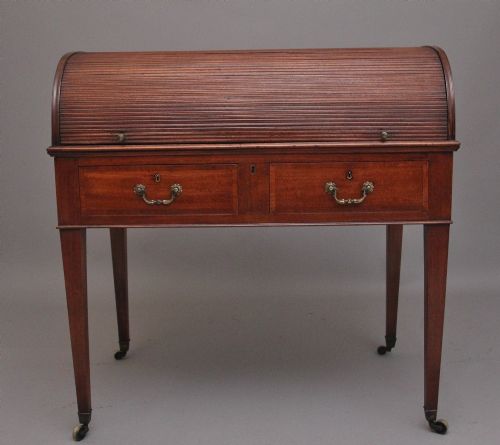
A tambour cylinder bureau conceals fitted compartments behind flexible slatted timber, offering a neat writing surface.
Tambour Cylinder Bureau
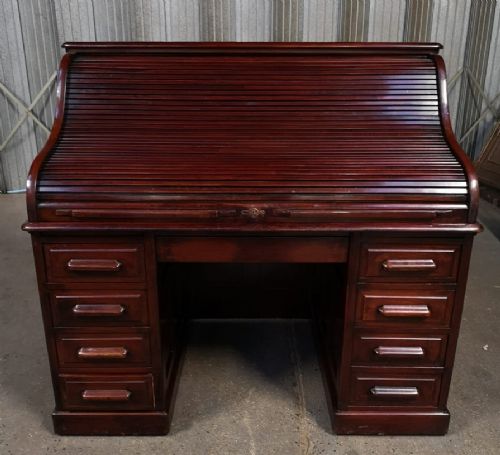
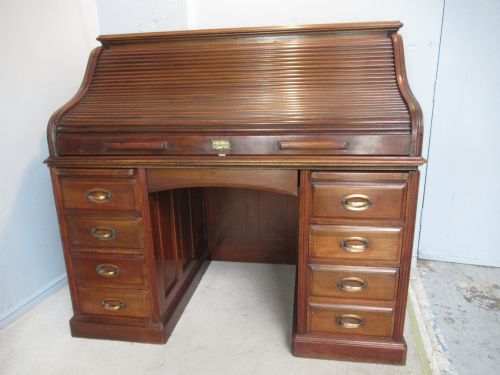
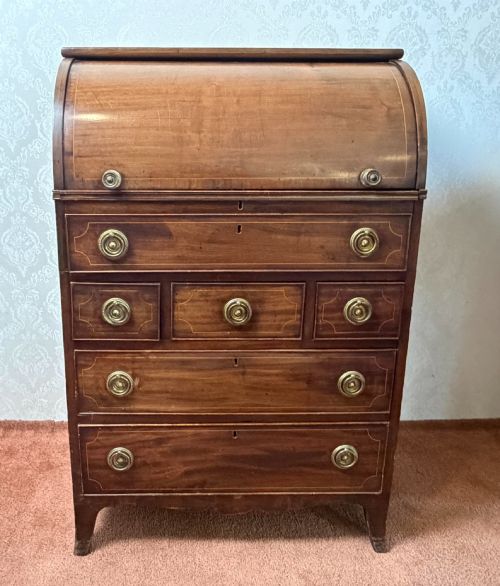
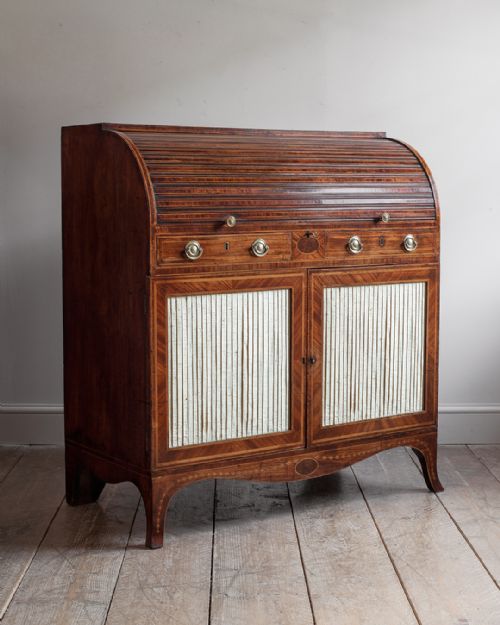
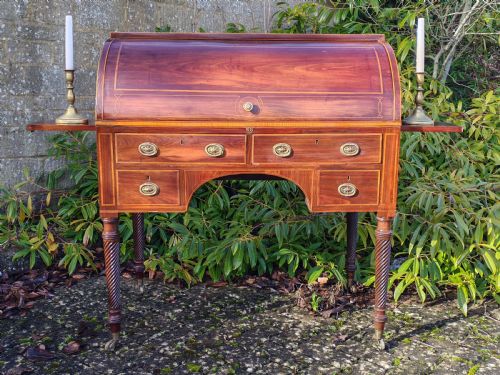
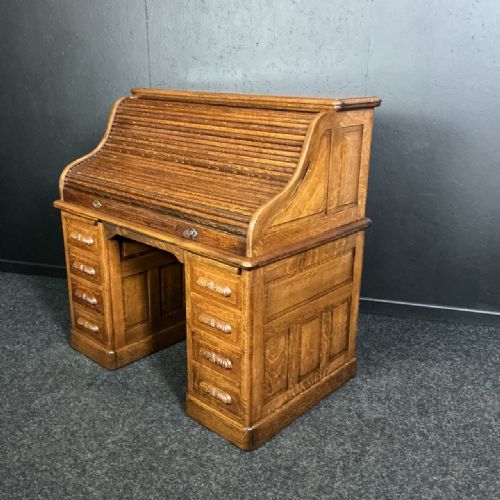
A tambour cylinder bureau combines a curved desk shutter with practical internal compartments for paperwork and correspondence. When someone searches for a tambour cylinder bureau, they meet pieces ranging from compact Georgian writing tables to large Edwardian and Victorian pedestals. The form relies on sliding wooden slats running in tracked grooves to reveal the writing surface.
The versions most common here span the eighteenth century through to the Edwardian period, constructed in mahogany, walnut, or oak. Many examples feature pull-out writing slides and satinwood inlay, reflecting the Georgian and Sheraton styles seen across the inventory. Desks range from refined ladies' writing tables to large commercial roll-top forms.
What varies in quality
The precision of the tambour mechanism dictates the functional quality of the desk, separating smooth-running shutters from stiff or binding slats. Timber selection also defines the tier, with figured mahogany and finely matched satinwood veneers marking out pieces intended for formal reception rooms.
Interior architecture varies from simple fixed shelving to elaborate arrangements of secret compartments, miniature drawers, and central locking systems operated by a single key. The finesse of the inlay work and the structural integrity of the curved cylinder housing further distinguish standard production models from exceptional cabinet work.
Some nineteenth-century desks feature ingenious internal spring mechanisms designed to retract the tambour shutter automatically when unlocked.
Boston Chair Company·Gillows
The Tambour Cylinder Bureau Glossary
- Tambour
- A shutter formed of narrow vertical strips of wood glued to a fabric backing. This flexible construction allows the cover to curve around a cylinder housing.
- Cylinder bureau
- A writing desk featuring a rounded, barrel-like enclosure over the desk surface. The curved lid retracts upwards to expose the fitted interior.
- Satinwood
- A pale, lustrous timber imported from the tropics, frequently utilised for decorative stringing and contrasting veneers during the Georgian and Sheraton periods.
- Partridgewood
- A dense tropical wood exhibiting distinctive speckled figuring resembling partridge plumage. Cabinetmakers employed it for decorative highlights on high-status writing furniture.
- Escutcheon
- A protective plate surrounding a keyhole, usually cast from brass. These fixtures often relate directly to the period of the desk's manufacture.
Tambour Cylinder Bureau: Frequently Asked Questions
How does the tambour top work?
The tambour top consists of narrow wooden slats attached to a flexible canvas or leather backing. This construction allows the entire shutter to slide smoothly along grooved tracks cut into the desk sides.
When pushed upward or backward, the slats follow the curve of the cylinder and disappear into the body of the desk. This mechanism conceals the desk surface and writing compartments without requiring clearance for swinging doors.
Where were these desks placed?
These desks served primarily in private studies, libraries, and withdrawing rooms for managing correspondence and personal accounts. Smaller satinwood and mahogany versions often stood in ladies' boudoirs for writing letters.
Larger oak and walnut pedestal variations appeared in professional offices and estate administration rooms by the late Victorian and Edwardian eras. Their lockable shutters kept confidential papers secure when the desk was unattended.
How do I care for the tambour tracks?
The internal tracks require occasional cleaning to prevent dust and debris from impeding the movement of the wooden slats. Keeping the environment stable helps prevent the wood from expanding and binding within the curved channels.
Avoid applying heavy oils or moisture directly to the fabric backing behind the tambour slats. Gentle dusting along the grooves preserves the smooth glide of the cylinder.
How can I tell a Georgian piece from a later copy?
Georgian and 18th century pieces typically employ solid secondary timbers like oak or pine for internal drawer linings, joined with hand-cut dovetails. The proportions tend to be more slender, utilising fine mahogany or satinwood veneers.
Later Victorian and Edwardian examples frequently feature heavier construction, standardised brass hardware, and mass-produced commercial fittings. Examining the construction of the interior pigeonholes and drawer sides reveals the working methods of the period.