

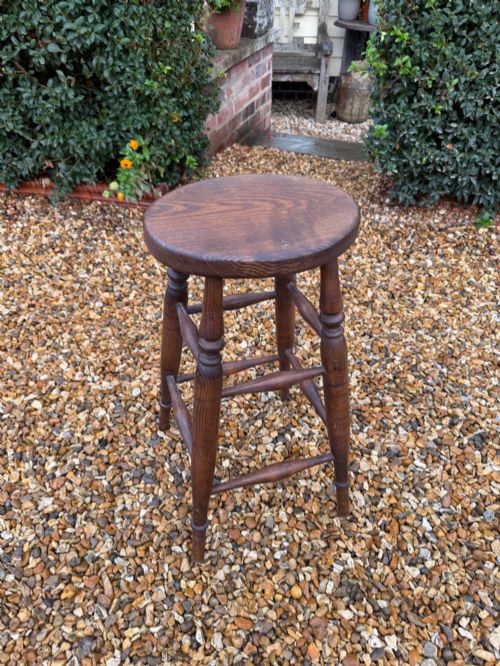
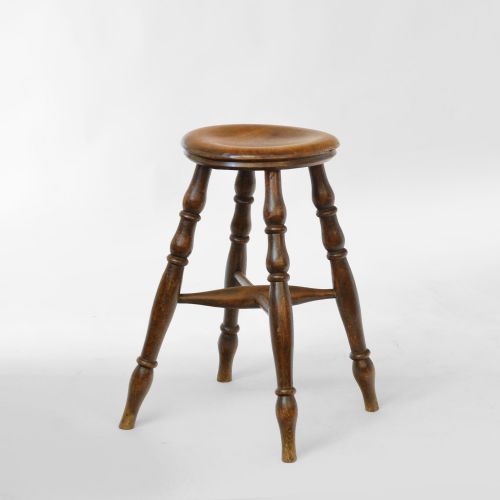

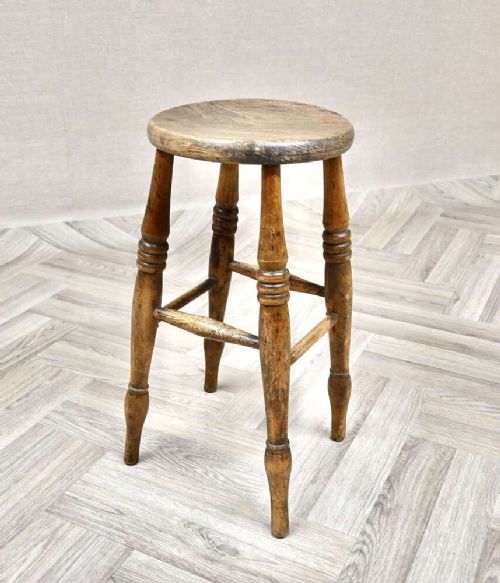


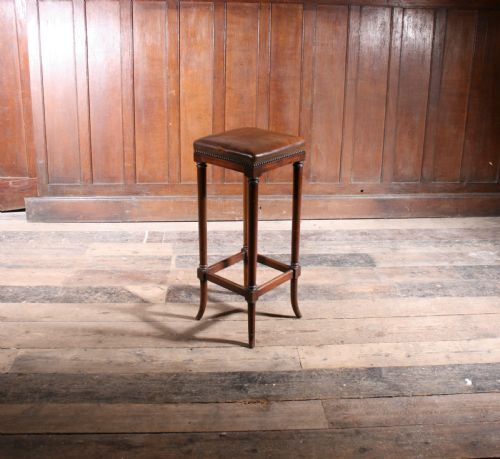


Tall Wooden Stool
A tall wooden stool brings functional utility and honest character to a room, offering elevated seating shaped by practical daily use.
Tall Wooden Stool
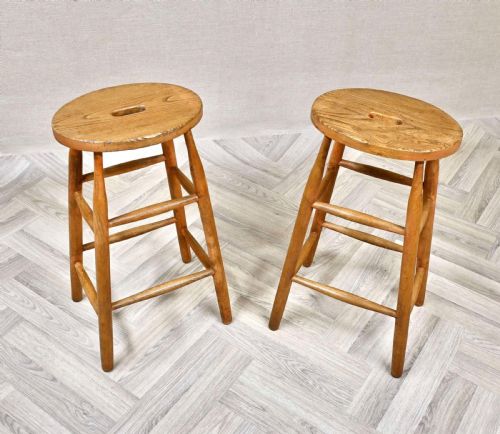
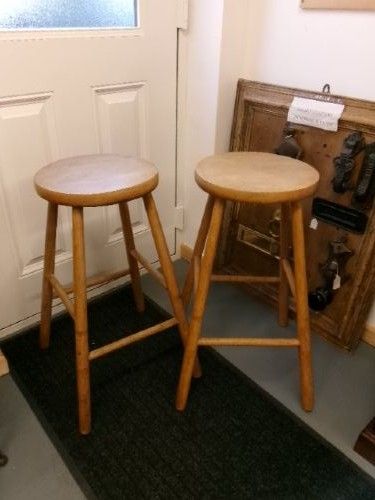
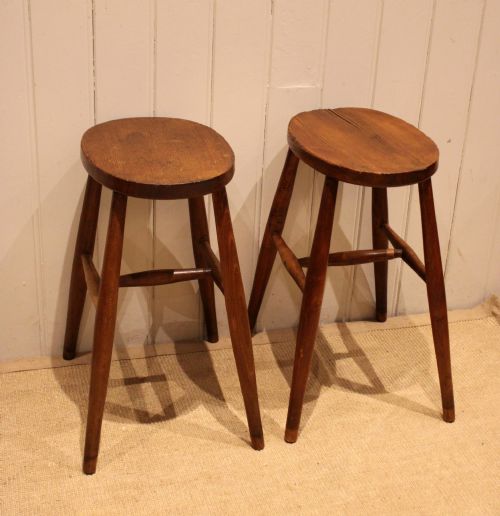
A tall wooden stool serves working spaces, counters and social areas, appearing frequently in nineteenth-century tavern, clerk and dairy forms. These pieces evolved for specific tasks where elevated seating was essential for reach and long hours at high desks or bars.
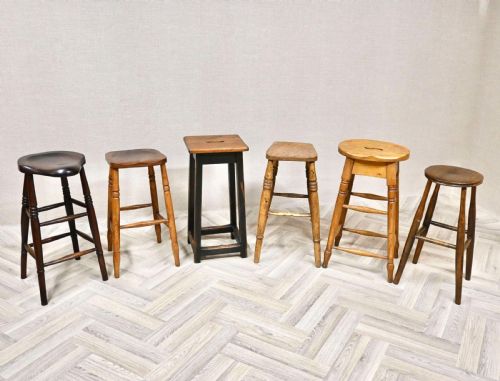
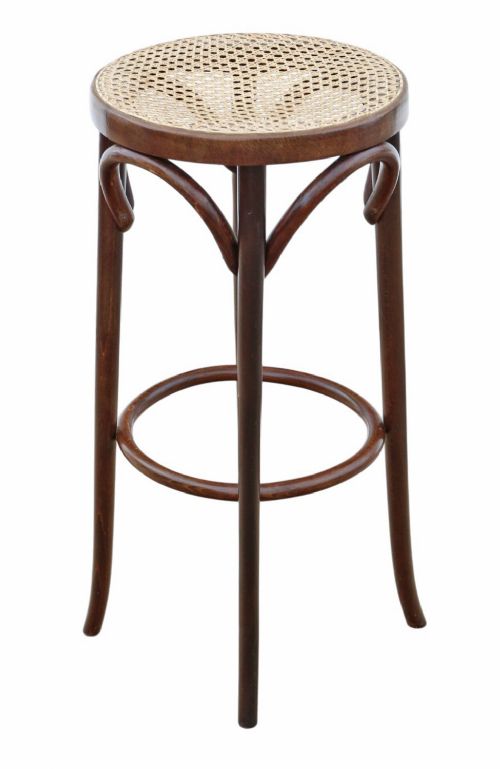
The varieties on this page span simple country work seats to more formal library and bistro designs, reflecting domestic and commercial interiors. Elm, beech and oak dominate the construction, providing robust support through simple, utilitarian silhouettes.
Many examples retain traces of original paint, surface wear or deep patination built up over generations of use in kitchens, pubs and offices. Buyers encounter everything from single tavern seats to matched sets intended for commercial counters.
Materials and construction methods
Makers utilised solid native timbers, selecting elm for durable seats alongside beech and oak for sturdy turned legs and stretchers. These woods offered the resilience needed to withstand heavy daily wear in busy workshops, dairies and public houses.
Joinery techniques relied heavily on traditional turned components, pegging and wedged tenons to ensure rigid frames without metal fastenings. Seat tops were frequently shaped or dished from single timber slabs to provide comfort during extended periods of sitting.
Tall Wooden Stool Retail Price Guide 2026
Typical asking prices for tall wooden stool among the pieces listed under this phrase on Sellingantiques today, from the lower quarter to the upper quarter. They describe what is for sale here now, not the wider market.
Listings feature woods including elm, beech, oak and sycamore, spanning the eighteenth century through to the 1940s.
Assessing quality and craftsmanship
Superior examples display balanced proportions, particularly in the splay of the legs and the height of the supporting foot ring. Finer pieces maintain original structural integrity without excessive timber shrinkage or replaced components that alter the stance.
Surface finish significantly dictates the desirability of a piece, with undisturbed patination and original paint or wax finishes holding greater appeal. The choice of timber grain, particularly figured elm or rich mahogany, elevates standard utility forms into notable examples of vernacular craft.
The Tall Wooden Stool Glossary
- Vernacular furniture
- Objects made by local craftsmen for everyday practical use rather than following high-style academic designs. These pieces prioritise function and local materials above prevailing fashion.
- Stretcher
- A horizontal wooden brace connecting the legs of a stool to provide structural rigidity and stability. They frequently double as footrests on elevated seating.
- Dished seat
- A wooden seat top carved with a shallow concave depression to improve comfort. This technique requires considerable skill with an adze or gouge.
- Turned leg
- A wooden support shaped on a lathe to create cylindrical, tapered or decorative profiles. Beech was commonly utilised for this purpose due to its dense grain.
- Patina
- The surface sheen and colour acquired by wood and paint over decades of handling, light exposure and cleaning. It serves as an indicator of age and continuous use.
Tall Wooden Stool: Frequently Asked Questions
How were tall wooden stools originally used?
These pieces served workers who needed elevated seating at tall desks, counting houses, libraries and tavern counters.
Clerks, barmen and artisans relied on them for mobility and posture during long shifts of standing or high-surface work.
Can I use a tall wooden stool at a kitchen island?
Many antique examples match modern counter heights, making them suitable for contemporary kitchens and breakfast bars.
Checking specific leg heights and footrest placements ensures comfort for everyday dining and social seating.
How do I distinguish nineteenth-century examples?
Look for hand-turned components, pegged joints, tool marks from traditional adzes and signs of genuine timber shrinkage.
Genuine period pieces display natural surface wear and patination that modern reproductions cannot replicate.
Are painted wooden stools original?
Several pieces retain early or original painted surfaces applied to protect the utility timber in dairies and taverns.
Surface analysis helps determine whether paint layers date from the period of manufacture or represent later decoration.
How should I care for antique wooden seating?
Maintain the wood with occasional applications of natural beeswax to nourish dry timbers and protect the historic surface.
Avoid placing stools near direct heat sources to prevent timber splitting and joint loosening.