

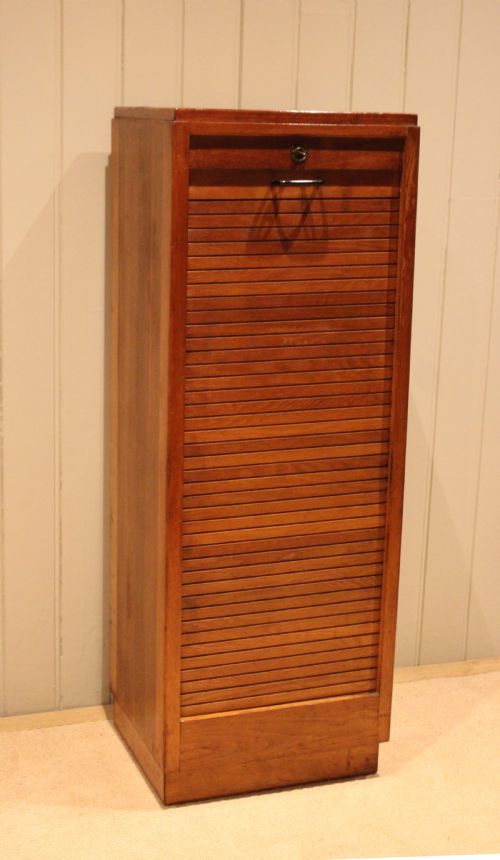


Tall Wooden File Cabinet
These tall wooden file cabinets offer serious storage with period character, giving your study or workspace practical organisation grounded in craft.
Tall Wooden File Cabinet
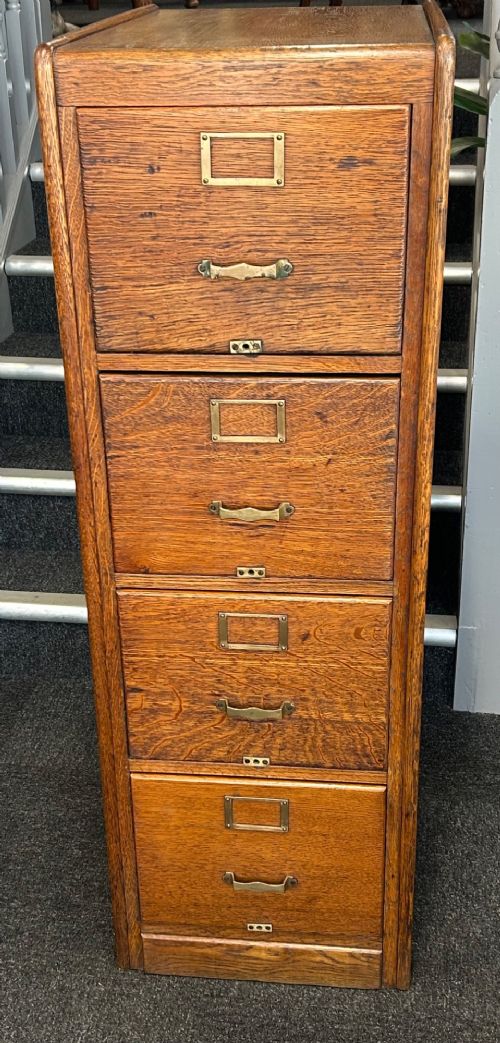
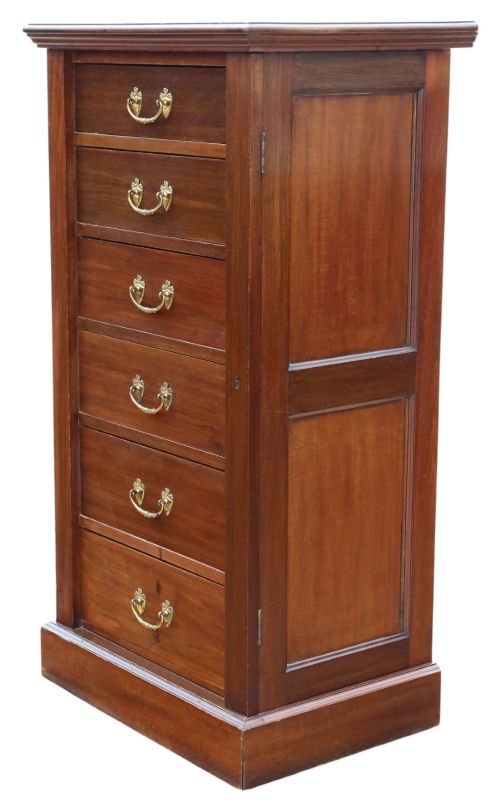
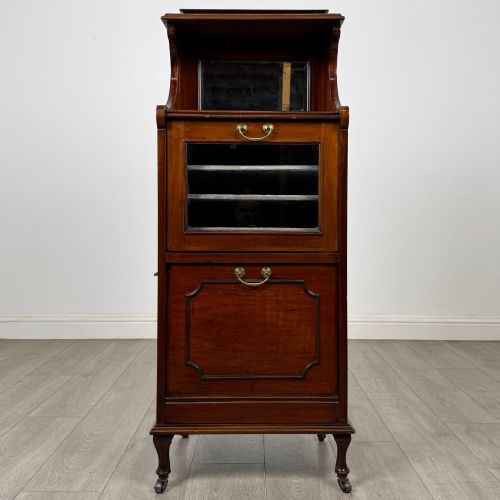
When searching for a tall wooden file cabinet, you are looking at vertical storage pieces designed to house documents, music, or small items while maintaining a handsome timber exterior. The versions you are most likely to meet on this page span from Victorian and Edwardian periods through the early twentieth century, taking forms such as Wellington chests, tambour front units, and banks of narrow drawers.
These pieces bridge the gap between heavy office utility and domestic furniture, often appearing in mahogany, oak, or walnut. You will encounter tallboy proportions, music cabinets adapted for paperwork, and specialised office furniture designed to fit tight spaces without sacrificing capacity.
How they were made
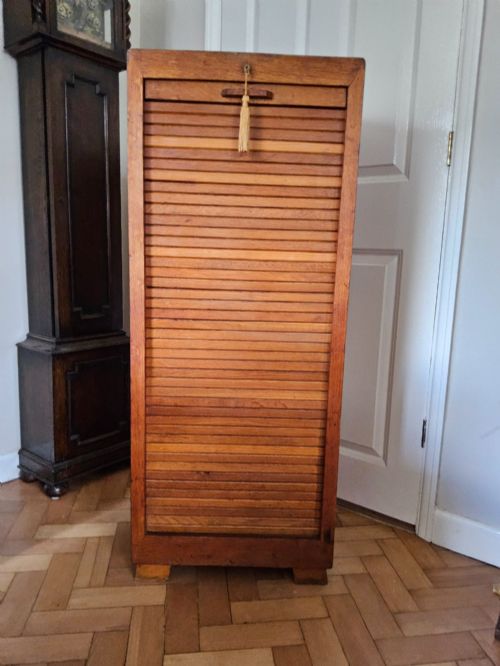
Cabinet makers built these tall units using solid hardwoods like oak, mahogany, and walnut, frequently pairing them with brass handles, locks, and card holders. Tambour doors required narrow wooden slats glued to canvas backing to slide smoothly around curved tracks.
Drawer construction relied on tight dovetail joints to withstand daily pulling and heavy paper loads. Timber selection favoured figured veneers on drawer fronts alongside solid frames to ensure stability across tall, narrow structures.
Tall Wooden File Cabinet Retail Price Guide 2026
Typical asking prices for tall wooden file cabinet among the pieces listed under this phrase on Sellingantiques today, from the lower quarter to the upper quarter. They describe what is for sale here now, not the wider market.
Listings feature oak, mahogany, walnut, and pine across Victorian, Edwardian, and mid-twentieth century periods.
What varies in quality
The distinction between standard office utility and finer examples rests on timber selection and secondary details like working locking mechanisms with original keys. Figured walnut or finely inlaid mahogany elevate a piece from a functional workspace item to a refined room centrepiece.
Internal engineering also separates different tiers of manufacture, particularly in the smoothness of tambour slat tracks and the precision of drawer runners. Original brass hardware and intact patent mechanisms denote a higher grade of original production.
Maple and Co·Amberg
The Tall Wooden File Cabinet Glossary
- Tambour
- A flexible door made of narrow wooden slats attached to fabric, allowing it to slide around a curved track to conceal interior shelves or drawers.
- Wellington chest
- A tall, narrow chest of drawers secured by a hinged locking side pilaster that fastens over the drawer edges.
- Bank of drawers
- A multiple-drawer unit designed for intensive sorting, often found in offices, shops, or watchmakers' workshops.
- Inlay
- The technique of inserting contrasting pieces of wood or other materials into depressions in the base wood to form decorative patterns.
- Tallboy
- A tall chest of drawers, typically constructed by stacking one cabinet section upon another or building a single tall vertical unit.
Tall Wooden File Cabinet: Frequently Asked Questions
How do tambour doors work?
Tambour doors consist of thin wooden strips glued to a fabric backing, which runs along a recessed track inside the cabinet frame. This design allows the door to slide open and closed around a tight corner without needing exterior clearance space.
Keep the tracks clean and lightly waxed to ensure smooth movement over time. Avoid forcing the mechanism if humidity causes the wood to swell slightly.
Where should I place a tall cabinet?
These tall units suit home studies, living rooms, or hallways where floor space is limited but vertical storage is required. Their narrow proportions allow them to fit into alcoves or beside larger pieces of furniture without dominating the room.
Anchor tall furniture securely to the wall for safety, especially on older timber floors that may not be entirely level.
Can these hold modern paper sizes?
Many early filing cabinets and music cabinets were built before modern paper standards were fixed, meaning interior drawer dimensions vary considerably. Check the internal measurements of each drawer if you intend to store standard contemporary files.
Some drawers suit cards, letters, or specialised collections better than standard modern folders.
How do I care for polished wood?
Maintain the timber surface by dusting regularly with a soft, dry cloth and applying natural beeswax periodically to nourish the grain. Keep the cabinet away from direct heat sources and strong sunlight to prevent the timber from drying out or fading.
Treat brass hardware gently with appropriate cleaners if polishing is desired, taking care not to stain the surrounding wood.