





Tall Wood Dresser
A tall wood dresser offers substantial vertical storage, combining traditional craftsmanship with the practical presence of Georgian, Victorian, and Edwardian design.
Tall Wood Dresser
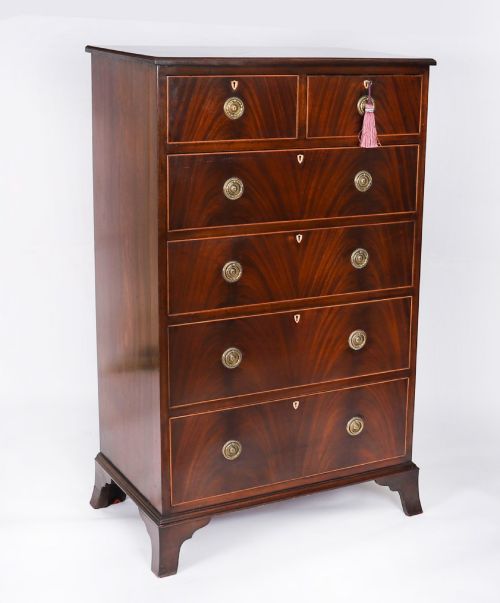
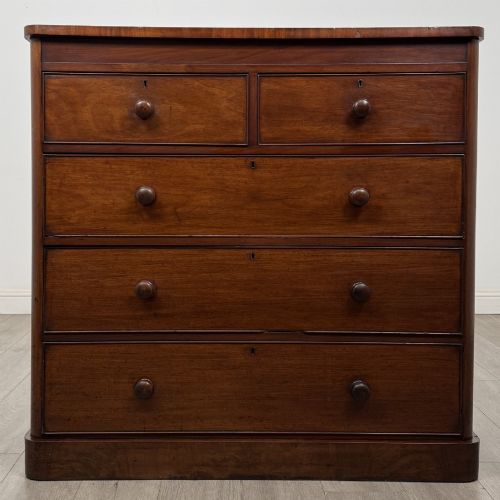
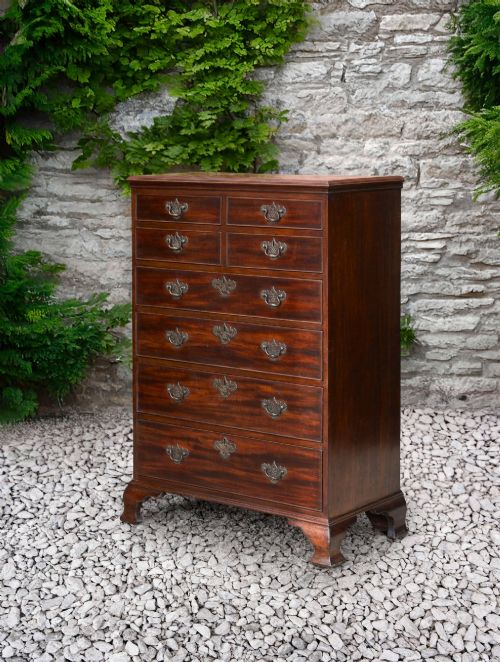
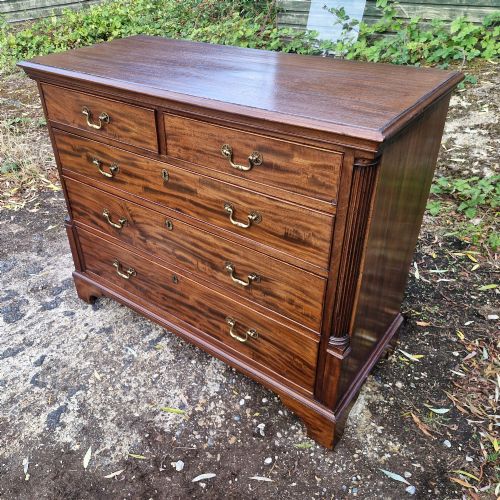
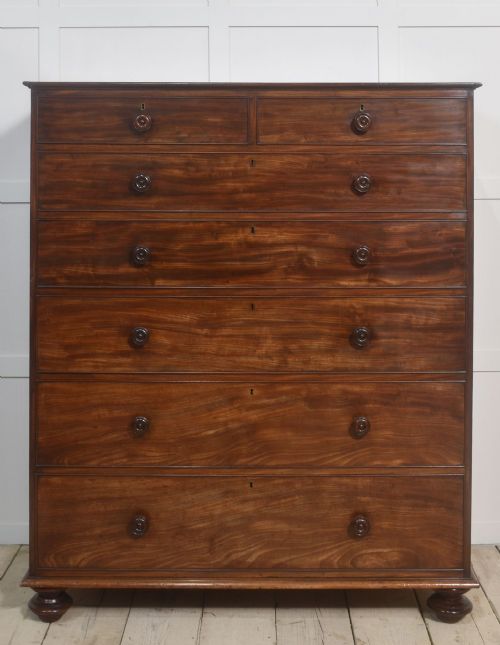
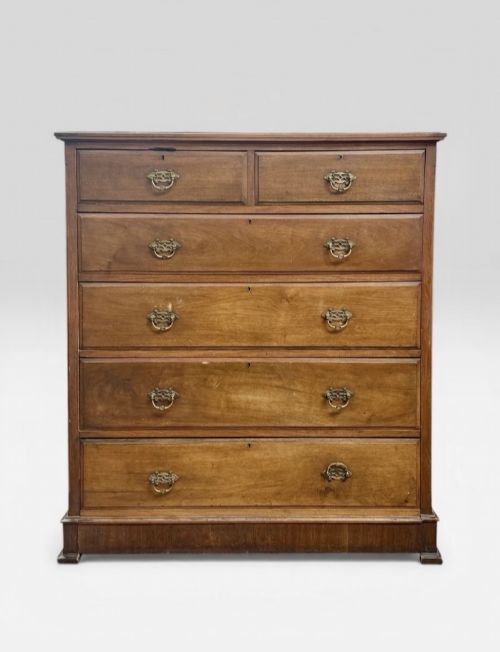
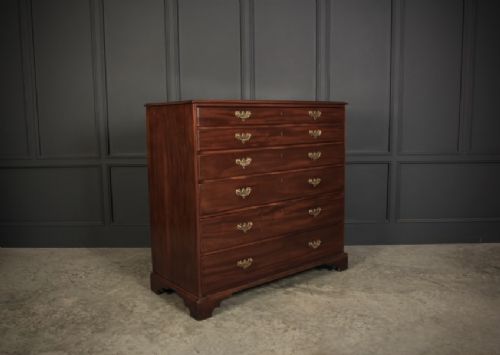
A tall wood dresser or tall chest of drawers provides deep vertical storage across multiple tiers, fulfilling the functional need for household organisation in bedrooms and living spaces. These pieces span centuries of cabinet making, appearing in forms such as George III tallboys, narrow Edwardian satinwood chests, and Victorian pine storage units.
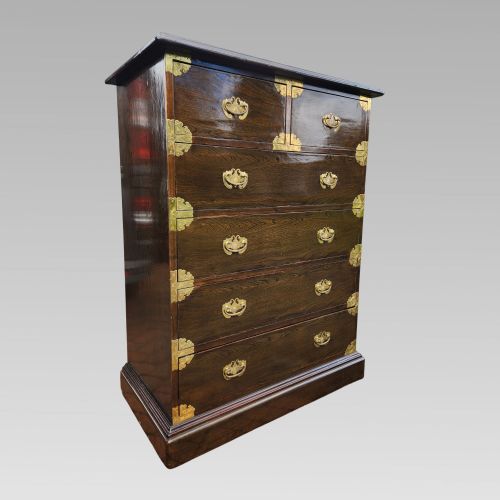
The materials vary widely across the selection, ranging from dense mahogany and figured walnut to utilitarian pine and painted surfaces. Buyers encounter regional variations too, including French Provincial buffets and Korean elm veneer chests alongside classic English forms.
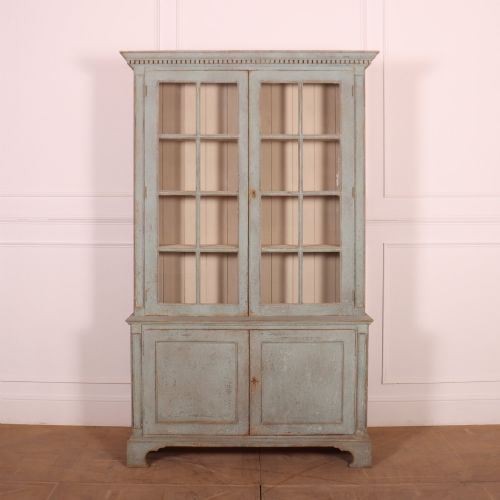
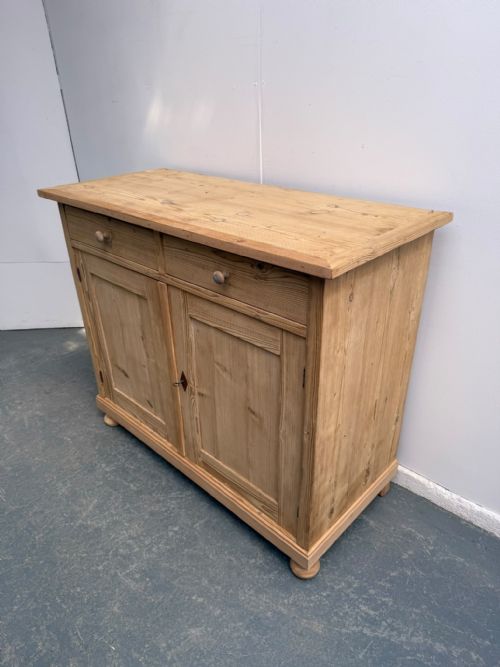
Most examples concentrate on drawer configurations, whilst occasional items incorporate glazed bookcase sections or two-door lower compartments. The proportions remain consistently upright, designed to maximise storage capacity whilst occupying a minimal floor footprint.
Materials and construction methods
Cabinet makers utilised hardwoods like mahogany, walnut, and cherry alongside softer timbers such as pine for internal framing and secondary woods. Timber selection dictated the structural integrity, with dense hardwoods permitting slender drawer dividers and precise joinery.
Surface decoration involved finely figured wood veneers, contrasting satinwood inlays, and hand-applied paint finishes depending on the period. Brass hardware, including drop handles and key escutbrellas, completed the functional assembly of each drawer.
Traditional joinery techniques governed the assembly of carcases and drawer boxes, ensuring durability across decades of daily use. Waxing and polishing protected the external timber grains while developing a characteristic sheen over time.
Tall Wood Dresser Retail Price Guide 2026
Typical asking prices for tall wood dresser among the pieces listed under this phrase on Sellingantiques today, from the lower quarter to the upper quarter. They describe what is for sale here now, not the wider market.
Listings feature pieces spanning from the 18th century through the Georgian, Victorian, and Edwardian periods up to the 1930s.
Assessing quality in tall storage furniture
Superior examples demonstrate meticulous timber selection, where wood grain matches symmetrically across drawer fronts and primary surfaces. Finer pieces often incorporate secondary timbers like oak or pine within internal drawer linings, indicating careful workshop standards.
The refinement of decorative elements such as crossbanding, string inlay, and hand-carved mouldings separates standard utility pieces from high-status furniture. Original brass hardware and well-fitted drawer runners contribute significantly to the enduring integrity of the piece.
The Tall Wood Dresser Glossary
- Tallboy
- A tall chest of drawers, often constructed as a chest-on-chest where a smaller upper section sits upon a larger base. This form maximises vertical storage without expanding the footprint.
- Chest-on-chest
- A tall storage unit built in two distinct sections, with one cabinet stacked directly upon another. This configuration facilitated transport up narrow staircases in historic homes.
- Bandaji
- A traditional Korean storage chest featuring distinctive brass strapwork and corner reinforcement. These pieces utilise native woods and serve as decorative focal points.
- Directoire
- A transitional French design style spanning the late eighteenth century, characterised by neoclassical restraint and clean architectural lines. Pieces from this era favour simple geometric forms over ornate carving.
- Satinwood
- A pale, lustrous timber utilised for fine inlays and decorative banding on late eighteenth and early nineteenth-century furniture. Its golden hue contrasts effectively with darker woods like mahogany.
Tall Wood Dresser: Frequently Asked Questions
How do I date a tall wood chest?
Dating relies on examining construction methods, timber choices, and hardware styles. Hand-cut dovetails and secondary woods often indicate eighteenth or nineteenth-century origins.
Later pieces from the Edwardian era or the 1930s introduce machine-sawn elements and different veneer application techniques while retaining traditional forms.
Are these pieces suitable for modern bedrooms?
Their vertical orientation makes them efficient storage solutions for contemporary spaces that lack floor area. They provide substantial drawer capacity whilst maintaining a compact footprint.
Placing them securely against a wall ensures stability, especially with taller chest-on-chest configurations.
What is the difference between a tallboy and a standard chest?
A tallboy typically refers to a piece built in two stacked sections or designed with an exceptionally elevated profile. Standard chests of drawers generally maintain a lower, horizontal proportion.
Both forms utilise multiple stacked drawers, but tallboys offer significantly greater vertical storage.
How should I care for antique wood furniture?
Maintain a stable room temperature and avoid placing the timber in direct sunlight or near heat sources. This prevents the wood from drying out and splitting.
Apply natural beeswax periodically to nourish the surface and preserve the polished finish without building up synthetic residues.