

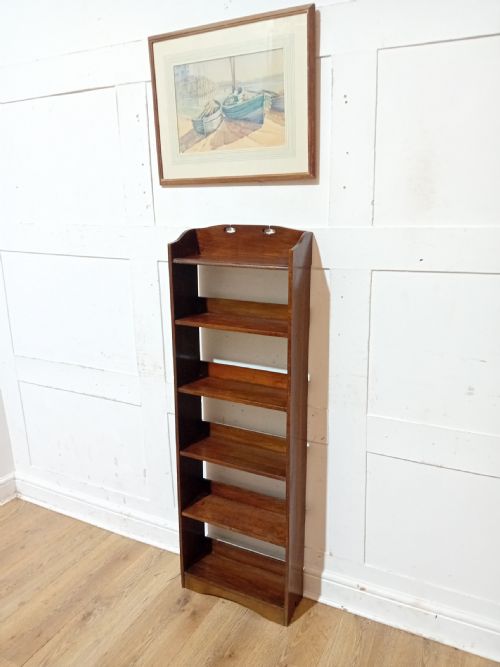


Tall Oak Shelving
Tall oak shelving provides practical upright storage, combining durable timber with open display space for books and objects.
Tall Oak Shelving
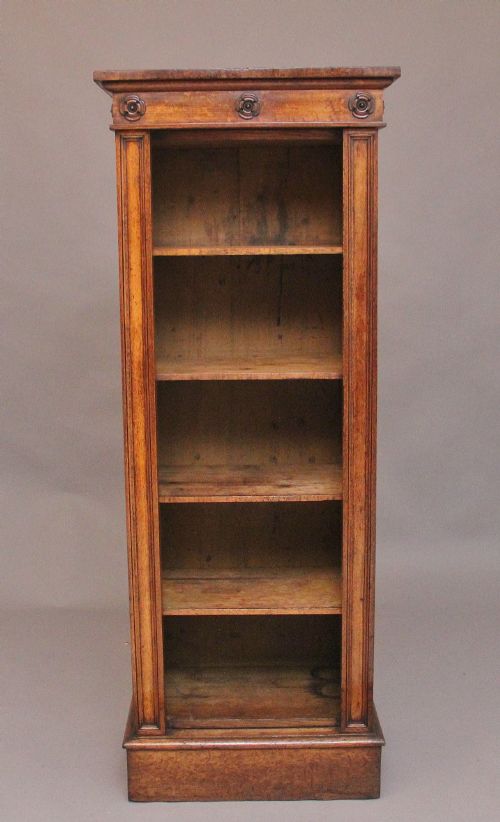
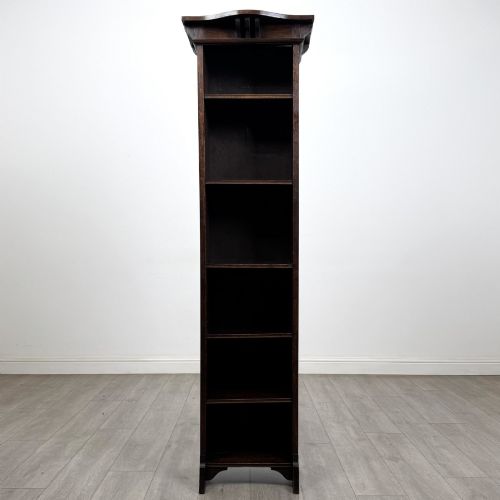
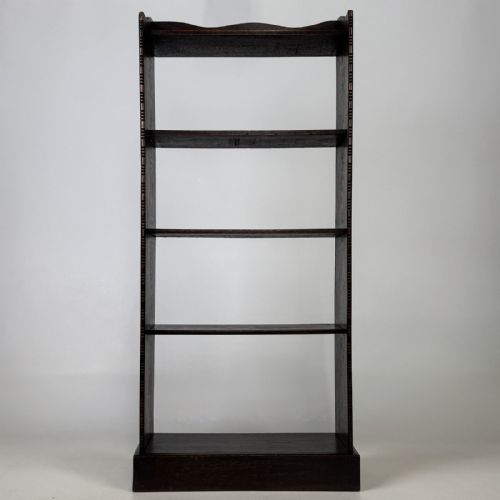
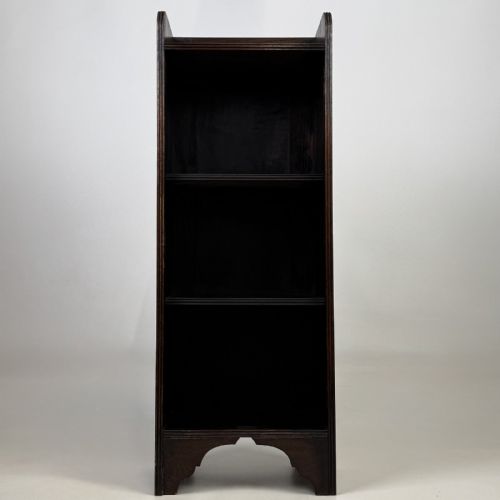
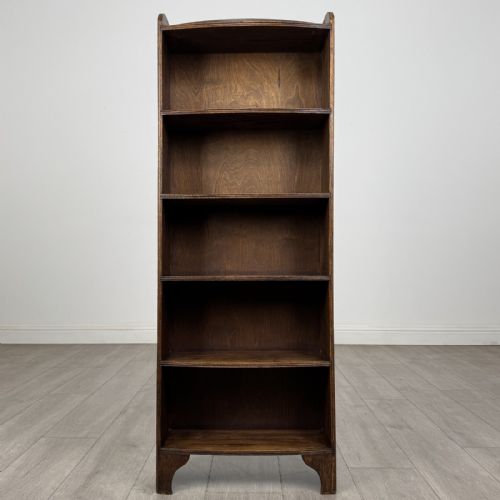
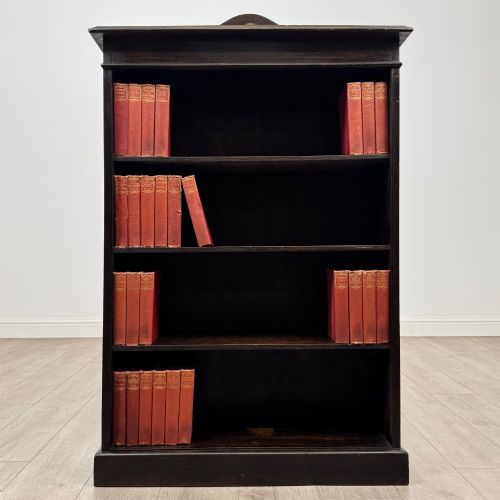
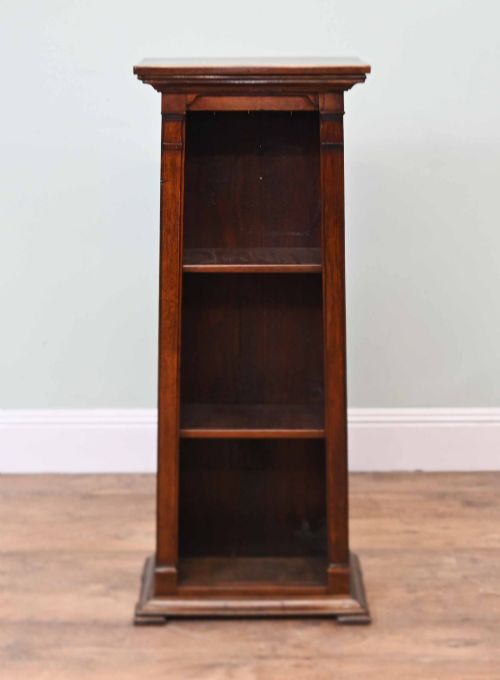
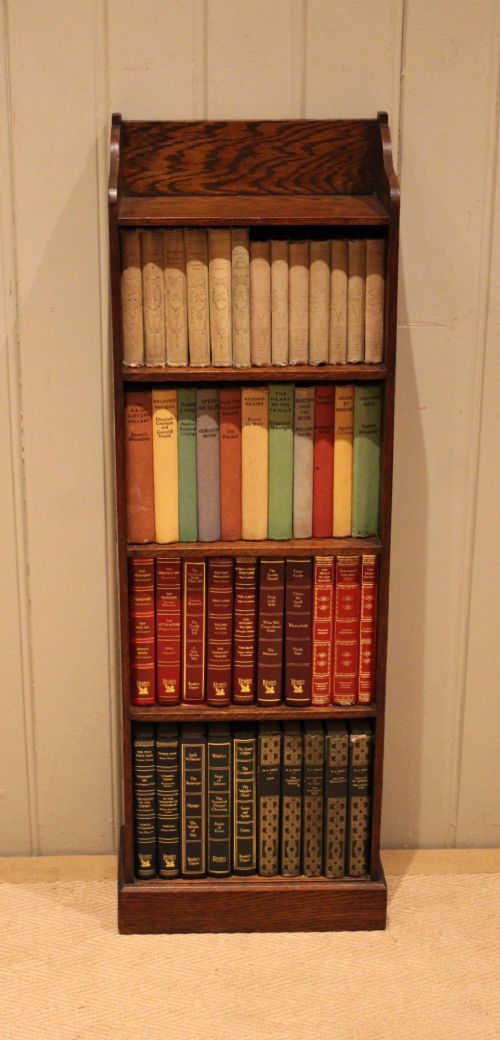
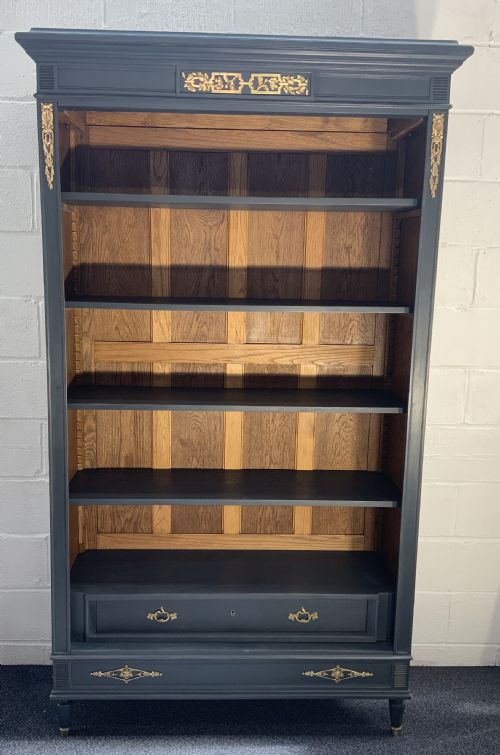
When seeking tall oak shelving, you encounter open bookcases, standing upright units, and narrow profile display furniture designed to maximise vertical wall space. These pieces serve primarily as functional storage for libraries and living areas, utilising sturdy timber frames to support multiple tiers of books.
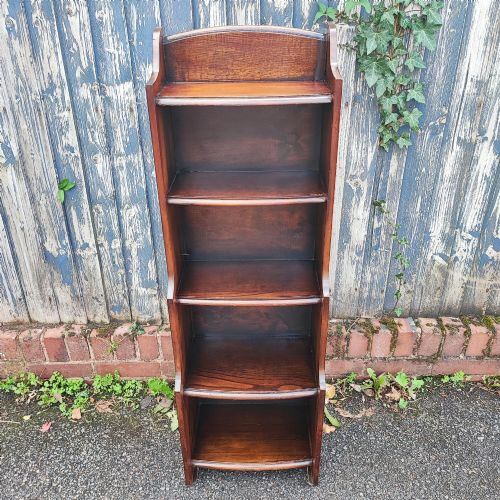
The selection on this page leans heavily towards early twentieth-century and Edwardian pieces, alongside Victorian examples and Arts and Crafts designs. You will find narrow proportions, double-width formats, and configurations featuring adjustable shelves or raised gallery tops.
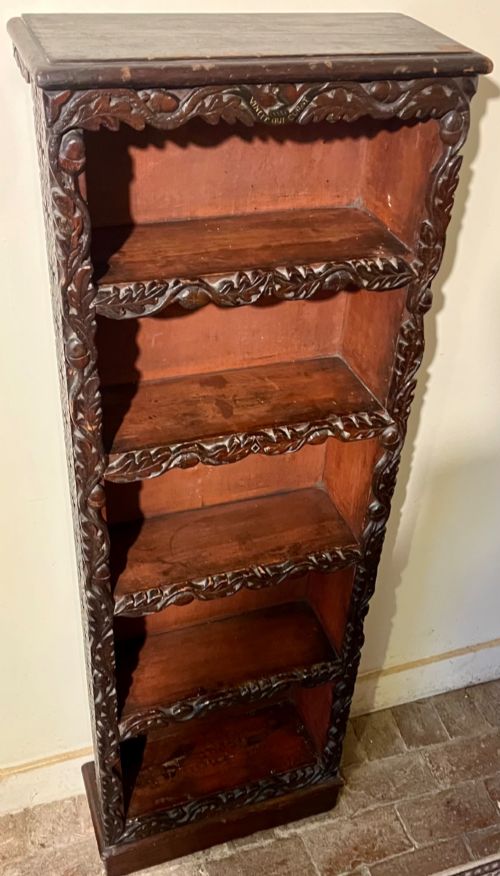
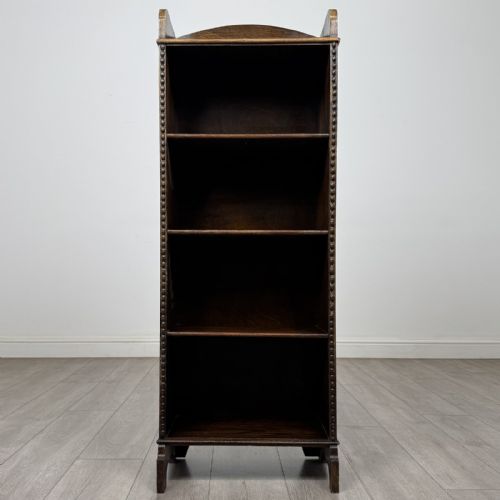
Common variations include open front bookcases, stacking units, and pieces finished with beaded edges or carved Renaissance revival details. These items originate predominantly from the nineteenth and early twentieth centuries, reflecting traditional cabinet-making practices.
Assessing Quality and Design
Quality in these pieces depends on the selection of timber grain, the crispness of carved details like Renaissance revival motifs, and the integration of functional elements such as adjustable shelving systems. Superior examples display balanced proportions, whether built with narrow profiles or double-width structures.
Tall Oak Shelving Retail Price Guide 2026
Typical asking prices for tall oak shelving among the pieces listed under this phrase on Sellingantiques today, from the lower quarter to the upper quarter. They describe what is for sale here now, not the wider market.
The listings span the Victorian era, the Edwardian period, and the 1920s, featuring oak, brass, glass, and painted wood.
Wylie Lochhead of Glasgow·E.A. Taylor
The Tall Oak Shelving Glossary
- Open Bookcase
- A shelving unit without doors, designed for direct access to books and displayed objects. This form dominates the available selection.
- Gallery Top
- A low raised rail or balustrade running along the top edge of a piece. It prevents items placed on the upper surface from sliding off.
- Arts and Crafts
- A design movement prioritising traditional craftsmanship and simple forms over mass-produced ornamentation. Pieces from this style often feature honest timber construction.
- Adjustable Shelves
- Shelves that can be moved to different heights within the bookcase interior. This mechanism accommodates books of varying sizes.
- Renaissance Revival
- A nineteenth-century architectural and decorative style drawing inspiration from fifteenth-century European design. It typically involves heavier carving and classical motifs.
Tall Oak Shelving: Frequently Asked Questions
What is tall oak shelving?
Tall oak shelving comprises upright wooden storage units and open bookcases designed to hold books and display objects vertically. These pieces utilise sturdy oak timber to provide multiple tiers of open shelving.
Most examples date from the nineteenth and early twentieth centuries, encompassing Edwardian and Arts and Crafts styles. They range from narrow single-bay units to double-width bookcases with adjustable shelves.
How were these bookcases used historically?
Historically, these bookcases served in studies, libraries, and parlours to organise growing collections of literature and display decorative items. Their open-front design allowed for quick retrieval of frequently read volumes.
Larger double-width and tall stacking variants accommodated extensive personal libraries in domestic settings. Narrower proportions suited tighter spaces, such as hallways or modest bedrooms.
How do I style tall oak shelving in a modern home?
Tall oak shelving integrates easily into contemporary interiors by anchoring vertical wall space while offering display capacity. You can balance books with ceramics, glassware, and framed art across the tiers.
Leaving some shelf space empty prevents the heavy timber structure from feeling overcrowded. The warm tones of golden oak or darker carved wood complement both neutral and bold room palettes.
How can I tell the period of an oak bookcase?
Dating relies on observing construction methods, hardware materials, and stylistic details such as carved mouldings or gallery tops. Pieces exhibiting heavy geometric carving or Renaissance revival motifs typically point to the nineteenth century.
Edwardian and early twentieth-century examples often favour simpler rectilinear lines or Arts and Crafts influences. Adjustable shelf mechanisms and brass fittings also provide clues regarding the manufacturing era.