



Tall Mahogany Open Shelving
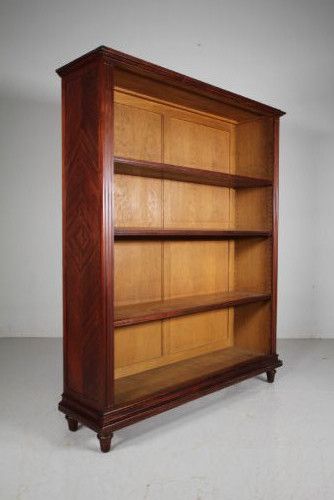
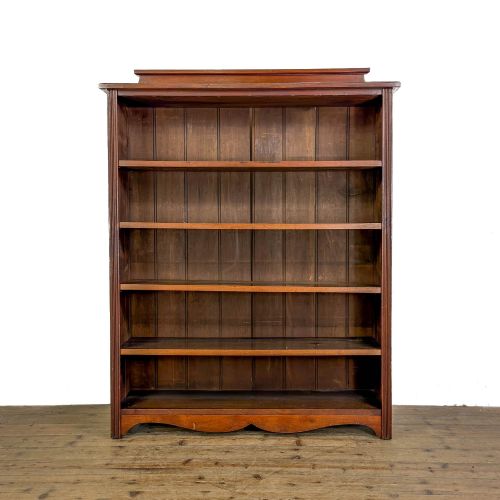
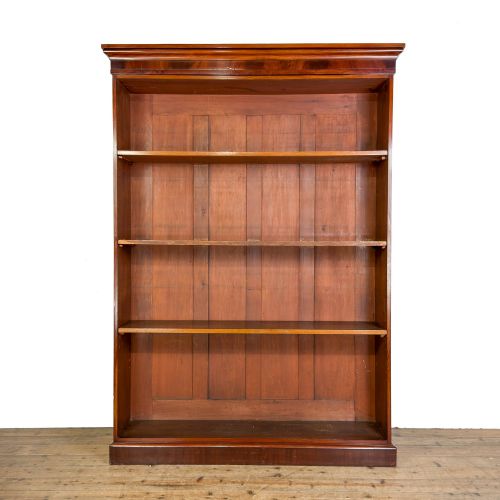
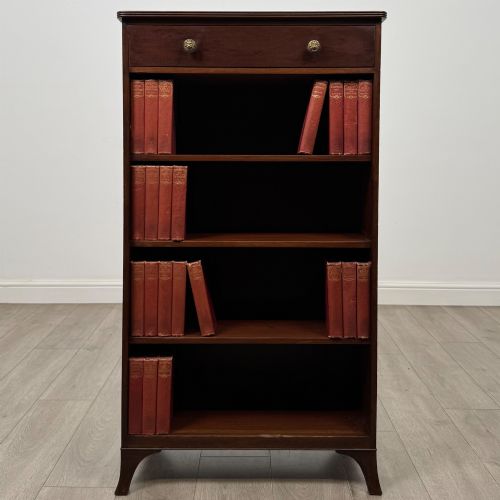
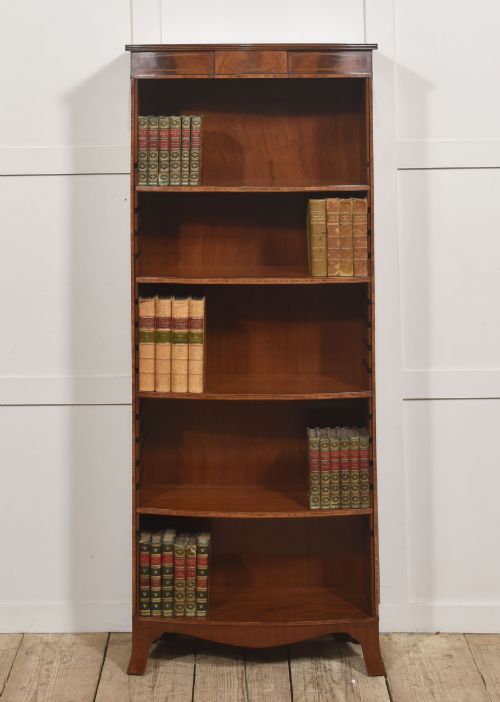
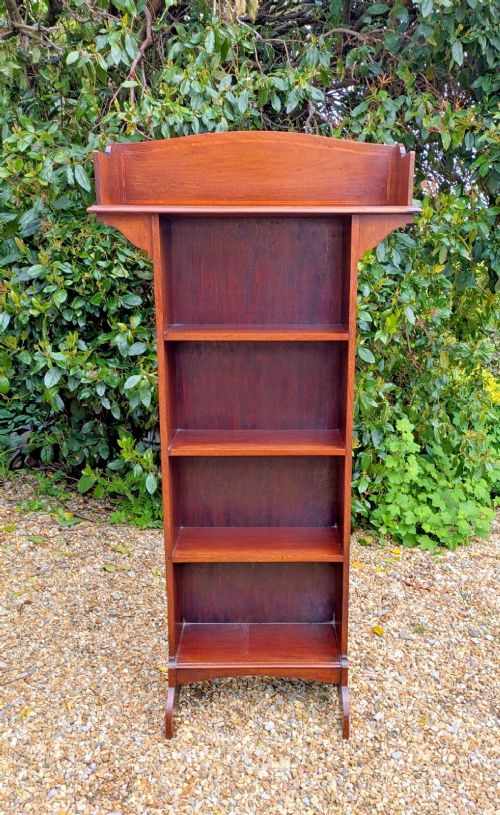
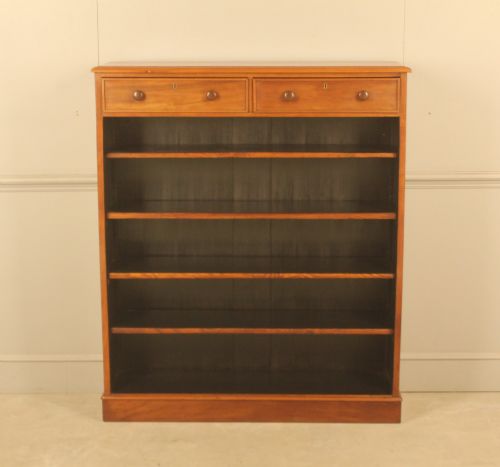
Tall mahogany open shelving gives a room vertical presence while holding a library in plain sight.
Tall Mahogany Open Shelving
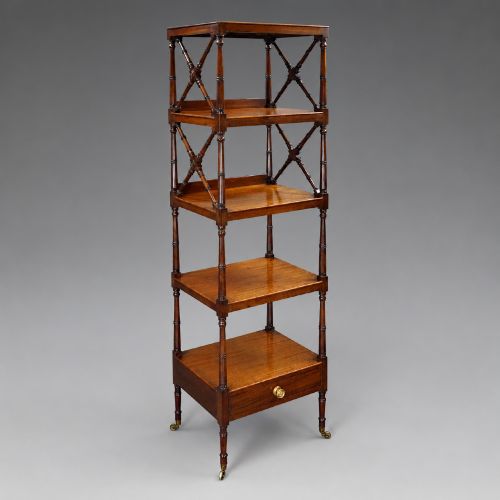
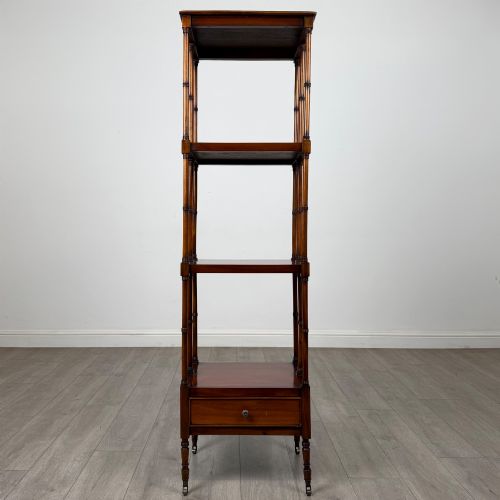
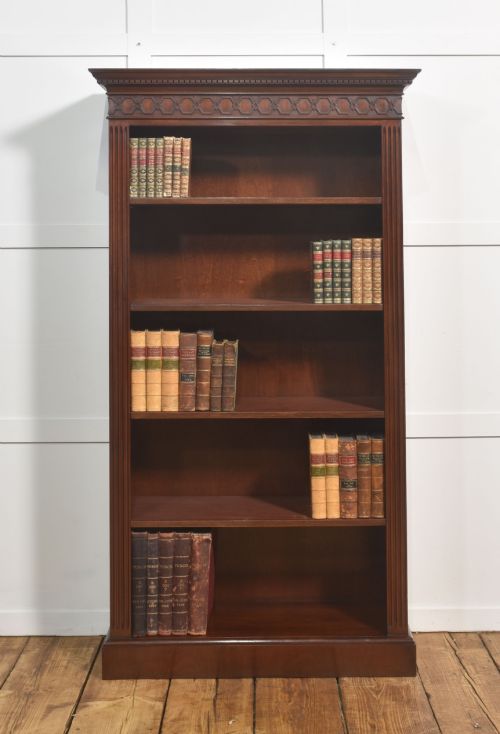
Tall mahogany open shelving brings together bookcases, whatnots, and display shelves built to span vertical space without doors. These pieces serve primarily to hold books and display objects within domestic rooms, utilising height to maximise floor space.
The versions most commonly met on this page date from the nineteenth and early twentieth centuries. They cross several periods including Victorian, Edwardian, and George III, alongside later revivals.
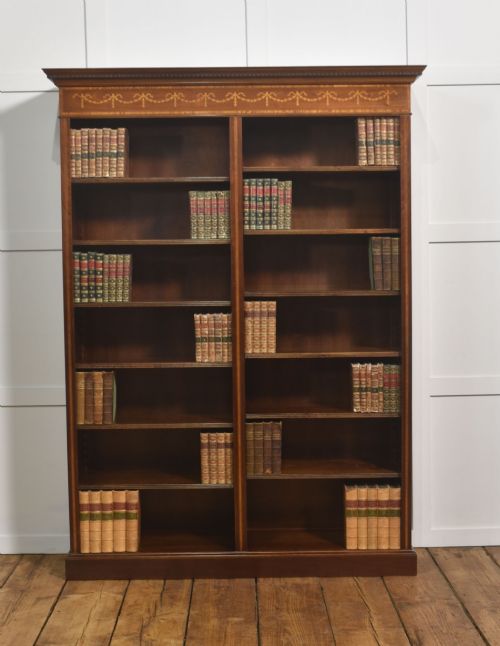
Forms range from simple four-tier or six-tier open shelves to breakfront library bookcases, tall stands, and tiered whatnots. Mahogany forms the core material across these structural types, often paired with adjustable shelving or cabinet bases.
The markers of quality
Quality in these pieces rests upon the selection of timber figures, the precision of inlaid details, and the integrity of the structural joints. Pieces featuring rich, well-figured mahogany grain and crisp boxwood stringing stand apart from plainer utility versions.
Proportion and utility also dictate worth, particularly where adjustable shelving mechanisms operate smoothly and tiered galleries remain rigid. The presence of secondary woods, solid brass mounts, and well-executed revival styles distinguishes higher workshops from standard production.
Listings span the nineteenth and twentieth centuries, encompassing Victorian, Edwardian, and George III styles built from mahogany, brass, and boxwood.
The Tall Mahogany Open Shelving Glossary
- Mahogany
- A durable tropical hardwood prized for its deep reddish-brown colour and stable grain. It forms the primary structural and visual surface for the vast majority of these pieces.
- Whatnot
- A piece of furniture consisting of a series of open shelves supported by pillars, used for displaying ornaments or books. They appear frequently in multi-tier formats.
- Breakfront
- A cabinet or bookcase whose central section projects forward from the flanking wings. This architectural arrangement creates depth and formal presence.
- Ormolu
- Gilt bronze mounts applied to furniture for decorative effect. They appear on select nineteenth-century examples.
- Inlay
- A technique where pieces of contrasting wood, such as boxwood or satinwood, are inserted into recesses in the mahogany surface to form decorative patterns.
Tall Mahogany Open Shelving: Frequently Asked Questions
How do I adjust the shelves?
Many of these bookcases utilise traditional wooden support slips, brass studs, or peg holes drilled into the interior sides. You simply lift the shelf, relocate the supports to the desired height, and level the board.
Older pieces may rely on fixed positions or wooden ratchets, so check the internal uprights before attempting to move any tier.
Are these suitable for heavy books?
Solid mahogany and substantial nineteenth-century construction provide the sturdiness required for heavy volumes. The thickness of the timber and the span of the shelf dictate the weight capacity.
Shorter tiers or reinforced library bookcases handle dense collections easily, whilst lighter Edwardian display pieces suit smaller volumes and ornaments.
How do I identify a revival piece?
Revival pieces, such as Sheraton Revival or Georgian Revival items, often date from the Edwardian era or the late nineteenth century. They copy earlier proportions but frequently feature lighter framing, machine-sawn backing boards, and distinctively crisp inlay.
Examine the secondary woods inside and the condition of the fixings to confirm the manufacturing period.
How should I care for mahogany shelves?
Keep the wood away from direct heat sources and strong sunlight to prevent the mahogany finish from drying out or fading. Dust regularly with a dry cloth and apply a quality beeswax sparingly when the timber appears dull.
Avoid silicone-based sprays, as they build up residue on the polished surface over time.