



Tall Glass Column Lamps
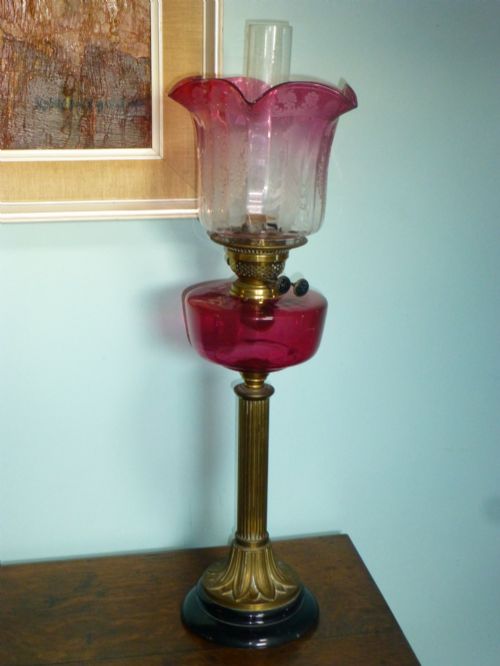
Tall glass column lamps bring height and clear illumination to a room, offering striking vertical presence through cut crystal, cranberry glass, and brass mounts.
Tall Glass Column Lamps
Tall glass column lamps combine vertical elevation with reflective transparency, drawing the eye upward in any interior setting. When searching for tall glass column lamps, buyers encounter stately nineteenth-century oil lamps alongside early twentieth-century electric conversions.
The selection here spans table lamps and floor lamps created during the Victorian and Edwardian eras. French Neoclassical and Neoclassical Revival styles dominate the pieces, often featuring slender columns paired with solid metal bases.
Most examples merge clear or coloured glass shafts with brass, ormolu, and opaline components. These pieces range from modest Victorian boudoir lighting to grand duplex double burner models designed for substantial rooms.
How they were made
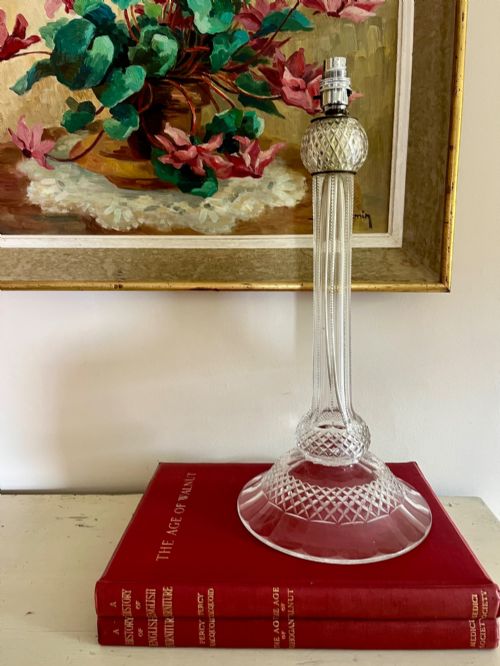
Maker workshops produced these columns using blown or moulded glass combined with cast brass and ormolu mounts. Workers cut intricate patterns into crystal and cranberry glass to catch and refract light along the shaft.
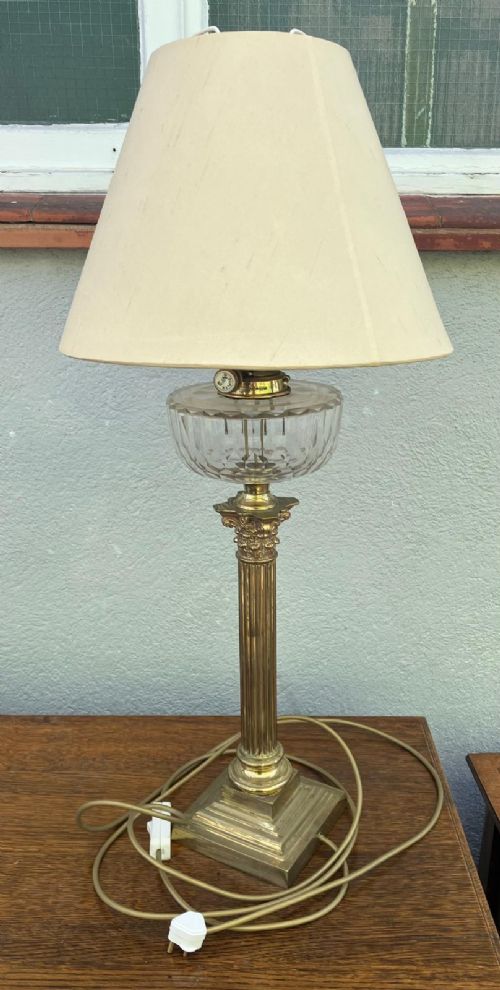
Architectural column designs such as the Corinthian order required precise metal casting for capitals and bases. Glass stems were secured to heavy metal foundations to ensure stability across elevated table and floor formats.
Tall Glass Column Lamps Retail Price Guide 2026
Typical asking prices for tall glass column lamps among the pieces listed under this phrase on Sellingantiques today, from the lower quarter to the upper quarter. They describe what is for sale here now, not the wider market.
Listings for tall glass column lamps span the nineteenth century through the 1930s, featuring brass, ormolu, and cranberry glass.
What varies in quality
Quality rests in the crispness of the glass cutting and the weight of the metal mounts. Fine examples display deep, sharp facets in cut crystal and heavy, well-chased brass or ormolu detailing.
The proportion between the glass column and its metal fittings dictates the visual balance of the piece. Superior specimens integrate opaline or cranberry hues evenly throughout the glass body without cloudiness.
The Tall Glass Column Lamps Glossary
- Duplex burner
- A double-wick mechanism found on nineteenth-century oil lamps designed to produce a brighter flame. This fitting often sits atop a brass collar fixed to the glass column.
- Opaline
- An opaque or translucent glass ranging from white to soft pink, popular during the Victorian period. It provides a smooth, milky surface that diffuses light gently.
- Ormolu
- Gild bronze achieved by applying a mercury and gold amalgam to cast brass or bronze. French pieces frequently utilise this technique for rich decorative accents.
- Corinthian column
- An architectural order featuring ornate capitals decorated with acanthus leaves. This classical motif inspired the metal capitals frequently seen on nineteenth-century column lamps.
Tall Glass Column Lamps: Frequently Asked Questions
What are tall glass column lamps?
These pieces are vertical lighting fixtures featuring glass shafts raised on metal bases, created across the nineteenth and early twentieth centuries. They combine architectural column forms with reflective glass materials.
Originally designed for oil or paraffin, many examples have since been adapted for electricity while retaining their period burners and collars.
How do I date a glass column lamp?
Dating relies on examining the materials, burner mechanisms, and stylistic influences present in the construction. Victorian and Edwardian pieces often display distinct brass mountings and hand-cut crystal patterns.
Makers frequently utilised specific glass colours like cranberry and opaline during the mid-to-late nineteenth century, helping to anchor pieces to specific decades.
Where should I place a floor lamp?
Floor lamps with glass columns suit corners or spaces beside seating where their height can project light outward. Their slender profiles allow them to occupy minimal floor space while making a strong visual statement.
Placing them near reflective surfaces enhances the way cut crystal and polished brass catch the surrounding light.
Are these lamps converted from oil?
Many tall column lamps originating from the nineteenth century began life as oil lamps fitted with double burners. Over time, workshops adapted these metal and glass structures to accept electrical wiring.
Retaining the original burner assemblies preserves the historical character of the piece while accommodating modern lighting needs.