



Tall Drinking Glasses
These tall drinking glasses bring genuine height and character to a table, ranging from eighteenth-century air twists to twentieth-century coloured stems.
Tall Drinking Glasses
When you search for tall drinking glasses, you uncover slender stems designed for celebratory toasts, ales, and cordials over the centuries. These drinking vessels elevate the act of sharing wine or ale, standing noticeably higher than standard table glassware.
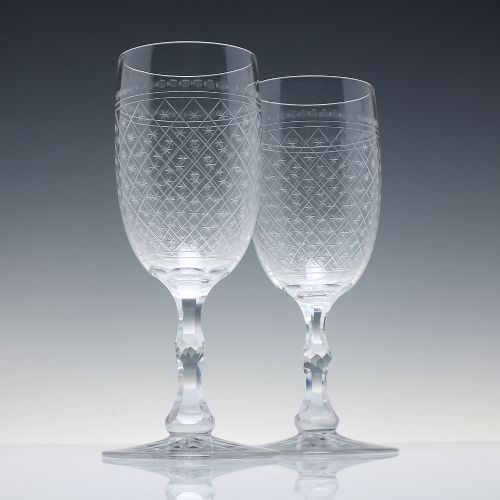
The selections span from eighteenth-century Georgian wine flutes and ale glasses to Edwardian and Art Deco tableware. You will encounter delicate lead crystal pieces alongside richly hued Victorian goblets and Secessionist designs.
Forms include drawn trumpet wine glasses, champagne flutes with folded feet, and sturdy ale glasses. While the primary focus rests on glass stemware, occasional related forms appear within the broader assortment.
How they were made
Glassmakers shaped these tall drinking glasses using traditional hot-working methods, often employing lead glass or flint glass to achieve clarity and strength. Artisans drew stems straight from the bowl while the material remained molten.
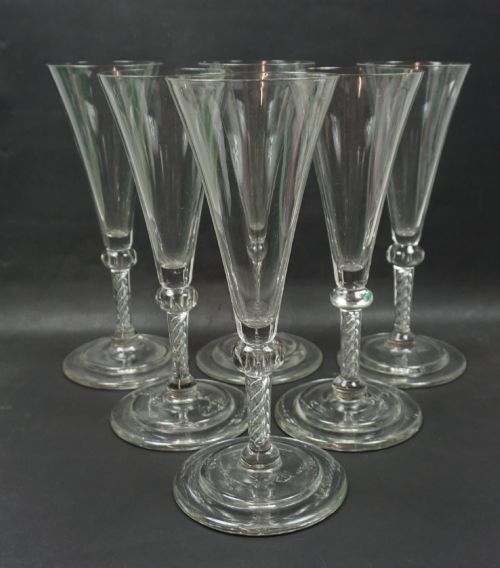
Twist stems required immense skill, trapping air inside the glass before manipulation into spiral threads. Craftsmen then added folded feet for stability at the base of tall goblets and flutes.
Surface decoration involved wheel engraving or adding coloured glass layers during formation. Certain pieces incorporated brass components or attribution to notable designers like Otto Prutscher.
Tall Drinking Glasses Retail Price Guide 2026
Typical asking prices for tall drinking glasses among the pieces listed under this phrase on Sellingantiques today, from the lower quarter to the upper quarter. They describe what is for sale here now, not the wider market.
The inventory records pieces spanning the eighteenth century through the 1930s, featuring glass, lead crystal, and brass materials.
What varies in quality
The refinement of the stem and the clarity of the metal set exceptional pieces apart from heavier, simpler wares. Superior examples display slender proportions, crisp air twists, and perfectly balanced feet.
Intricacy of engraving and depth of colour determine the distinction in decorative variants. Pieces retaining uniform wall thickness and minimal bubbles in the glass demonstrate superior workshop standards.
The Tall Drinking Glasses Glossary
- Air twist
- A decorative stem enclosing spiral threads of tiny air bubbles formed during shaping. This technique defines many eighteenth-century drinking vessels.
- Flint glass
- A bright, heavy type of glass containing lead oxide, known for its refractive brilliance. It allowed makers to create thinner, taller vessels.
- Folded foot
- A base edge turned underneath to form a protective rim. This added weight and durability to tall wine and ale glasses.
- Ale glass
- A tall, narrow vessel specifically shaped for serving malt beverages. They frequently feature slender stems and simple bowls.
- Drawn stem
- A manufacturing method where the stem is pulled directly from the base of the bowl rather than applied separately. This created a seamless transition in Georgian stemware.
Tall Drinking Glasses: Frequently Asked Questions
What are tall drinking glasses used for?
These vessels serve wine, champagne, cordials, and ale during formal dining or toasts. Their height helps preserve effervescence in sparkling drinks and showcases the clarity of the liquid.
Historically, specific heights and shapes suited particular beverages, from narrow flutes for champagne to deeper bowls for ales. Today, they function both as usable tableware and decorative cabinet pieces.
How do I date an old drinking glass?
Dating relies on observing form, manufacturing marks, stem construction, and the composition of the glass itself. Eighteenth-century pieces often feature folded feet and air twists, while Victorian examples lean towards heavier coloured glass.
Examining the pontil mark on the underside provides further clues about the manufacturing era. Subtle shifts in silhouette help distinguish Georgian proportions from Edwardian or Art Deco revivals.
Can I use antique stemware daily?
Using antique stemware requires gentle handling, particularly with eighteenth-century lead glass and delicate air twist stems. Hand washing in warm water without harsh detergents keeps the material safe.
Avoiding sudden temperature changes prevents thermal shock and cracking in fragile bowls. Storing them securely on stable surfaces protects the slender stems from accidental knocks.
What is an air twist stem?
An air twist is a decorative feature inside glass stems created by forming elongated bubbles and twisting the molten metal. This produces delicate internal spirals that catch the light.
Craftsmen perfected this technique during the Georgian period to enhance the visual appeal of wine flutes and cordials. It remains a defining mark of eighteenth-century British glassware.