

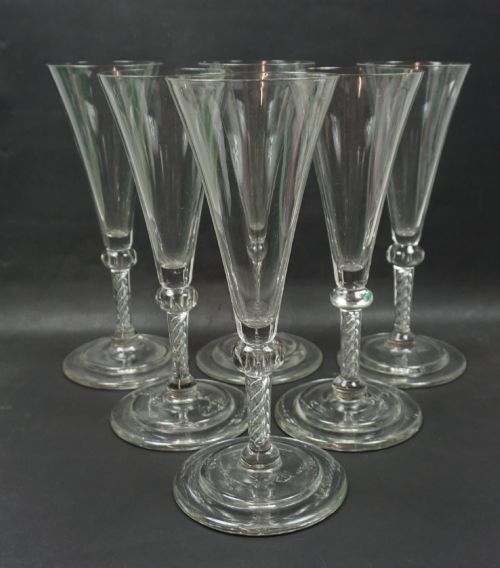


Tall Drinking Glass
A tall drinking glass brings height and light to a table, combining centuries of glassmaking skill with slender forms.
Tall Drinking Glass
A tall drinking glass is an elegant vessel designed for wine, ale, champagne, or cordials, stretching upwards to hold generous proportions or slender flutes. These pieces span several centuries, reaching from the 18th Century through the Georgian, Victorian, and Edwardian eras into the early 20th Century.
The version most commonly met on this page is the 18th Century Georgian wine or ale glass, often featuring a drawn trumpet bowl, air twist stem, or folded foot. Alongside these early stemware pieces, collectors encounter later coloured glass from the Victorian and Edwardian periods.
Forms range from simple wine flutes and cordial glasses to tall champagne glasses and engraved ale vessels. Each tall drinking glass reflects the drinking customs and glasshouse techniques of its specific era.
How they were made
Glassmakers created these vessels using blown glass and lead crystal, shaping the metal while molten to achieve long stems and delicate bowls. Lead glass and flint glass provided the clarity and weight needed for the slender proportions characteristic of tall drinking glasses.
Stems were formed with intricate air twists or mixed twists, trapping tiny bubbles within the glass during the drawing process. Engraving and coloured glass additions, such as turquoise blue or green hues, completed the decoration before the pieces cooled.
Tall Drinking Glass Retail Price Guide 2026
Typical asking prices for tall drinking glass among the pieces listed under this phrase on Sellingantiques today, from the lower quarter to the upper quarter. They describe what is for sale here now, not the wider market.
An accidental bubble trapped in hot glass centuries ago became an art form, spiralling silently inside a tall stem forever.
What varies in quality
Quality rests in the precision of the form and the clarity of the metal, distinguishing fine lead crystal from heavier, simpler glass. The execution of internal air twists within the stem shows the skill of the glassmaker.
Proportion and balance define the superior examples, where the height of the stem matches the capacity of the bowl without clumsiness. Engraving depth and foot stability further separate standard utilitarian vessels from finer tablewares.
Otto Prutscher·Meyr’s Neffe
The Tall Drinking Glass Glossary
- Air twist
- A spiral formation of tiny elongated bubbles running through the stem of a glass, created during the drawing process.
- Flint glass
- A heavy, brilliant form of glass containing lead oxide, known for its clarity and ring when struck.
- Folded foot
- A base whose outer rim is doubled over underneath to give extra strength and stability to the glass.
- Drawn trumpet
- A bowl and stem formed from a single gather of glass, pulling outwards into a flared bell shape.
Tall Drinking Glass: Frequently Asked Questions
How do I clean a tall drinking glass safely?
Wash each glass by hand in warm water using a mild detergent, avoiding sudden temperature changes that can crack old metal. Dry them promptly with a soft linen cloth to prevent water spots.
Store them upright on a stable surface where the tall stems will not catch on neighbouring objects.
Are these glasses suitable for daily use?
Many of these vessels were made for functional dining and drinking, but older lead crystal and thin blown glass require careful handling. Using them for special occasions helps preserve their condition.
Keep them away from modern dishwashers and harsh chemicals to protect the surface.
How can I tell an 18th century glass from a later reproduction?
Examine the base for pontil marks, wear scratches, and irregularities in the metal that betray hand-blown methods. 18th century examples often display slight asymmetry and weight differences absent in machine-made items.
Compare the stem construction and twist patterns against known period specimens.
What caused the different stem twists?
Makers twisted the hot glass rod while pulling it downwards, stretching enclosed air bubbles into delicate threads. Air twists contain simple spiralled cavities, while mixed twists combine air with opaque white glass threads.
This technique required great skill to maintain an even spiral along the entire stem.