



Tall Display Shelving
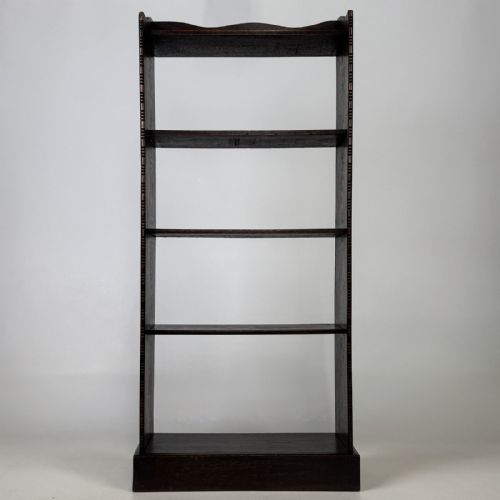
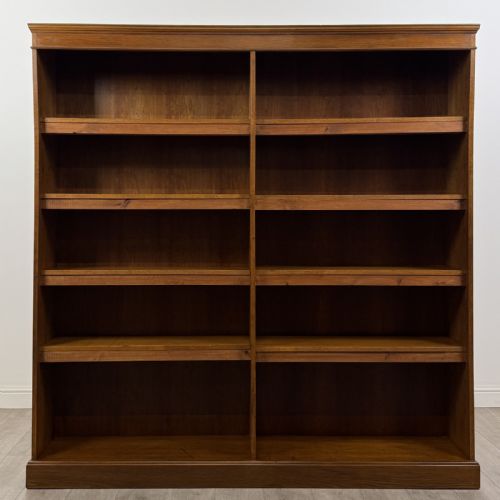
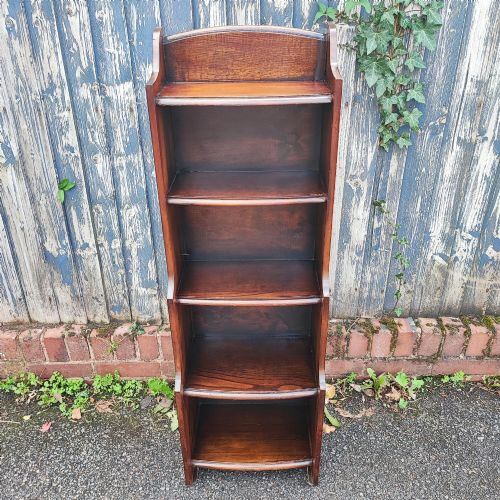
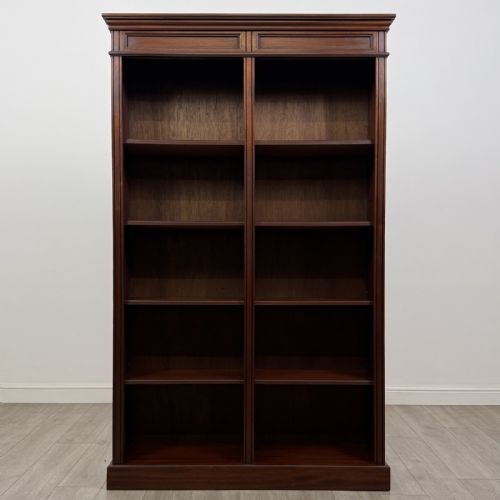
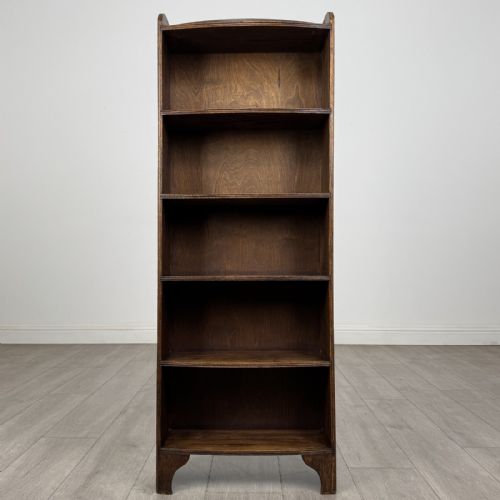
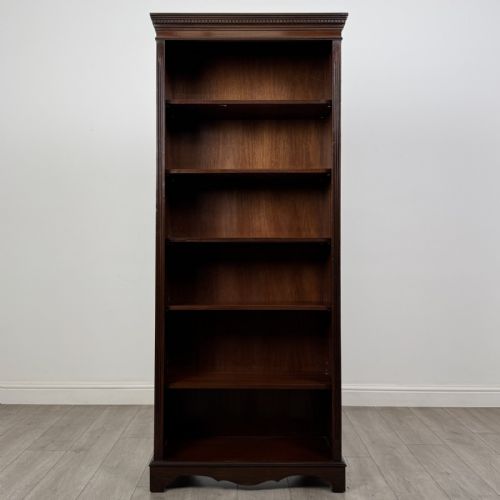
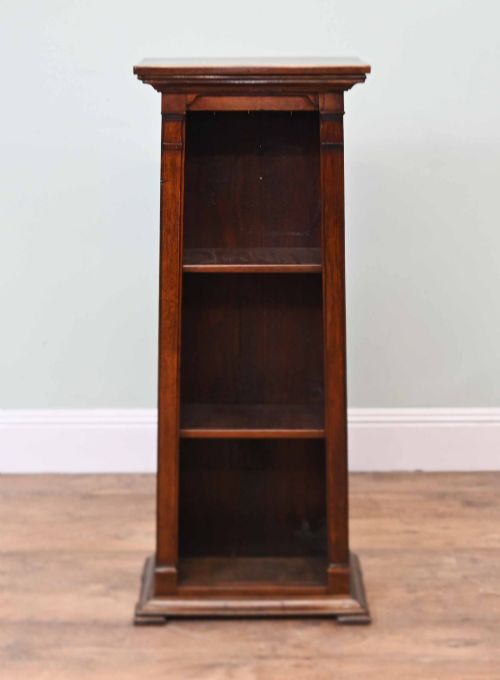
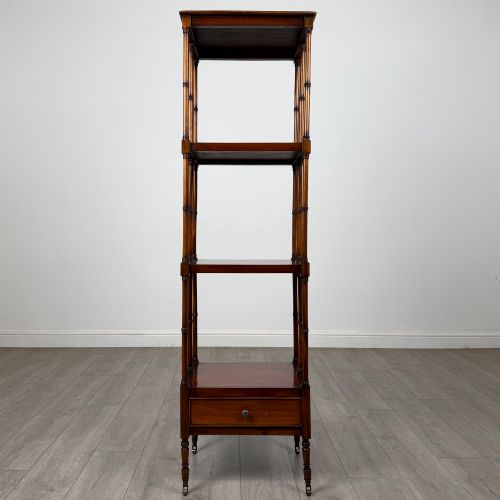
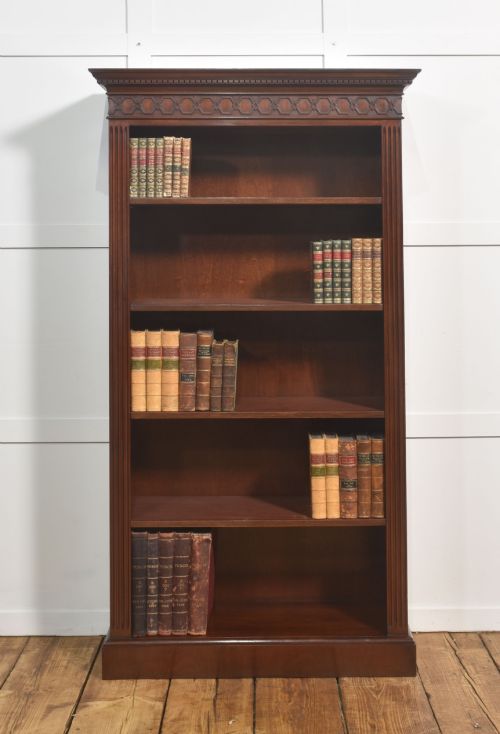
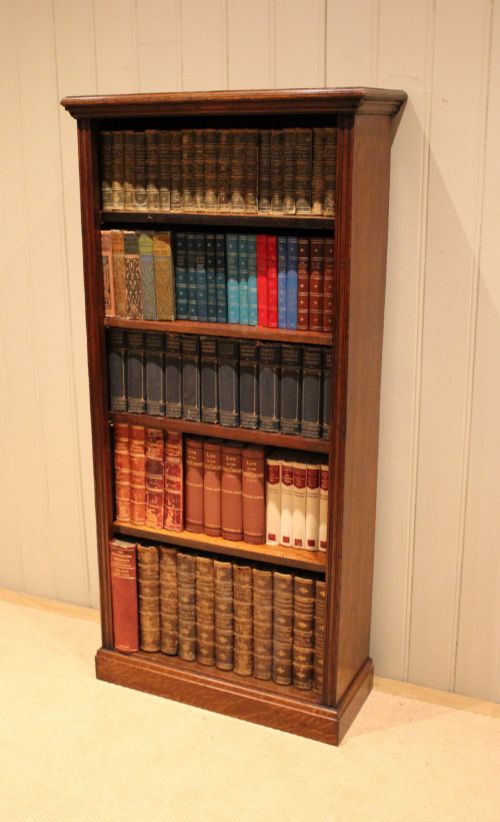
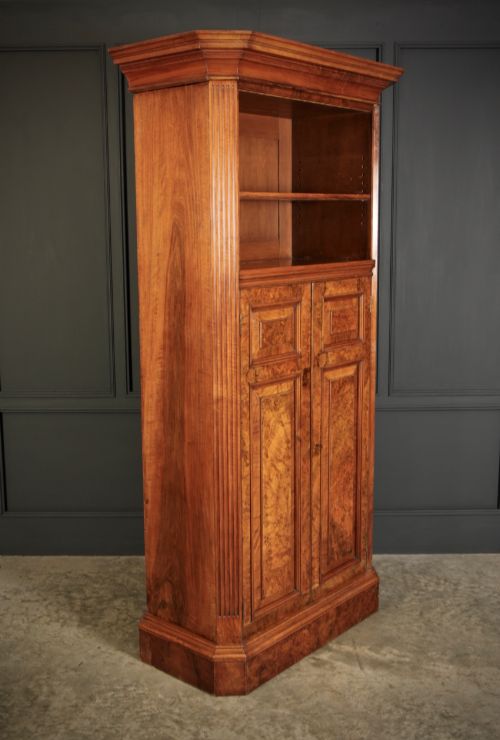
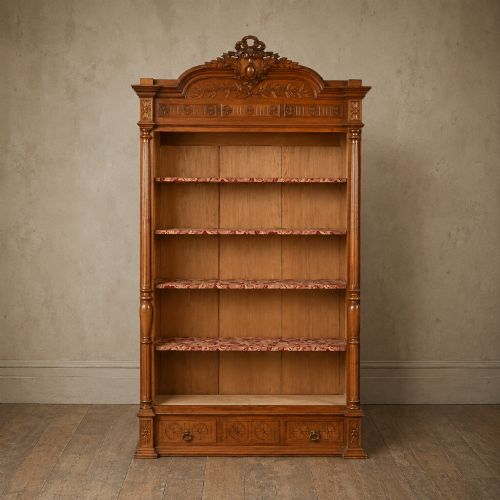
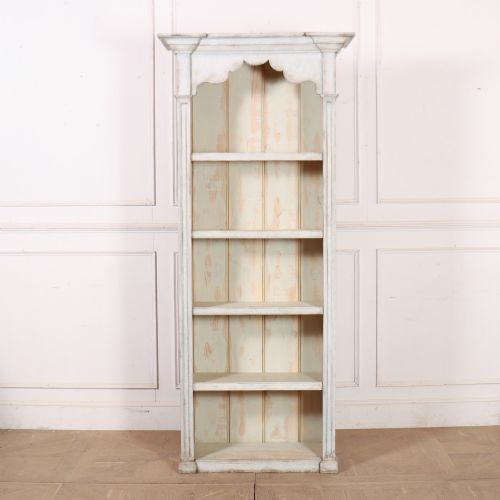
Tall display shelving takes the form of open bookcases, whatnots, and cabinets that organise books and decorative objects vertically.
Tall Display Shelving
When you search for tall display shelving, you encounter tall open bookcases, shop display cabinets, and multi-tiered whatnots designed to hold books and objects in an upright format. The selection spans the nineteenth century through the early twentieth century, taking in Victorian, Edwardian, and Art Deco periods.
Mahogany and oak dominate the timber choices, supplemented by walnut, pine, teak, and satinwood alongside iron, brass, and painted finishes. Most pieces rely on adjustable shelving or tiered platforms to accommodate items of varying heights.
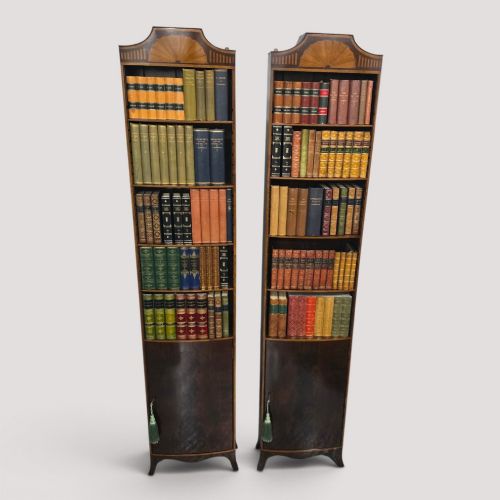
The forms range from slender Edwardian mahogany bookcases with pillars and inlaid details to rustic pine units, French painted cupboards, and George III style library pieces. Corner cabinets and plant stands also appear to utilise vertical wall space effectively.
Materials and construction
Cabinet makers constructed these units primarily in solid timbers such as oak, mahogany, walnut, and pine, often enhancing mahogany surfaces with decorative inlay or polished wax. Workshops incorporated brass and iron for structural embellishments, hinges, and display stands.
Construction techniques focussed on utility and strength, utilising adjustable wooden or glass shelves supported by pegged or tracked systems within sturdy upright frames. Painted finishes in specific shades appear alongside carved wooden details, beaded edges, and applied mouldings.
Tall Display Shelving Retail Price Guide 2026
Typical asking prices for tall display shelving among the pieces listed under this phrase on Sellingantiques today, from the lower quarter to the upper quarter. They describe what is for sale here now, not the wider market.
Materials across the selection include brass, iron, and glass alongside painted finishes and traditional timber veneers.
Judging the execution
Quality reveals itself in the selection of timber and the precision of the joinery, particularly in how cleanly shelves adjust and how tightly corners and cornices fit. Superior examples display carefully matched wood grains, refined inlay work, and robust backing boards rather than hurried assembly.
The distinction between standard utility items and finer pieces rests on decorative restraint and proportion, such as slender pillars, subtle carved mouldings, and well-balanced open fronts that remain stable under weight.
The Tall Display Shelving Glossary
- Open bookcase
- A piece of furniture featuring side panels and horizontal shelves without doors, designed for accessible book storage. These units often include adjustable wooden shelves.
- Whatnot
- A multi-tiered stand with open shelves supported by slender pillars or columns, used for displaying ornaments and small objects. These pieces date across the nineteenth and early twentieth centuries.
- Inlay
- A decorative technique where contrasting strips of wood or other materials are set into the surface of a primary timber. Edwardian and Sheraton Revival pieces frequently employ this method.
- Adjustable shelves
- Shelving resting on movable supports that allow the user to alter vertical spacing between tiers. This feature appears commonly in nineteenth and twentieth-century bookcases.
- Corner cabinet
- A specialised storage unit built with a triangular footprint to fit directly into a room corner. These pieces maximise floor space while offering display capacity.
Tall Display Shelving: Frequently Asked Questions
How do I choose the right height?
Measure your ceiling clearance and available wall space before selecting a unit, keeping in mind that tall designs demand adequate room to breathe in a interior.
Consider what items you plan to display, as taller shelves require stable placement and safe clearance from overhead obstructions or lighting.
Are these shelves suitable for heavy books?
Many period bookcases feature solid timber construction and adjustable wooden shelving designed to support substantial weight without sagging.
Examine the thickness of the boards and the strength of the shelf supports to ensure the unit suits your storage needs.
What is the difference between a whatnot and a bookcase?
A whatnot is typically lighter in construction, featuring multiple open tiers held up by slender pillars specifically for displaying decorative objects rather than heavy volumes.
Bookcases are built heavier with deeper shelves intended primarily to hold rows of books upright.
Can painted pieces fit into a traditional room?
Painted finishes in traditional tones integrate easily into various room schemes by softening the visual weight of large wooden furniture.
Such pieces bring texture and colour variation while retaining the practical storage benefits of standard open shelving.