



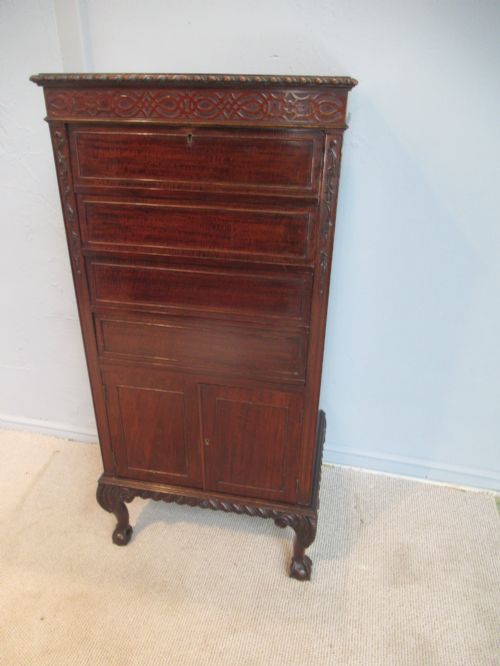


Tall Chest on Legs
A tall chest on legs offers elevated drawer storage, combining vertical capacity with slender, raised supports.
Tall Chest on Legs
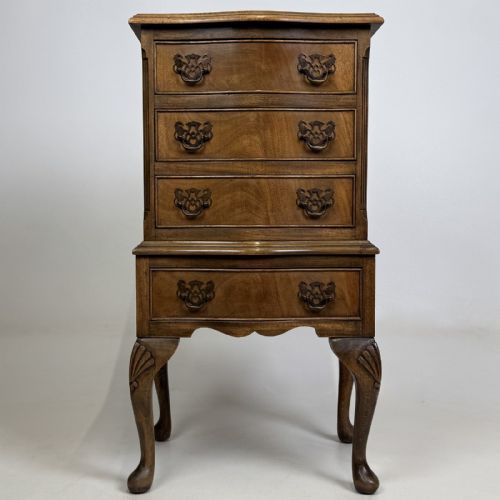
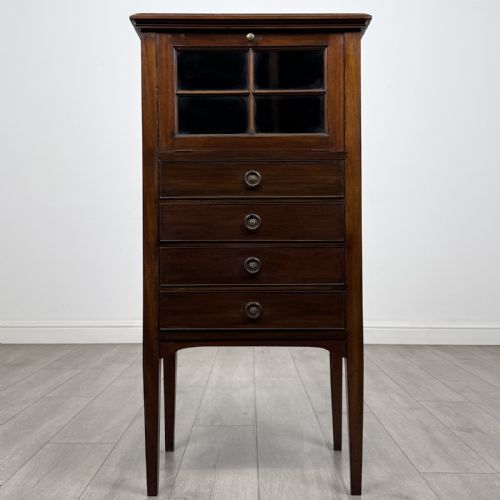
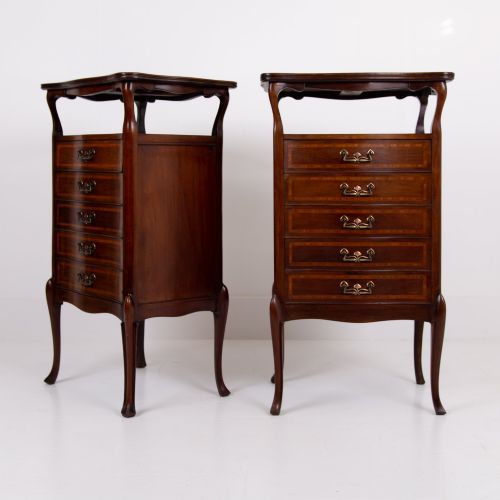
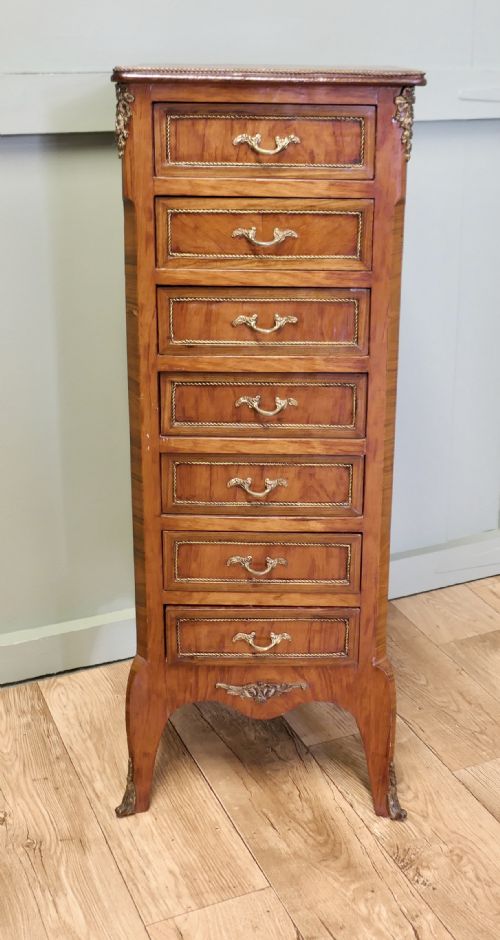
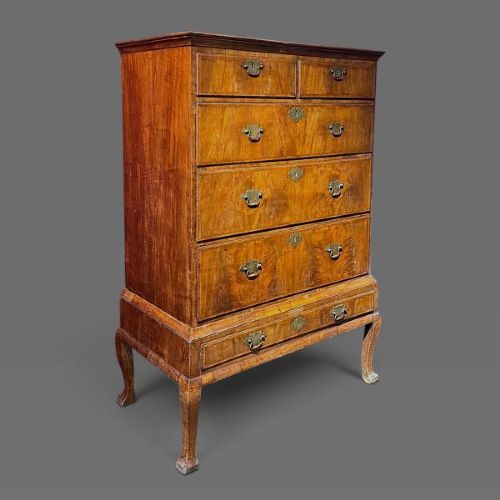
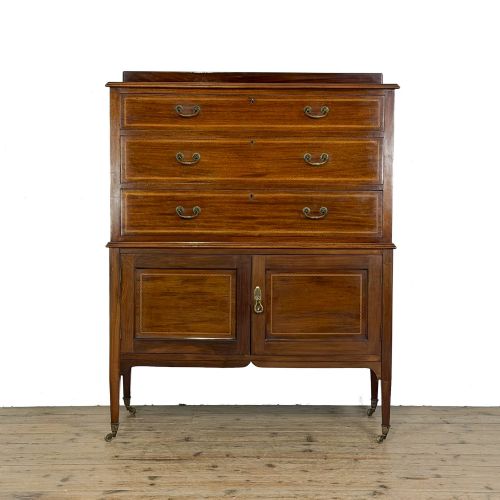
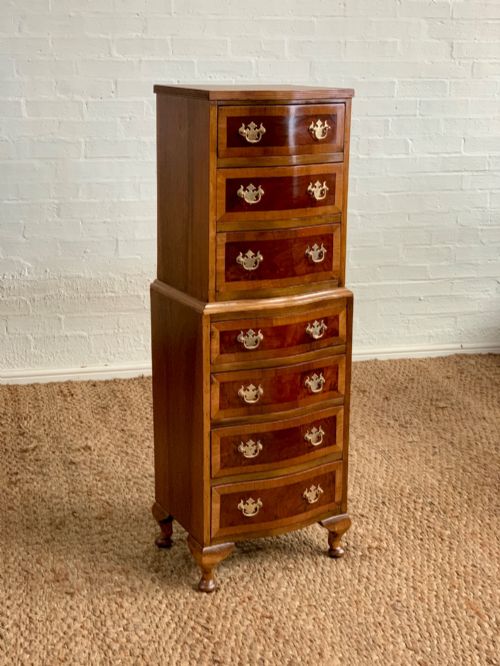
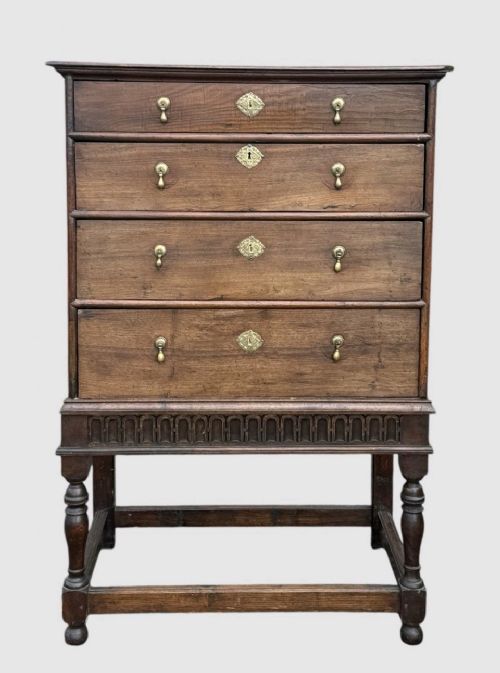
A tall chest on legs brings together vertical drawer storage and elevated stands, offering a practical solution for rooms with limited floor space. When you search for a tall chest on legs, you encounter pieces that range from early eighteenth-century walnut stands to twentieth-century mahogany tallboys and cabinets.
The format appears across several distinct eras, spanning eighteenth-century designs, Edwardian variations, and twentieth-century revivals. Walnut and mahogany dominate the offerings, often taking the form of a chest on stand or a tallboy configuration with multiple drawers.
Materials and construction methods
Cabinetmakers utilised dense hardwoods such as mahogany and walnut, frequently applying fine veneers to flat surfaces to create decorative grain patterns. Oak also appears as a primary structural timber, particularly in earlier examples.
Supports often take the form of cabriole legs, connecting the upper drawer sections to the floor with curved wooden profiles. Brass handles and escutcheons complete the hardware, fixed to the drawer fronts to facilitate access.
Tall Chest on Legs Retail Price Guide 2026
Typical asking prices for tall chest on legs among the pieces listed under this phrase on Sellingantiques today, from the lower quarter to the upper quarter. They describe what is for sale here now, not the wider market.
Listings feature periods spanning from the eighteenth century through the Edwardian era up to the nineteen-thirties.
Assessing quality in elevated chests
The standard of a piece rests largely on the selection of timber and the precision of the veneer work, where figured grain adds visual depth. Smooth operation of the drawer joints indicates careful historical joinery.
Proportion and the integrity of the leg supports distinguish finer examples from simpler utilitarian items. Original hardware and undisturbed surface finishes contribute to the standing of the piece.
The Tall Chest on Legs Glossary
- Tallboy
- A tall chest of drawers, often constructed in two sections with one chest stacked atop another or upon a stand.
- Cabriole leg
- A furniture leg that curves out and then in, resembling the leg of an animal, common on eighteenth-century and revival pieces.
- Chest on stand
- A drawer unit elevated on a separate framework of legs rather than resting directly on the floor.
- Veneer
- A thin layer of finely figured wood applied to a secondary wood base to provide a decorative exterior surface.
Tall Chest on Legs: Frequently Asked Questions
What is a tall chest on legs?
A tall chest on legs is an elevated storage furniture piece designed to hold garments or household items while occupying a smaller floor footprint than wide drawer units.
These pieces combine vertical drawer capacity with raised stands, incorporating styles from the eighteenth century through to twentieth-century revivals.
How do I style a tall chest on legs?
Living with a tall chest on legs involves placing it against a wall where its vertical proportions provide balanced scale within a bedroom or hallway.
The raised clearance underneath creates an open appearance in the room, distinguishing it from boxy floor-standing furniture.
How do I identify eighteenth-century examples?
Early pieces often feature walnut or oak timbers, hand-cut dovetails within the drawer construction, and structural elements typical of the period.
Examination of the timber grain, hardware fixings, and leg joinery helps separate eighteenth-century originals from later twentieth-century revivals.
What woods are used for these chests?
Makers predominantly worked with mahogany and walnut, utilising both solid planks and decorative veneers across the drawer fronts and top surfaces.
Oak also appears regularly in structural frameworks, particularly among pieces originating from the eighteenth century.