



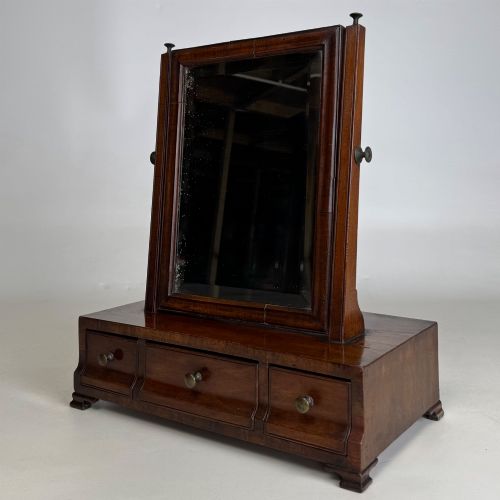
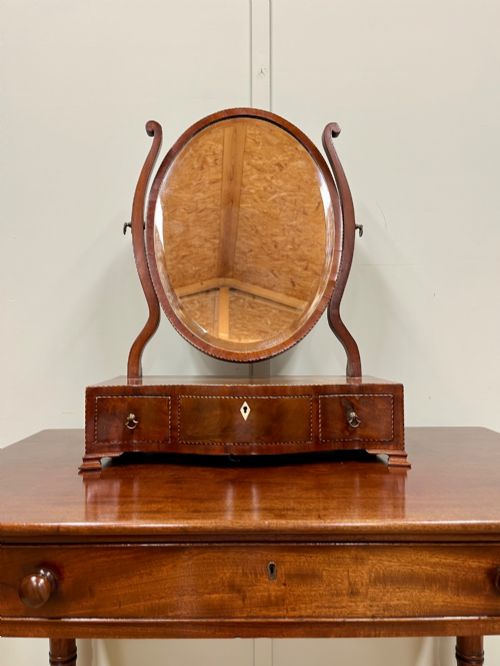
Tabletop Swinging Mirror
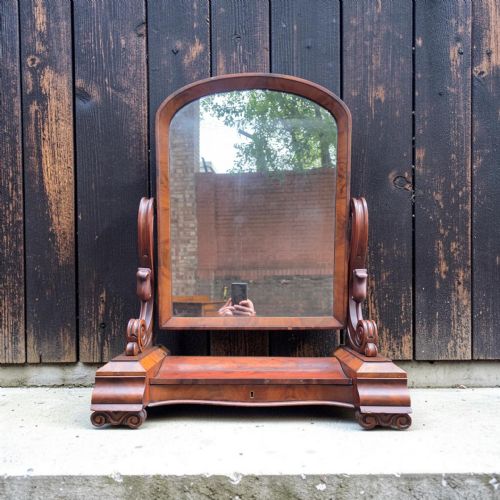
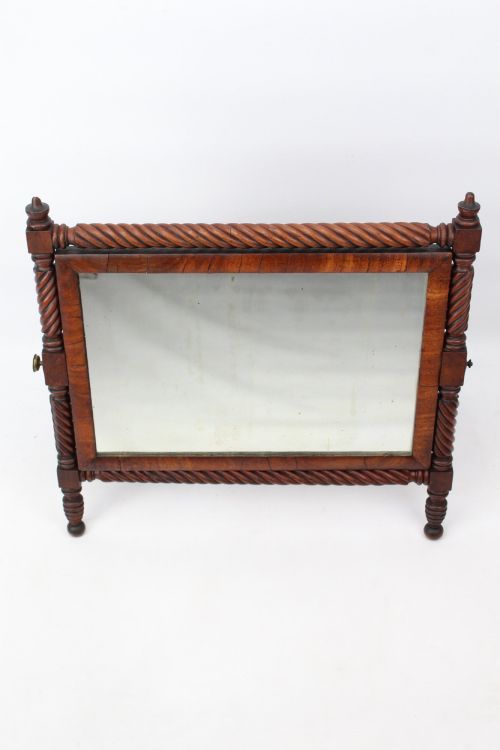
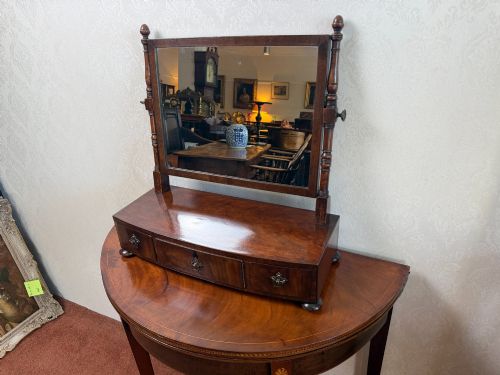
These tabletop swinging mirrors sit on chests and dressing tables, offering adjustable reflections framed in mahogany, walnut and brass.
Tabletop Swinging Mirror
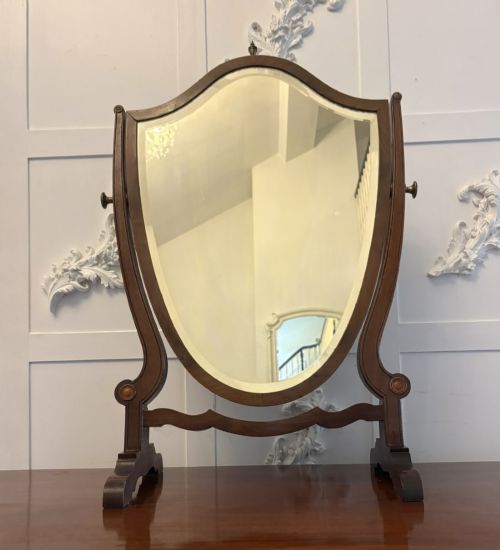
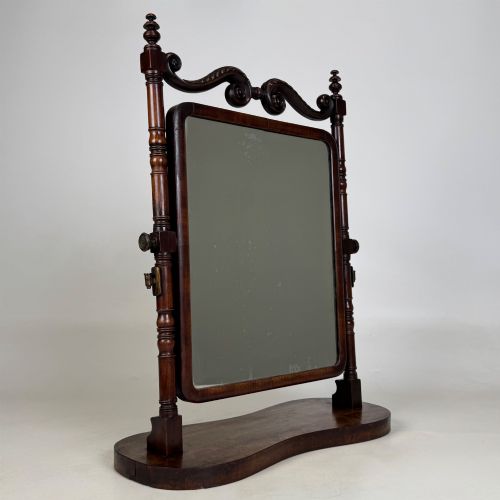
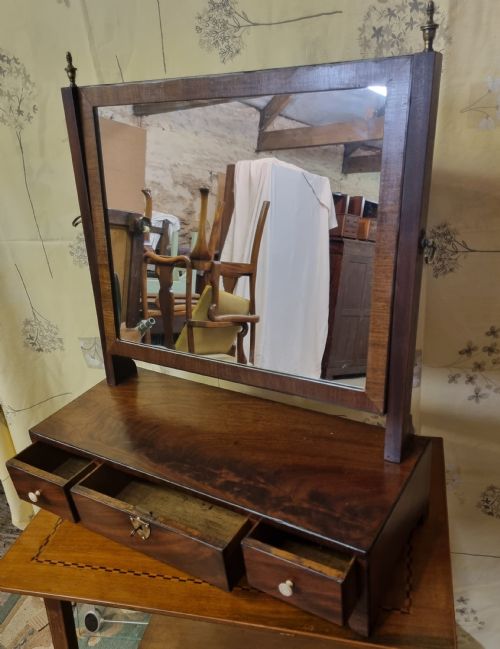
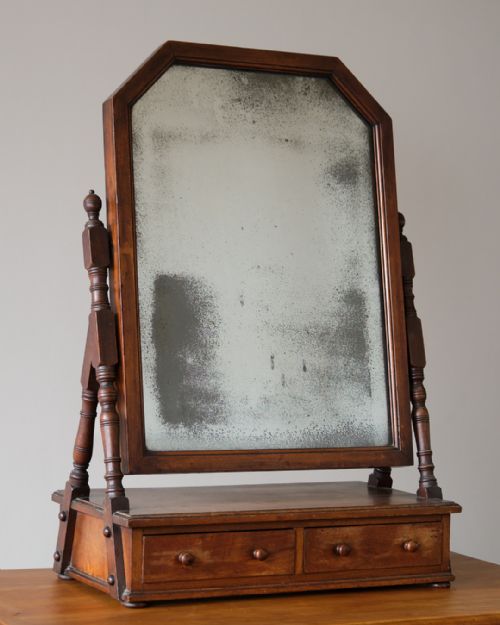
Tabletop swinging mirrors provide an adjustable glass plate supported by upright arms above a base, historically positioned on dressing tables or chests. When seeking a tabletop swinging mirror, buyers frequently encounter mahogany examples dating from the Georgian, Regency and Victorian periods.
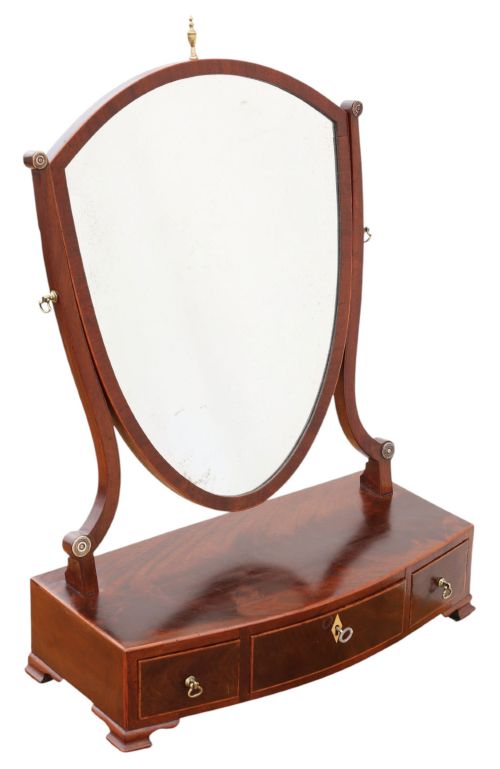
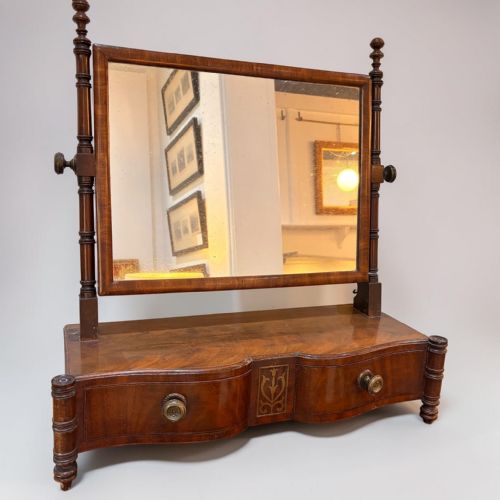
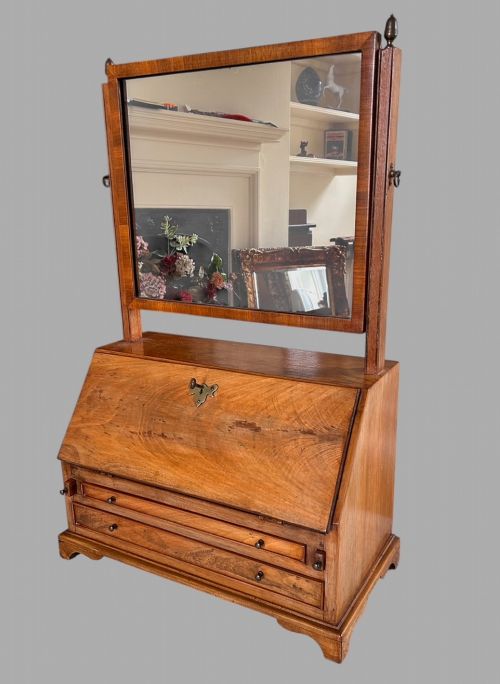
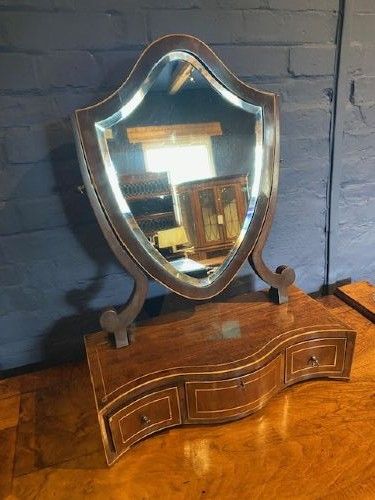
The format encompasses simple rectangular frames, shield shapes, and versions incorporating small box bases fitted with drawers for trinkets or documents. Walnut, satinwood and kingwood appear alongside mahogany, with occasional variations featuring bureau compartments or inlaid decoration.
Originating largely from British and French workshops across the eighteenth and nineteenth centuries, these pieces combine utility with decorative cabinetwork scaled for domestic spaces.
Materials and construction
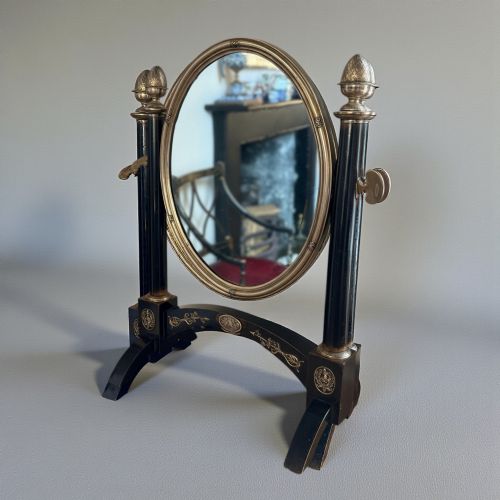
Cabinetmakers utilised solid timbers and veneers, predominantly mahogany and walnut, applying crossbanding and stringing to enhance the surfaces of the box bases. Brass brackets, pivots and finials secure the frame to the upright arms, allowing the mirror plate to tilt freely.
Glass plates are set within rebated wooden frames, sometimes accompanied by secondary woods such as pine or oak in the internal construction of the drawers. Ormolu mounts, giltwood accents and champleve enamel decorate more elaborate French and Victorian iterations.
Tabletop Swinging Mirror Retail Price Guide 2026
Typical asking prices for tabletop swinging mirror among the pieces listed under this phrase on Sellingantiques today, from the lower quarter to the upper quarter. They describe what is for sale here now, not the wider market.
Listings feature mahogany, walnut and satinwood across periods from Queen Anne to Edwardian times.
Distinctions in quality
The sophistication of the timber figure and the precision of the cabinet joinery set finer examples apart from simpler utilitarian pieces. Mahogany with strong figuring or carefully matched walnut veneers indicates a deliberate choice of materials by the maker.
Proportion between the mirror frame and the supporting base dictates visual balance, while the weight and finish of the brass hardware contribute to the overall tactile character of the piece.
Heal & Sons
The Tabletop Swinging Mirror Glossary
- Toilet mirror
- A term historically used for a dressing table mirror, typically featuring a small box base with one or more drawers.
- Cheval mirror
- A large freestanding or tabletop floor mirror mounted on a frame with side pivots, allowing a full-length reflection.
- Crossbanding
- A border of veneer laid perpendicular to the grain of the main surface, often seen on Georgian and Regency pieces.
- Ormolu
- Gilded bronze used for decorative mounts and accents, frequently found on French nineteenth-century examples.
- Shield mirror
- A dressing glass cut into the shape of a shield, popular during the eighteenth century.
Tabletop Swinging Mirror: Frequently Asked Questions
What is a tabletop swinging mirror?
A tabletop swinging mirror is a portable dressing glass mounted on pivots between two upright posts, allowing the user to adjust the angle of reflection.
These pieces typically rest upon a table, chest of drawers or bureau base containing small storage compartments.
How were these mirrors used historically?
They served as personal grooming aids in bedrooms and dressing rooms before full-length cheval mirrors became commonplace.
The integrated drawers held small valuables, cosmetics, and letters while elevating the glass to a convenient height.
How do I date a mahogany dressing mirror?
Dating relies on timber choice, construction methods, and frame profile, such as the shield shapes of the eighteenth century or the robust proportions of the Victorian era.
Secondary woods and the design of the brass pivoting hardware also provide clues to the period of manufacture.
Where should I place a tabletop mirror?
These mirrors suit dressing tables, low chests of drawers, or sideboards where their compact footprint adds vertical interest.
Positioning them near natural light enhances their reflective function while highlighting the timber grain.