

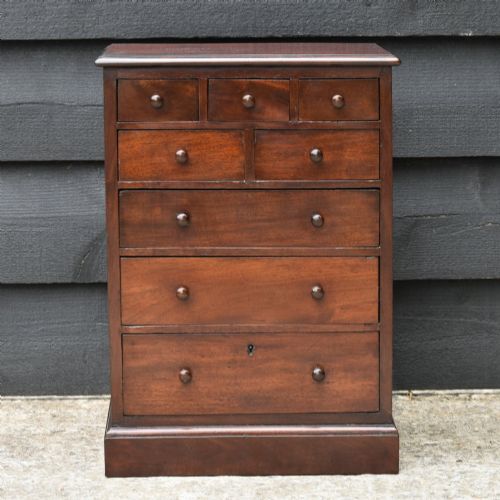

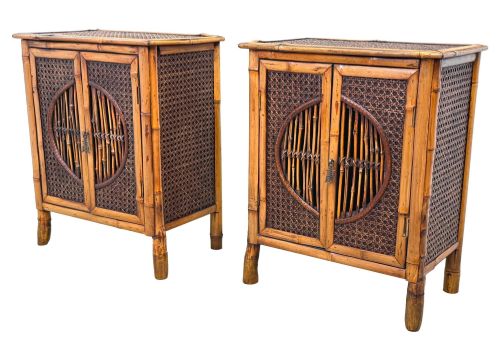
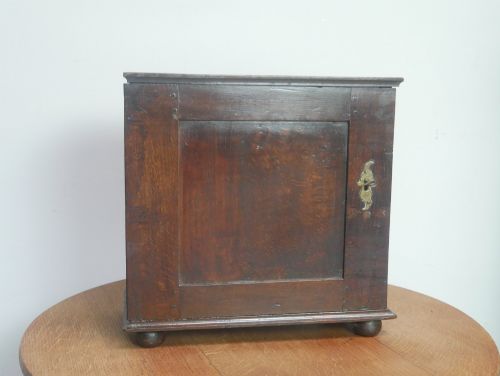
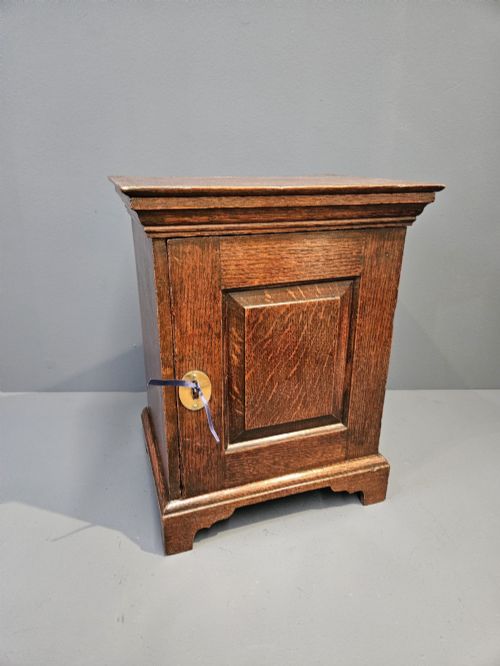



Tabletop Spice Cabinet
These tabletop spice cabinet examples provide neat storage for condiments and small treasures, bringing period woodwork onto a desk or sideboard.
Tabletop Spice Cabinet
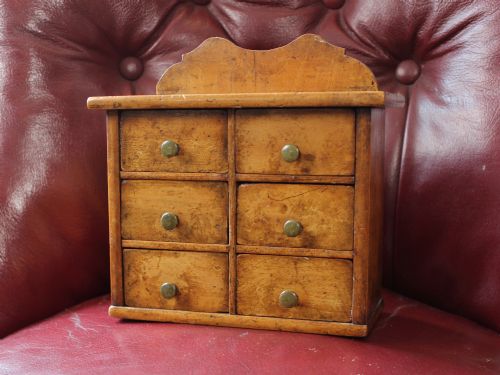
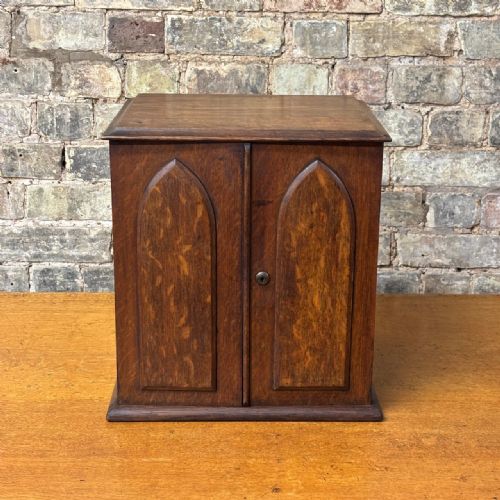
A tabletop spice cabinet is a compact wooden storage piece designed to sit on a counter or table, often featuring multiple small drawers or a hinged door. These items served historically to keep precious kitchen seasonings secure and dry.
The pieces appearing here span several centuries, with prominent representation from the eighteenth and nineteenth periods. Buyers encounter vernacular oak spice cupboards alongside mahogany miniature chests and occasional bamboo or fruitwood variants.
Formations range from plain single-door cupboards to elaborate miniature court cupboards and drawer sets. Each version reflects the domestic needs and cabinetmaking standards of its specific era.
Materials and construction methods
Oak and mahogany dominate the construction of these items, providing the sturdy timber necessary for small-scale case furniture. Cabinetmakers utilised solid boards alongside fine veneers, particularly in later Georgian and Victorian examples.
Brass fittings such as escutcheons, hinges and drop handles frequently secure the doors and drawers. Metalwork and occasionally silver elements appear on specific designs, while secondary timbers like pine and fruitwood support internal partitions.
Tabletop Spice Cabinet Retail Price Guide 2026
Typical asking prices for tabletop spice cabinet among the pieces listed under this phrase on Sellingantiques today, from the lower quarter to the upper quarter. They describe what is for sale here now, not the wider market.
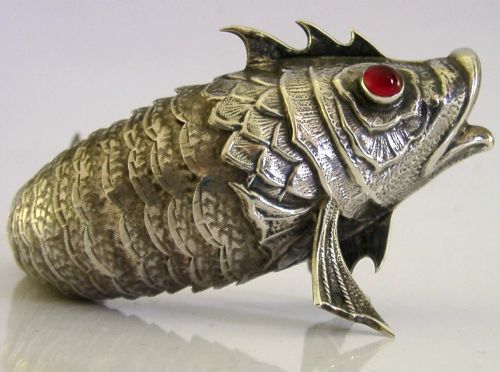
Among the heavy oak and mahogany joinery sits a solitary Spanish silver articulated fish swimming through the nineteenth-century woodwork.
Assessing quality in miniature cabinetry
Superior examples display careful timber selection, featuring matched grain patterns on drawer fronts and door panels. Fine dovetail joints on the drawers indicate the skill of the original maker.
The integrity of the hardware and the precision of the fit around doors and lids distinguish finer pieces from simpler utilitarian boxes. Surface patination achieved through decades of handling also sets apart better-preserved specimens.
The Tabletop Spice Cabinet Glossary
- Apprentice piece
- A small item of furniture created by a trainee to demonstrate mastery of joinery techniques. These often mirror full-sized chests and cabinets in miniature.
- Escutcheon
- A protective plate surrounding a keyhole. On these cabinets, brass escutcheons often add a decorative accent to wooden doors and drawer fronts.
- Court cupboard
- A traditional standing or tabletop storage form featuring recessed upper sections or tiered levels. These date back to earlier centuries of English woodworking.
- Veneer
- A thin layer of figured wood applied to a secondary timber base. Mahogany and burr walnut cabinets frequently employ this technique to enhance visual depth.
Tabletop Spice Cabinet: Frequently Asked Questions
What were spice cabinets used for?
These miniature cupboards stored valuable culinary seasonings, herbs and exotic spices in domestic kitchens or dining rooms.
Over time, owners also repurposed them to hold letters, trinkets, sewing gear or collection items.
How do I date an oak spice cupboard?
Examine the construction methods, such as the cut of the wood and the joinery style used on the internal drawers.
Eighteenth-century examples often feature pegged frames and hand-cut dovetails, while later pieces show machine assistance.
Are apprentice pieces different from spice cabinets?
Apprentice pieces represent scaled-down tests of skill made by learners to prove their competence to a guild.
While they take the form of miniature chests of drawers, traditional spice cabinets specifically house internal compartments for seasonings.
Where should I place a tabletop cabinet?
These compact pieces fit comfortably on top of sideboards, desks, console tables or deep window sills.
Keep them away from direct heat sources and strong sunlight to protect the aged wood and original finish.