

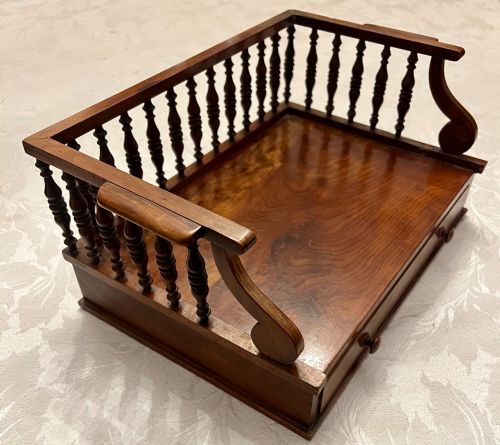
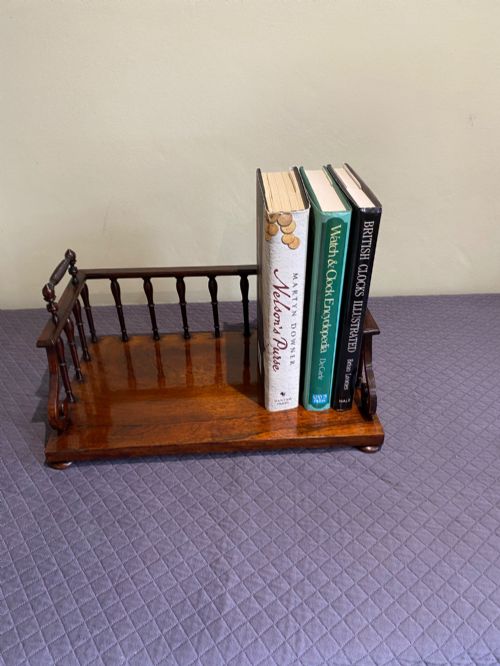
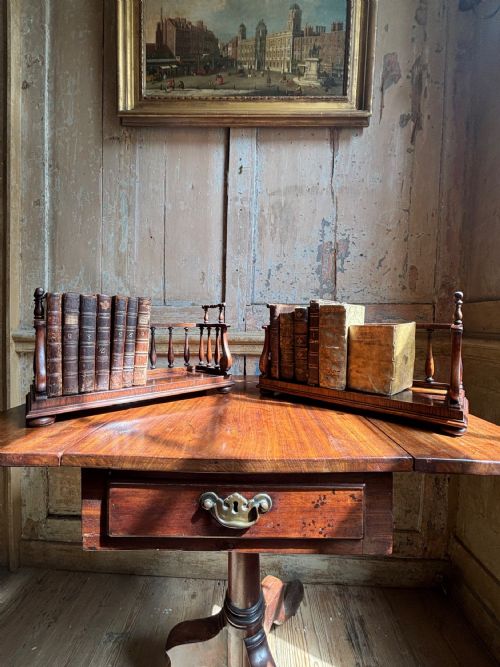


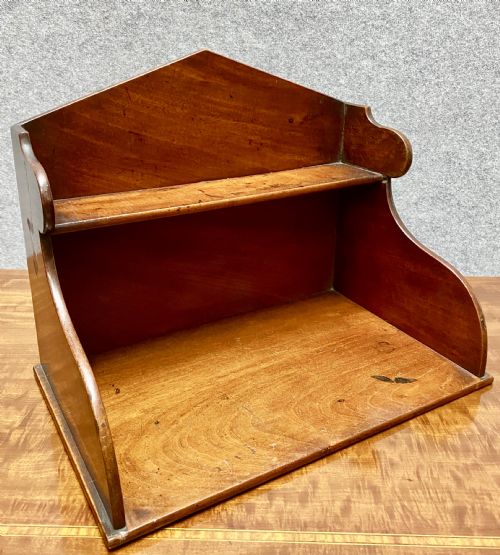


Tabletop Book Organiser
A tabletop book organiser gathers volumes close at hand on a desk, combining utility with fine timber craftsmanship.
Tabletop Book Organiser
When you search for a tabletop book organiser, you encounter desk accessories, book stands, and desktop bookcases designed to keep books upright and accessible on a writing surface. The pieces listed on this page span the Georgian, Regency, Victorian, and Edwardian periods.
You are most likely to meet mahogany and rosewood book stands, carriers, and troughs from the Regency and Georgian eras. These forms range from simple waterfall fronted open shelves to pivoting desktop bookcases in the Art Nouveau style and oak bible boxes.
Makers shaped these items for practical use in studies and libraries, employing durable hardwoods to withstand daily handling. Each piece reflects the dominant design vocabulary of its era, from Georgian plainness to Victorian Gothic detail.
How they were made
The makers utilised dense timbers such as mahogany and rosewood, alongside oak, shaped through traditional woodworking joints. These materials provided the structural rigidity necessary to support heavy volumes of books on a desk.
Brass fittings, wire elements, and iron components frequently appear as structural supports, hinges, or decorative accents on book carriers and stands. Cabinet makers turned and joined these elements by hand to achieve stable, weight-bearing desktop frames.
Tabletop Book Organiser Retail Price Guide 2026
Typical asking prices for tabletop book organiser among the pieces listed under this phrase on Sellingantiques today, from the lower quarter to the upper quarter. They describe what is for sale here now, not the wider market.
Some nineteenth century desk stands feature small integrated carrying handles so your favourite volumes could follow you from room to room.
What varies in quality
The distinction between ordinary and superior pieces rests on the choice of timber figure, the crispness of turned details, and the integrity of the original joints. Finer examples display carefully selected grain patterns and restrained decorative carving.
Design sophistication also divides the range, where balanced proportions and thoughtful integration of brass fittings elevate a simple desk tidy into a piece of fine cabinet work.
The Tabletop Book Organiser Glossary
- Book trough
- An open-topped desktop receptacle with sloping sides that keeps volumes angled for easy reading and selection. This form appears frequently in Georgian and Regency examples.
- Bible box
- A sloping-lidded wooden box historically used to store large volumes, placed upon a table for reading and writing. Early nineteenth century examples serve well as desktop organisers.
- Waterfall fronted
- A tiered shelving arrangement where each lower shelf steps forward from the one above it. This design provides accessible storage for books on a tabletop.
- Desk tidy
- A compartmentalised desktop accessory designed to hold stationery alongside small collections of books. It gathers everyday study items into one organised footprint.
Tabletop Book Organiser: Frequently Asked Questions
What is a tabletop book organiser used for?
These pieces hold small working libraries, ledgers, or reference volumes upright upon a desk or table. They keep frequently consulted books within arm reach while maintaining a tidy workspace.
Historically, they served scholars, writers, and clerks who needed immediate access to texts without leaving their desk. Today, they perform the same function in domestic studies and libraries.
How do I date a wooden book stand?
Dating relies on observing the timber species, construction methods, and stylistic cues present in the piece. Georgian and Regency pieces often feature figured mahogany or rosewood with delicate turning, while later Victorian items show heavier Gothic influences or oak construction.
Examining the fixings, such as brass screws or iron wire, also helps place a piece within its proper nineteenth or early twentieth century context.
Where should I place a desktop bookcase?
These items sit comfortably upon sturdy desks, side tables, or library cabinets where books require upright support. Their compact footprints allow them to occupy corners or central spaces without dominating the surface.
Ensure the supporting furniture can bear the combined weight of the wooden stand and the volumes you intend to store within it.
Are revolving bookcases stable?
Revolving desktop models utilise internal pivot mechanisms that allow the bookcase to turn smoothly for easy book selection. Edwardian versions in the Art Nouveau style balance weight across a central axis to prevent tipping.
Careful loading with evenly distributed books ensures the revolving action remains balanced and steady during daily use.